-
Lakes of Fire
I have to admit that I don’t really love the town we are staying in- but I guess it was never about the town… it’s just a base. And there is beauty everywhere and I do really love the unique patterns mosaiced into the narrow streets’ cobbled pavements and city squares here in Ponta Delgada (CalçadaPortuguesa)… with every street a different pattern. So cool.
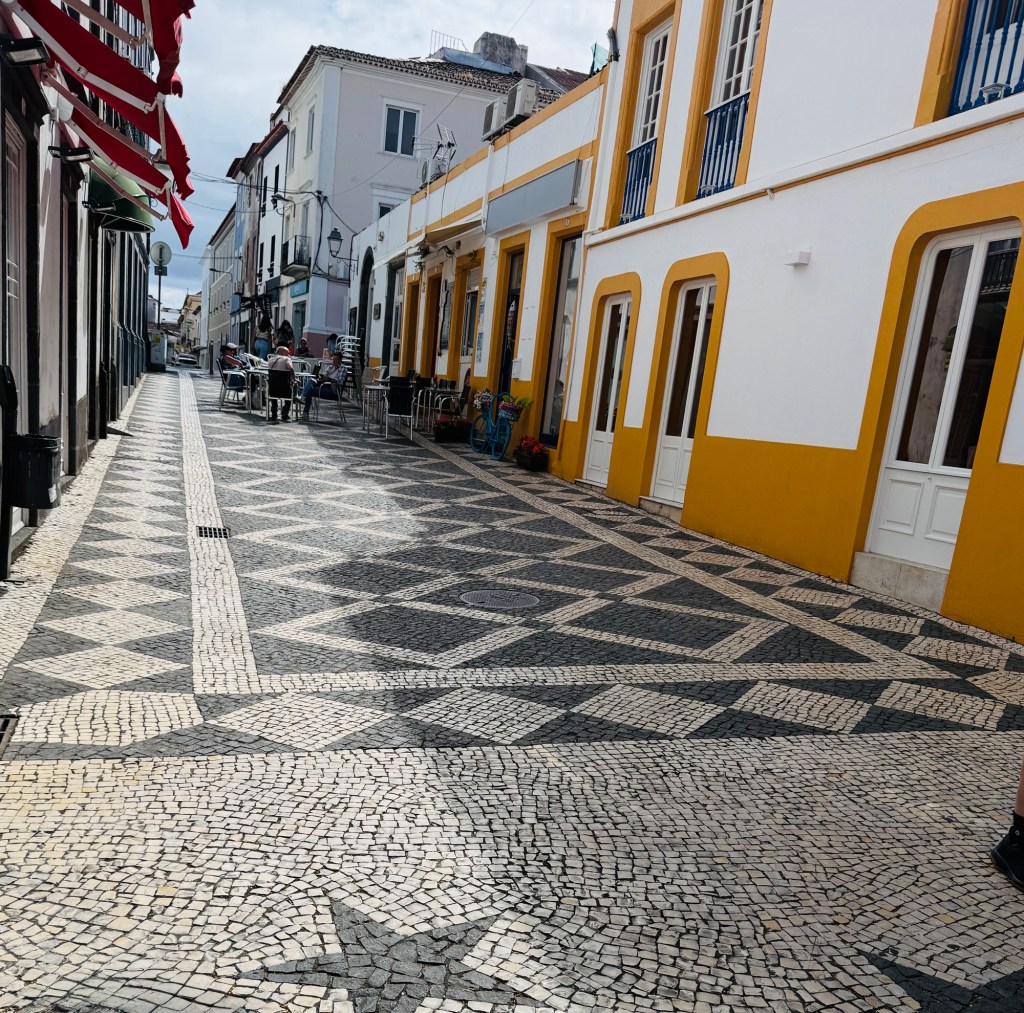
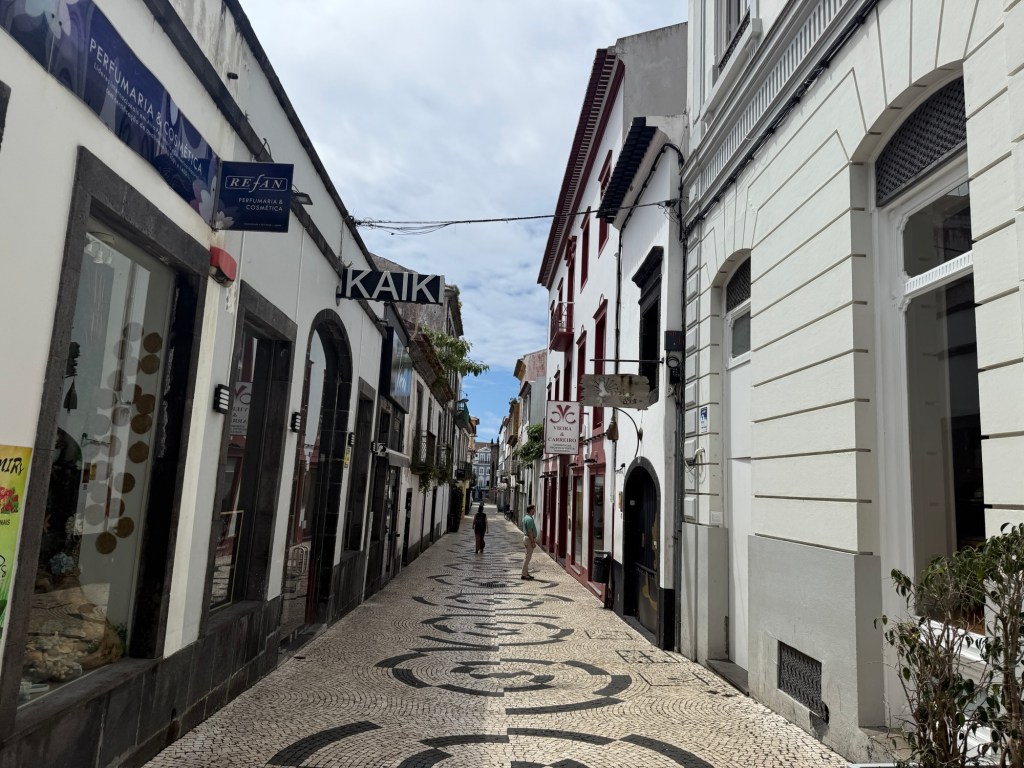
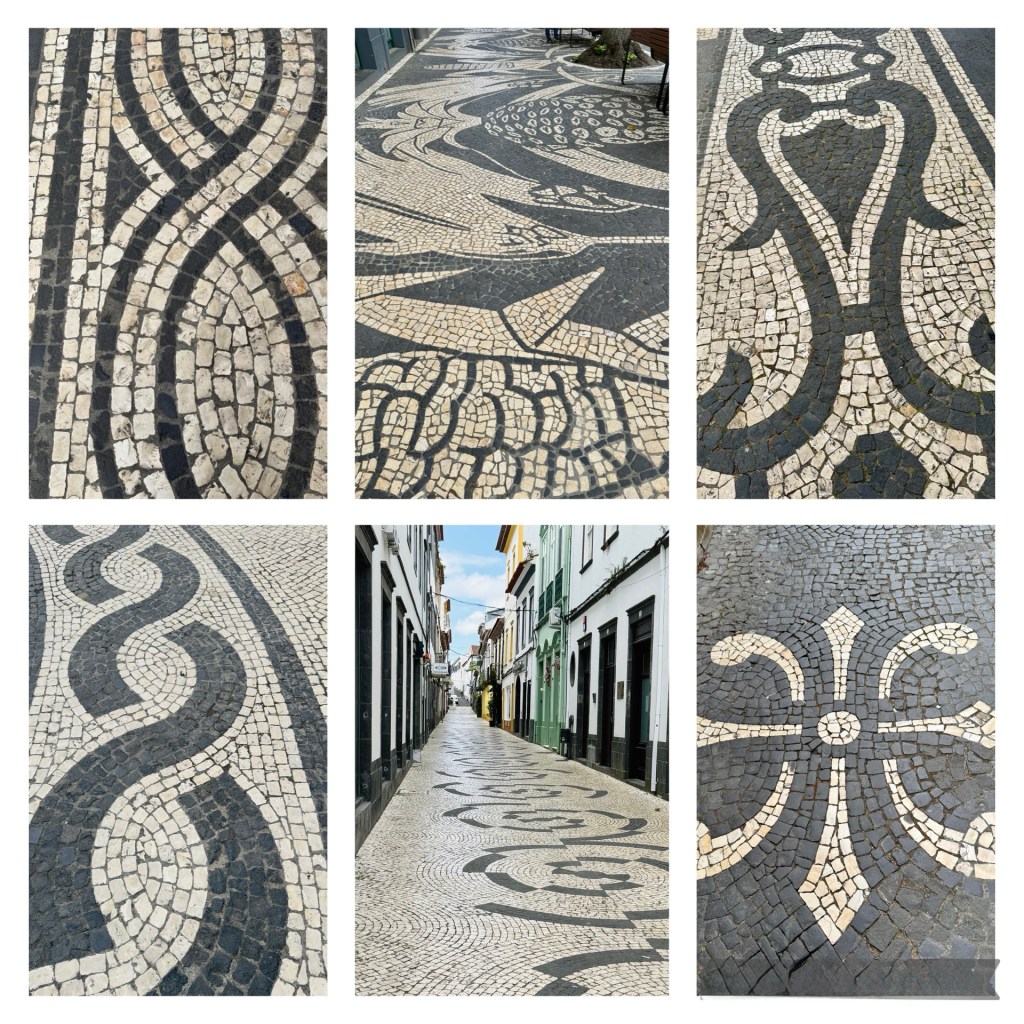
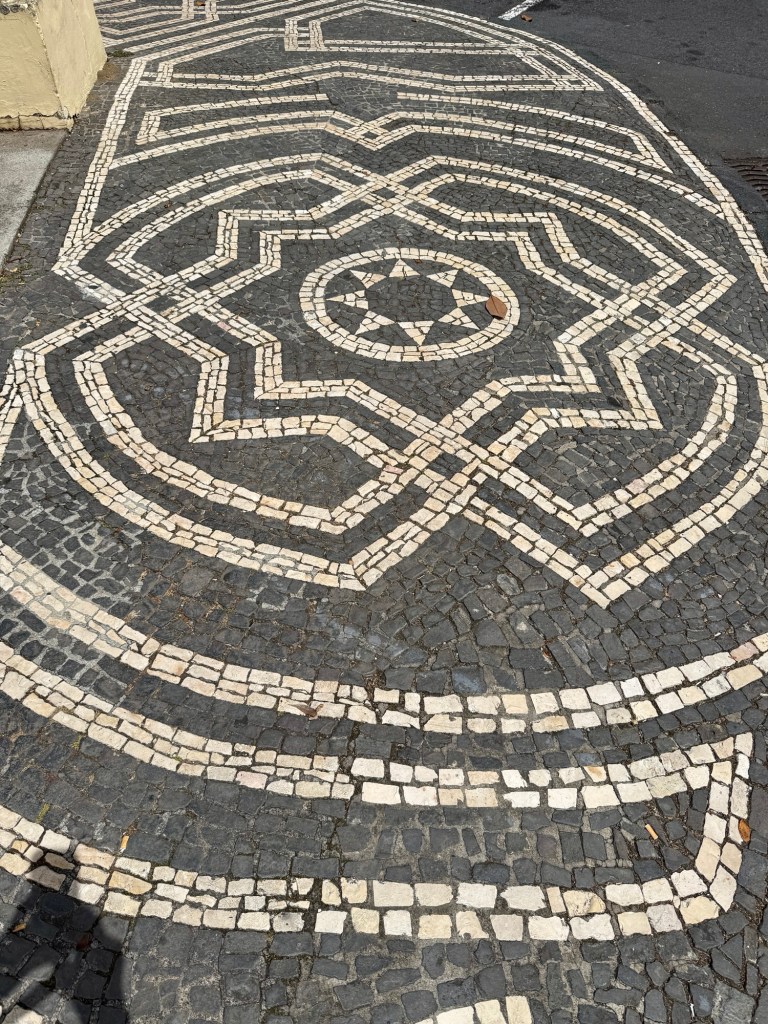
And even though there are some colourful houses,
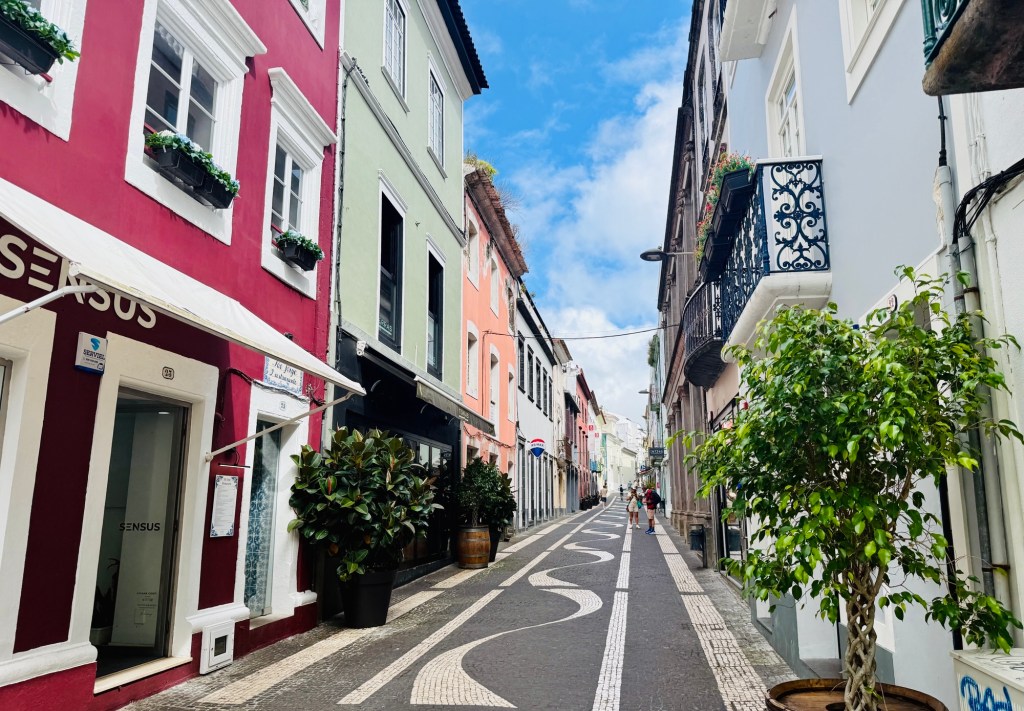
… it does feel like a very black and white town, albeit with a lot of lovely bright flowers decorating the gardens and balcony’s.
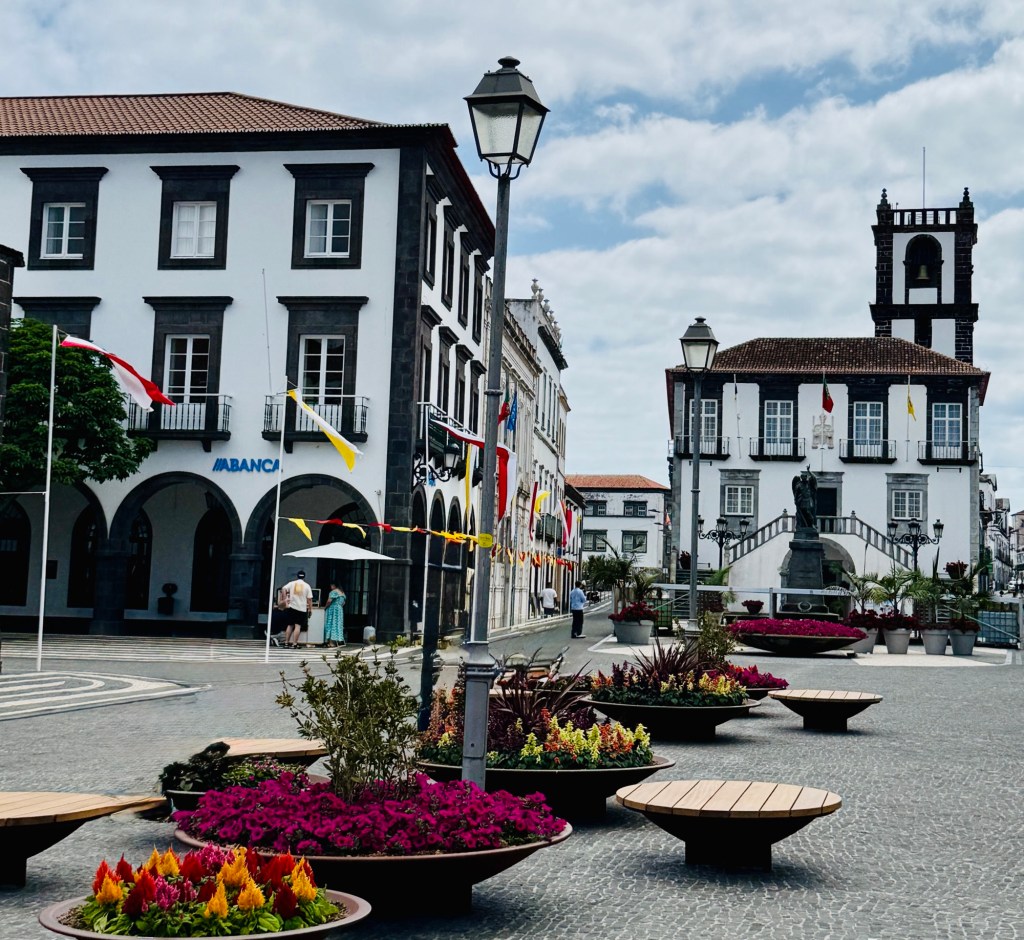
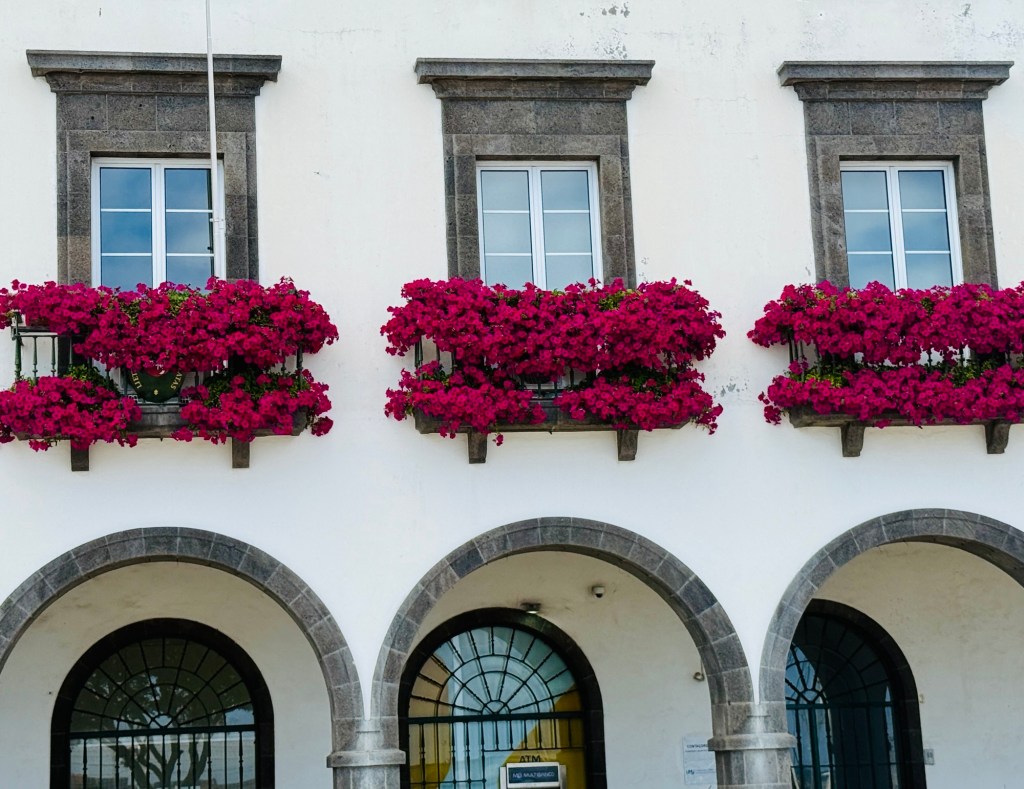
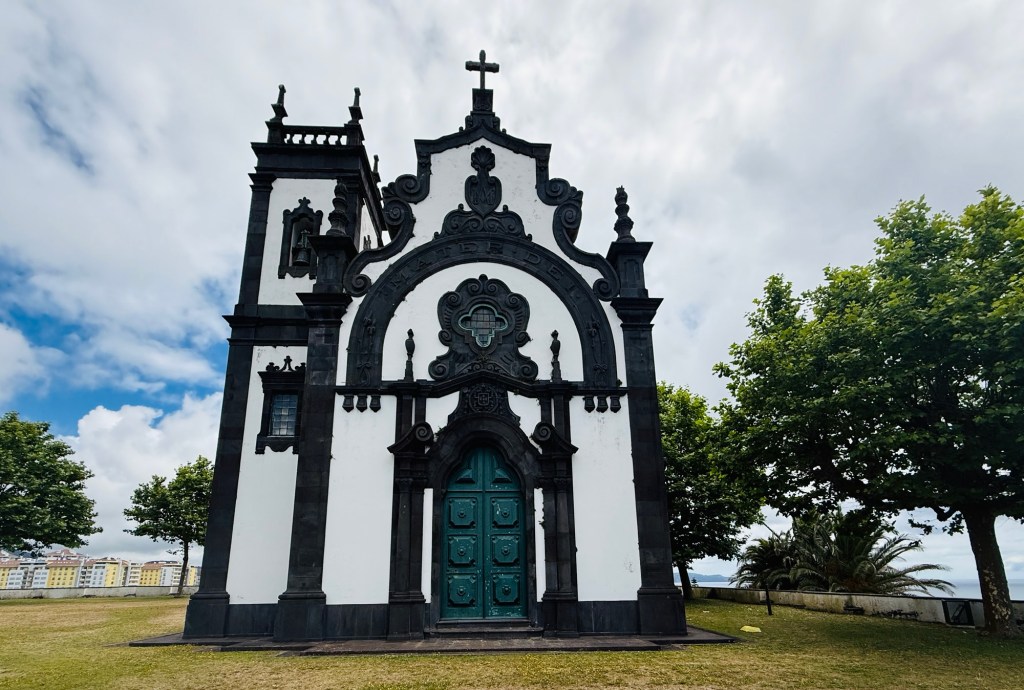
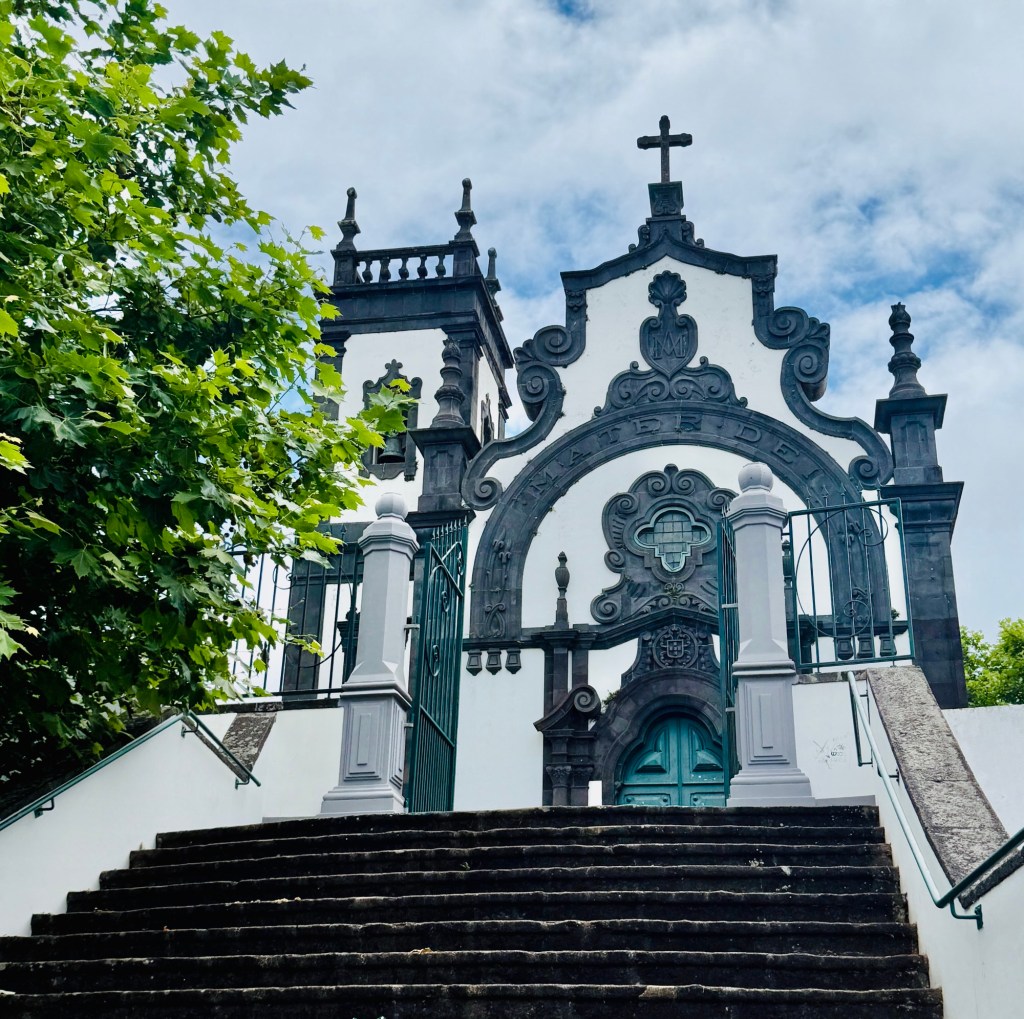
A lot of the churches and buildings are traditional white with black volcanic basalt rock accents on the edges, which is very characteristic for Portugal… and certainly for the Azores… all very black and white.
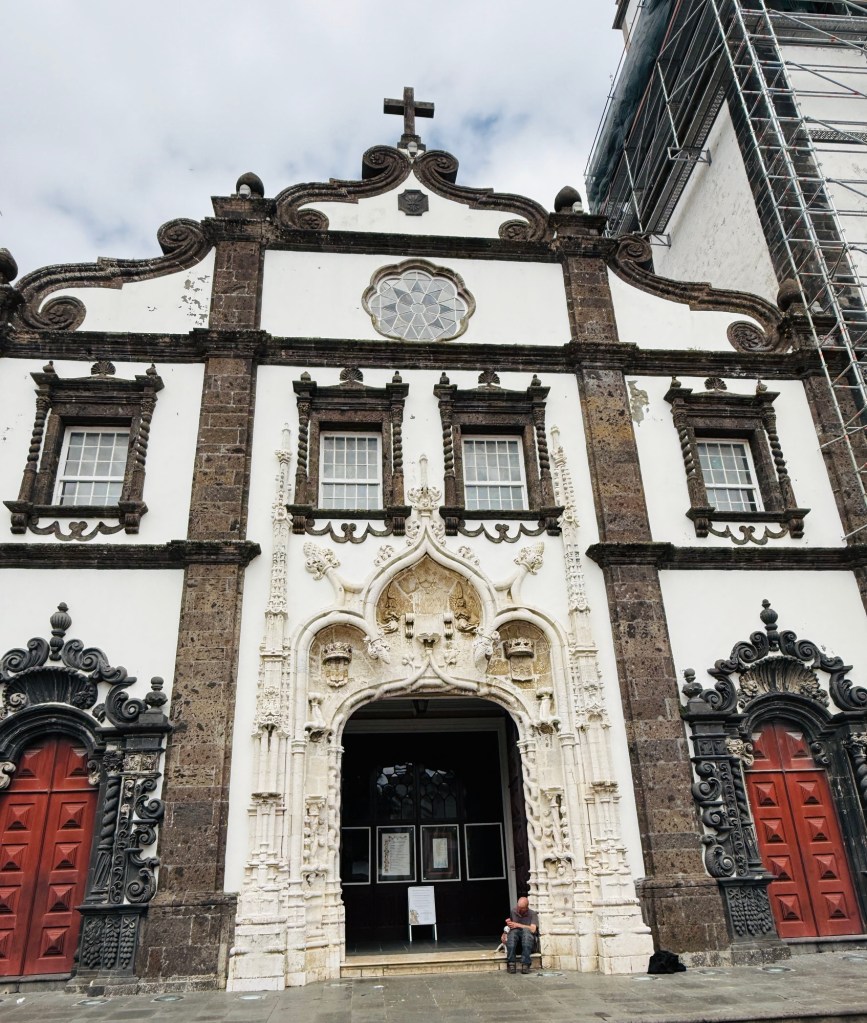
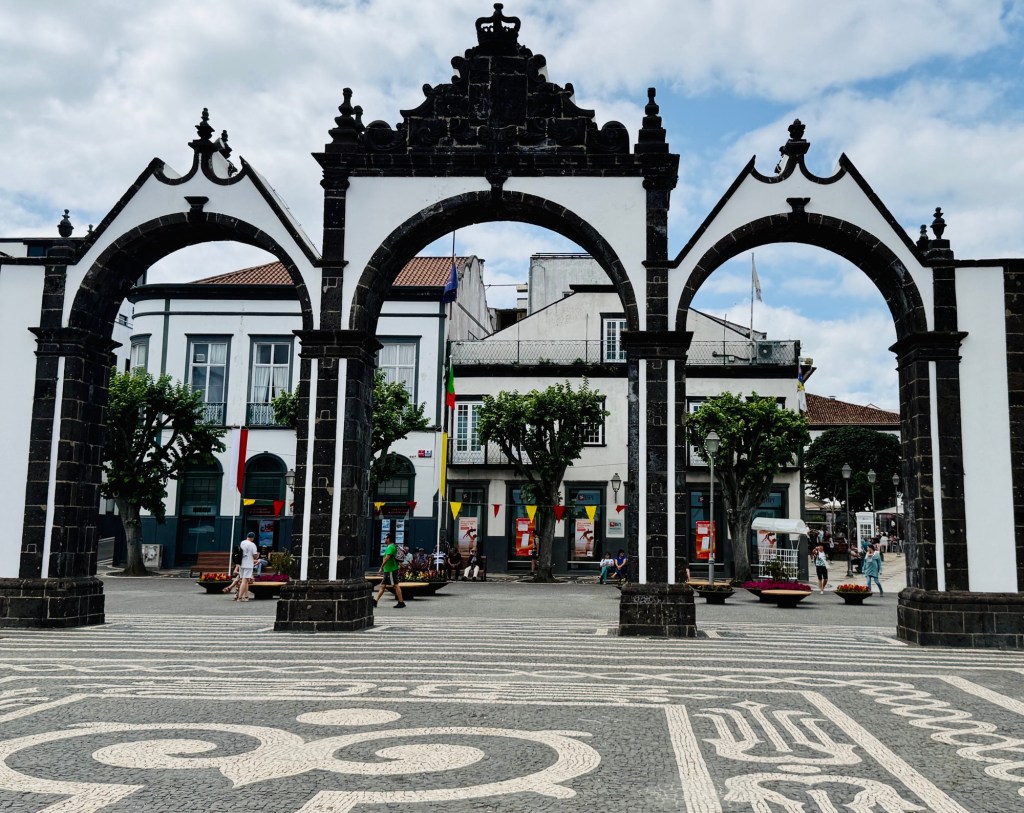
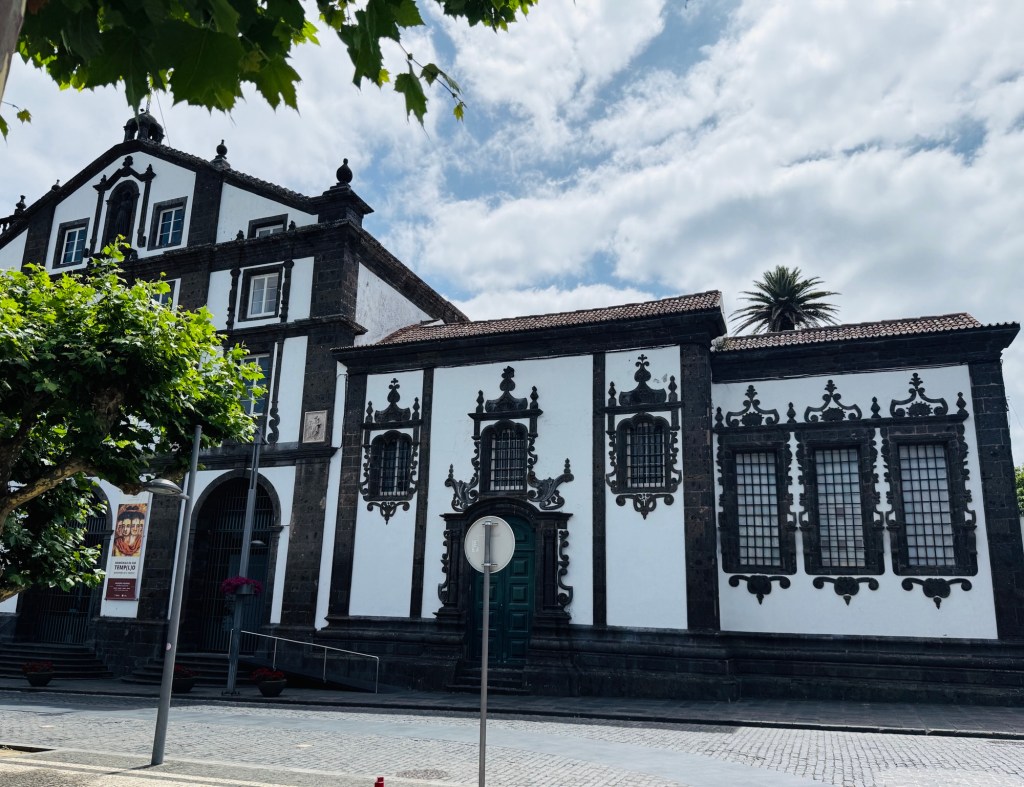
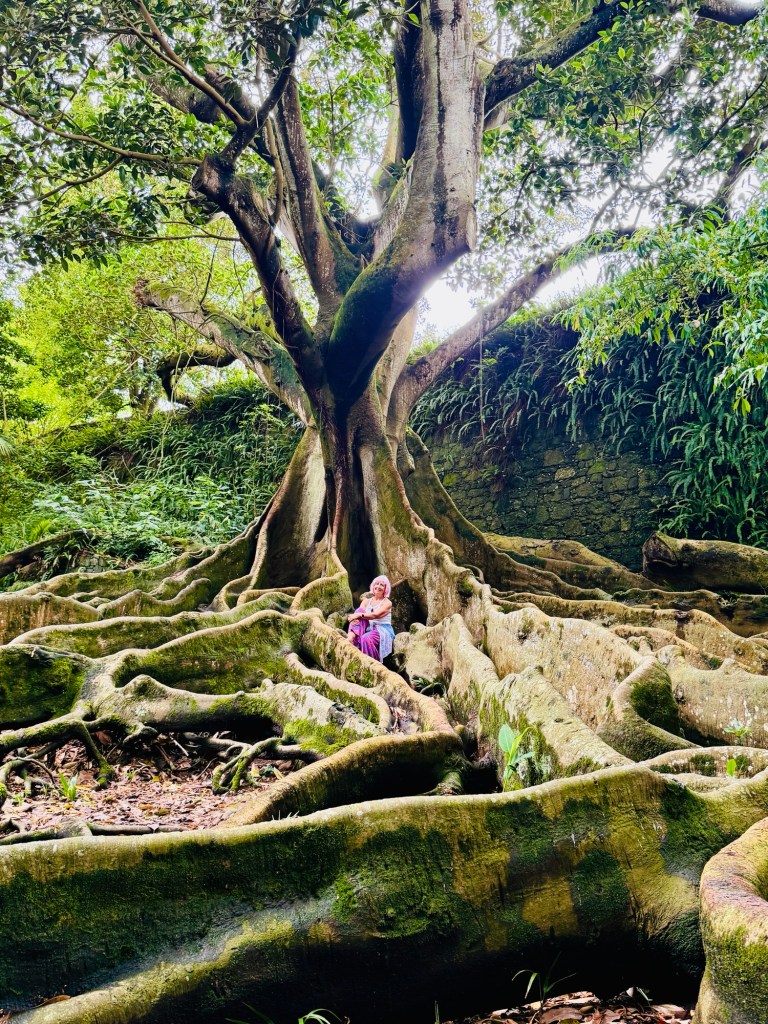
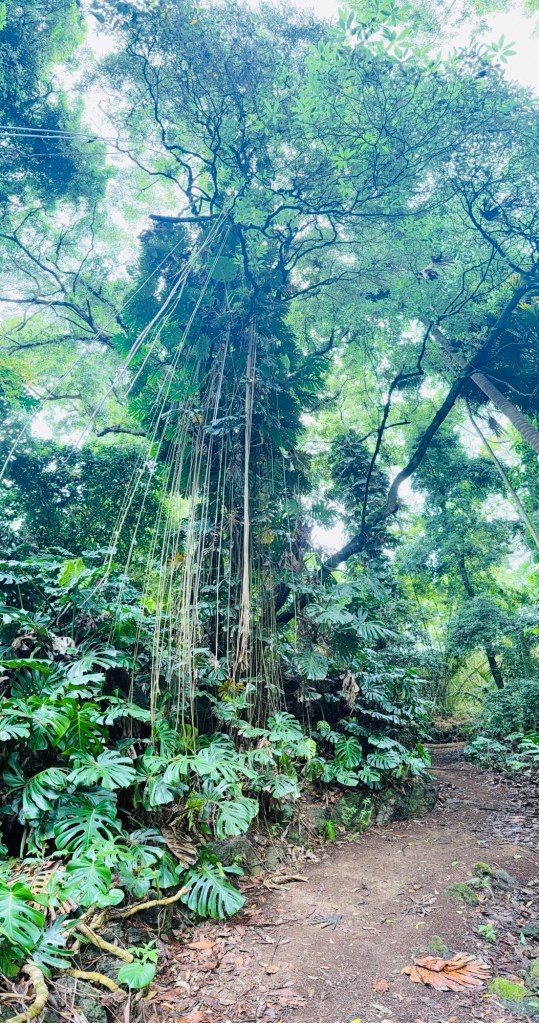
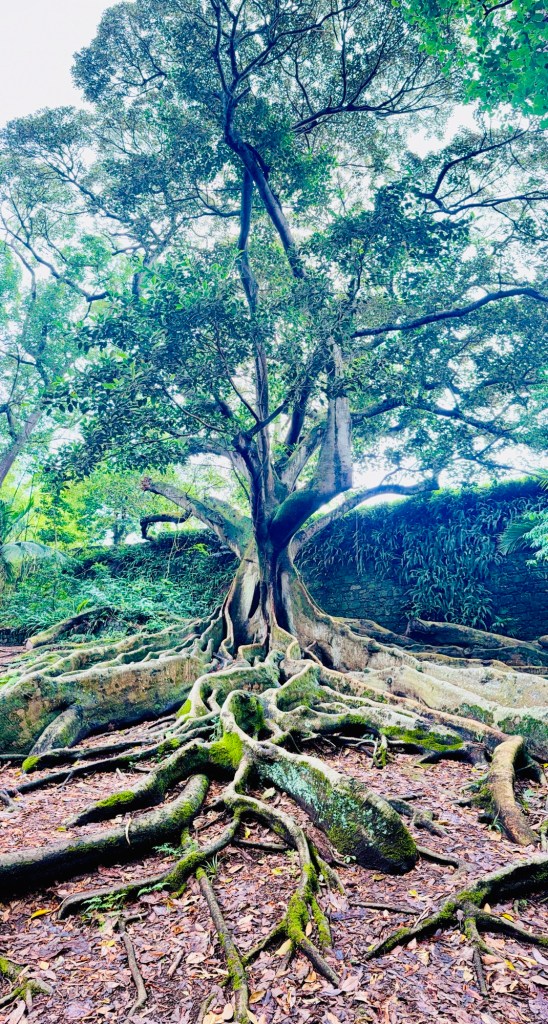
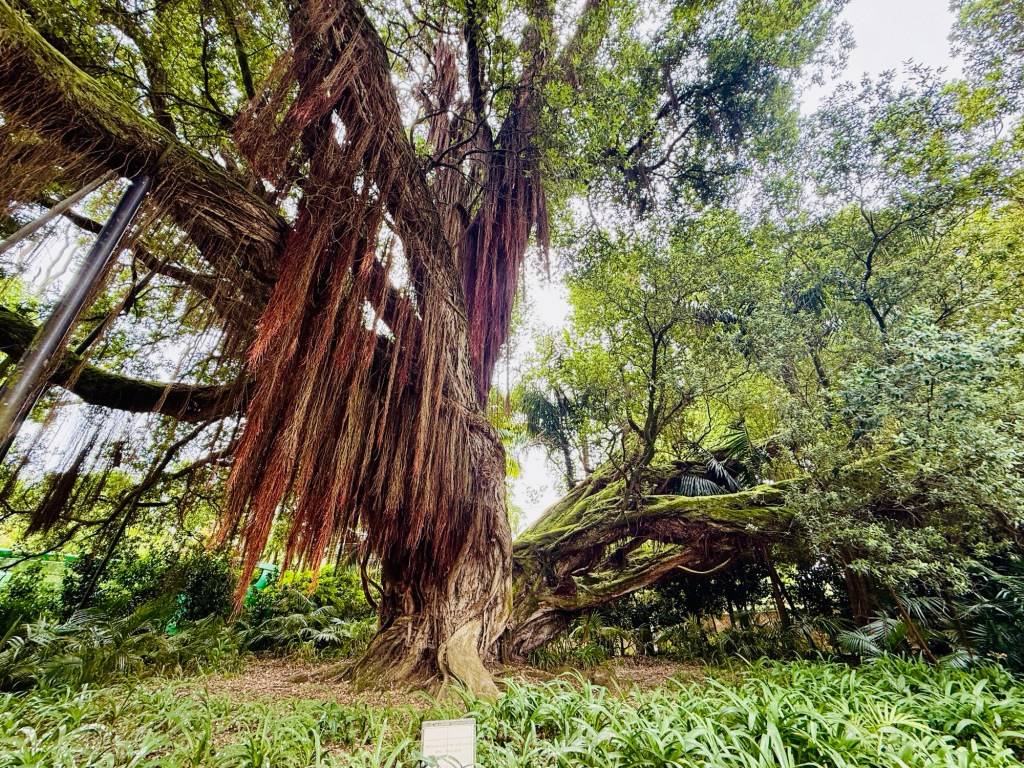
We had a couple of rest days and found there was very little to do once we had walked around the town… and the weather wasn’t great. Wandered the botanical gardens which was lovely for me, including a couple of amazing Australian Moreton Bay Figs.
Climbed the town hall tower for a view over the town…
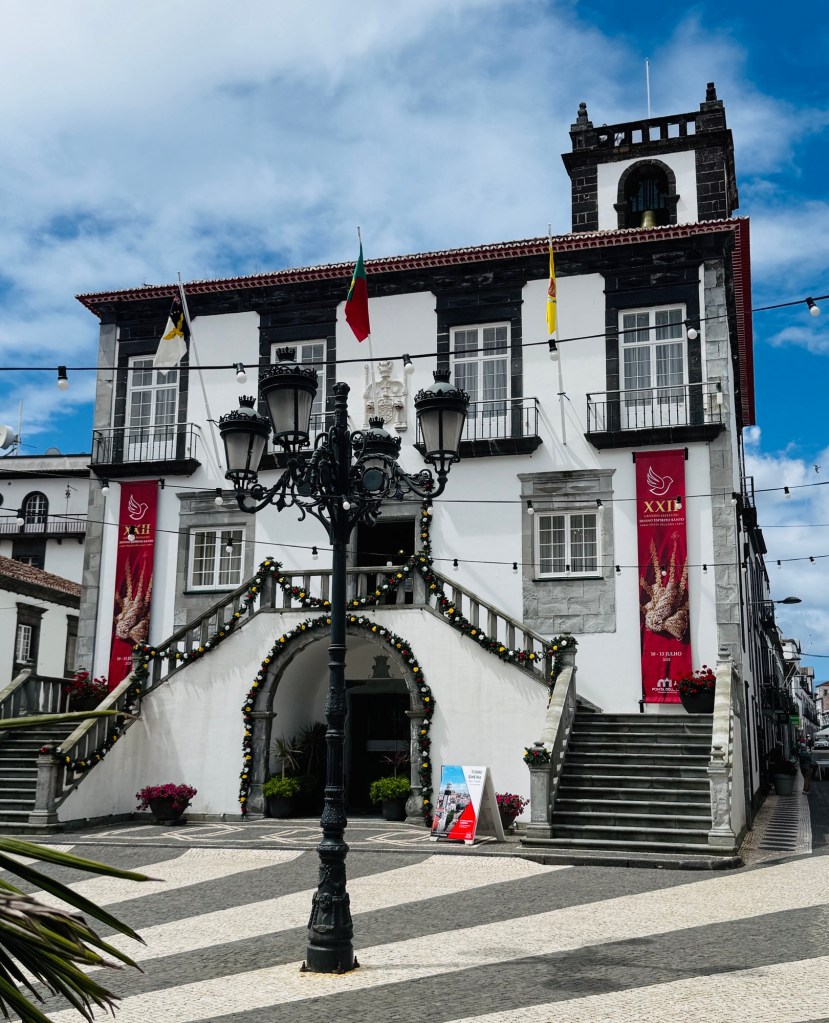

… checked out a few local churches…
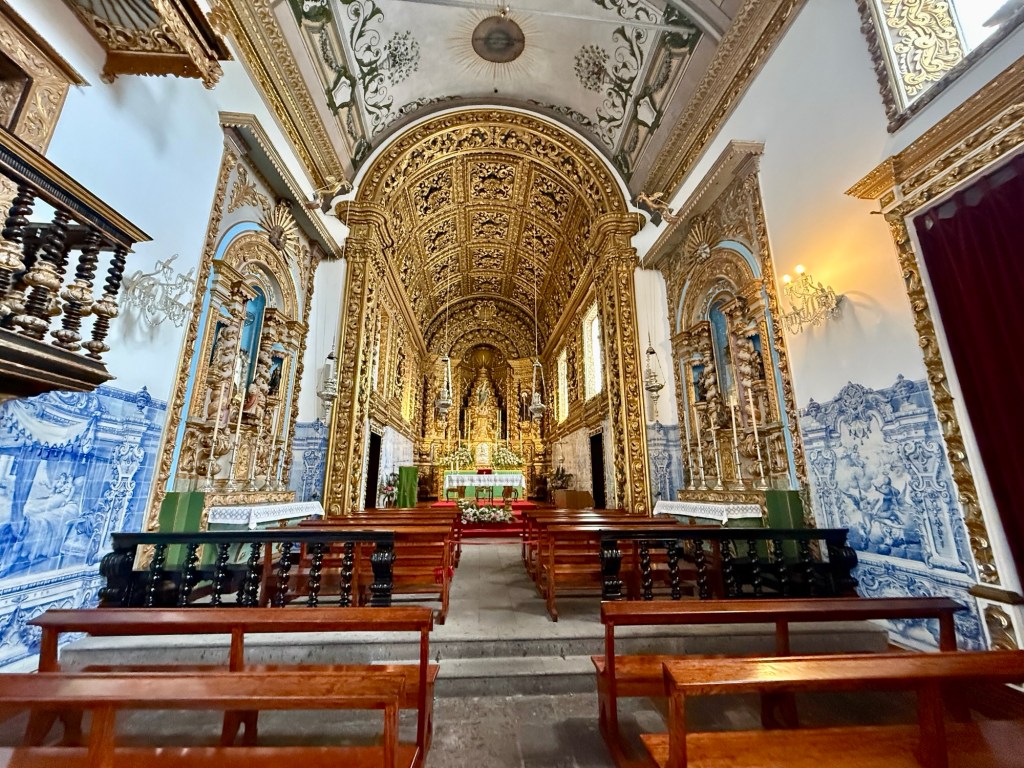
… but there really wasn’t a lot to occupy our time. I booked a hiking tour which was disappointingly cancelled… and I think we could have cut this visit short.. or maybe visited another island in the group… but that’s all very well in hindsight.
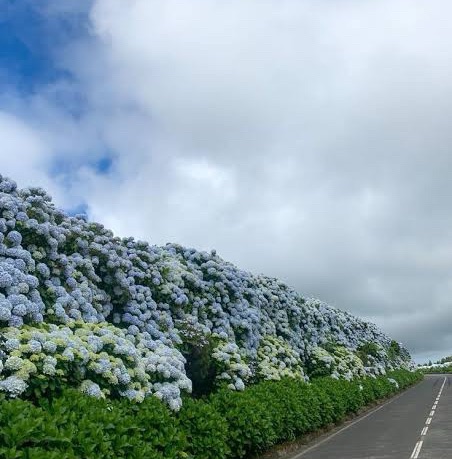
We did have an amazing second day of touring around the island- this time the Wild West side. We stopped at an organic pineapple farm grown in greenhouses (not particularly interesting)… and drove through endless kilometres of huge hydrangea bushes lining the roads and hillsides, at times well above the height of the car… sometimes combined with lilies, agapanthus and azaleas. These stunning flowers flow like poetry between cliffs and clouds… painting the island in shades of blue, lilac, white and purple, creating magical scenery at every turn. A paradise in bloom. Simply mind bogglingly spectacular even if they arent in full bloom! I tried to video but we were driving too fast and it’s just a blur.
And then we arrive at the view that I had been wanting to see since I first saw pictures in social media years ago… the Vista do Rei viewpoint over Sete Cidades… probably the most photographed of the whole island group.
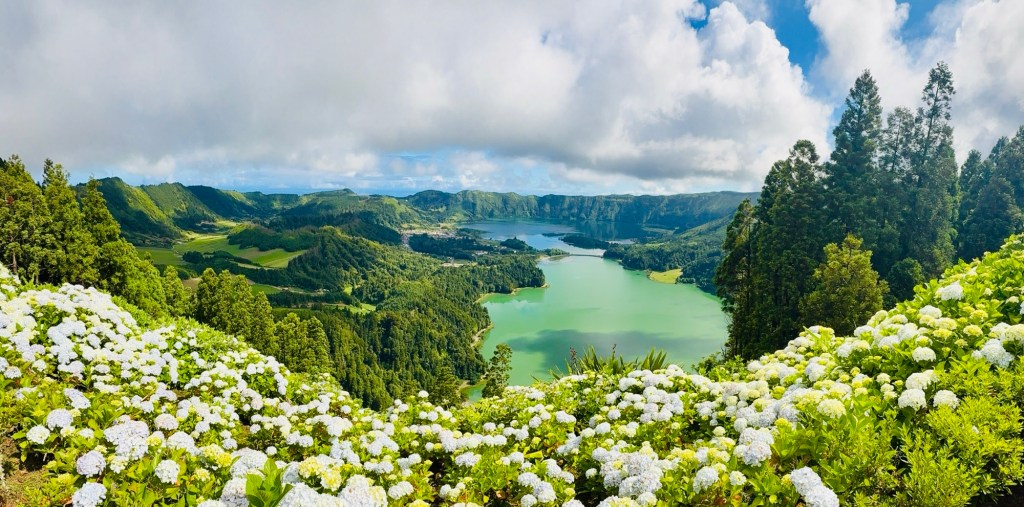
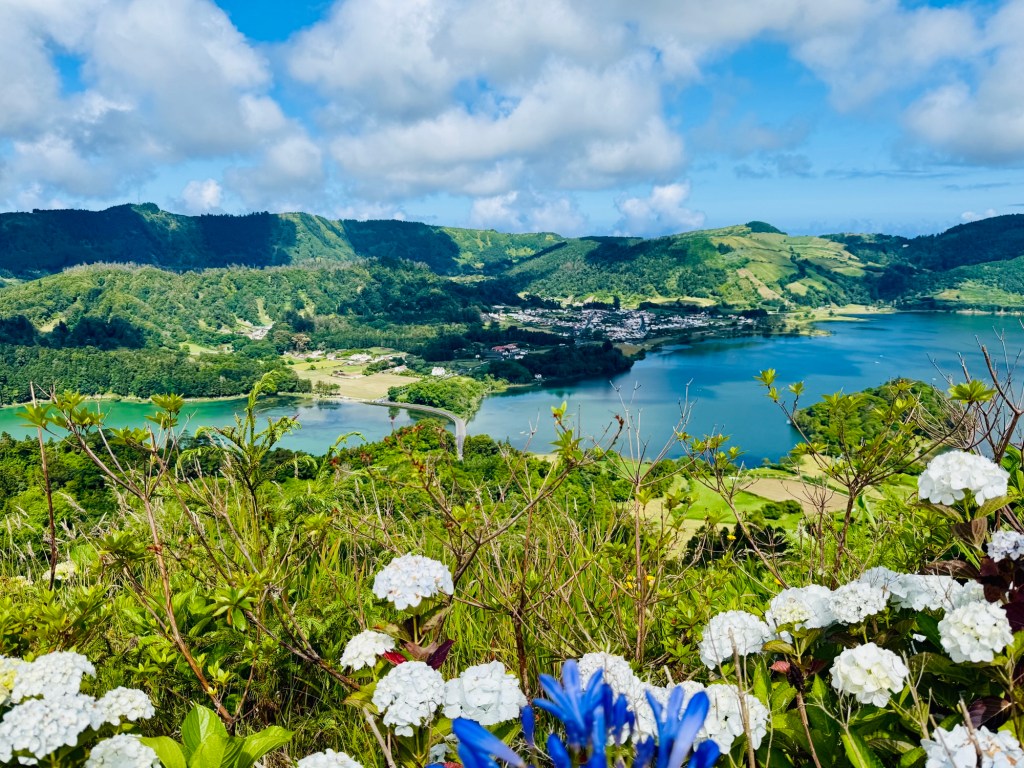
It looks like there are two lakes… one green and the other blue. But the lake is actually shaped like an eight and so it only seems like there is two lakes. The clearly visible difference in colour is caused by the strong growth of algae on one part of the lake which makes it look green. And then the masses of hydrangeas framing the view are just extraordinary. Have you ever seen a more spectacular view?
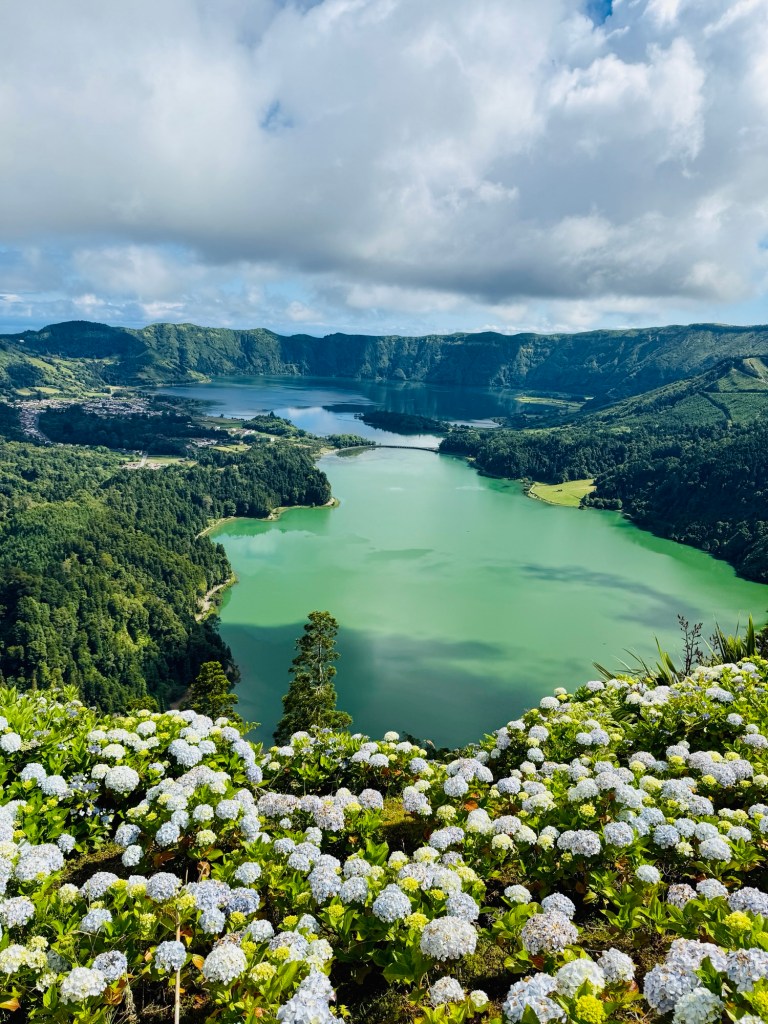
We were so blessed to have a beautiful day as the colour difference is apparently only obvious in the sunlight. We were booked for this tour a couple of days ago and postponed due to rain when it was likely there would have been no view at all.
This is also the start of the hike I had booked that goes along the crater rim, then down the slopes into the crater of the dormant volcano, ending in the town of Sete Cidades. This hike apparently gives great views of the interior of the crater, letting you experience the Sete Cidades in a deeper way than driving to the viewpoints… very disappointing but alas, it was not to be.
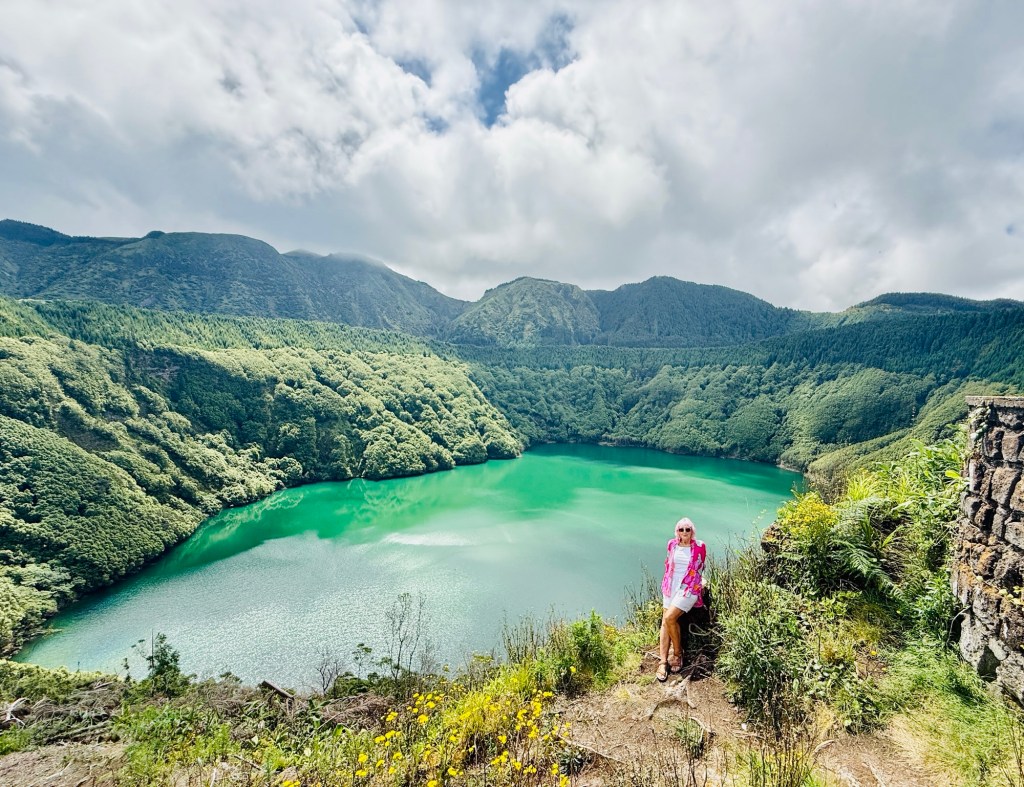
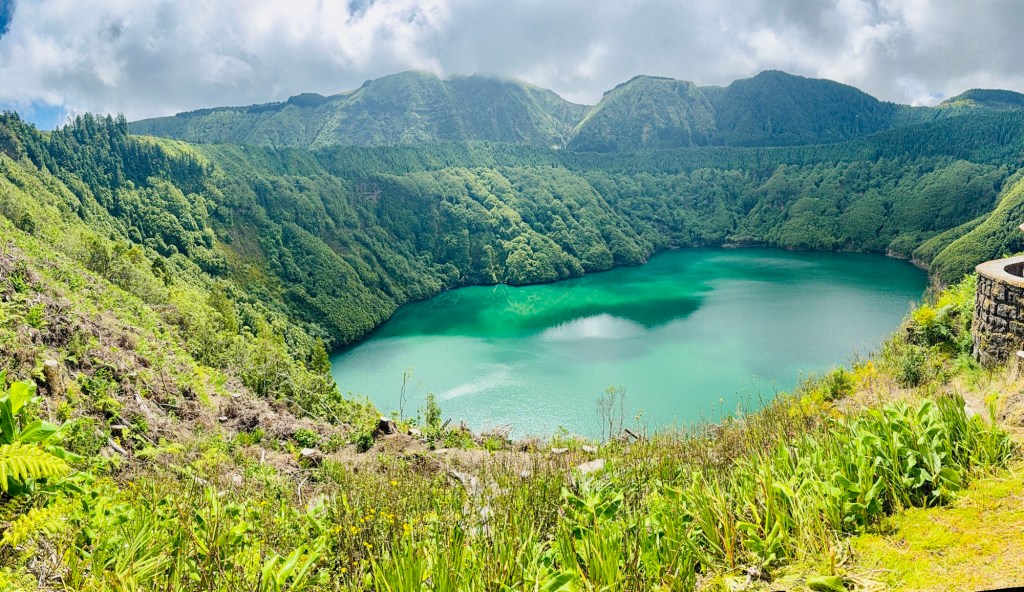
Not far away, we visited another stunning lake- the secluded and seemingly inaccessible Lagoa de Santiago, nestled inside its own volcanic crater… with its high banks, lush vegetation, and uniquely green waters, offering a grandeur like no other.
We passed some beautiful coastal vistas…
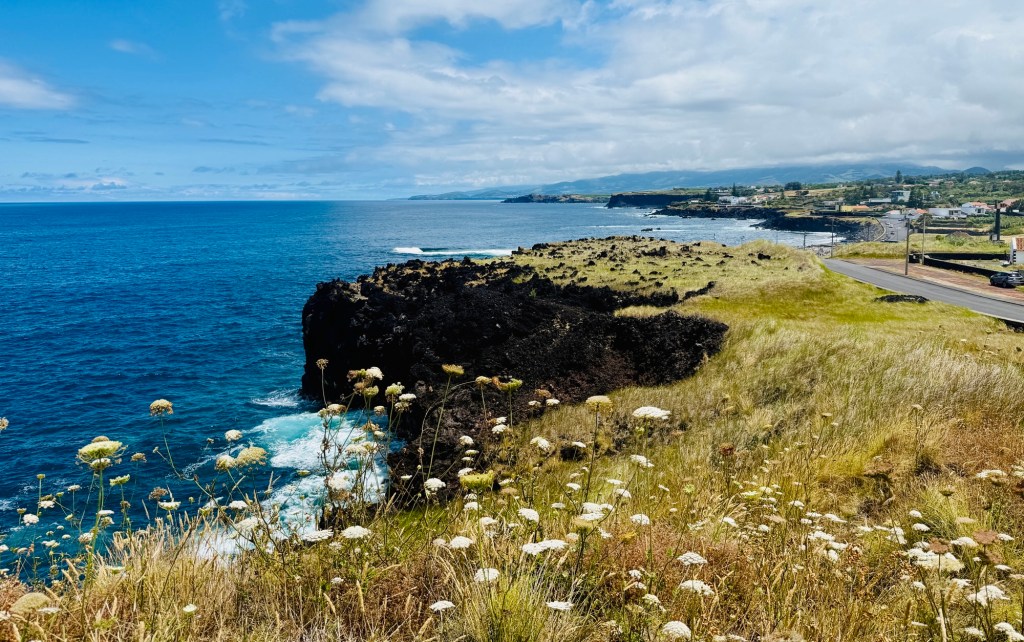
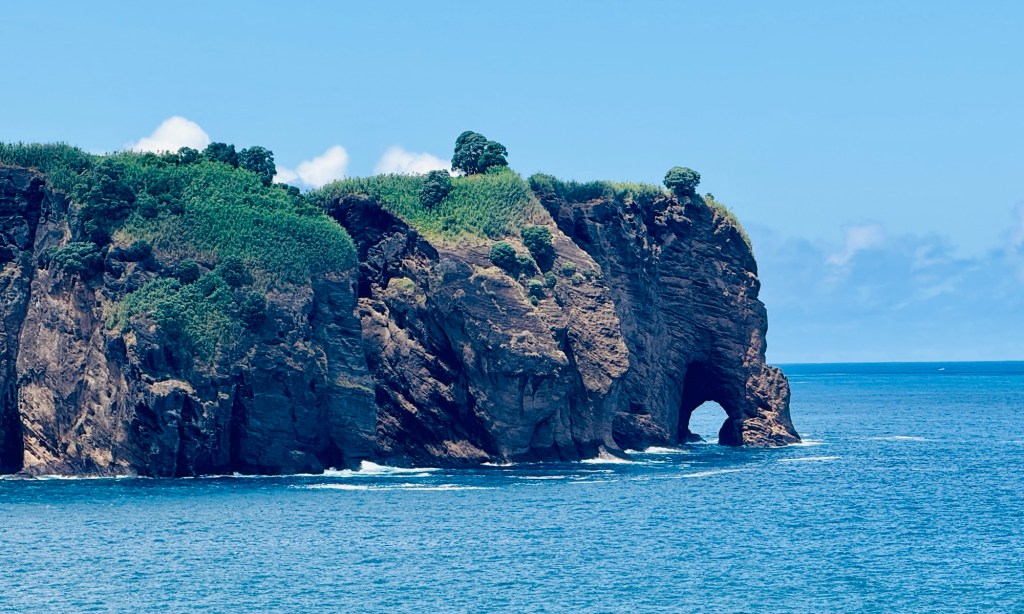
… and stopped at a popular volcanic beach…
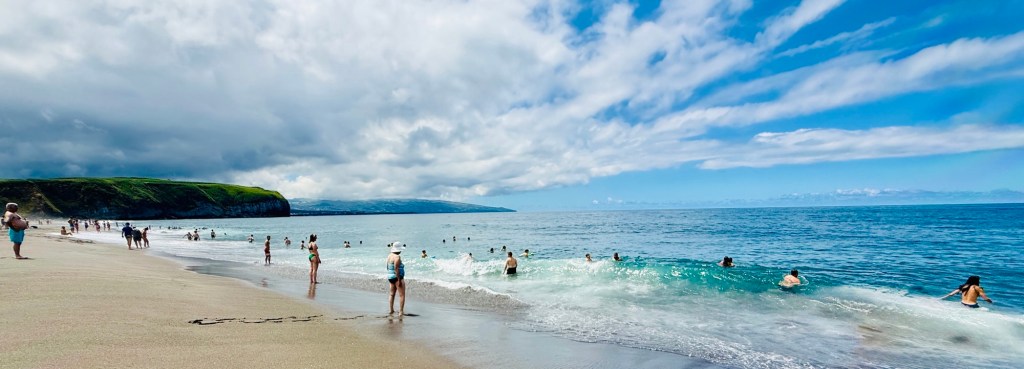
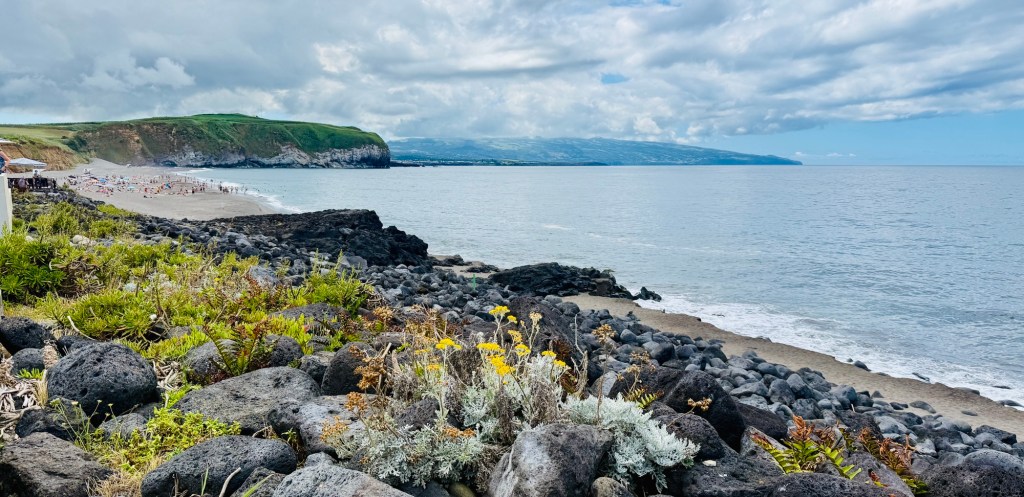
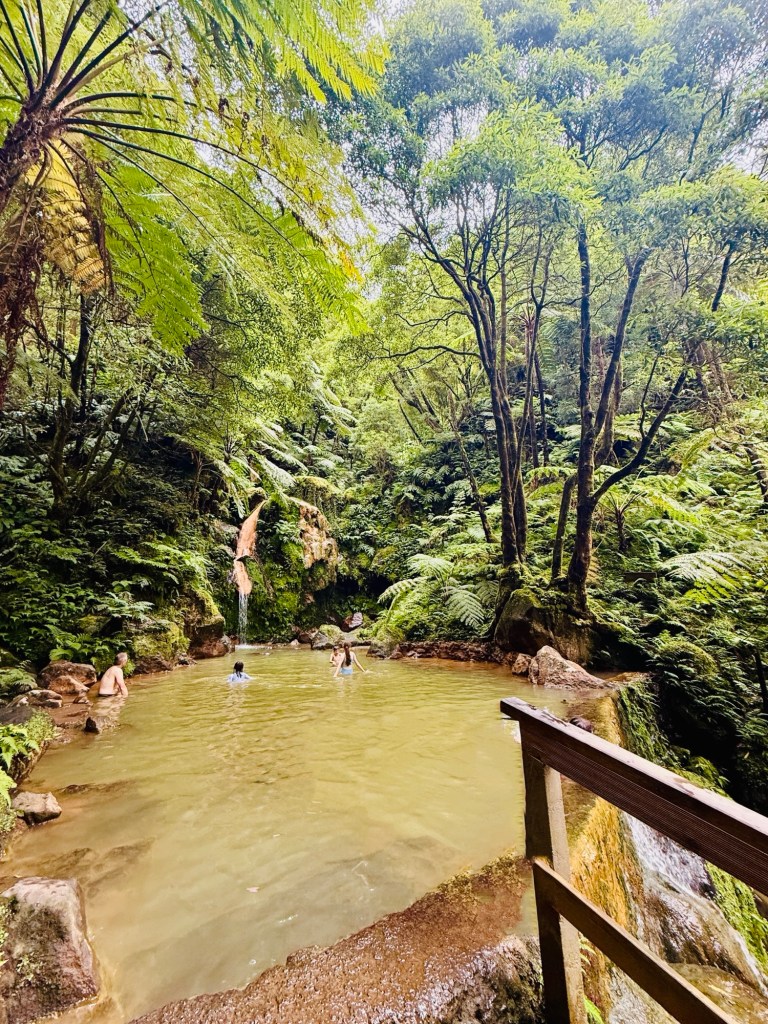
… before heading to Caldeira do Velha- a natural paradise with thermal pools of differing temperatures (between 25-38°)… far more appealing than the Terra Nostra Park we visited a couple of days ago. On the slope of Volcano Água de Pau, which has been inactive since the 16th century, the volcano still emits intense internal energy that heats the waters of the thermal pools in this natural park.

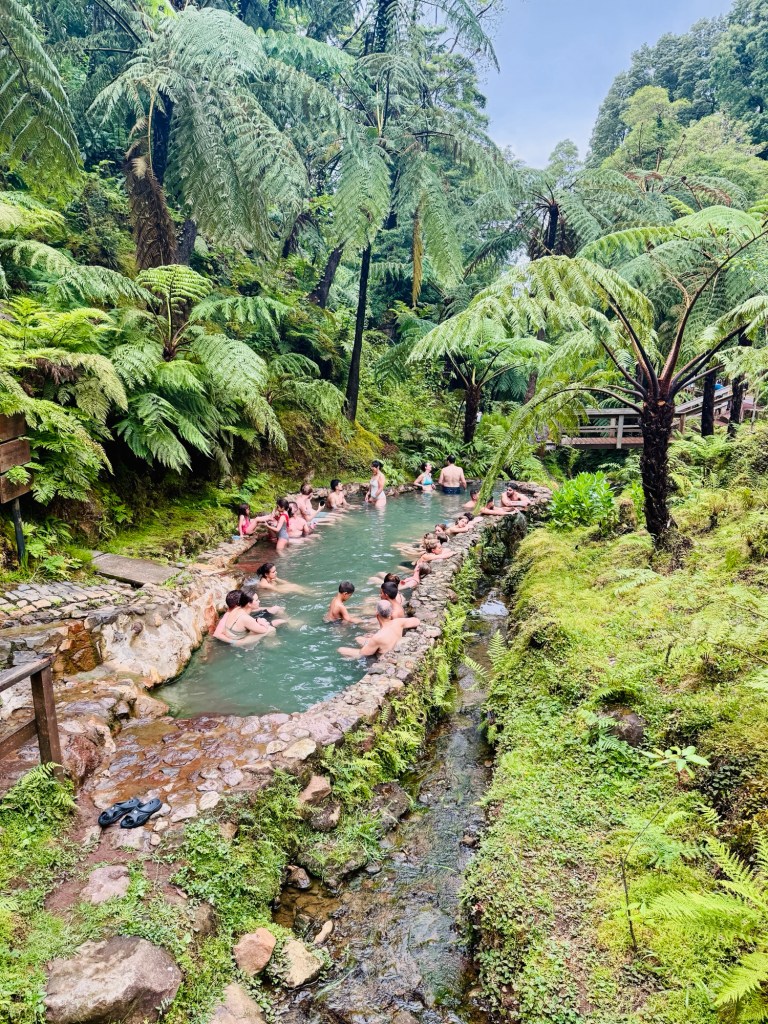
Iron-rich waters, sulfur smell, huge tree ferns and other exotic vegetation and birdsong define this place, which was really beautiful and very inviting. The largest and deepest pool, even has a waterfall that adds an even wilder touch to the environment.
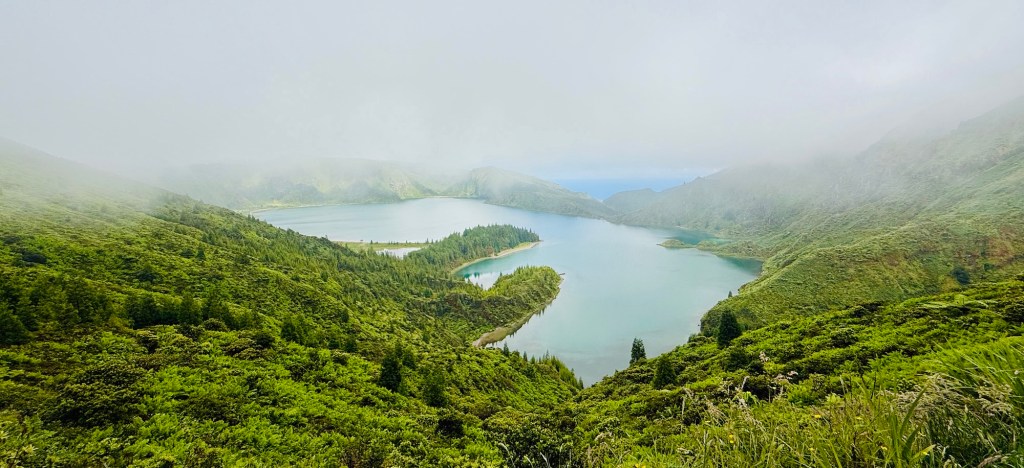
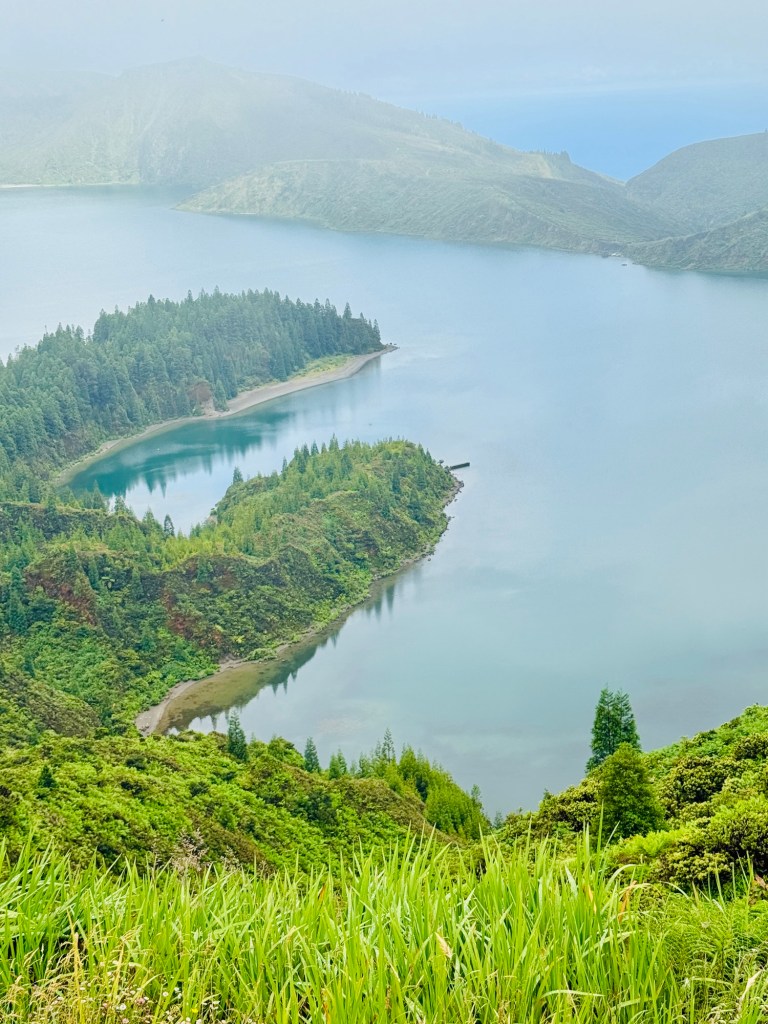
Our final stop for the day was to our guide’s favourite lake… and the highest on the island. Lagoa de Fogo is a beautiful crater lake translated meaning “lake of Fire” and is located in a strato-volcanic complex in the centre of the island. Looking up into the hills, we once again weren’t sure if there would be any view at all as this place, more than any other is often covered by clouds. And it didn’t look promising… but while the clouds did float in and out, we still managed to get a wonderful glimpse of this stunning lake.
And so, we say goodbye to our insanely green hydrangea paradise with its stunning lakes and volcanoes, and fly back to Lisbon late in the evening. We arrive back at the same lovely little boutique hotel we stayed at before flying to the Azores… to a bottle of champagne waiting in our room as they knew it was Anne’s birthday tomorrow. So we sat on our bed, ate in our room and drank champagne while watching Portuguese tv… the first time we had put it on since our arrival 6 weeks ago.
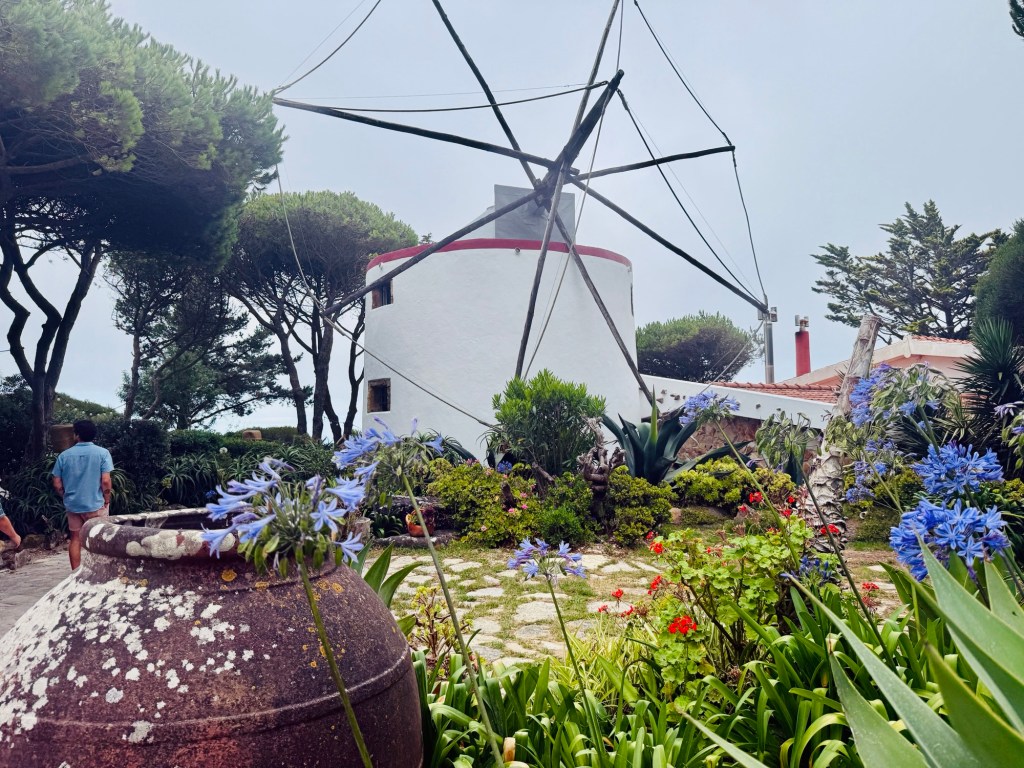
The next day we had planned to celebrate Anne’s birthday at a lovely little rustic restaurant I had found on social media… in the middle of nowhere, with a fantastic view over the Atlantic Ocean. We hopped in a Bolt and then spent several relaxing hours in a very bohemian place built around an old moinho (mill) with several terraces outside where you can enjoy the views in an extremely welcoming atmosphere… eating delicious food and drinking wine.
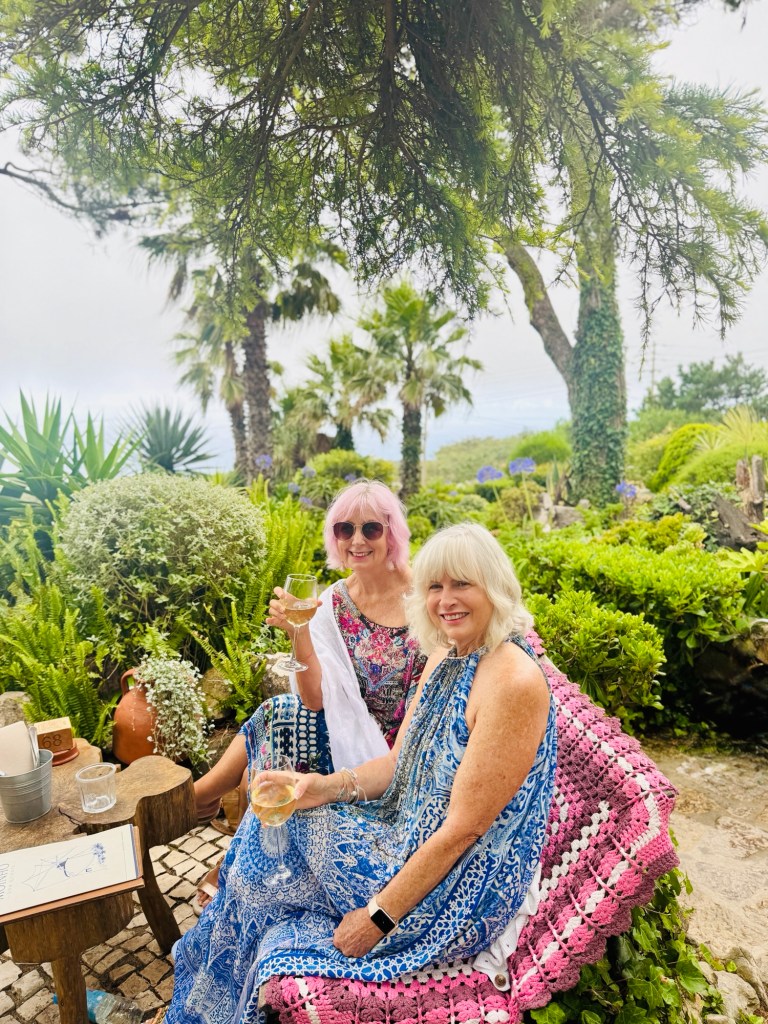
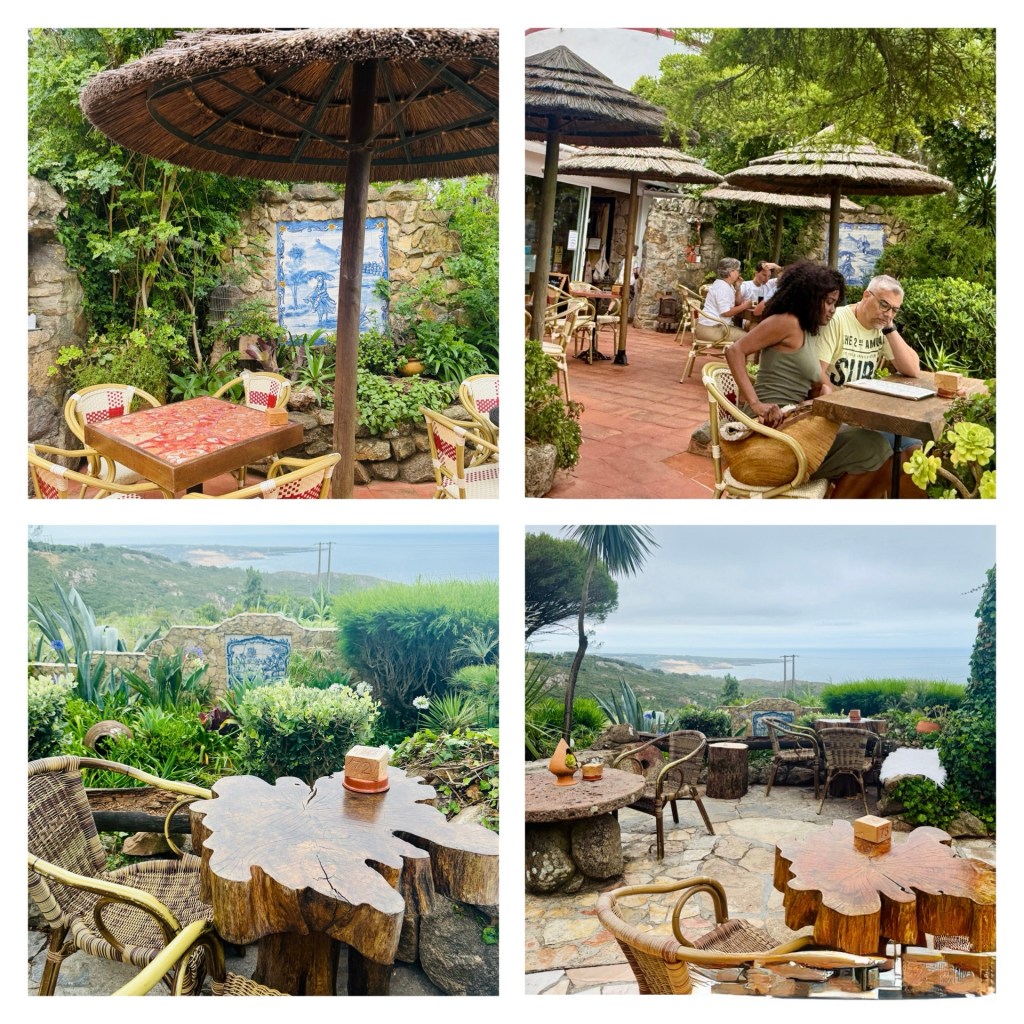
And so, after 7 weeks, it is time to head home to real life… and as much as I love to travel, that’s always a comforting thing. Of course, I’m already planning my next trip… a part of which scares me a little as it will test this ageing but capable body once again. But I was a little anxious about how I’d go on the Camino walking 300 kilometres and it turned out to be wonderful… so I have to believe the next adventure will be too. You only get one opportunity at life to take chances and have adventures, and to make all those wonderful memories. And I think if you do something scary today you get more inspired to try more things in life… but if you do nothing today, tomorrow will be exactly the same.
So my hope and prayer is that we all be ever more entangled… aware of the breadth of life… and amazed by the wonders… all around us. Love life! Embrace aging. It’s not age that is to be feared: it’s losing your appetite for wonder and joy. And we do live in such a wonderful world…
Here’s to the next journey, whatever it may be!
-
Hydrangea Heaven
“I must have flowers, always, and always.” ~ Claude Monet
Of everywhere we planned to visit on this journey, this was the place I’d been waiting for… a dream come true. One of those places I’d seen pictures of in social media but thought I’d never see in real life. An exotic place… no one I know has been here… and I love the road a little less travelled. The Azores… a perfect way to end this wonderful adventure.
The Azores is a stunning off-the-beaten-path destination- sometimes dubbed “Iceland without the ice”. Now I haven’t actually been to Iceland (it is on the list though) so I can’t really comment, but I think maybe it is unlike anywhere else in the world. A collection of nine islands in the Mid-Atlantic Ocean, and we are staying on the largest island Sao Miguel. Its not a typical sun-and-sand vacation island like the Maldives… due to the climate (unlike Portugal proper that has around 300 sunny days a year, the Azores has more like 300 rainy days a year) and there are relatively few beaches anyway. But this insanely green island’s allure lies in its volcanic geography, with epic viewpoints, volcanic craters, lakes, natural thermal pools, meandering coastal roads, traditional fishing towns, whale watching, fresh seafood… and its lack of mass tourism. Sounds like paradise. And of course, there are hiking trails. Haven’t I done enough hiking, you ask? Never enough! And I’m definitely drawn to the wild spaces… so I think there will be hiking.
This unspoiled island is also filled with an extraordinary show of wild hydrangea blooms, adding to its already picturesque natural landscapes. And anyone who knows me knows that I am an Anthophile… a person who deeply loves flowers. Especially if there’s masses of them… and we were, in theory here for the peak season. These flowers are a very big part of my reason for choosing this place.
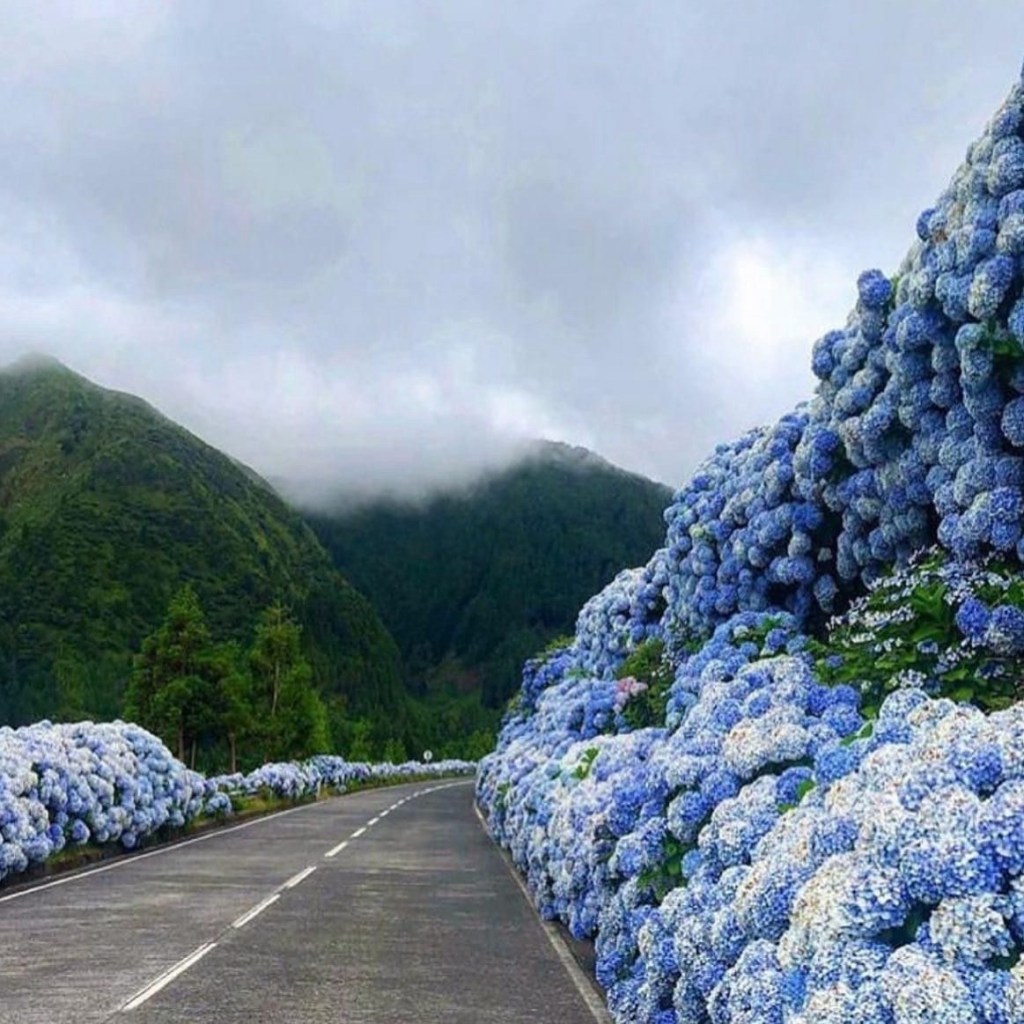
Not my photo- but shows the prolific hydrangea bloom at its peak on the island… and what I was expecting to see everywhere So you can imagine my disappointment when I asked the tour guide about the hydrangeas as we began our day, and she said they weren’t really blooming because there had been no summer yet. As we had found throughout this trip, besides a few really hot days, the weather has been very cool (yep- that means we’ve had all the wrong clothes 🤷🏼♀️).
We hit the road towards the eastern half of the island and stopped at a beautiful organic tea plantation.
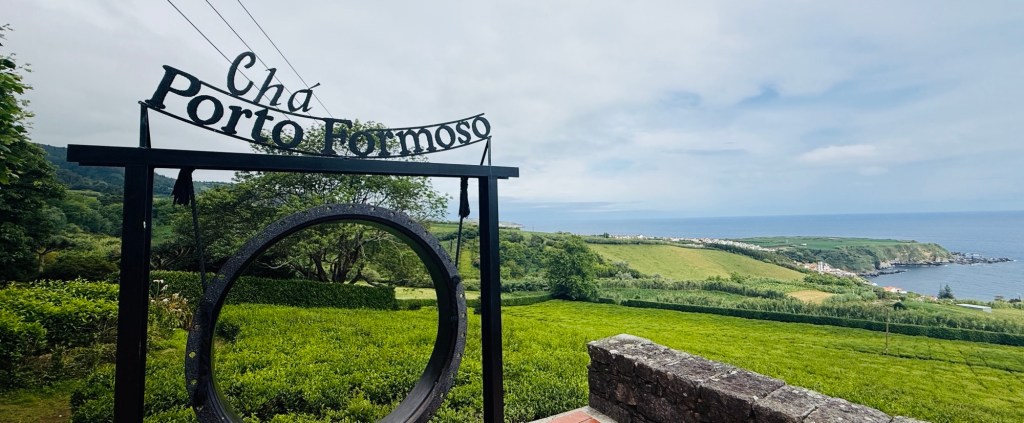
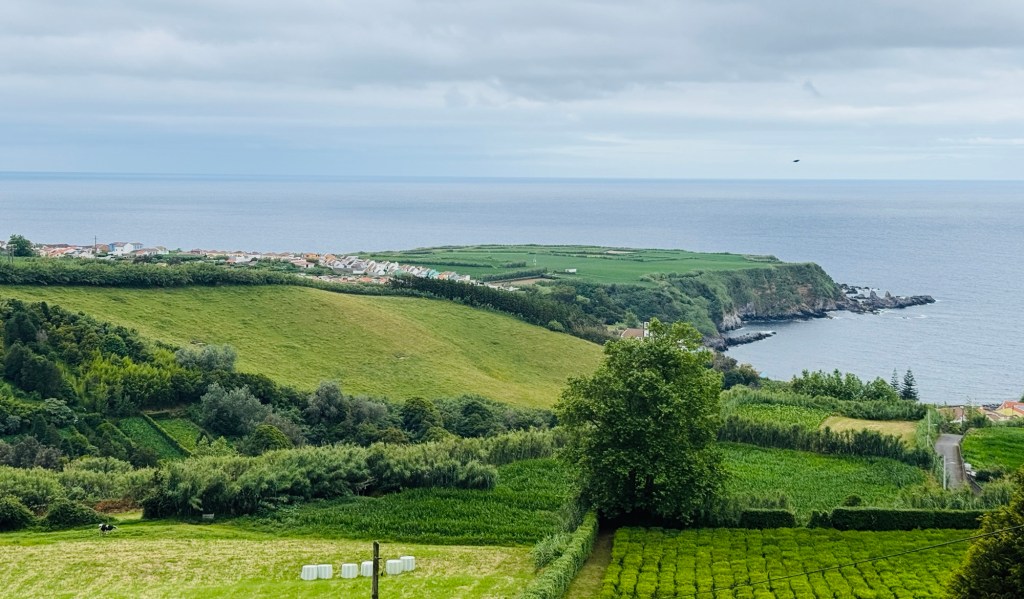
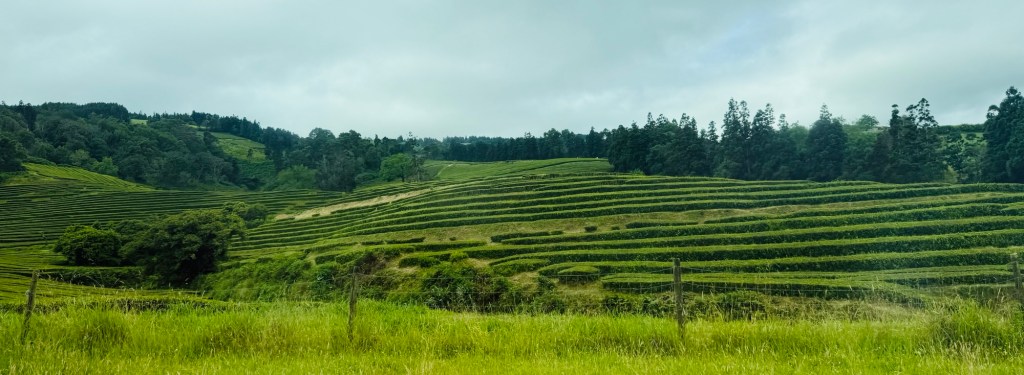
The Azores have the only tea plantations in Europe and I took a leisurely stroll through their fields and enjoyed their panoramic views and we had a cup of one of their teas. I also discovered that when our tour guide had said that the hydrangeas were not blooming… that was a very relative statement.
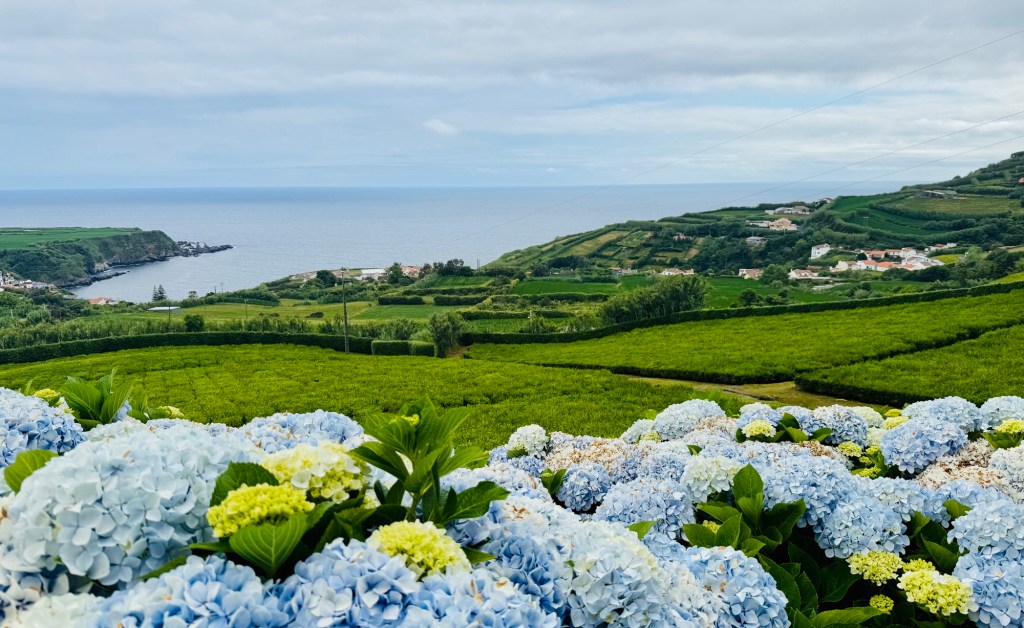
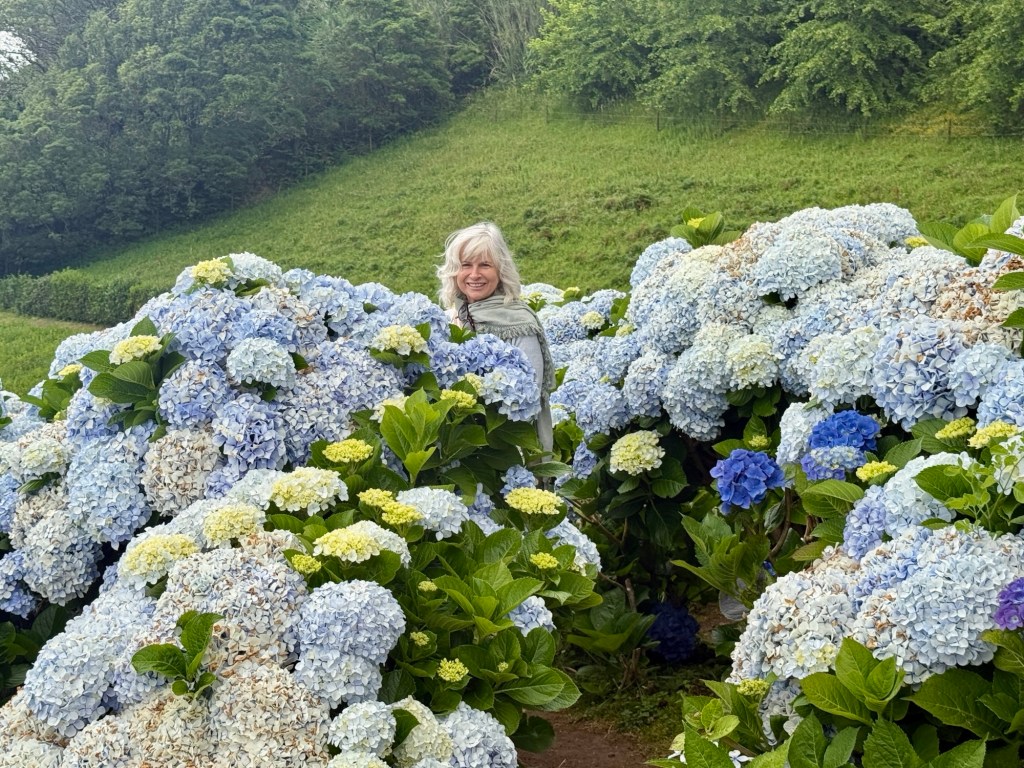
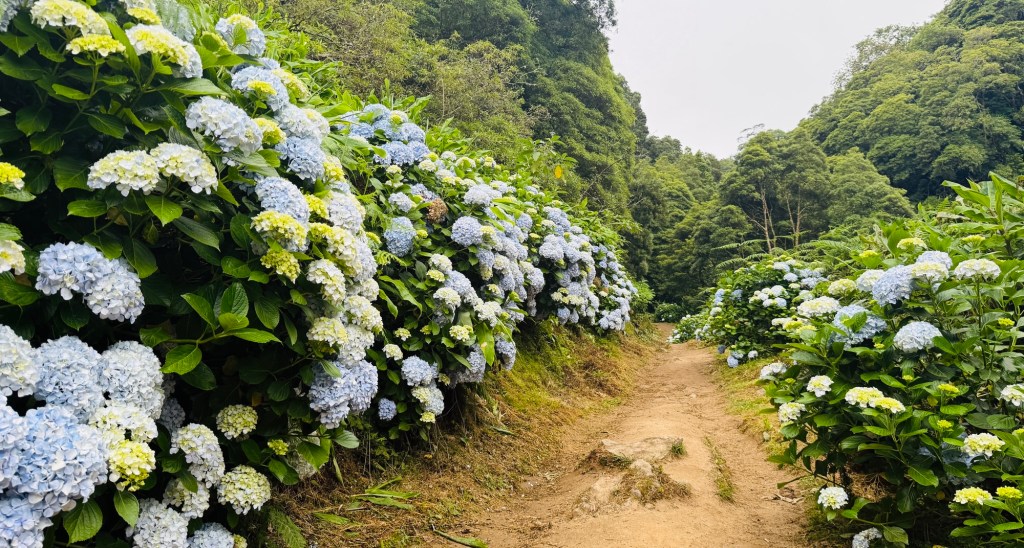
On my reckoning, they were everywhere… lining the roads and even used as hedging between properties and paddocks… just not in full bloom… and I was still pretty much in seventh heaven for much of the day.

We headed to Ribeira dos Caldeirões Natural Park… renowned for its gorgeous waterfall… and yes… it was surrounded by hydrangeas.
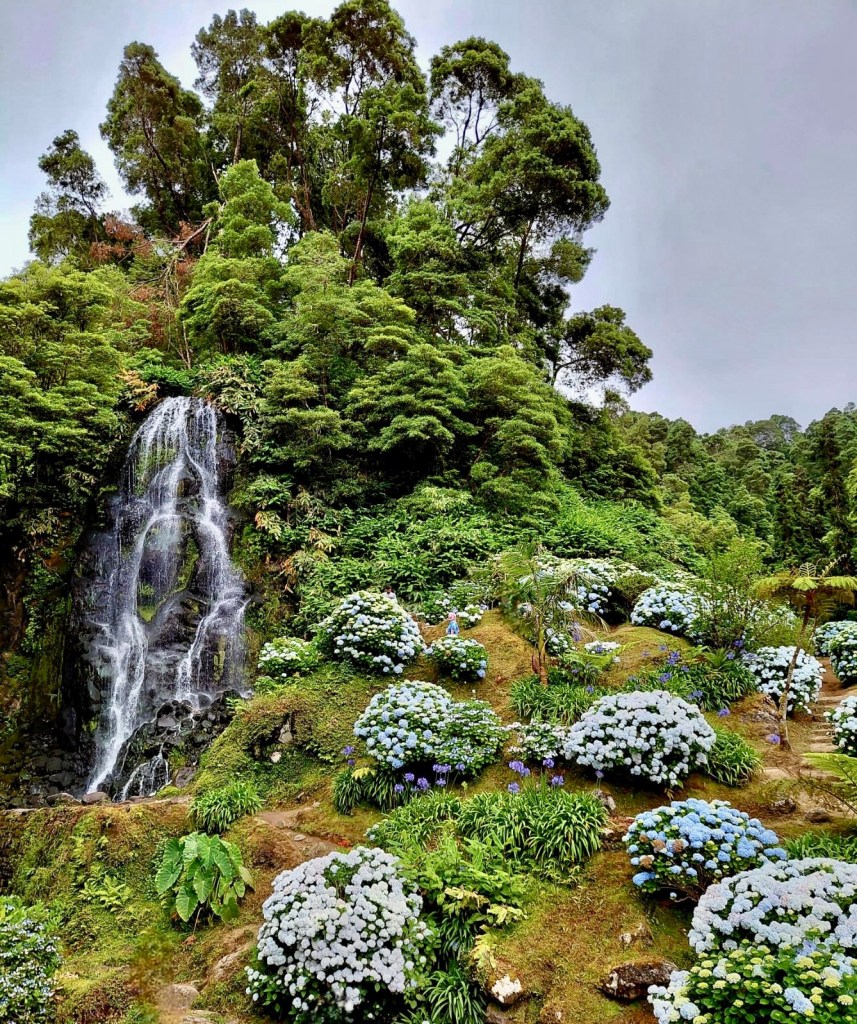

There was a model or influencer draped all over the rocks for a while and I am thankful for the new ‘clean-up’ function on my iPhone that can remove annoying people from my pictures. Technology is amazing!

I went for a quick wander among the stunningly beautiful lush vegetation in all shades of green… huge trees… all kinds of ferns including large tree ferns, and big bushes of hydrangeas… and endangered birds. It felt like a rainforest and I would have loved more time to wander more but there was so much to be packed into today that we had to move on.
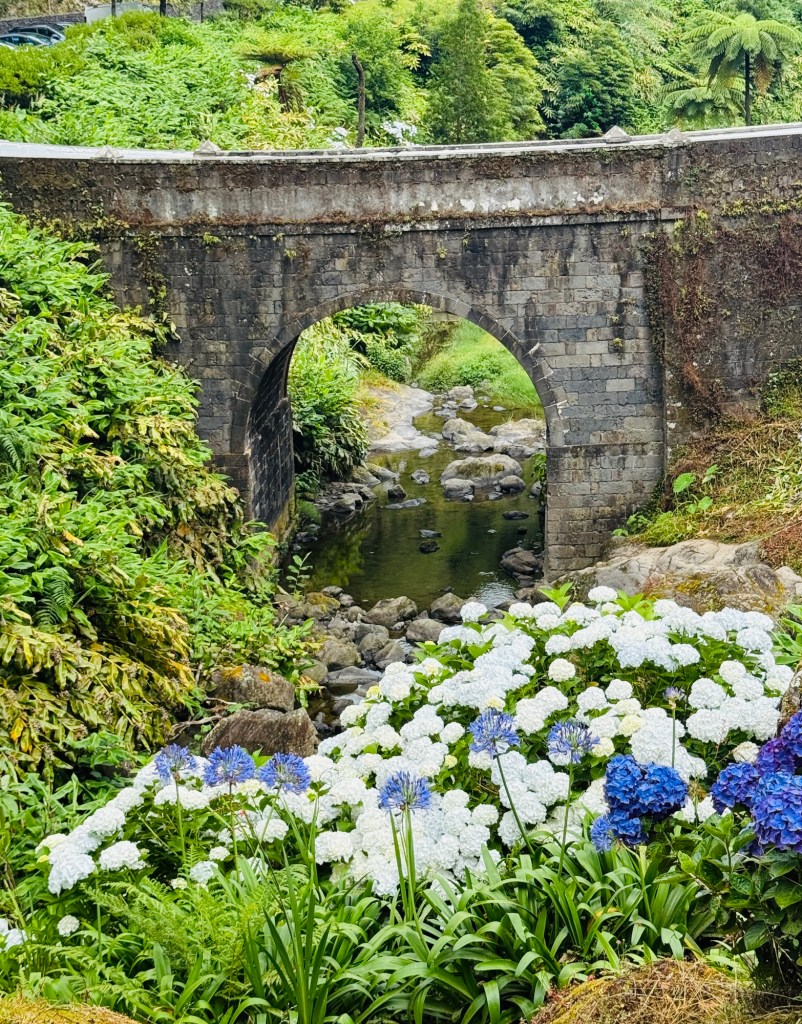
There was also a beautiful garden with five 16th-century watermills and more waterfalls.
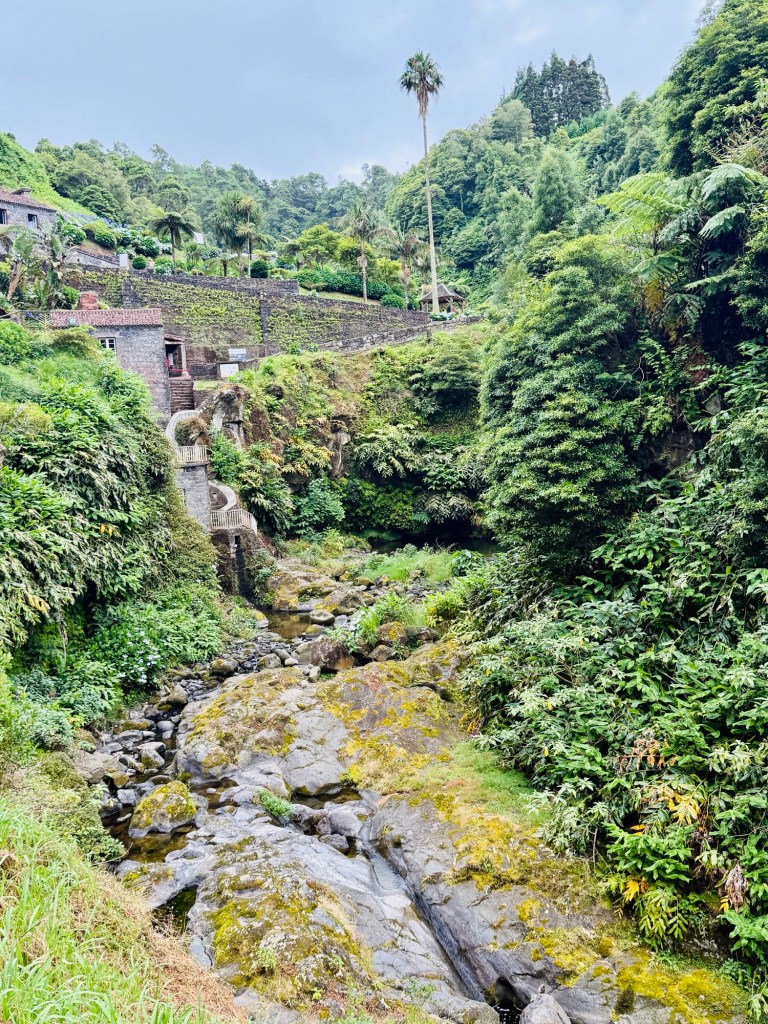
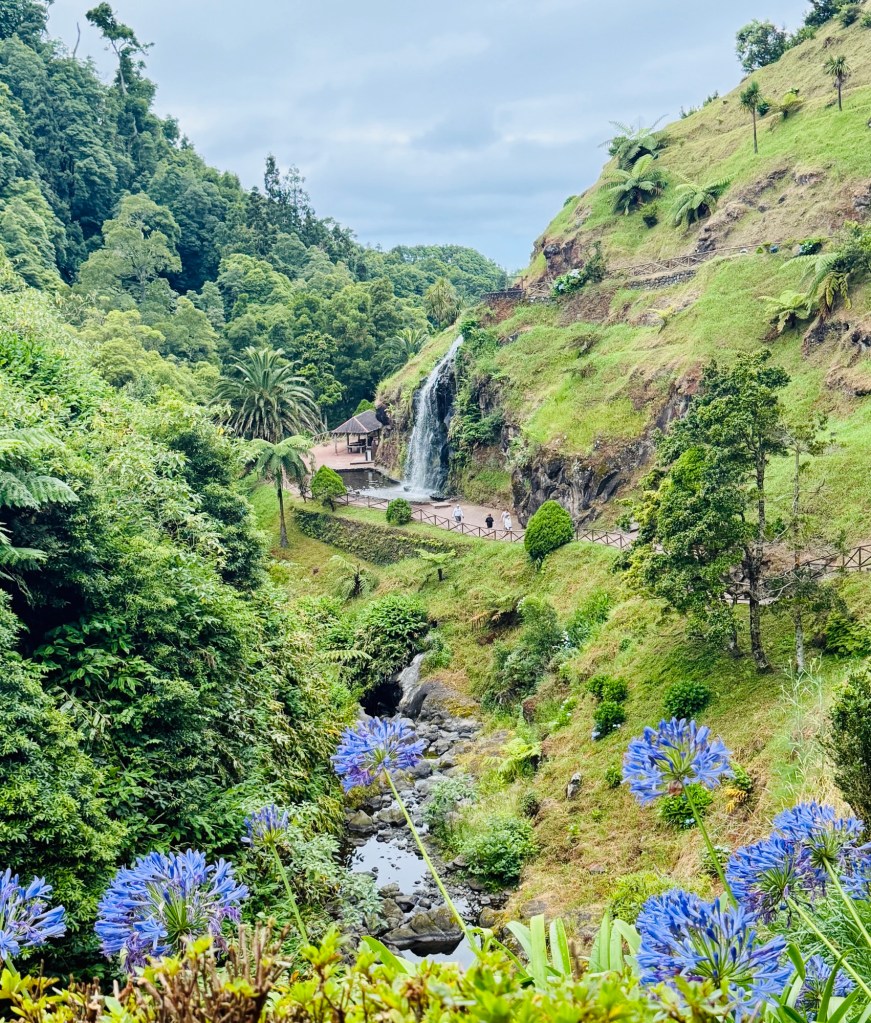
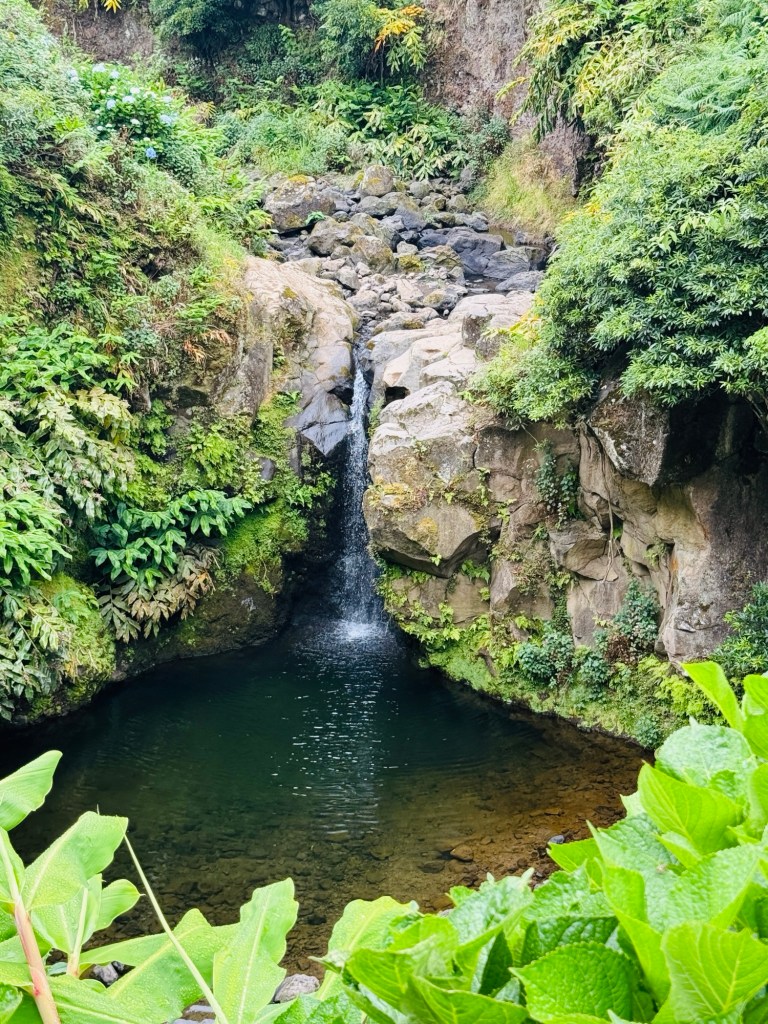
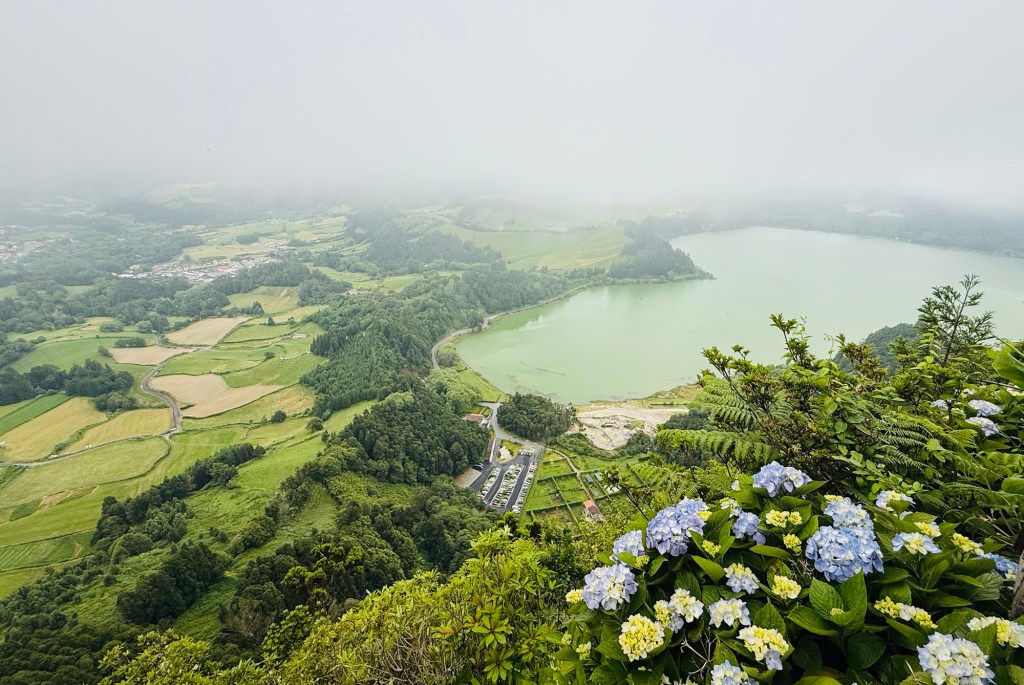
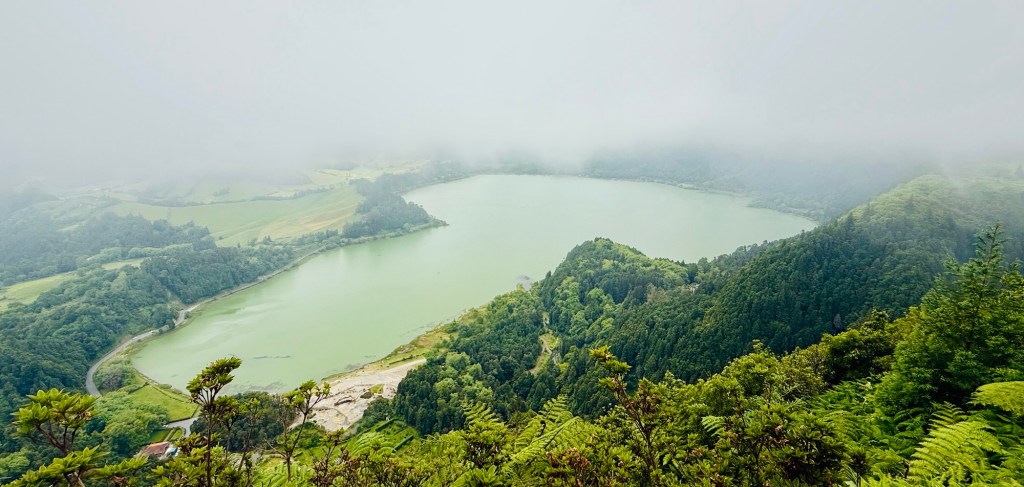
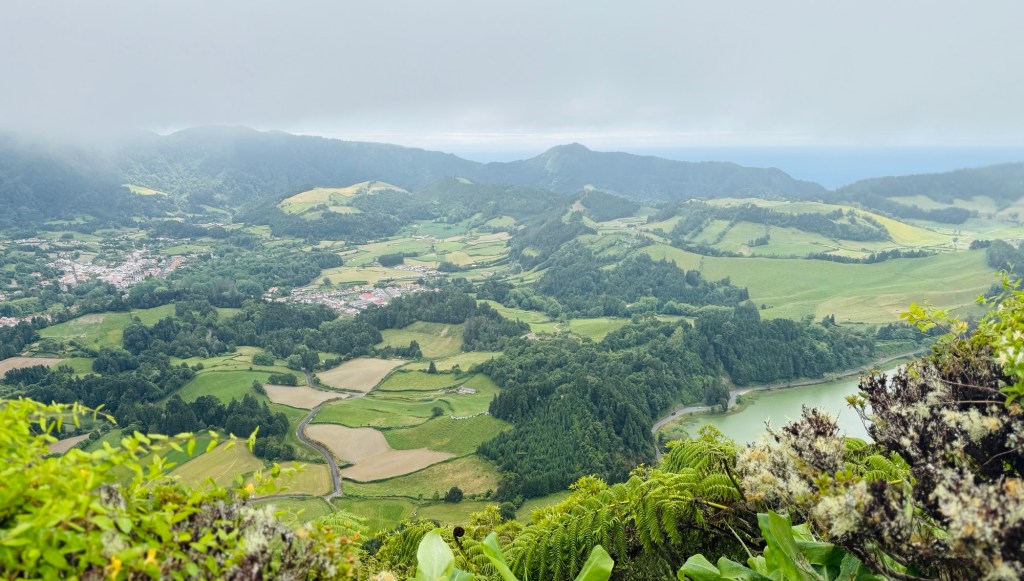
We headed towards the Furnas valley to experience its dramatic volcanic landscape and stopped at the stunning Miradouro Pico do Ferro for a panoramic view of the valley. The Furnas volcano is an active but dormant stratovolcano and encompasses a volcanic lake, Lagos das Furnas, surrounded by the steep peaks of the ancient mountains and its lush green rim. In fact the whole town is inside the volcano. Our guide was not sure if we would be able to see anything due to the iffy weather and while it certainly was not completely clear, we did have incredible views of the crater lake.
And then it was lunchtime and we enjoyed Furnas stew or Cozido, which is a traditional Azorean stew that has been cooked on the island for hundreds of years, in the volcanic soil of Furnas. The ingredients are placed in a pot and cooked underground using geothermal heat. The stew included all different meats and vegetables and was very tender and quite delicious.
As already mentioned, the village of Furnas is located within the caldera… and although the Furnas volcano last erupted in 1630, you can feel, see, and smell the geothermal activity all around you in the form of steaming fumaroles, thermal pools, and natural mineral springs around every corner.
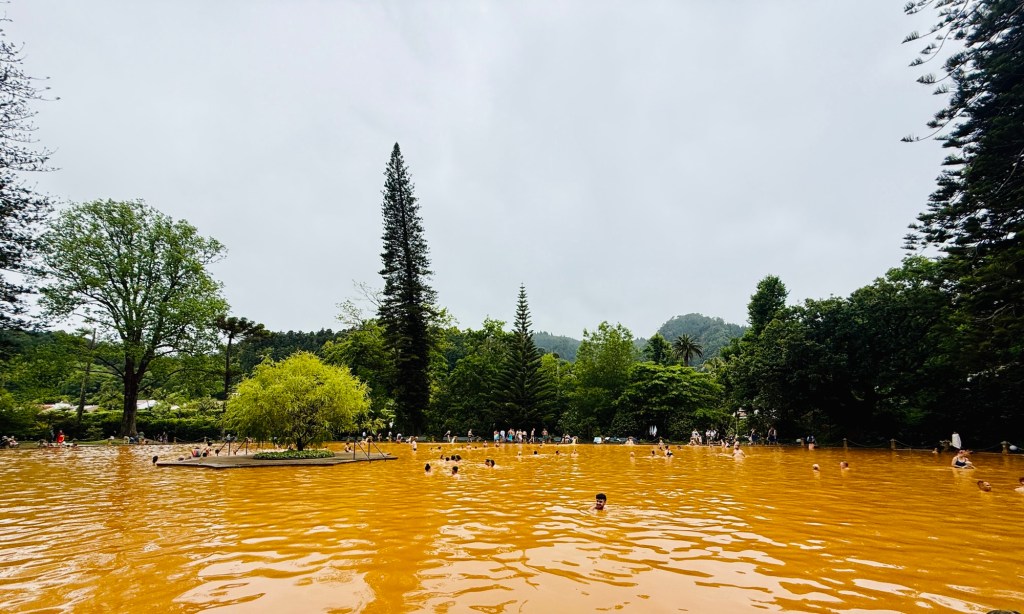
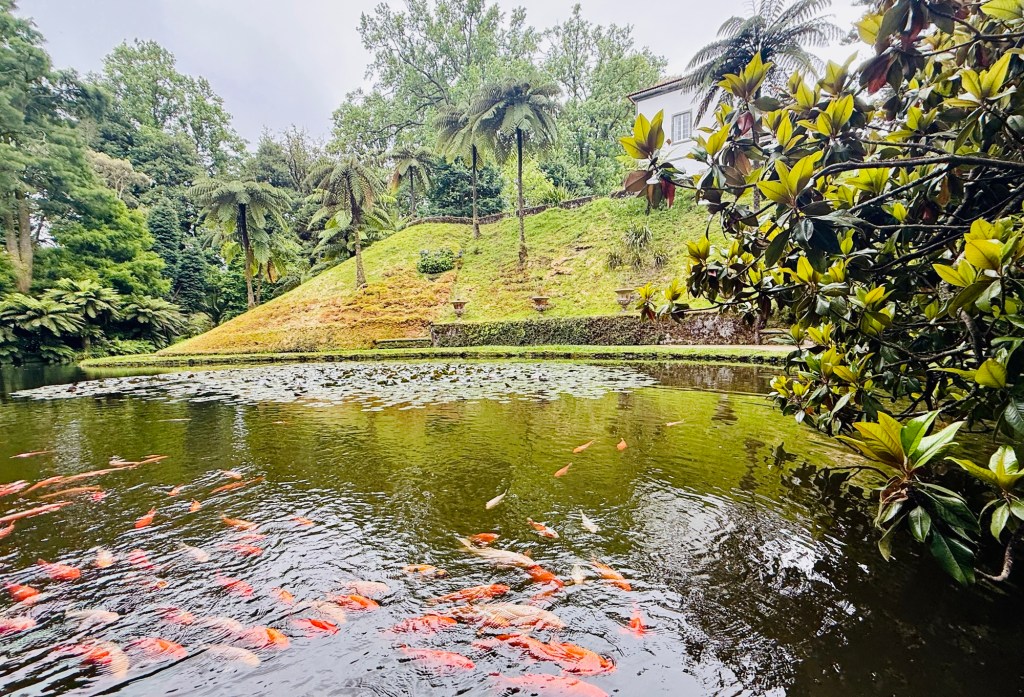
And our next stop was to one of its thermal springs for which the town is well known. People come for thermal baths and to drink the many different kinds of mineral waters, each with different chemical compositions and tastes and a warm, iron rich stream runs through the town. Volcanic mud is also used for relaxing therapies but we had only time for a relaxing soak in the warm but kind of yucky-brown water of the gorgeous Terra Nostra Park.
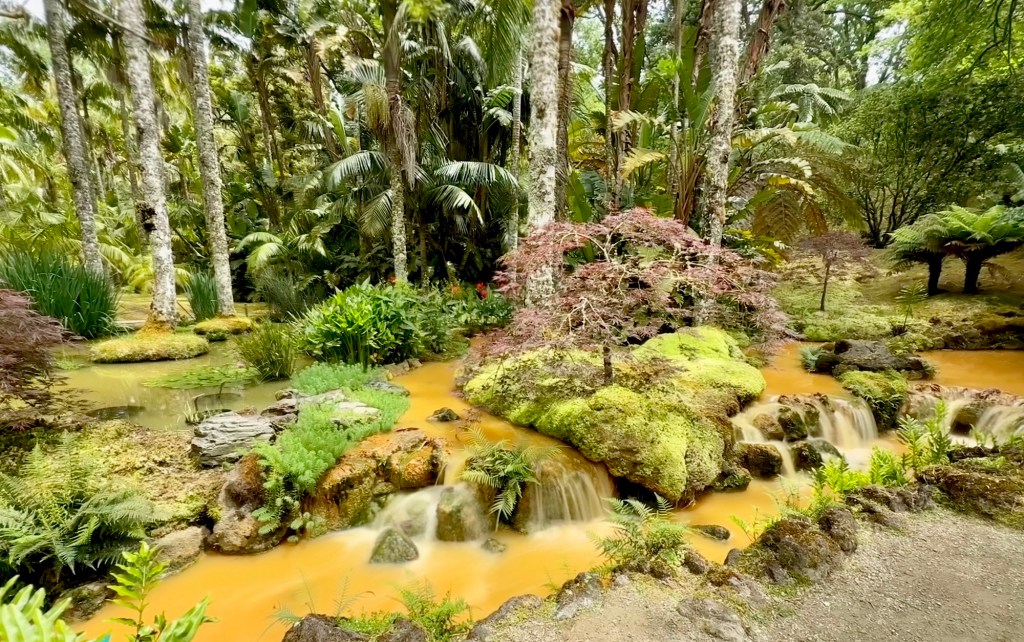
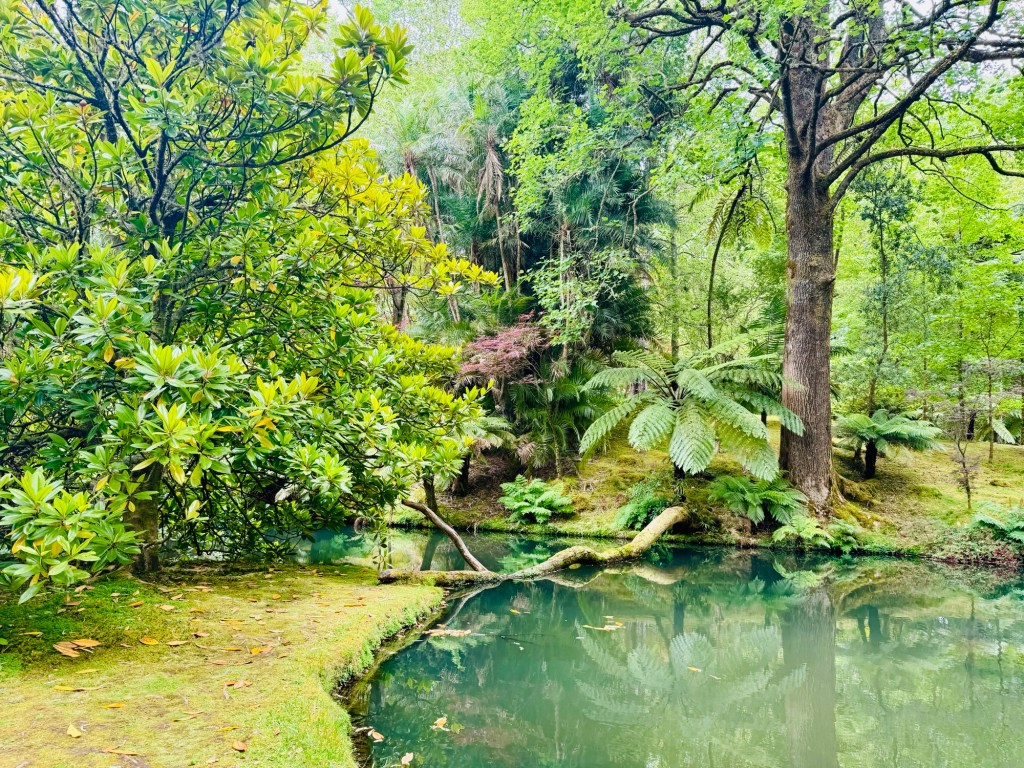
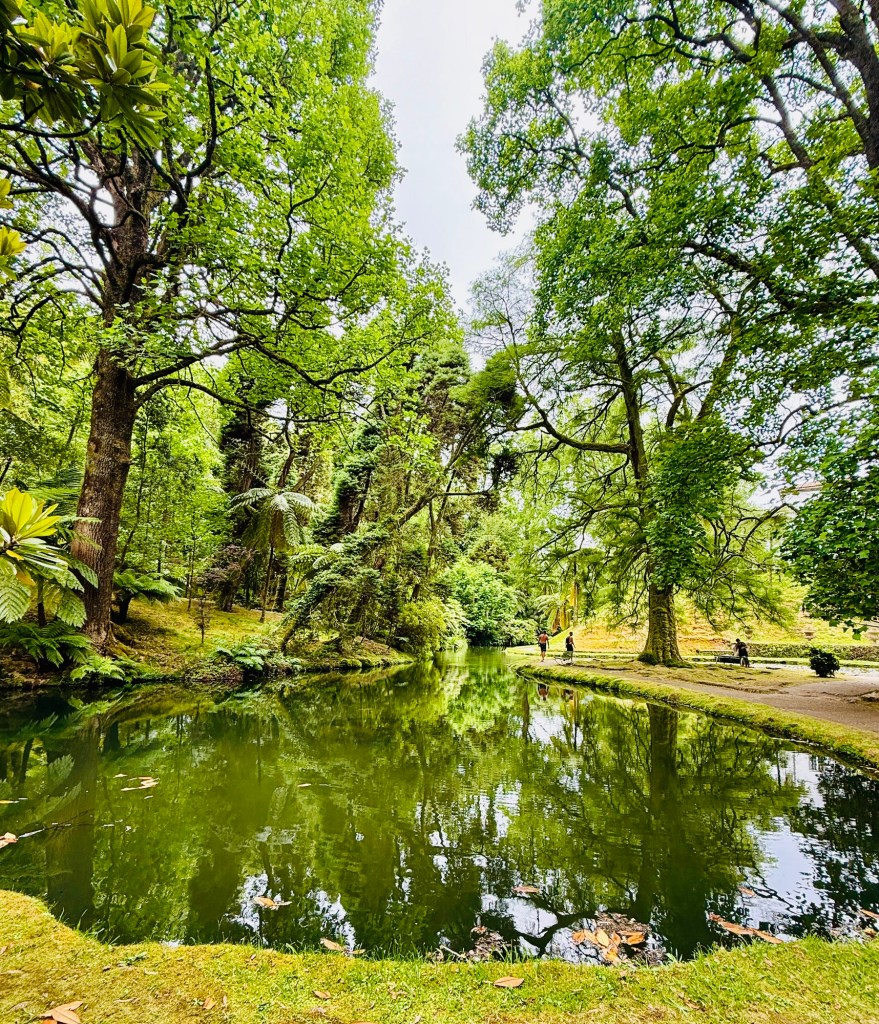
As the center of São Miguel’s unique geothermal activity, we visited two active volcanic sites to see the fumarole fields, thermal and mineral waters, and boiling caldeiras in action.
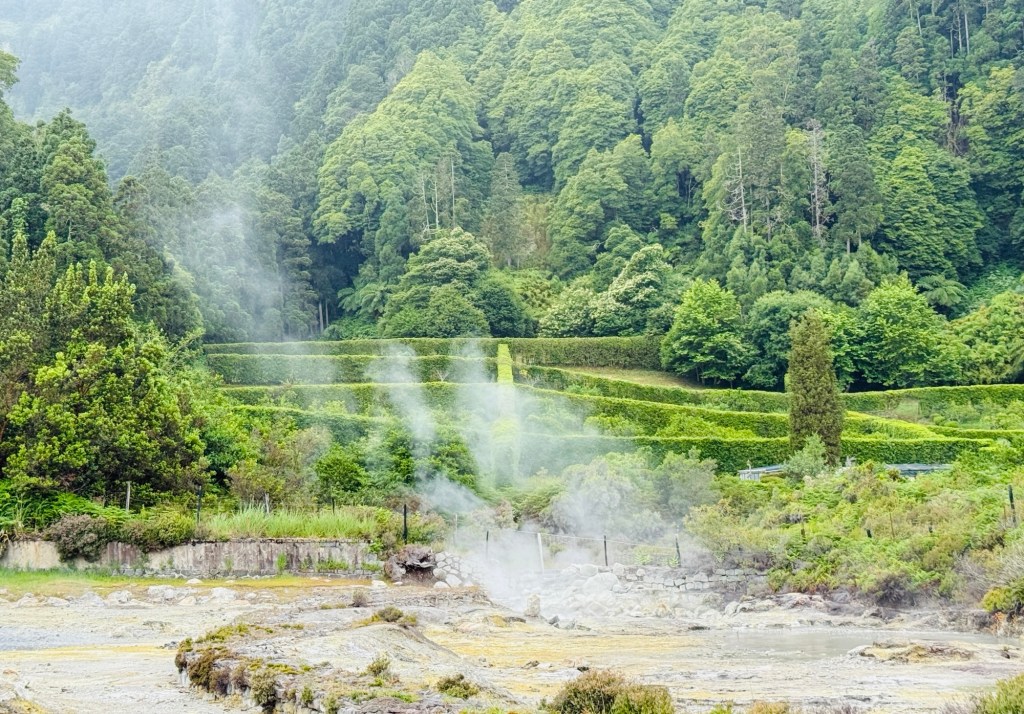
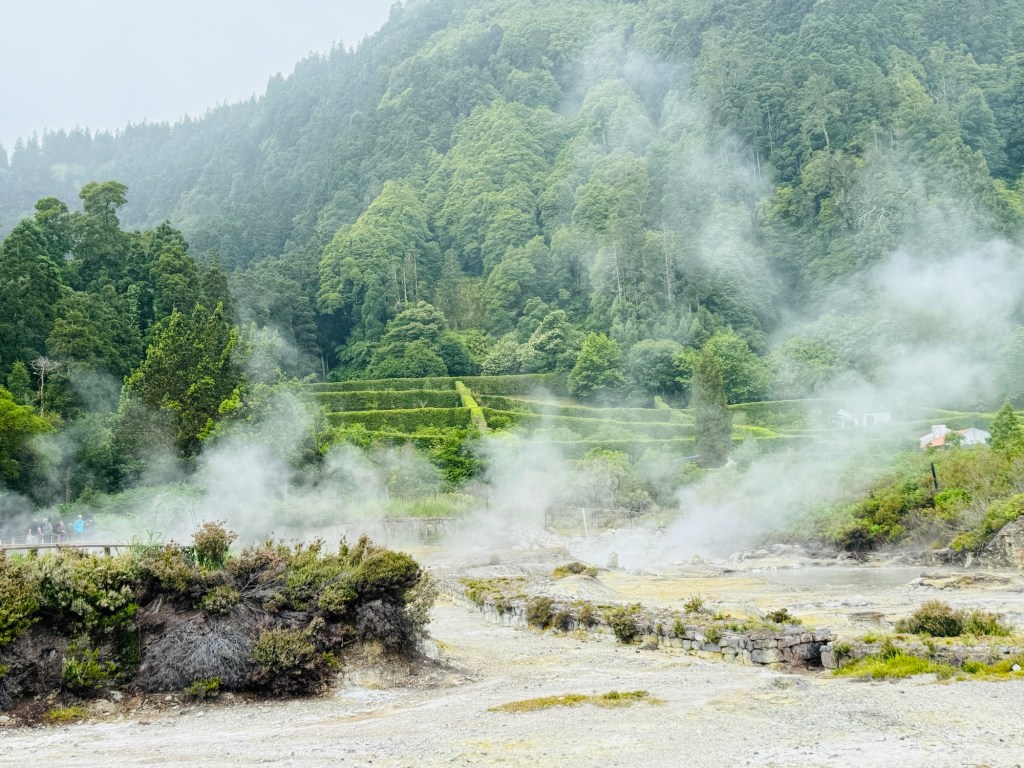
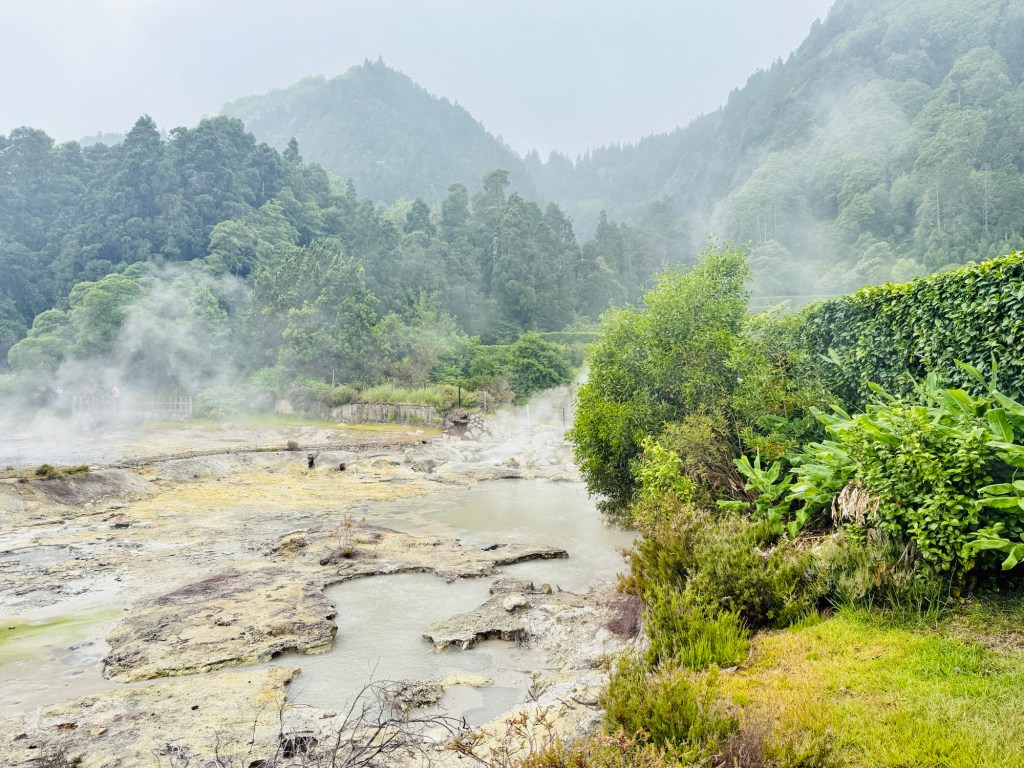
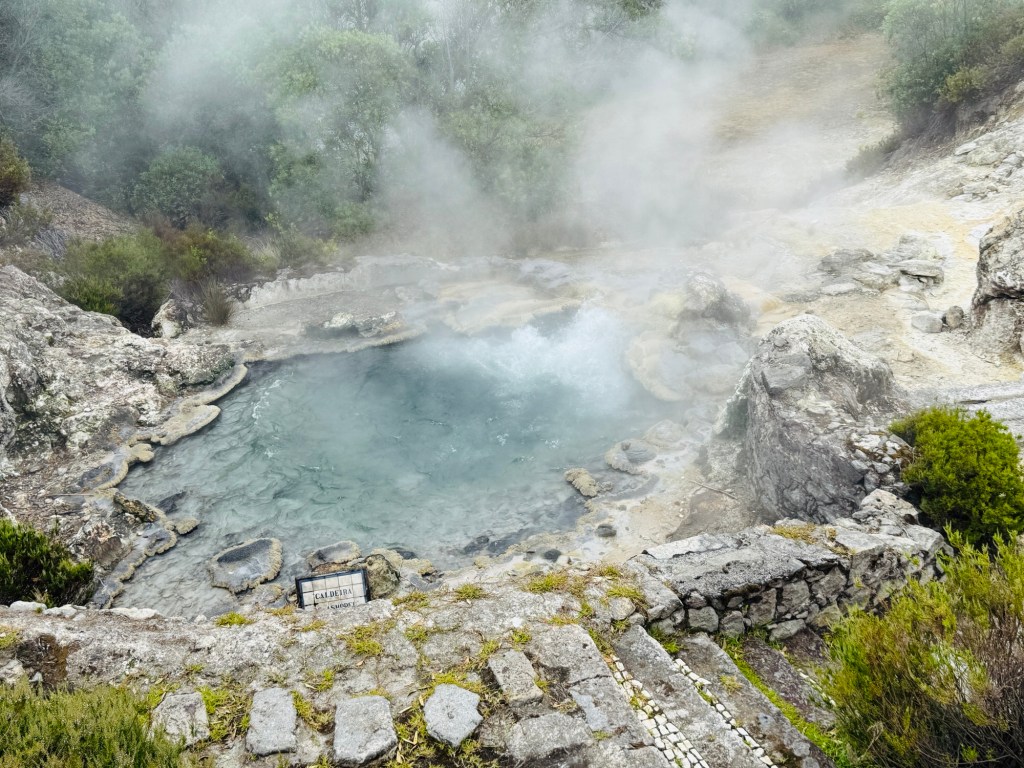
It’s really kind of strange to see the water coming directly from the ground boiling so vigorously and apparently there have even been deaths from people falling into the water.
Our last stop was to vila Franca do Campo to see the little island paradise off its coast that it is well known for. You used to be able to go to the island, climb its hills and swim in its perfectly round shaped natural pool, but it is now a protected area due to its high levels of biodiversity. They still do little boat tours out there but you can’t get off the boat so I didn’t think that would really be worthwhile.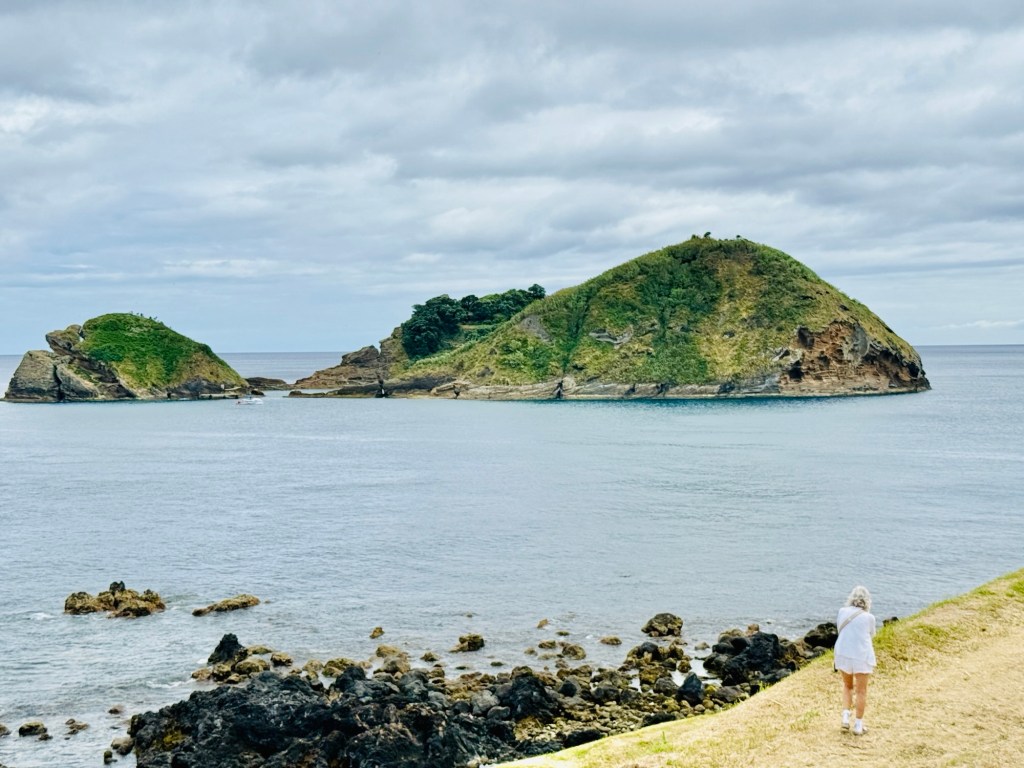
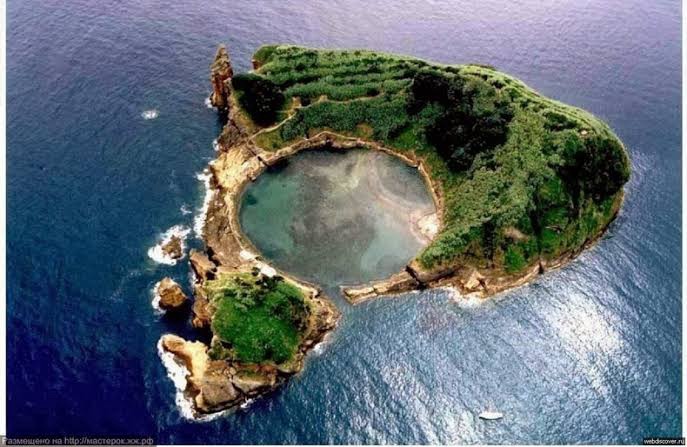
Photo care of Google- what the cute little island looks like from above. Big but fantastic day with so many stops and oh, so much beauty… we came home and didn’t even venture out again for dinner.
-
“We, the bones that are here, for yours wait.”
Much of a day on a bus and we are briefly back in Lisbon, staying in an area not far from Alfama where we were a few weeks back, but very different. We appreciate that there appears to be no stairs or hills although we haven’t ventured far. The one similarity is the beautiful azulejo tiles that once again surround us… and the loud music and noise that went well into the night.
I had heard about a stunning medieval city… which was also a UNESCO site, and a bit of a hidden treasure in the heart of the rural Alentejo region… so I thought it sounded like my kind of place. Hopped on a train and travelled through countryside very different from what we have experienced in the last few weeks. It is hot and dry and due to its position, this area is one of Portugal’s hottest places. The landscape is full of olive groves, wide-open plains, and traditional stone villages. Although there were still plenty of vineyards as the Alentejo region is famous for its rustic wineries and delicious wine.
I love the feeling of history that hangs over so many beautiful towns in Europe… we just don’t have that back home… and Évora is one of those places. It has over 2000 years of history that goes back as far as the Romans and includes Moorish and Portuguese heritage… and it is one of Portugal’s most beautifully preserved medieval towns. Inside the 14th-century walls it has all the quintessential beauty…
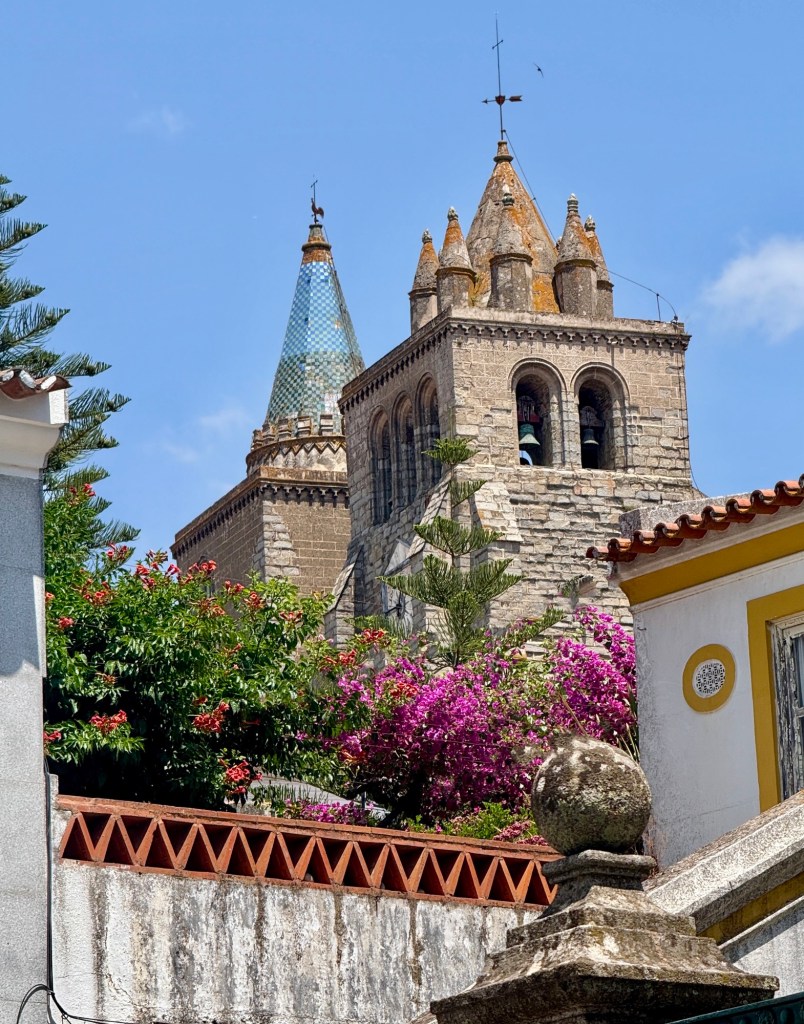
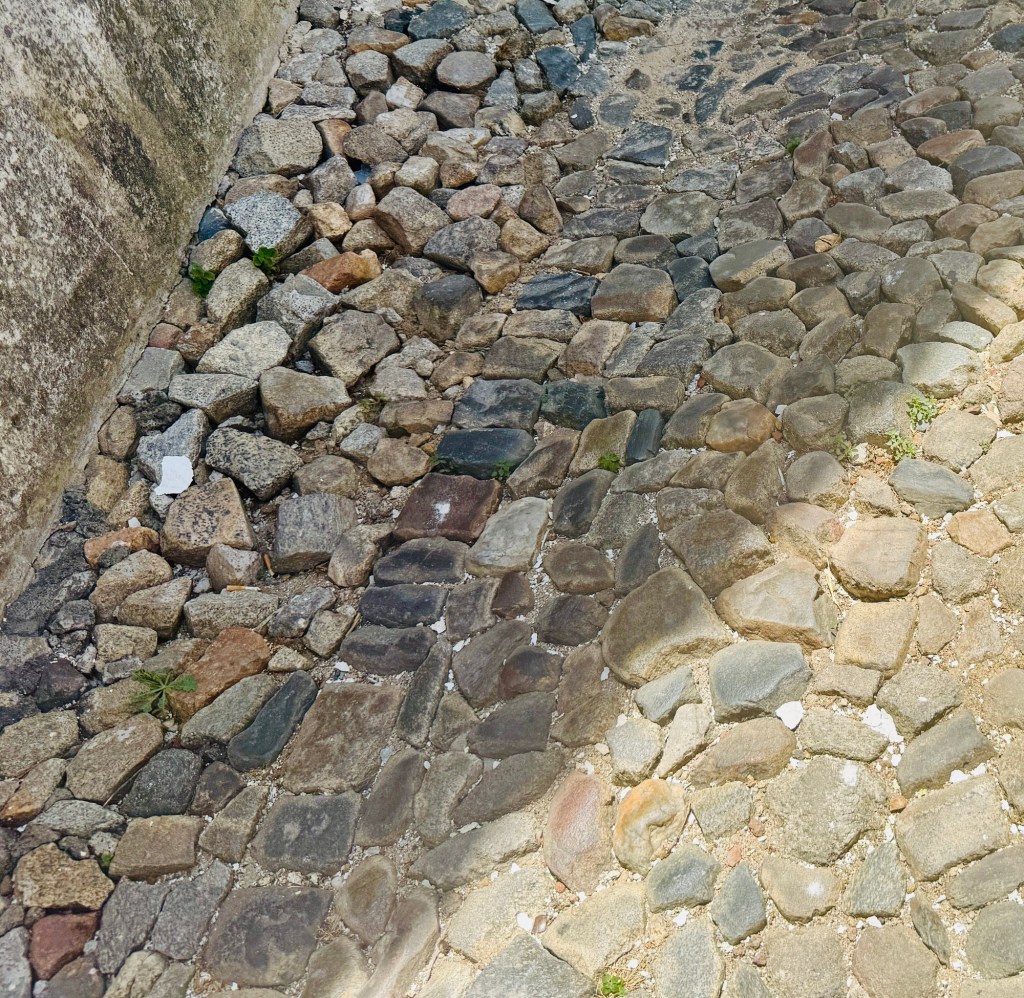
… narrow, winding lanes leading to striking monuments, including an elaborate medieval cathedral and cloisters… Roman ruins… whitewash houses… historic sights… the azulejo tiles and the balconies and a picturesque town square that was apparently once the site of some rather gruesome episodes courtesy of the Inquisition. And of course cobbles. And not just any cobbles. I once said, “the worse the cobbles, the better the town”… well these were real cobbly cobbles. No nicely cut squares or flat slate or marble… but all stones of very different shapes and sizes… very difficult to walk on. But what an enchanting place.
I came across the Roman temple of Diana by accident … you sort of can’t miss it right next to the cathedral, where I was headed. And I wandered over to the Jardim Diana just opposite with a great view out over the rooftops.
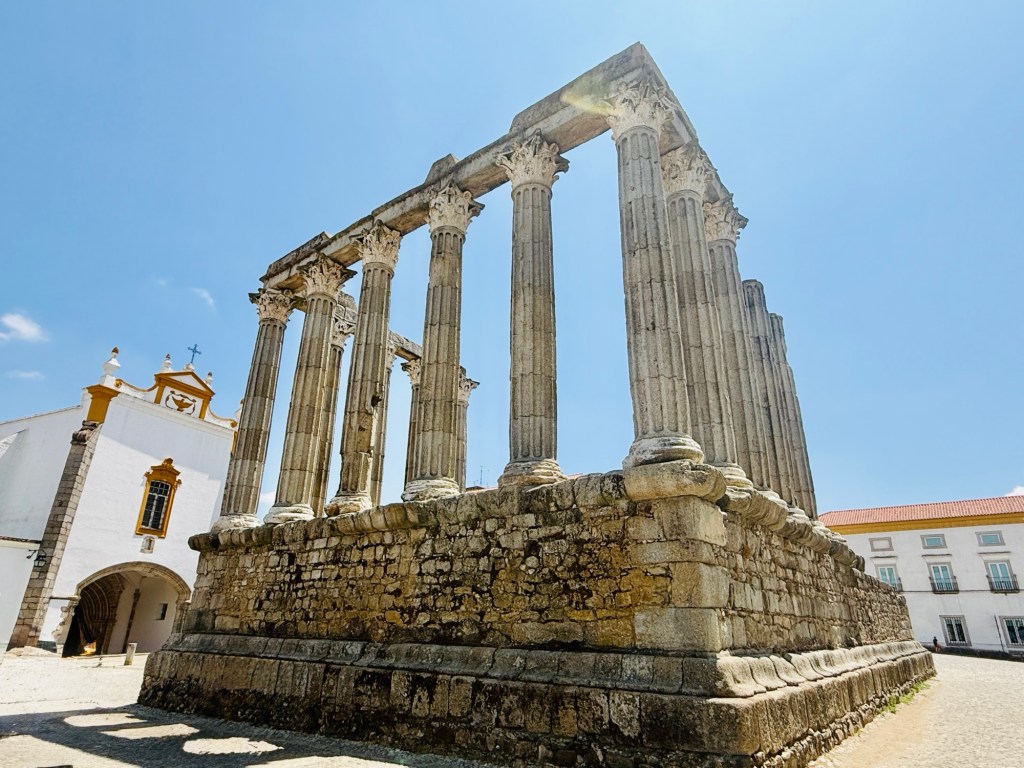
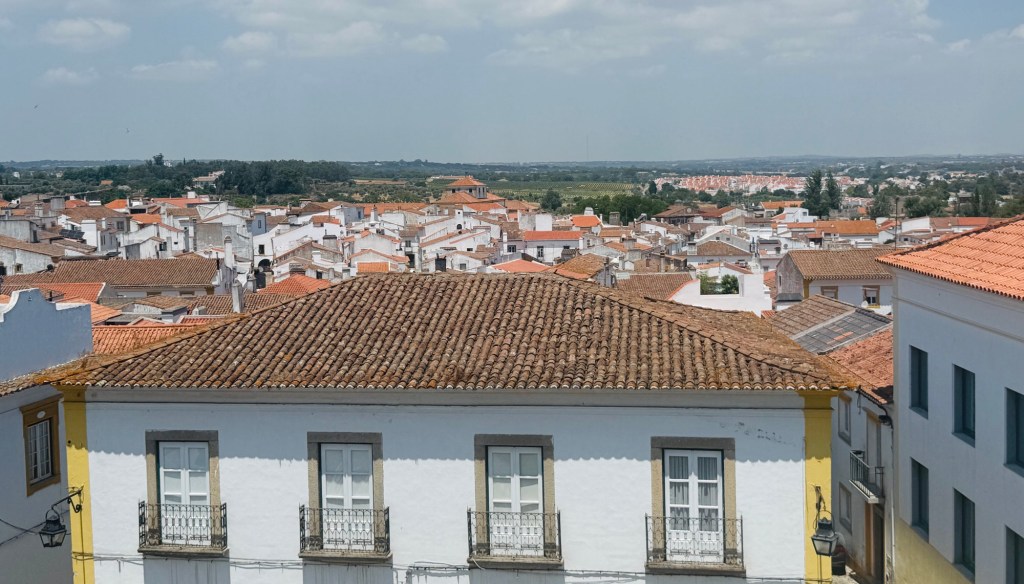
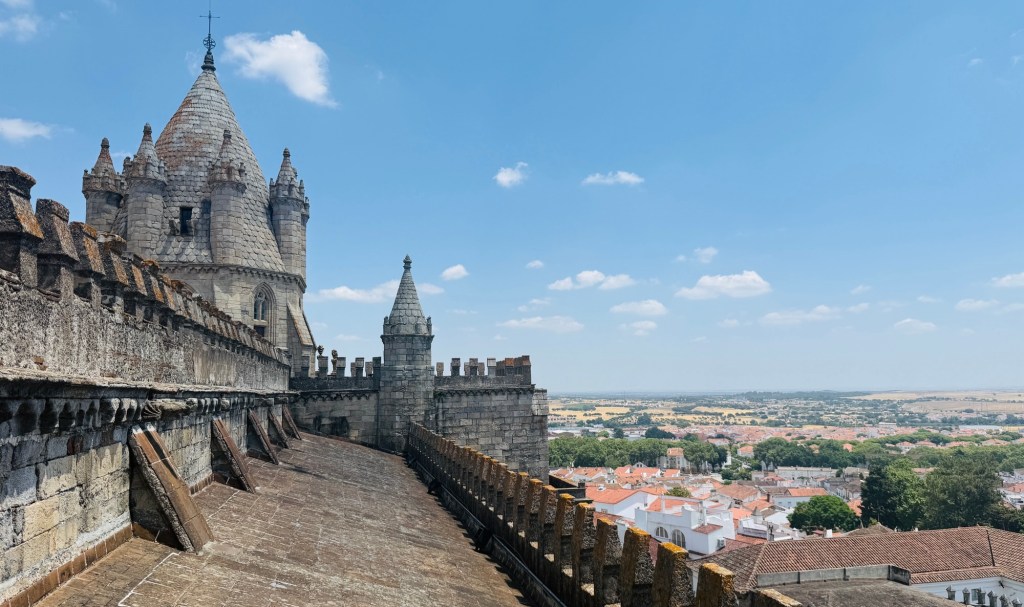
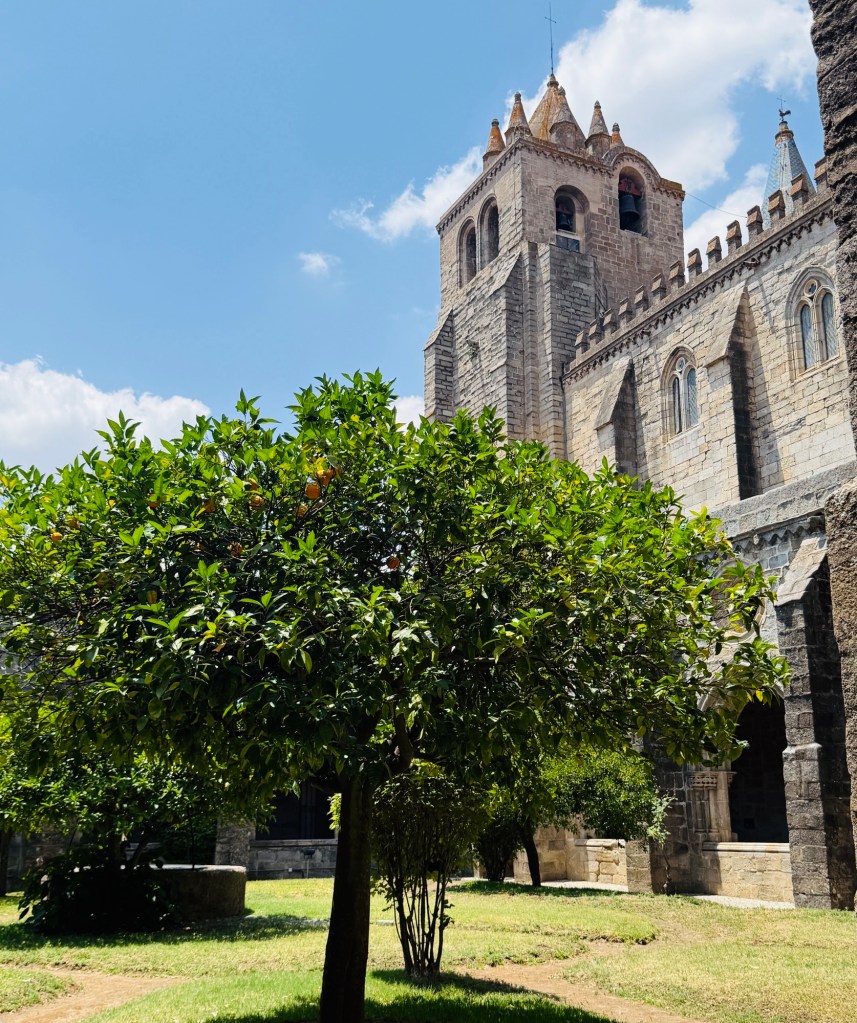
And then, the gothic cathedral that looks more like a fairytale castle, with its turrets and towers… and is the largest medieval cathedral in the country. It looked to me like it belonged in Sintra or somewhere like that… but there was no tourists. Seriously there were not many people in the town at all which makes me love it all the more… the rhythm is slow here… an oasis of calm without the tourist hoardes.
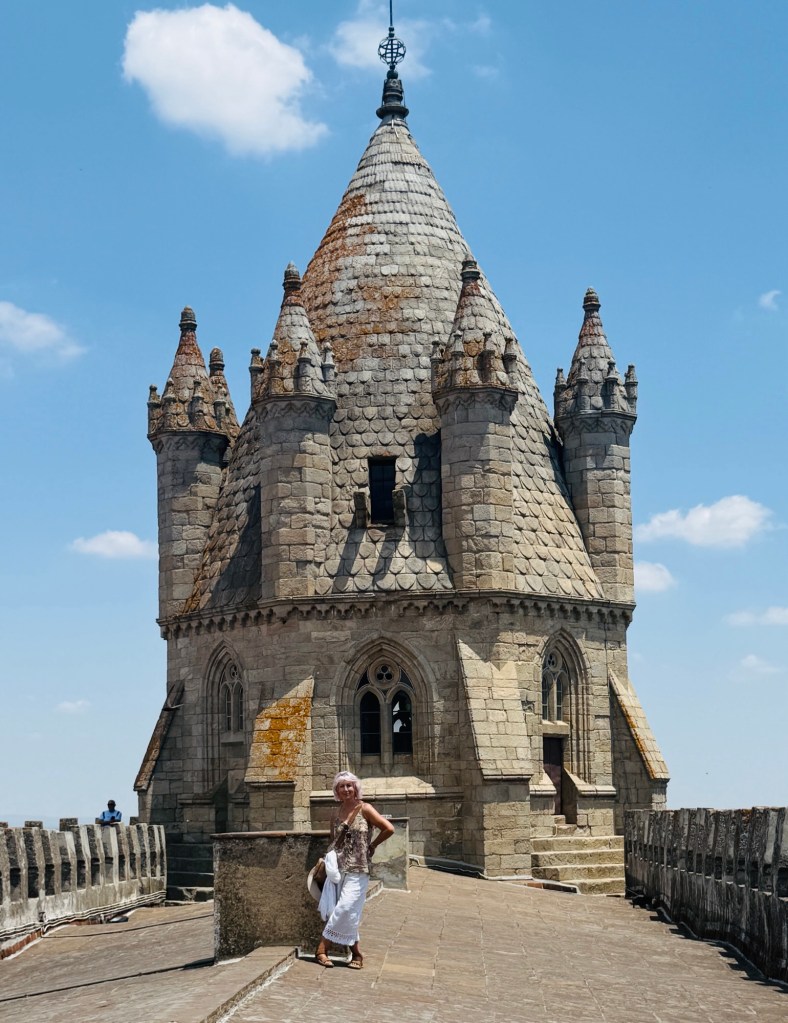
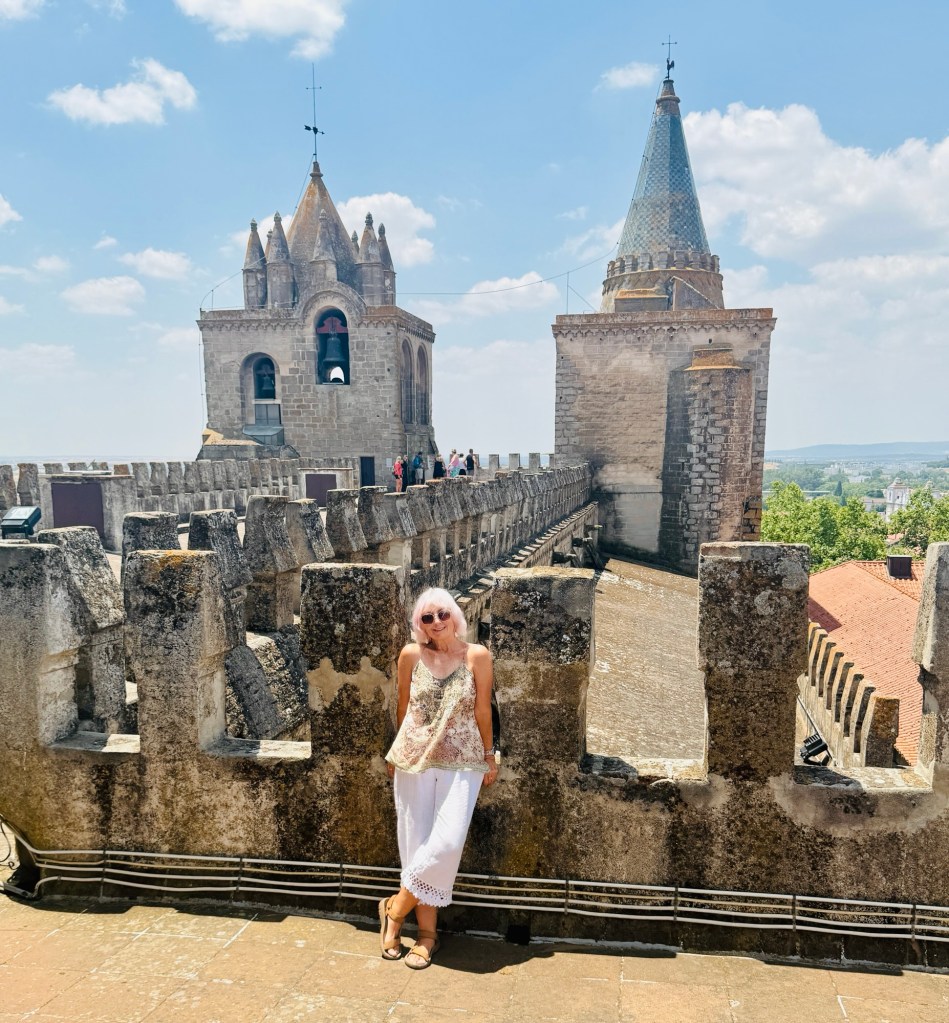
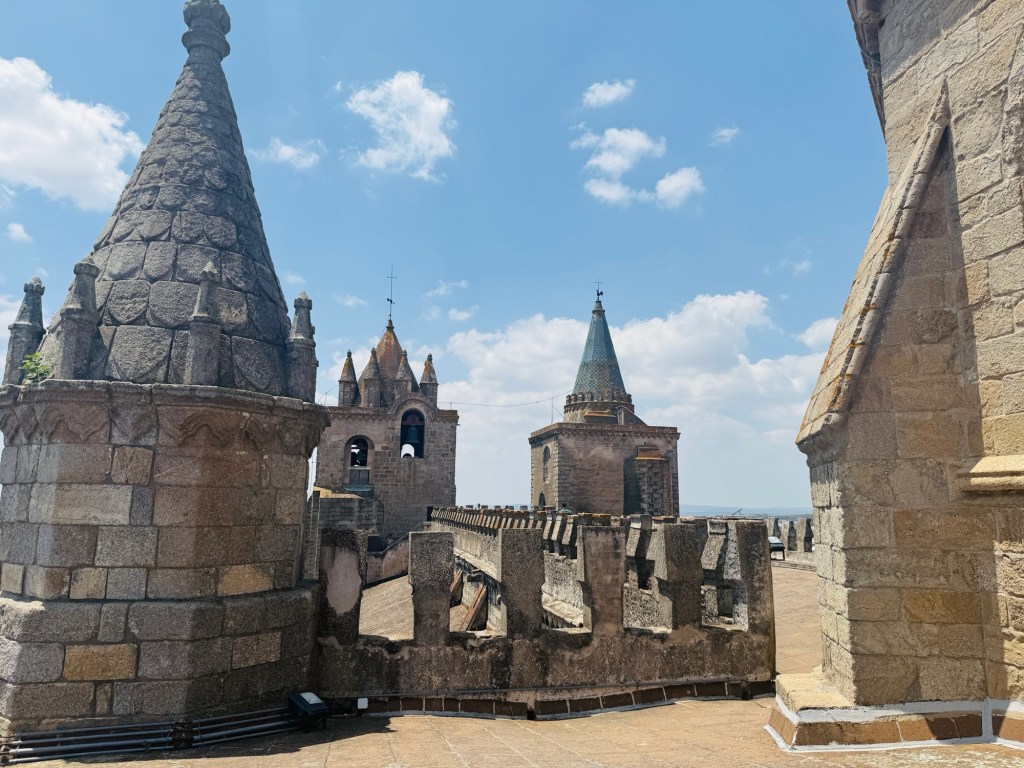
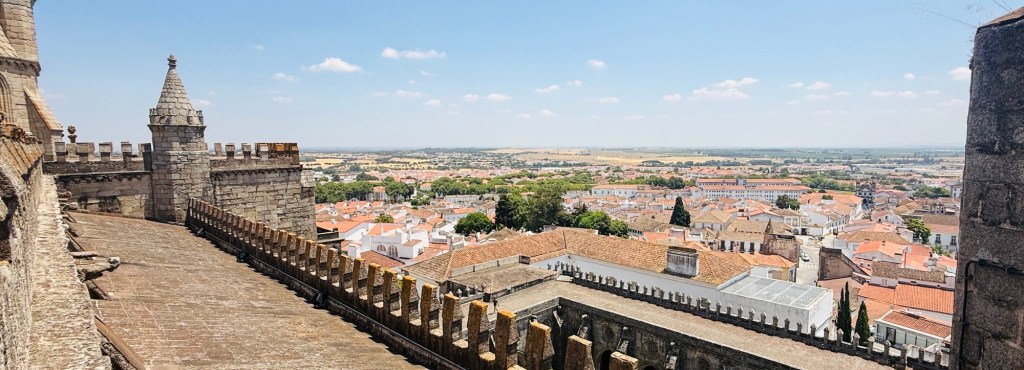
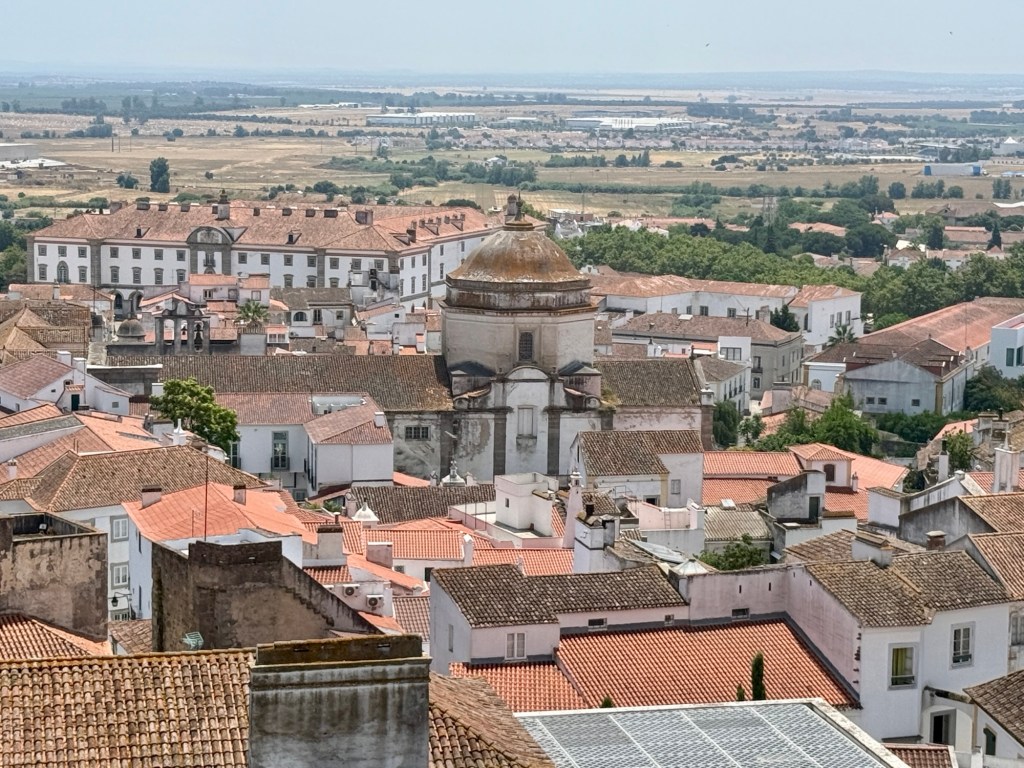
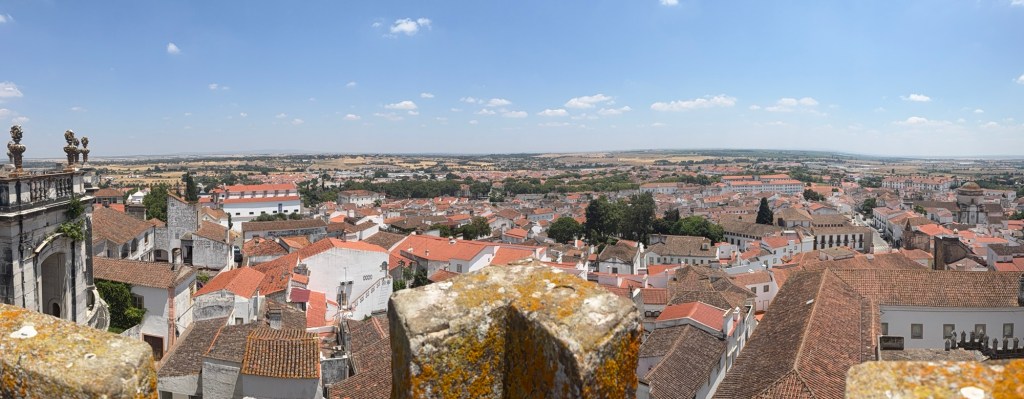
I climbed up the tower via a tiny narrow stone spiral staircase to the rooftop and seriously breathe-taking views over the countryside as far as you can see… vast plains and rolling hills with sparse white-washed houses and small farms, vineyards, olive trees, cork forests and cultivated land.
Back down the stairs to the lovely serene interior… home to beautiful art, cloisters and orange trees… and the church itself.
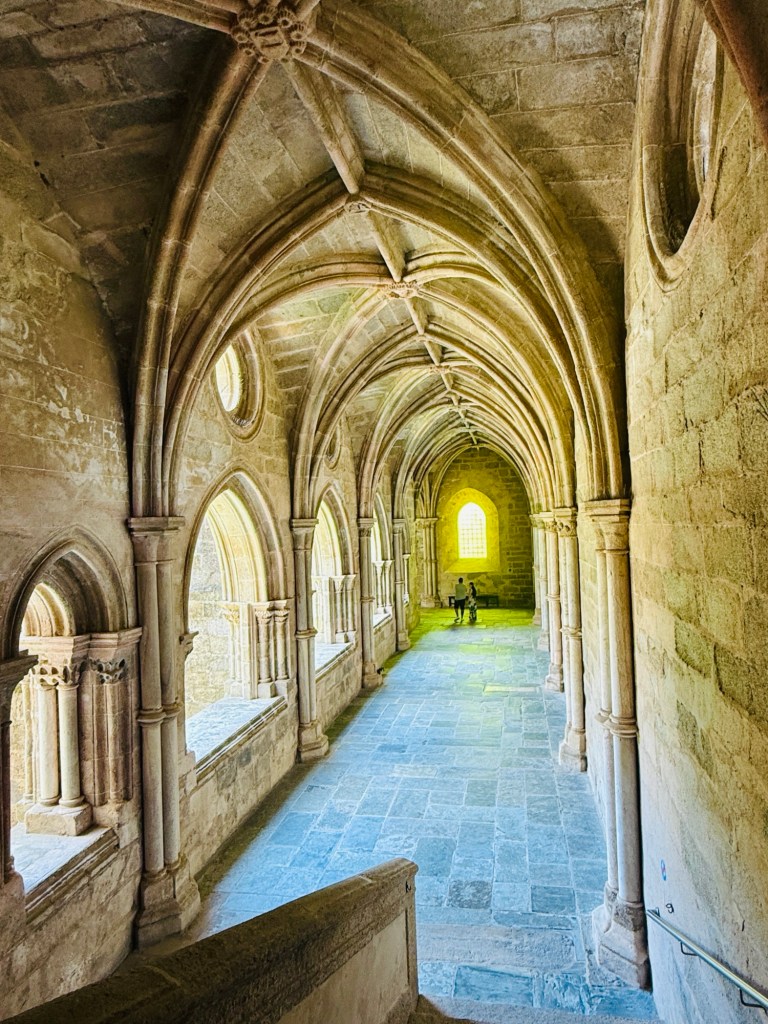
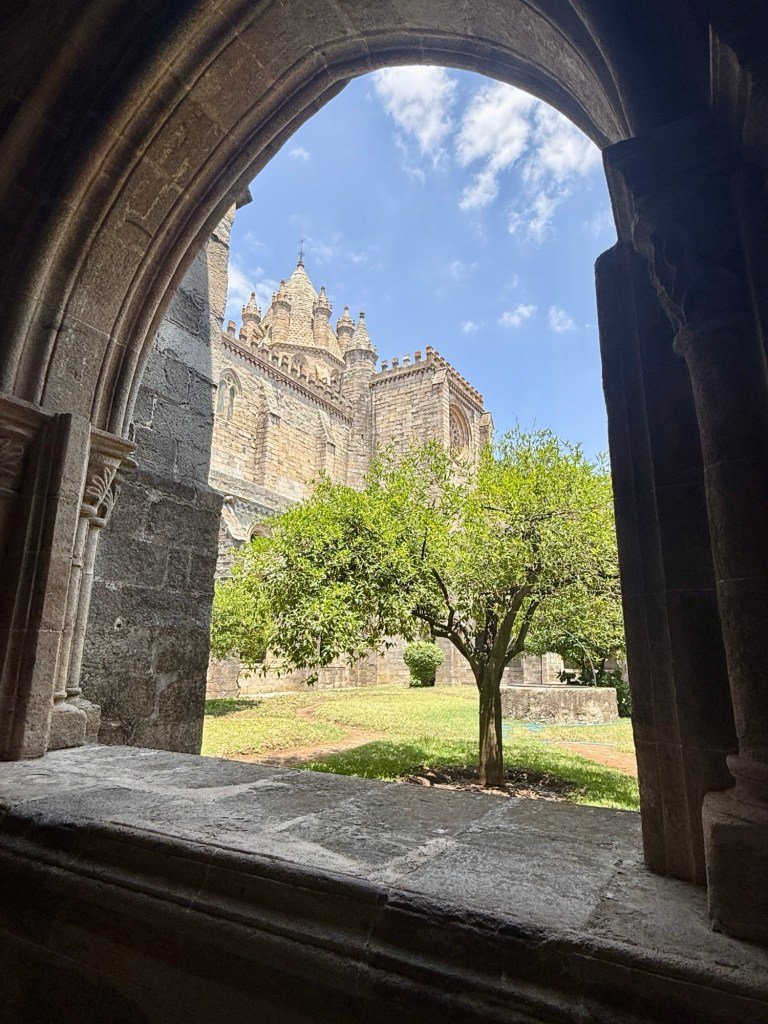
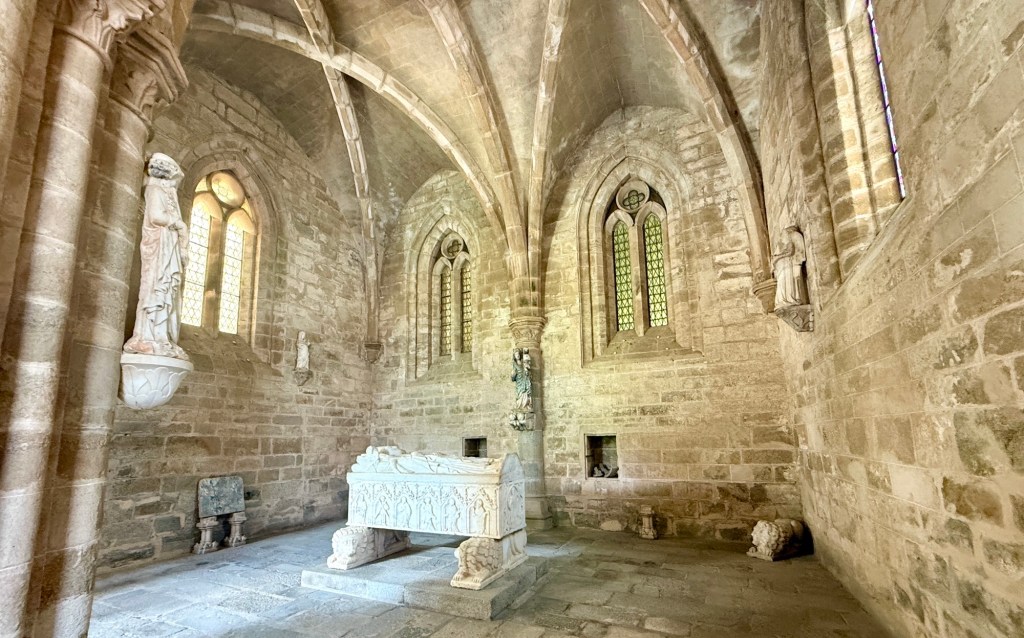

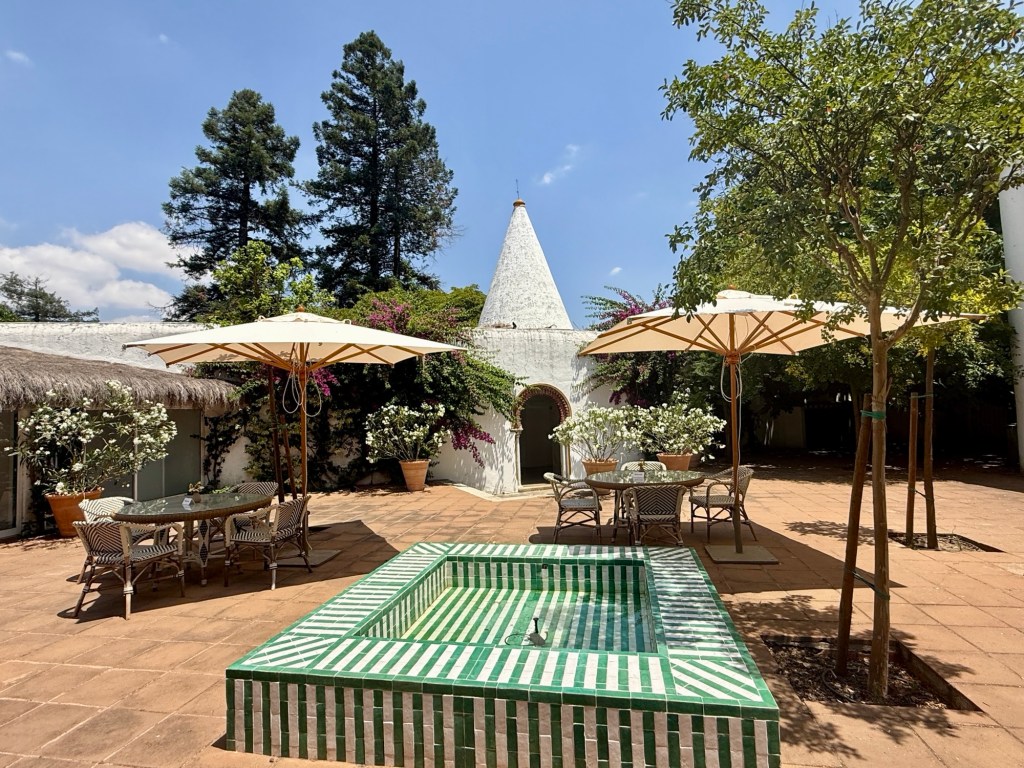
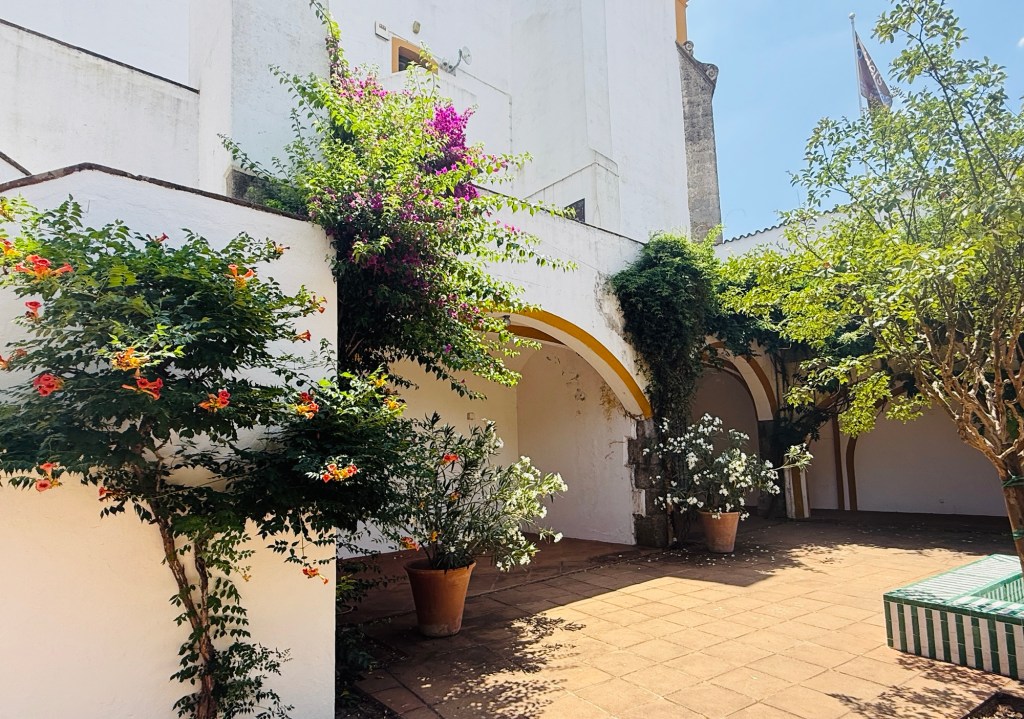
Very close by I wandered into the Palácio Duques de Cadaval with its stunning garden restaurant and art museum that happened to be exhibiting Australian indigenous art.
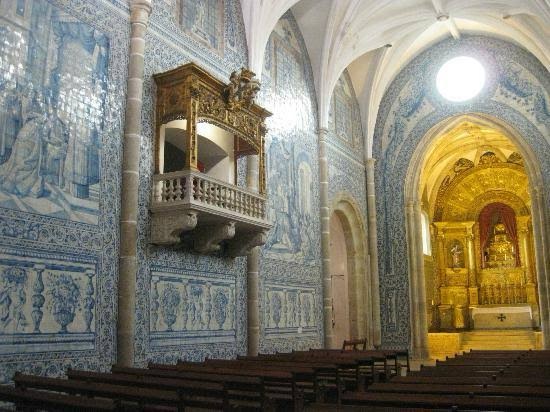
And then the igreja de São João Evangelista which stands out for the magnificent tile panels that cover the walls.
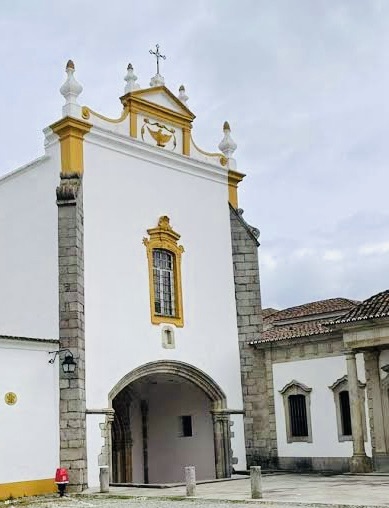

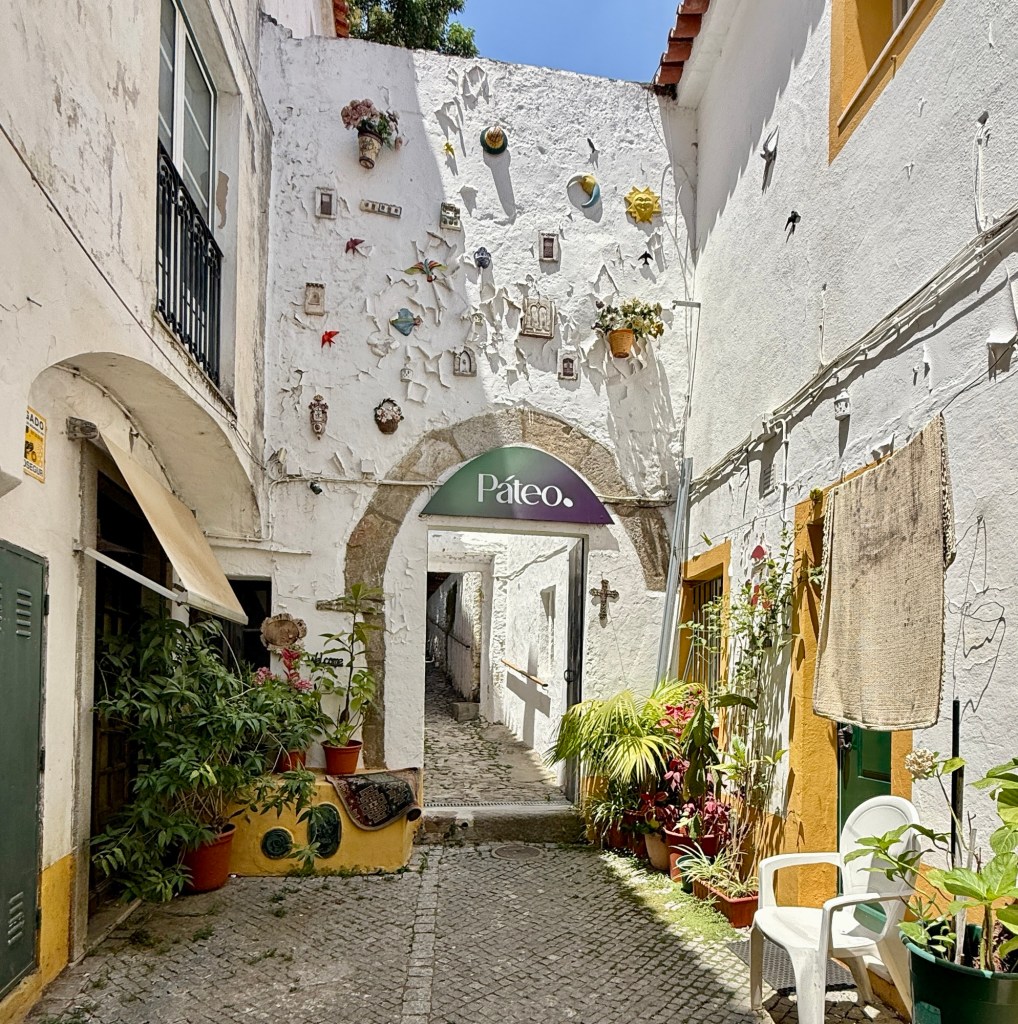
I wandered the patchwork of narrow cobblestoned streets in the ancient walled city… full of lovely old whitewashed houses with the Évora trademark yellow trim…

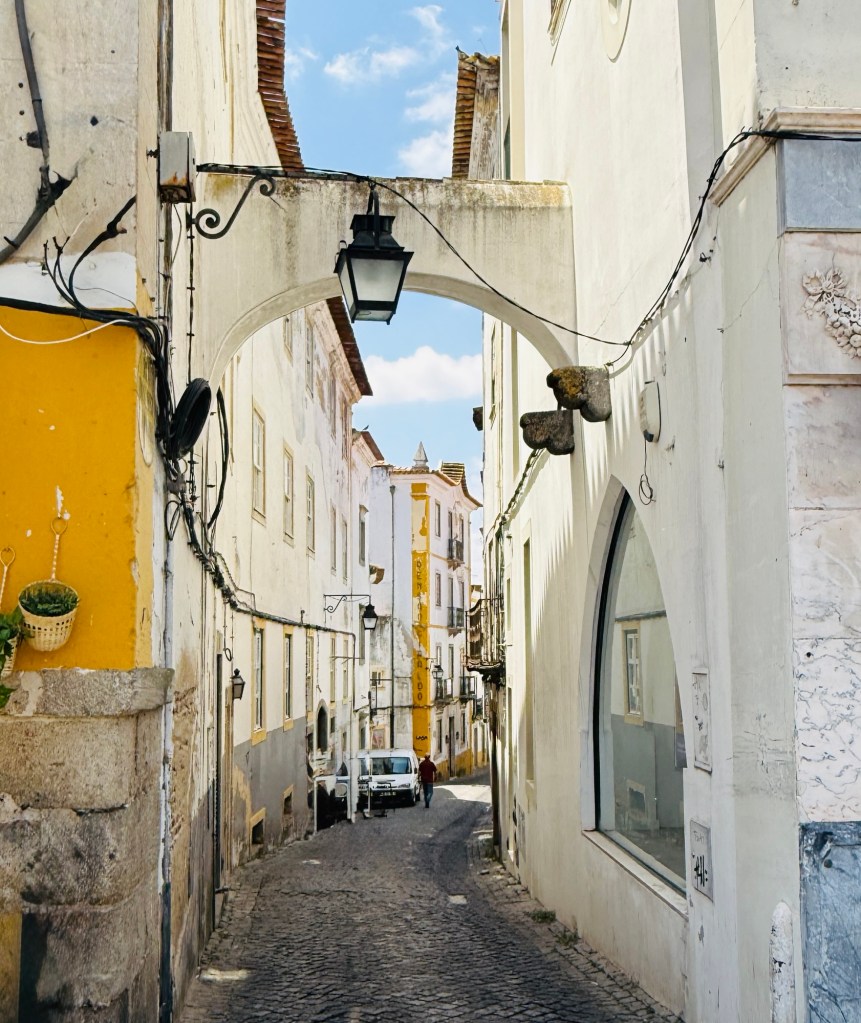
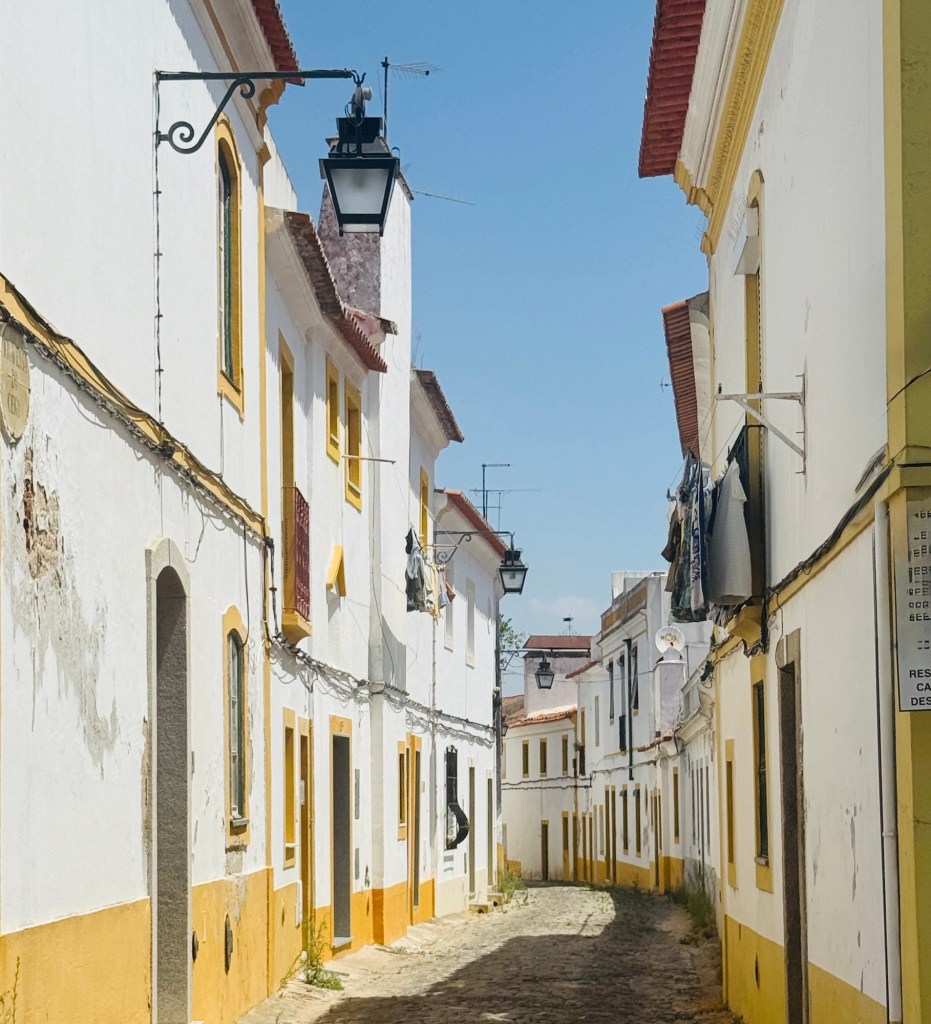
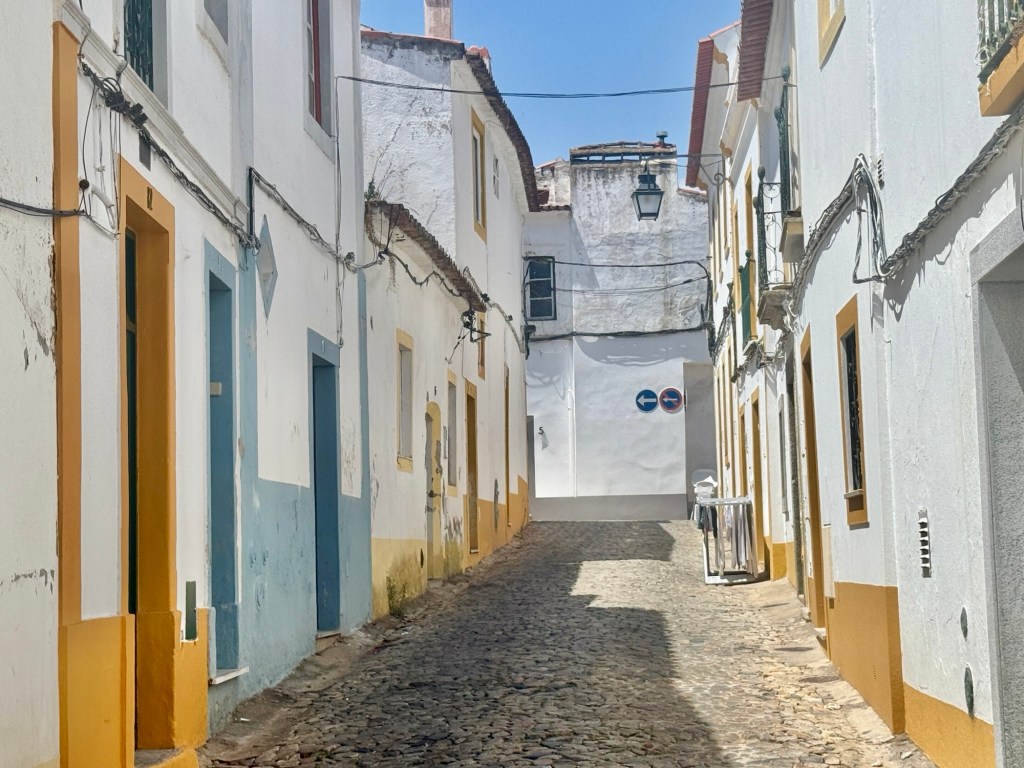
… to the main square Praça do Giraldo…
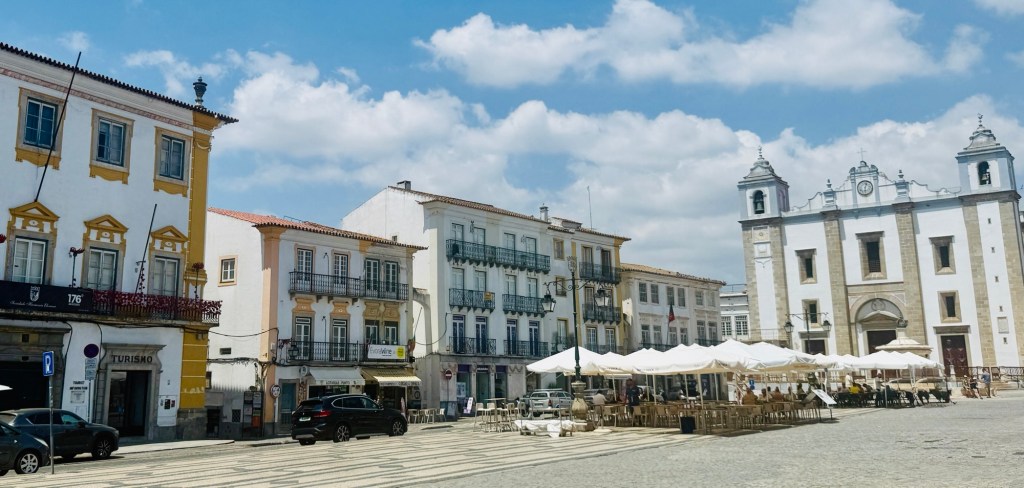
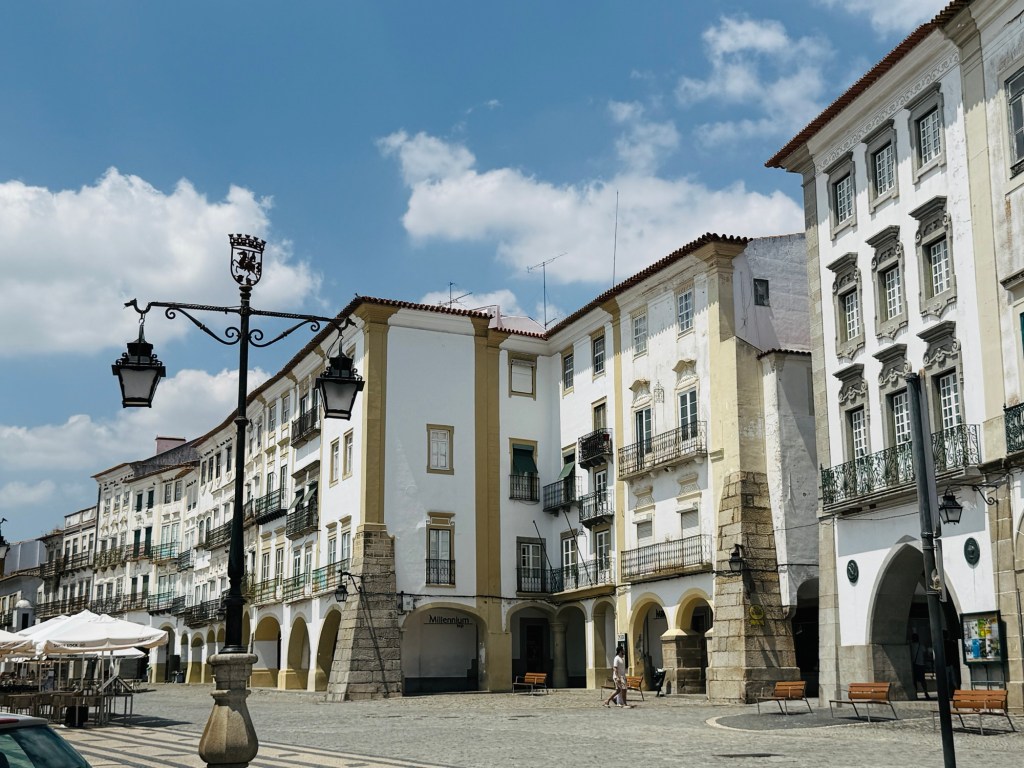
… and passed restaurants and local shops selling regional delicacies, handmade traditional pottery, local wines, and lots of local cork handicrafts.
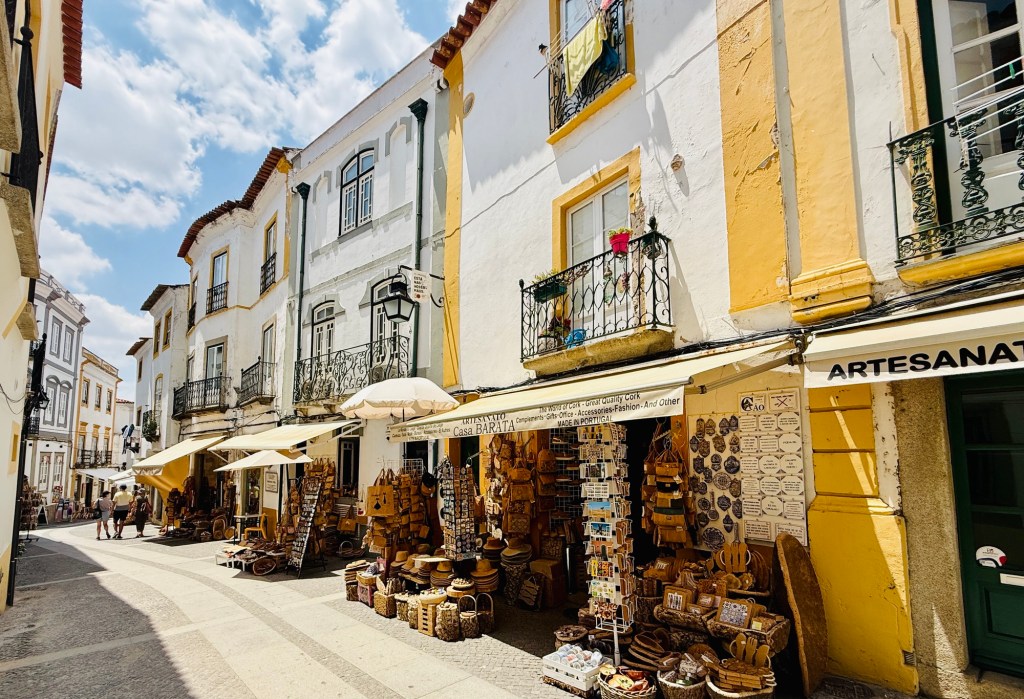
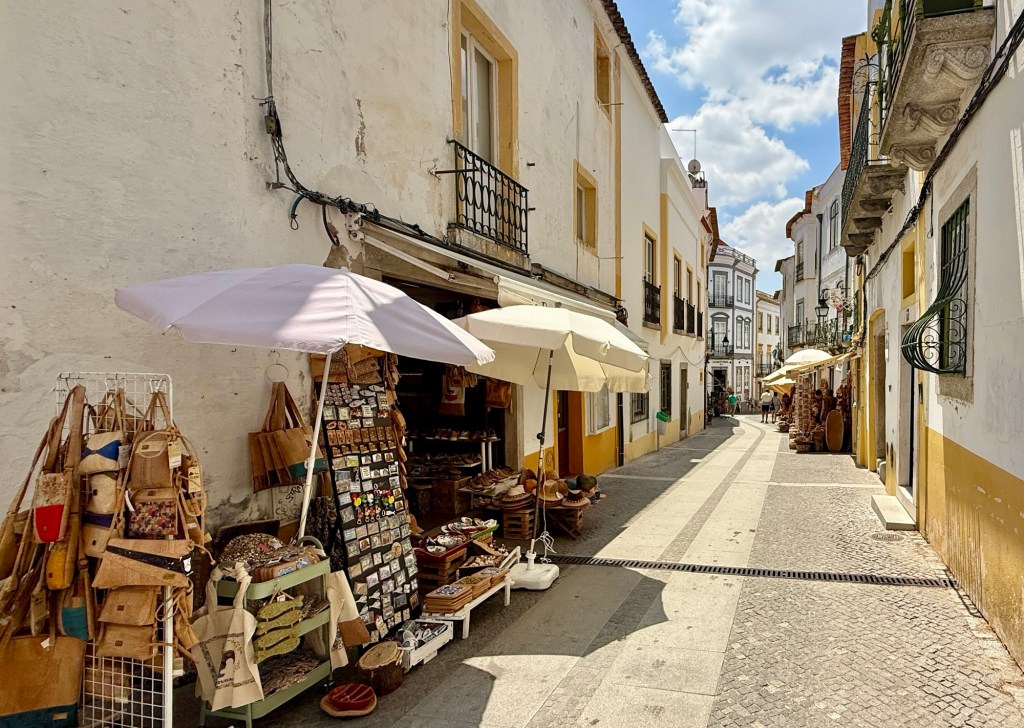
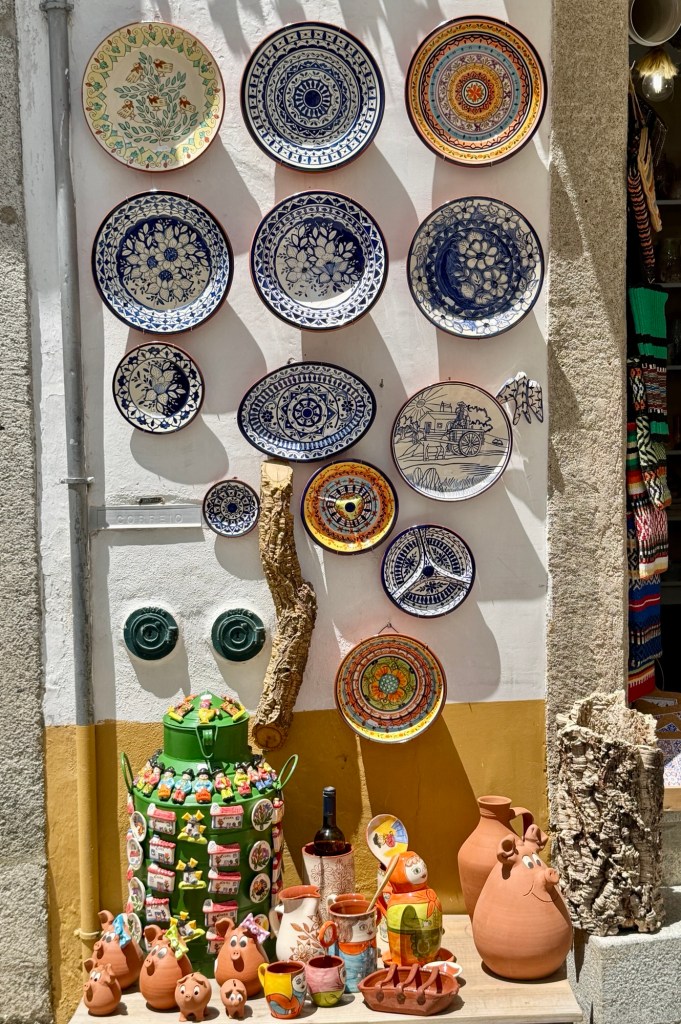
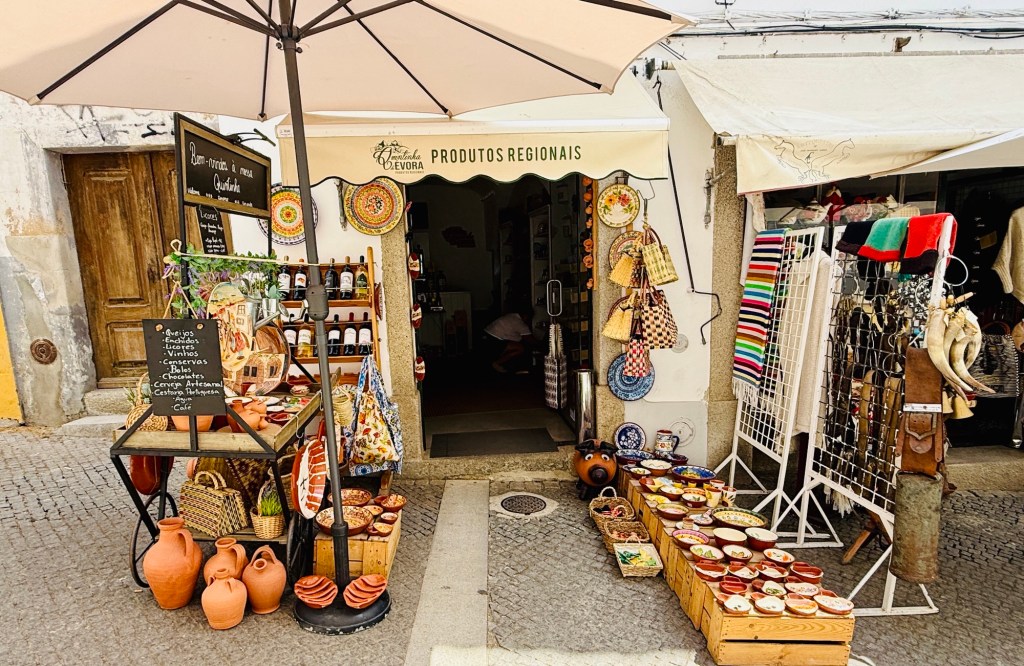
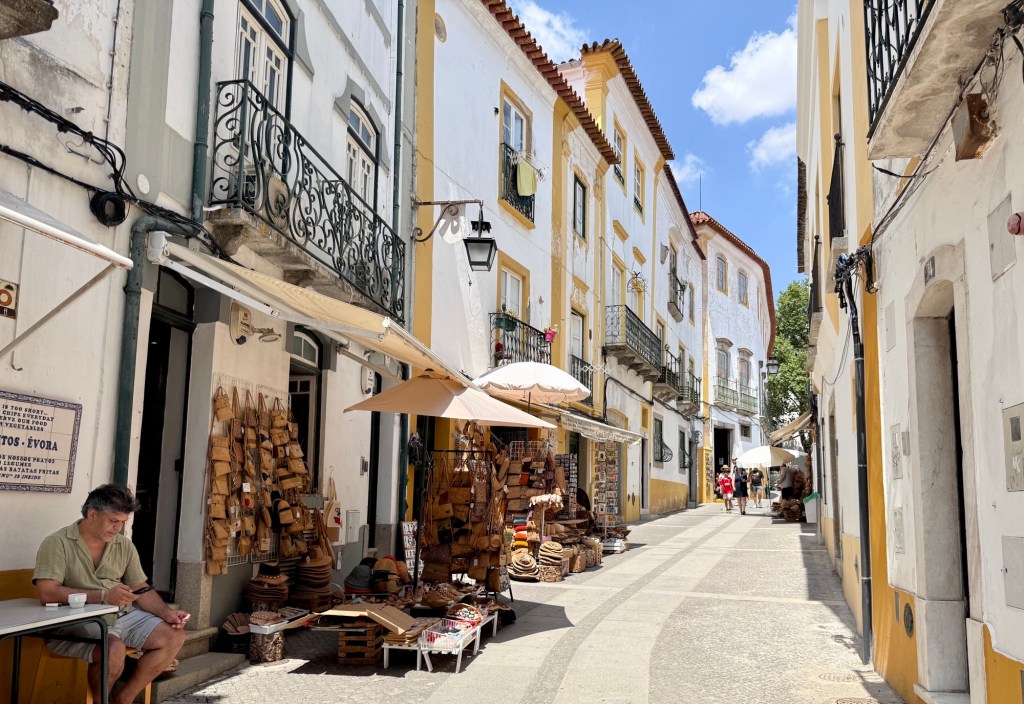
Apparently the streets have some pretty outlandish names if I understood Portuguese, like the “Alley Of The Unshaven Man” and the “Street Of The Countess’s Tailor”.
Next stop, the Capela dos Ossos may be Évora’s most famous landmark and is a hauntingly beautiful and eerie site. Constructed in the 17th century by Franciscan monks, the chapel serves as a haunting reminder of the transient nature of human life.
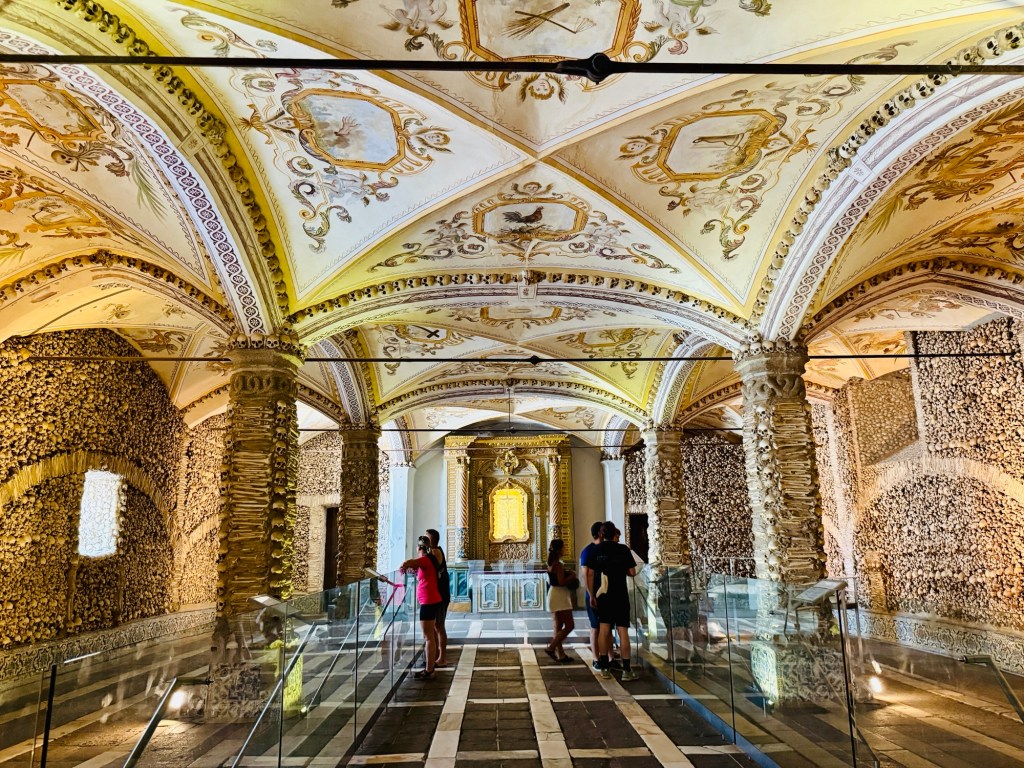
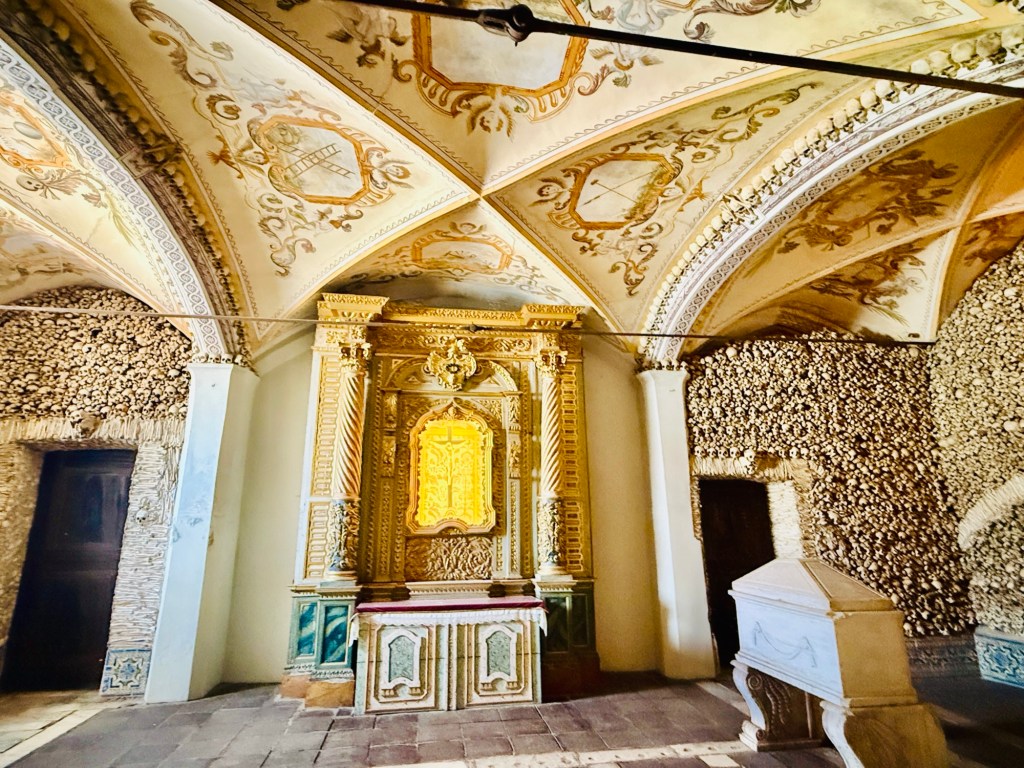
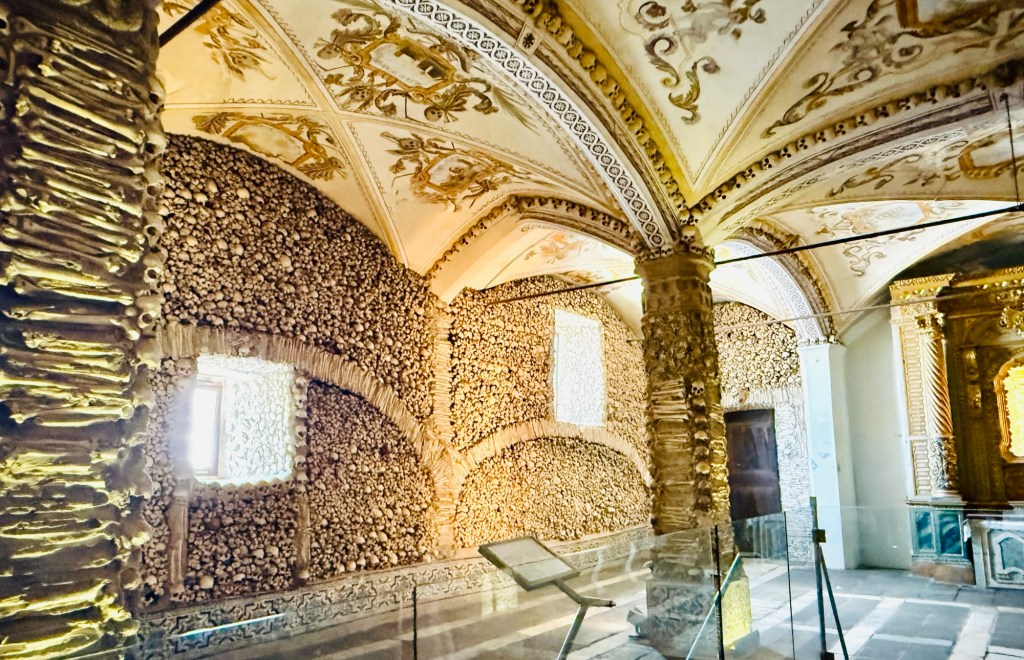
Its walls are intricately adorned with the bones and skulls of approx 5000 souls artfully arranged by Franciscan monks to symbolize our mortality. A definite touch of the macabre.

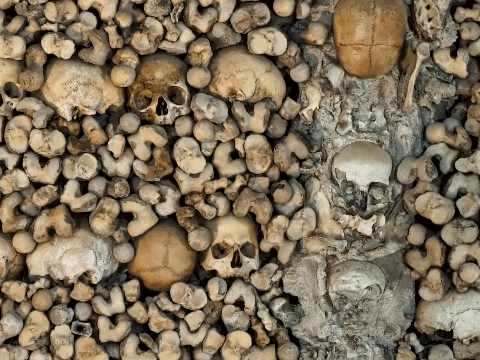
Above the chapel’s entrance, an ominous inscription reads “Nós ossos que aqui estamos, pelos vossos esperamos,” which translates to “We, the bones that are here, for yours wait.”

It was getting late and I was very hot so I headed back up the hill to a little restaurant I had noticed earlier… off the street and very shady and sat relaxing with a glass of wine, food and a fan that constantly sprayed me with water. Just what I needed… until it was time to catch the train back.
-
“The End of the World”
Wherever you go becomes a part of you somehow.” – Anita Desai
We wake in the morning and stay in bed longer than usual. We don’t have anywhere to go… nowhere to walk to today. It’s a strange feeling… there’s relief because I don’t want to walk anymore and sadness because I don’t want to stop walking. How can that make sense in any way?
I think I can confidently speak for both of us when I say our overwhelming emotion is immense gratitude. We are grateful that we completed this pilgrimage in relatively good health. We are grateful to all the amazing people we met along the way that enriched the experience. I am grateful that I had Anne to share this unique experience with me. And I am grateful that I am so privileged that we can do something like this… and I’m also so very conscious of how much we all need to do things like this.
Because I think we are living in a system that is breaking our spirits. It demands constant productivity but denies rest. It glorifies material success but neglects emotional well being. The pressure… the disconnection… the endless rat race. For what end? It’s no wonder so many feel lost or broken or depressed or overwhelmed because we’re pushed since childhood to be in a constant state of fight or flight. Rush… compete… achieve… perform. Be busy. But our nervous system needs stillness… quiet… play… creativity… cooperation… sharing. We are humans, not machines. The Camino is like a perfect antidote… just a thought.
They say the Camino is divided into three parts: the first part is a test of the body, the second part is a test of the mind, and the third part is a gift of the soul. I see the truth in this: the first part of the Camino was spent with our bodies trying to adapt to the unusual load: how to swing our trekking pole… I need to adjust my backpack… loosen my shoelaces… I’m hungry… I’m thirsty… I’m hot… I’m cold… I’m tired… it hurts (everywhere)… there is pressure… how long can I sleep… when can we eat… Anne needs to pee 😂… etc. Then, after a few days, a rhythm is sort of established, and our body adapts to the new situation and the challenges become almost more mental. The long stretches of walking can become monotonous, and maintaining focus and motivation can be difficult. This stage is about developing mental strength, resilience, and the ability to persevere through challenges and even pain. Knowing that you are walking in the footsteps of hundreds of thousands of people over many centuries inspires you to keep pushing ahead. As do people you meet along the way.
The final part of the journey is often described as a spiritual awakening or gift. As pilgrims approach Santiago de Compostela, the culmination of their physical and mental efforts can lead to a deep sense of purpose, self-discovery, and reflection. This stage is about experiencing a sense of accomplishment and finding meaning in the journey.
And then suddenly it’s done and you kind of feel a little lost. But we did get out of bed as we have things to do today. Firstly to get our “Compostela”- the certificate that verifies our journey. Anne is emotional here at the Pilgrims office… we find we both are all day… both crying at random times. Somehow it’s all a little overwhelming and there’s no way to explain it.
There is a Pilgrims mass on at 12.00… a daily ceremony held to welcome and honor pilgrims who have completed the Camino de Santiago. And we had been advised to go an hour early to get a seat. This is the first time we have seen inside the cathedral… which is crazily busy with tourists doing tours and there are constant requests for quiet. We sit quite close to the front of the alter and just enjoy the time relaxing as the cathedral seats gradually fill until it is standing room only. Pilgrims even sit on the floor. The mass is in Spanish and as much as I would love to understand what is being said, it doesn’t really matter. It was beautiful and I felt very blessed.
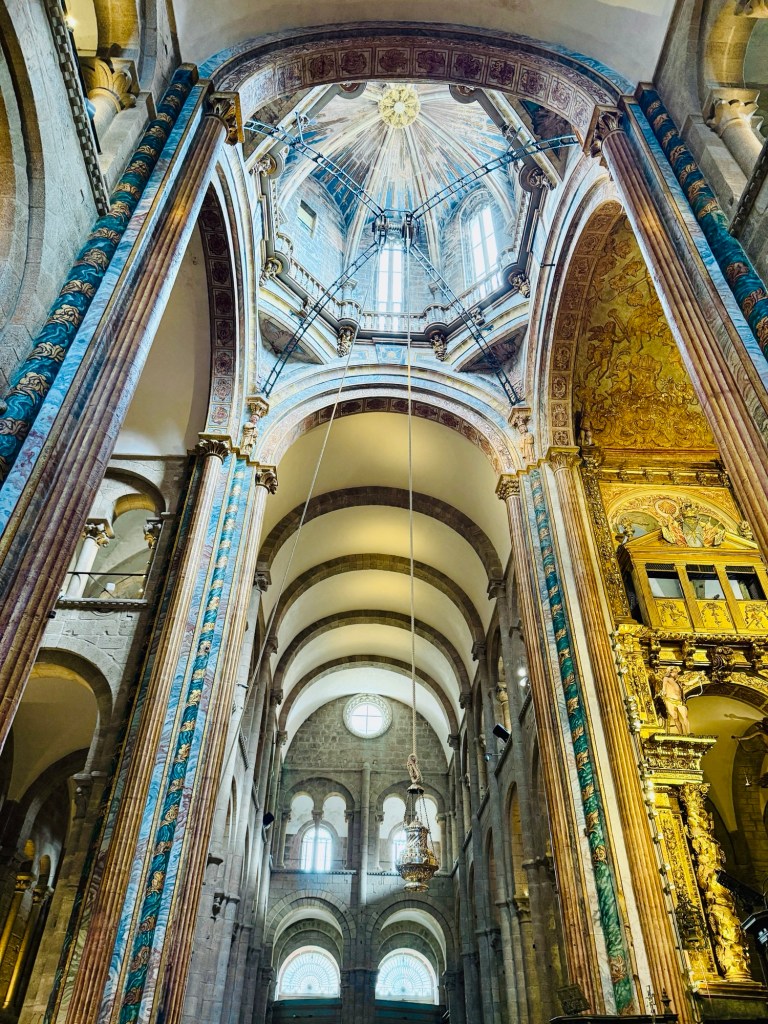
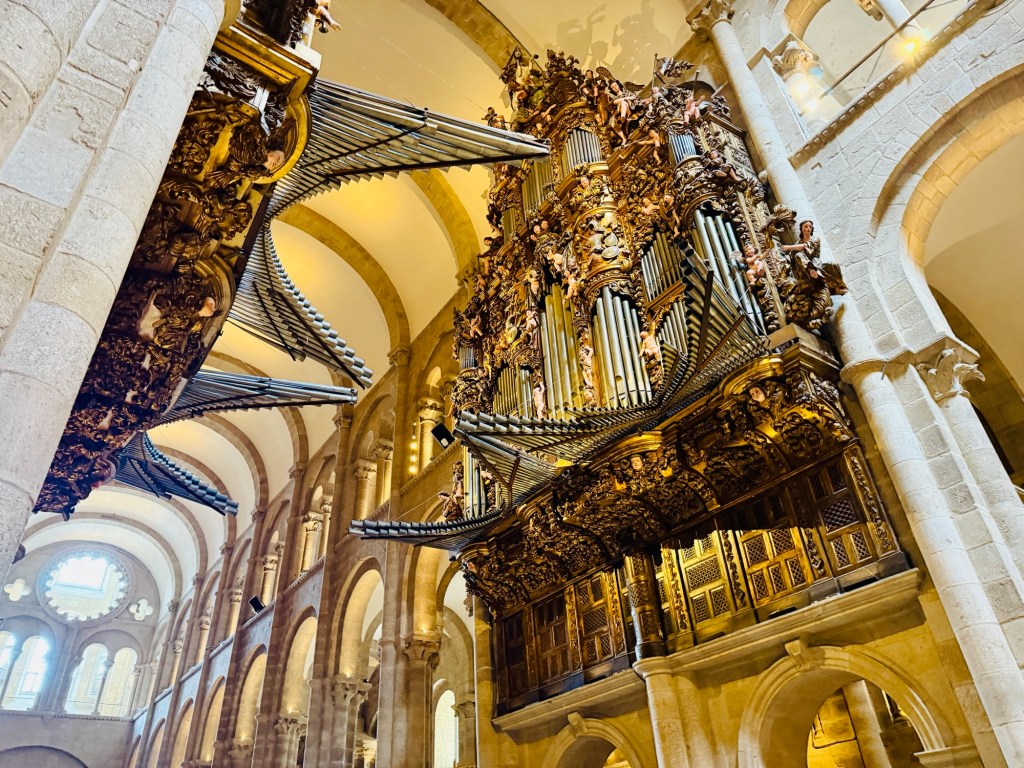
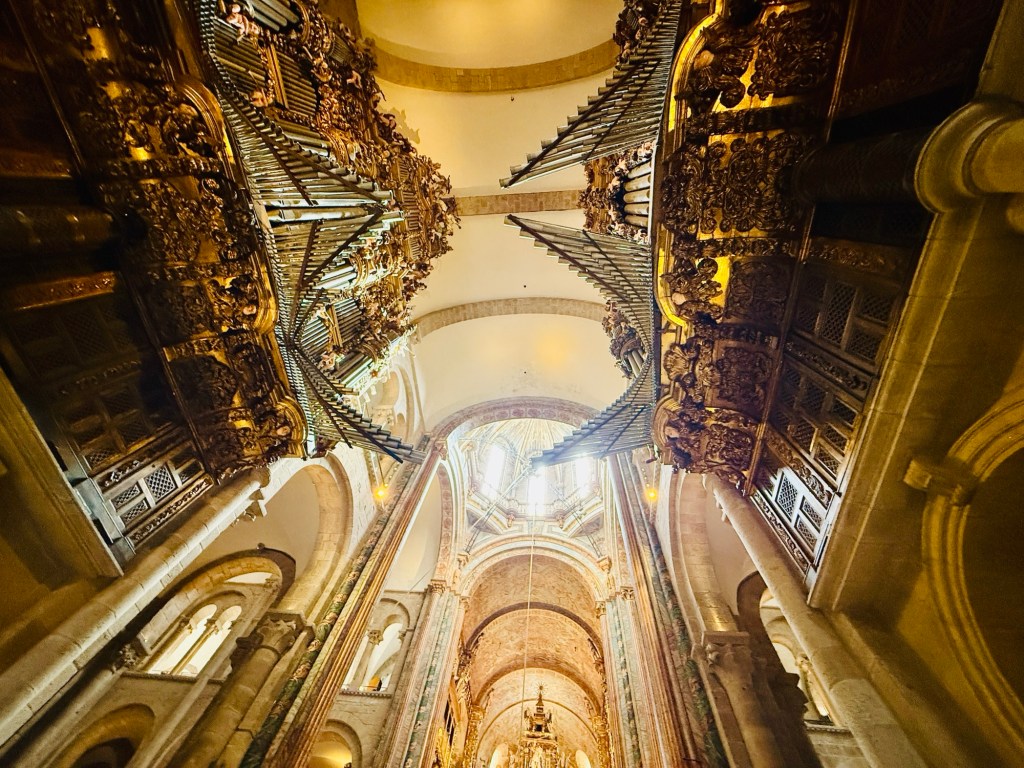
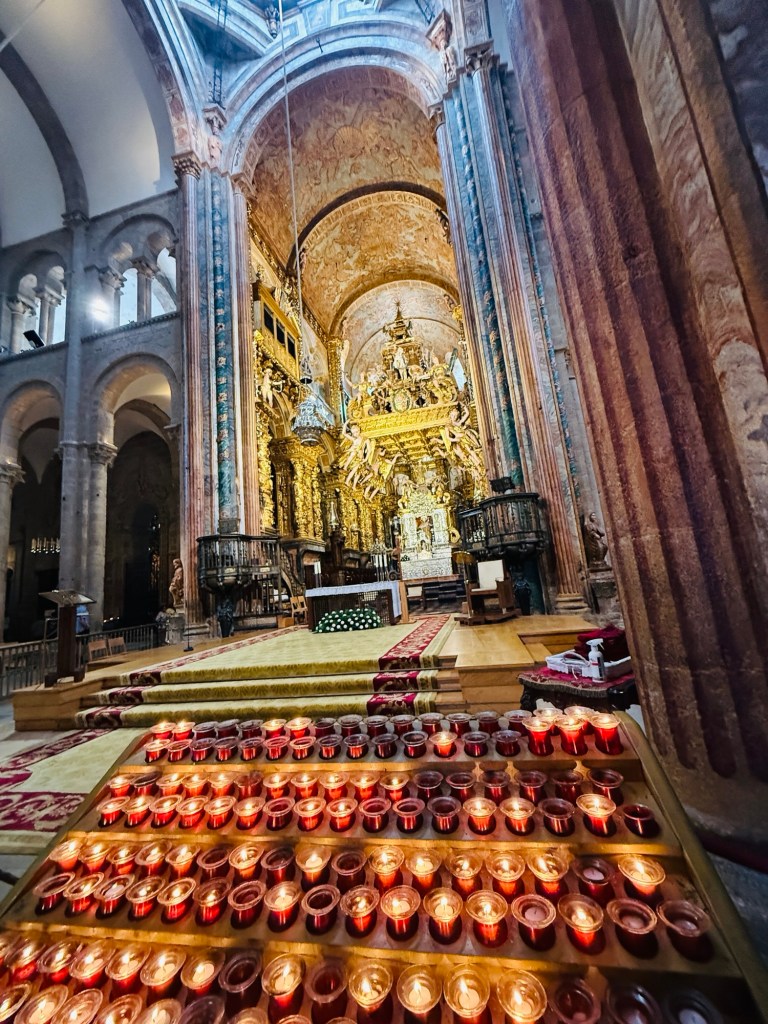
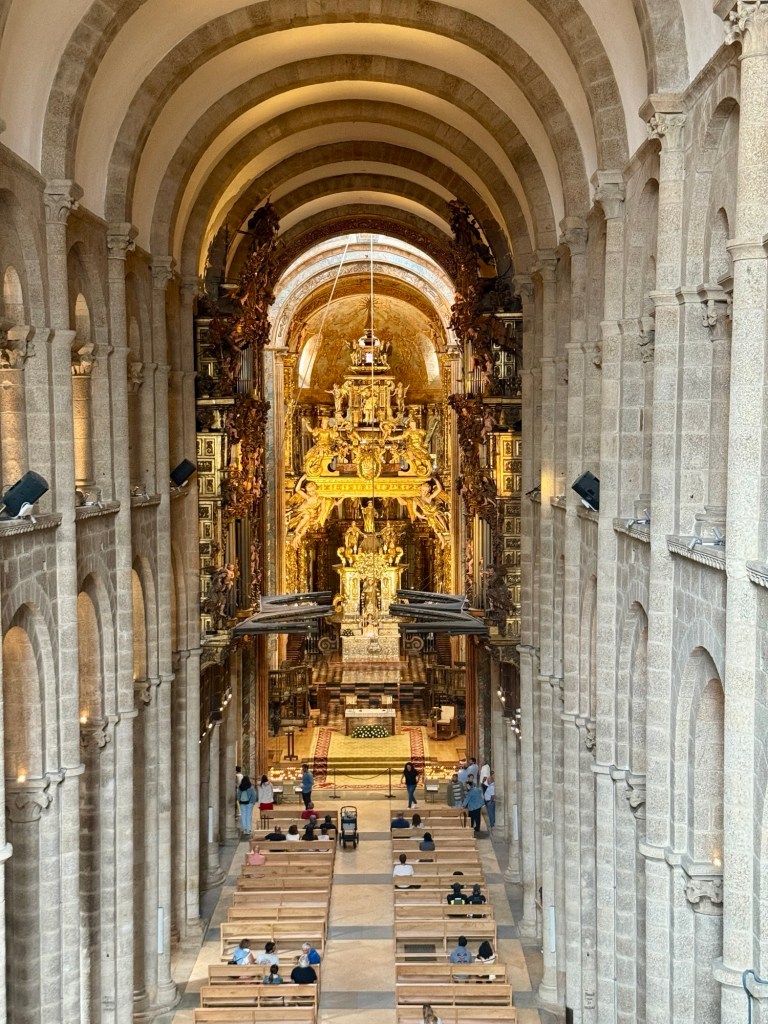
We had been told that the botafumiero mostly only swings on specific religious dates and sometimes upon request for special occasions… so we were not expecting to see it in action… although we both really wanted to experience this. You don’t always get what you want I guess.
So what is the Botafumiero you may ask? Well it is basically a huge incense burner… measuring 1.5m and weighing 62kg plus the charcoal and incense that is put inside. The rope that ties this enormous artefact to the transept of the cathedral and supports it during its flight, has a length of 65m and weighs almost 100kg.
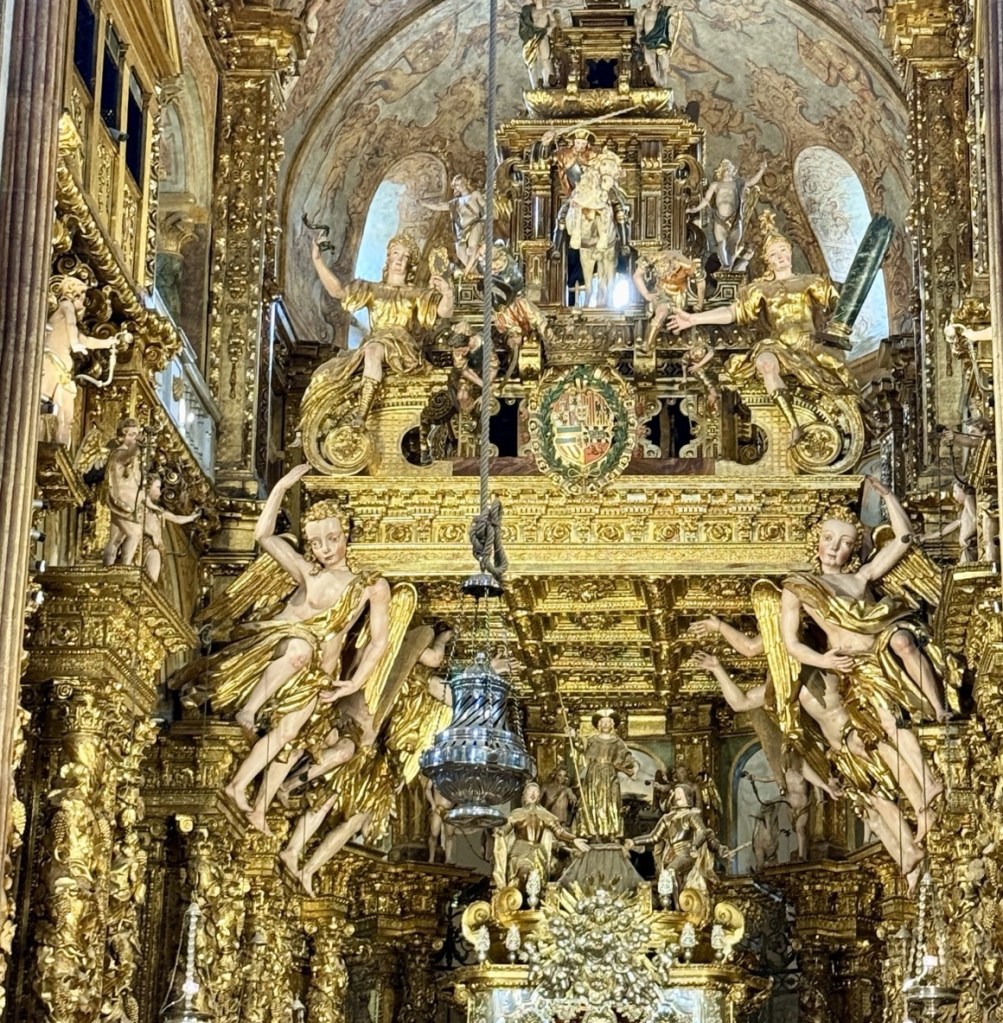
The term comes from the Galician language and basically means “smoke thrower”. So when I realised it was happening, the tears flowed again and seeing it swinging through the soaring Cathedral was definitely a highlight of our Camino… and we are both in tears of amazement because it was such an expected blessing.
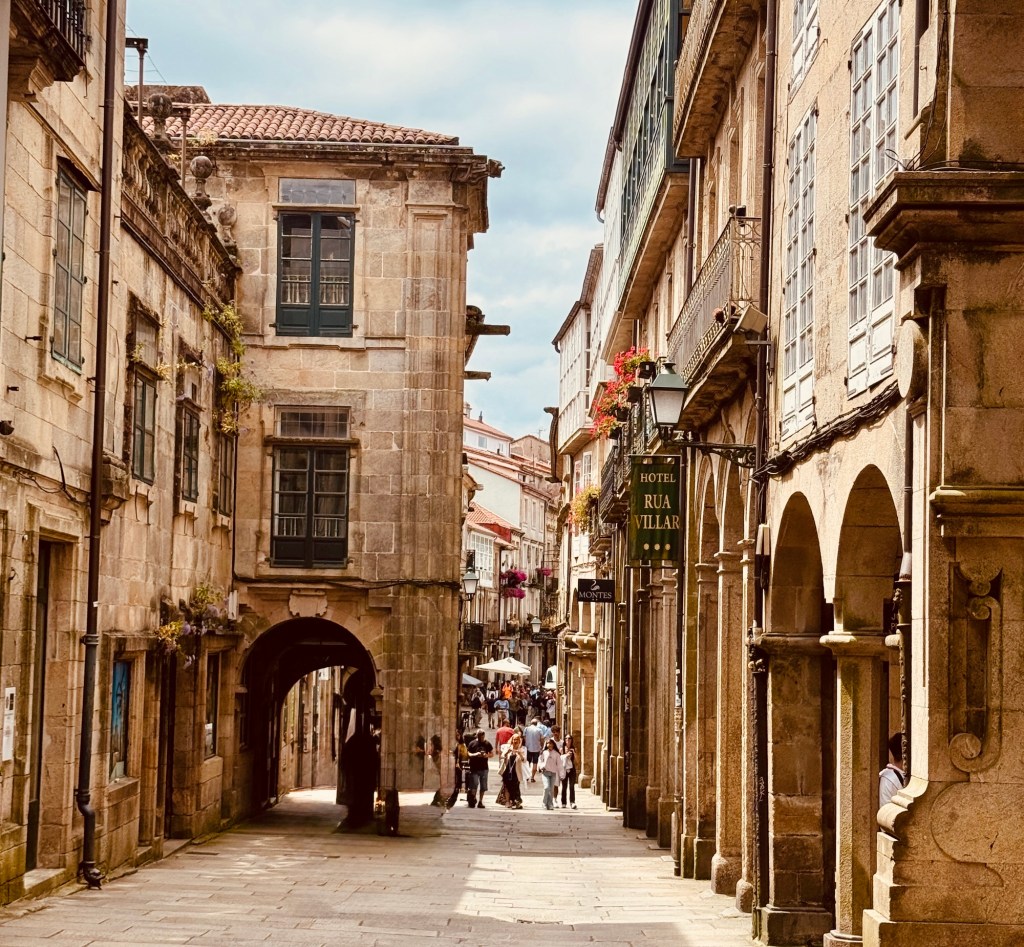
We wander through the old town which is an immaculately preserved UNESCO World Heritage Site… and it’s stunning.
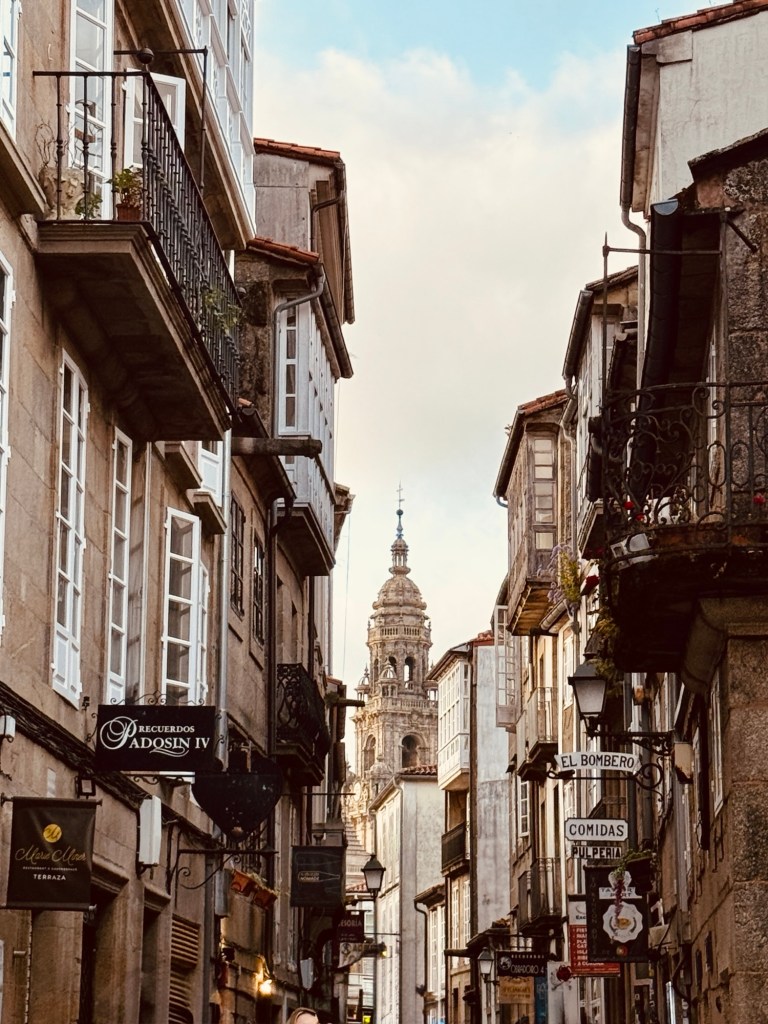
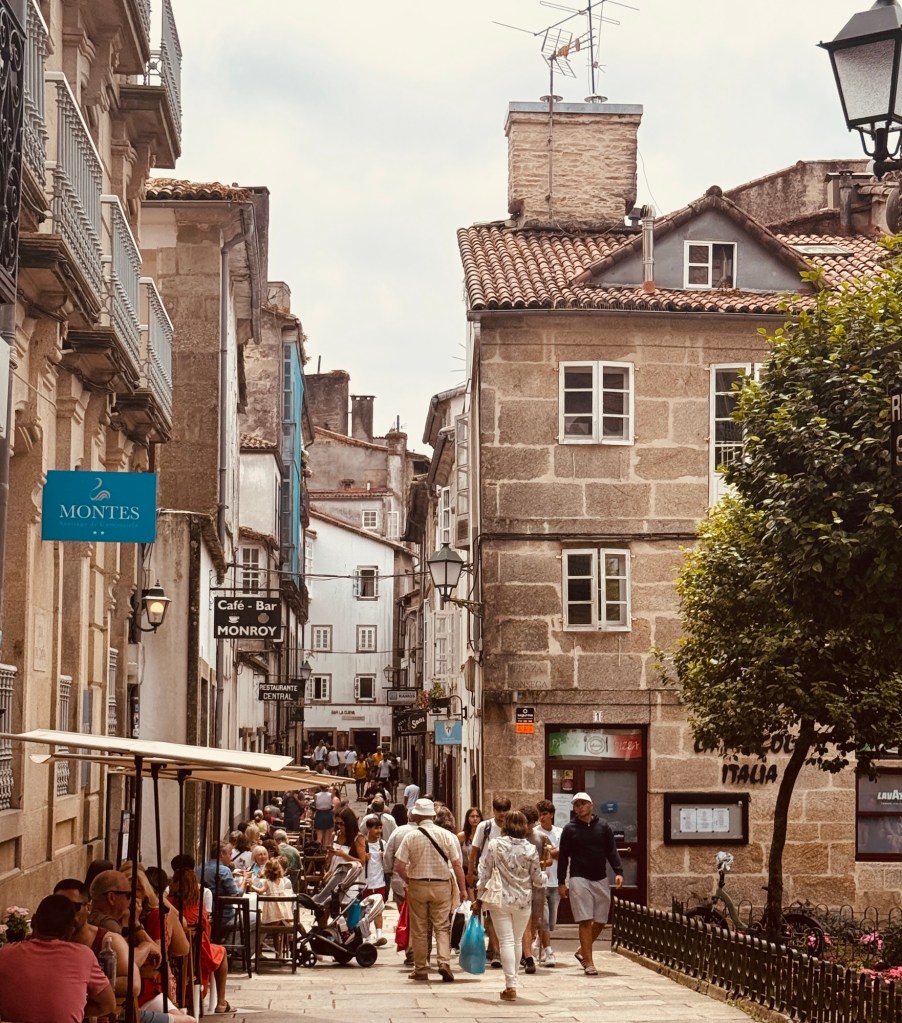
Every step is a discovery with charming squares filled with amazing architecture…
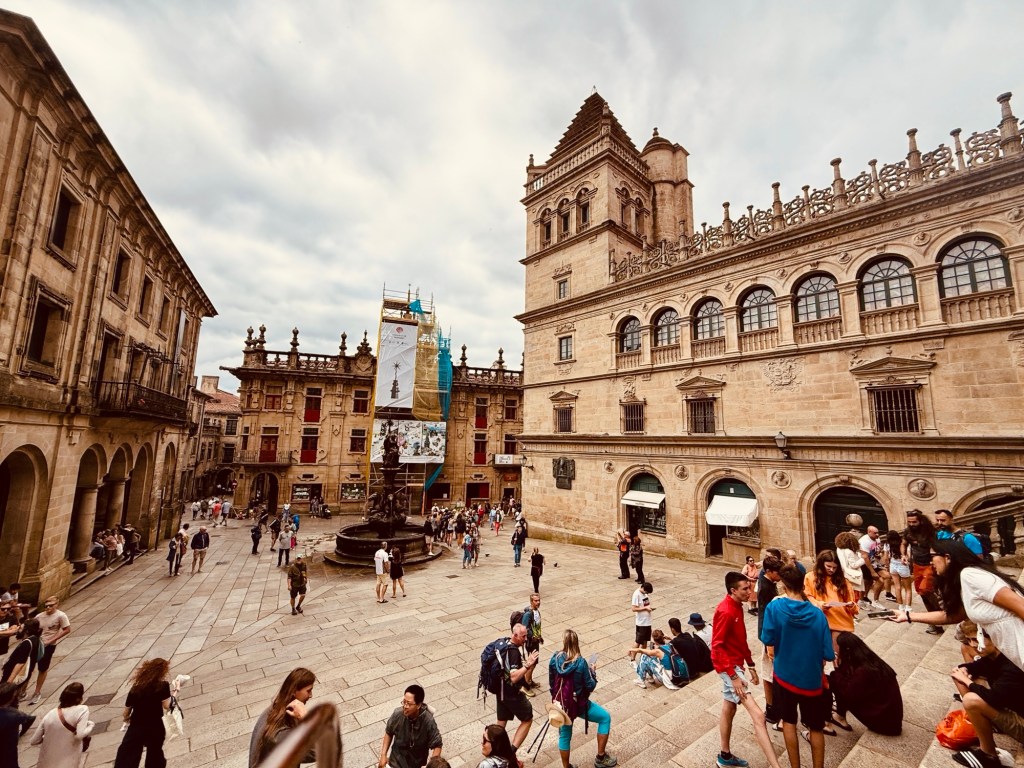
… including the world’s oldest hotel…
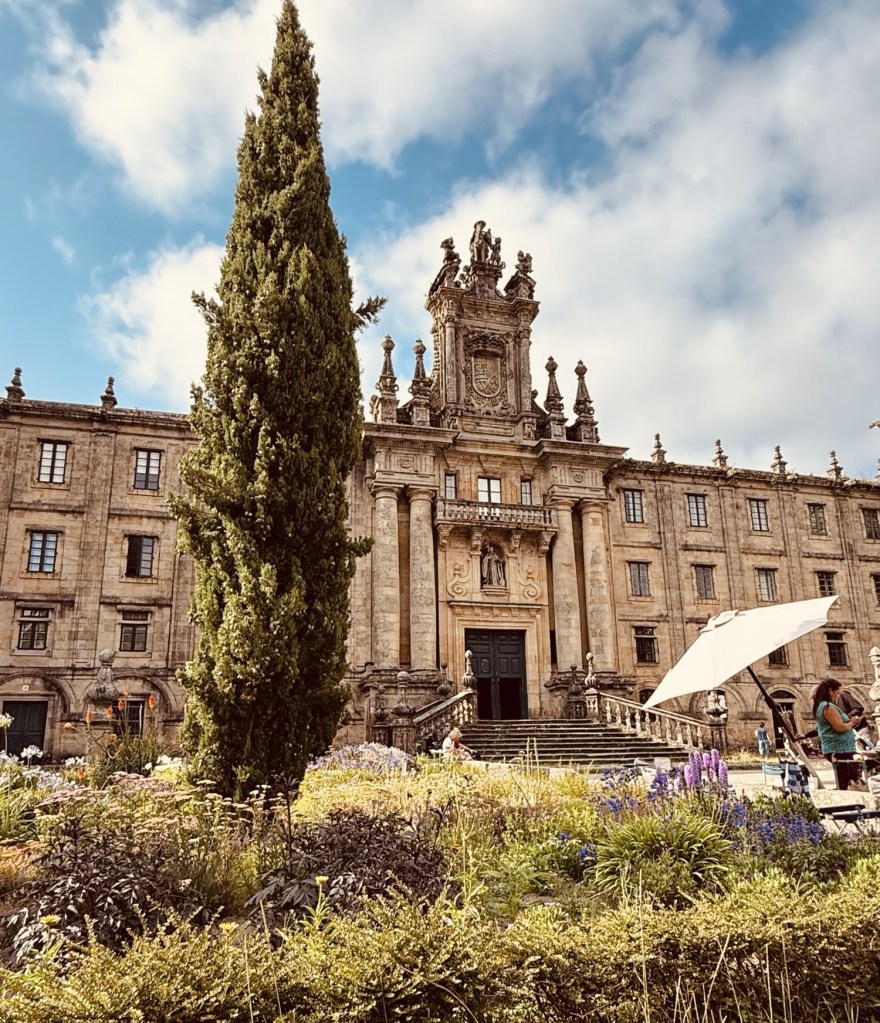
amazing rooftop views… cobbled streets…
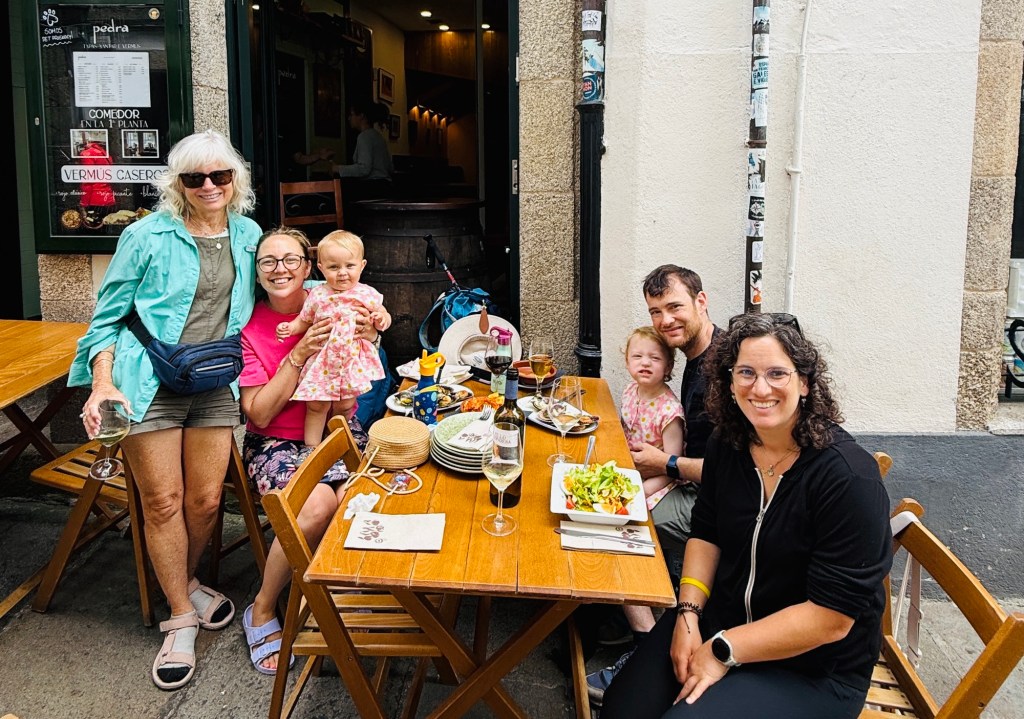
… countless restaurants and bars serving fantastic food…
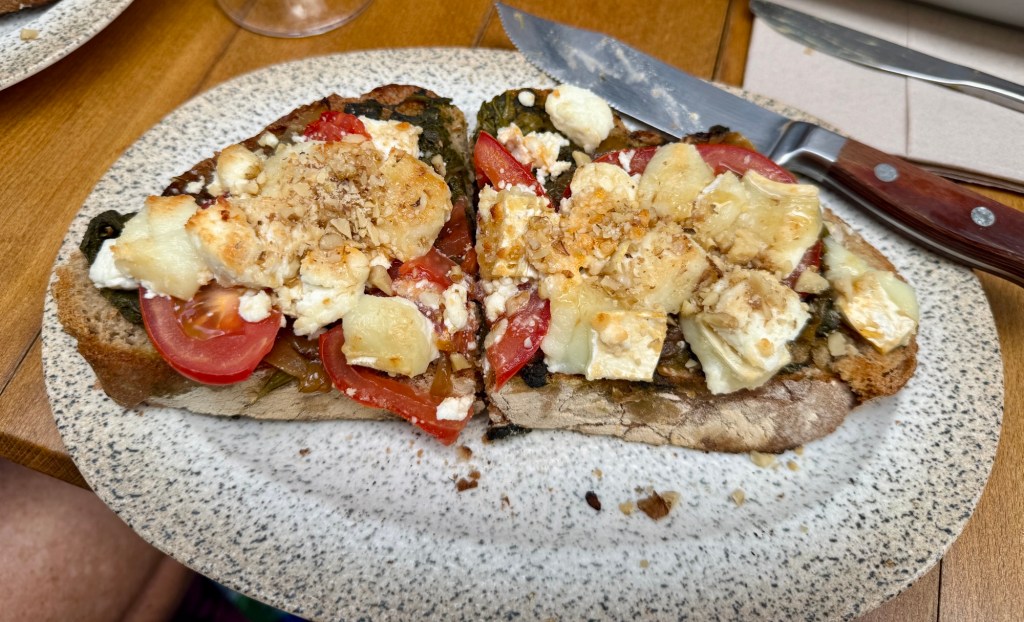
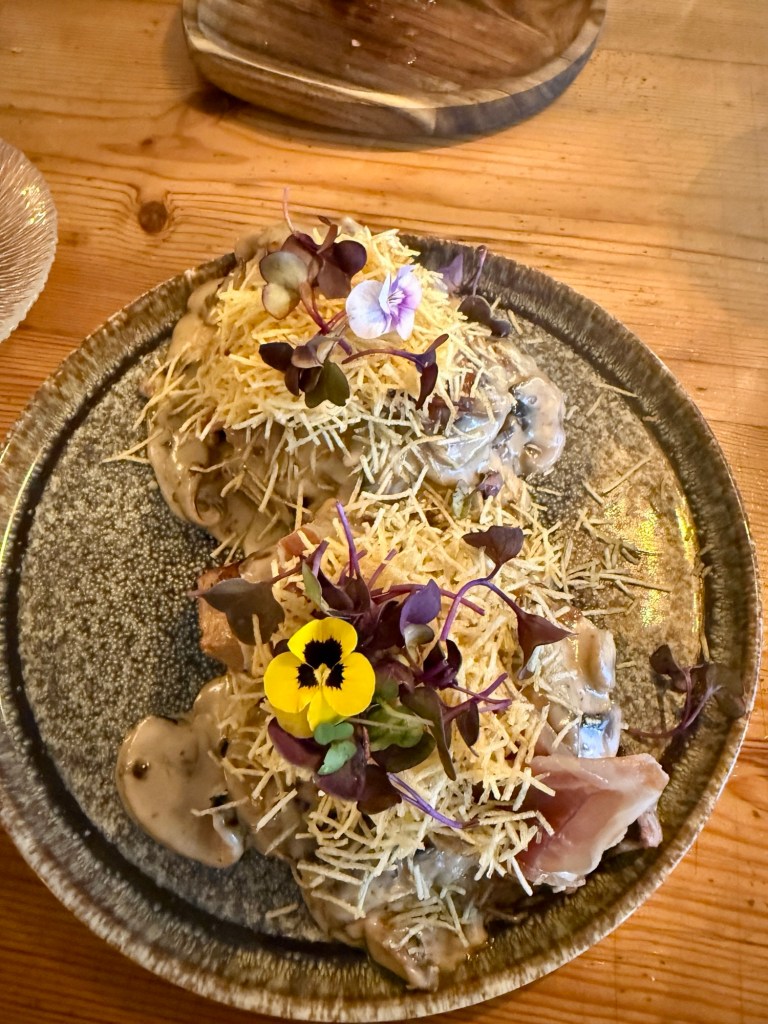
and flowers everywhere… in gardens and spilling from balconies… and even growing out of the stone.
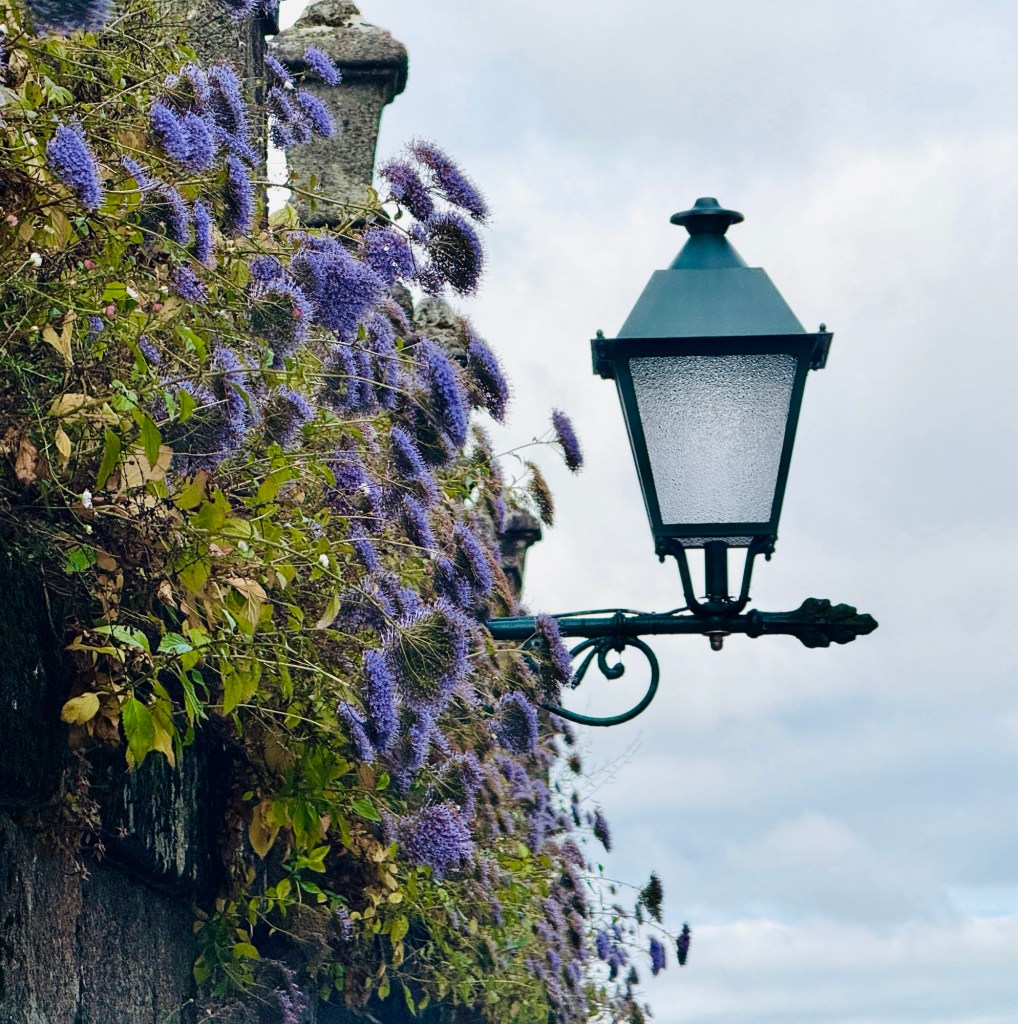

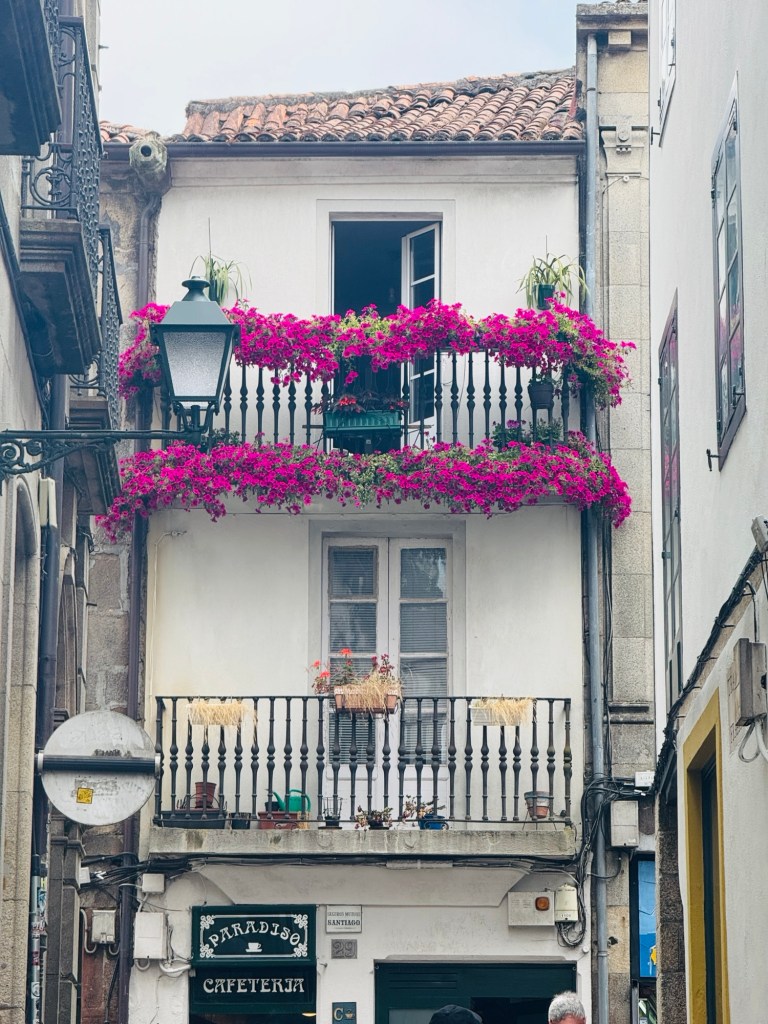
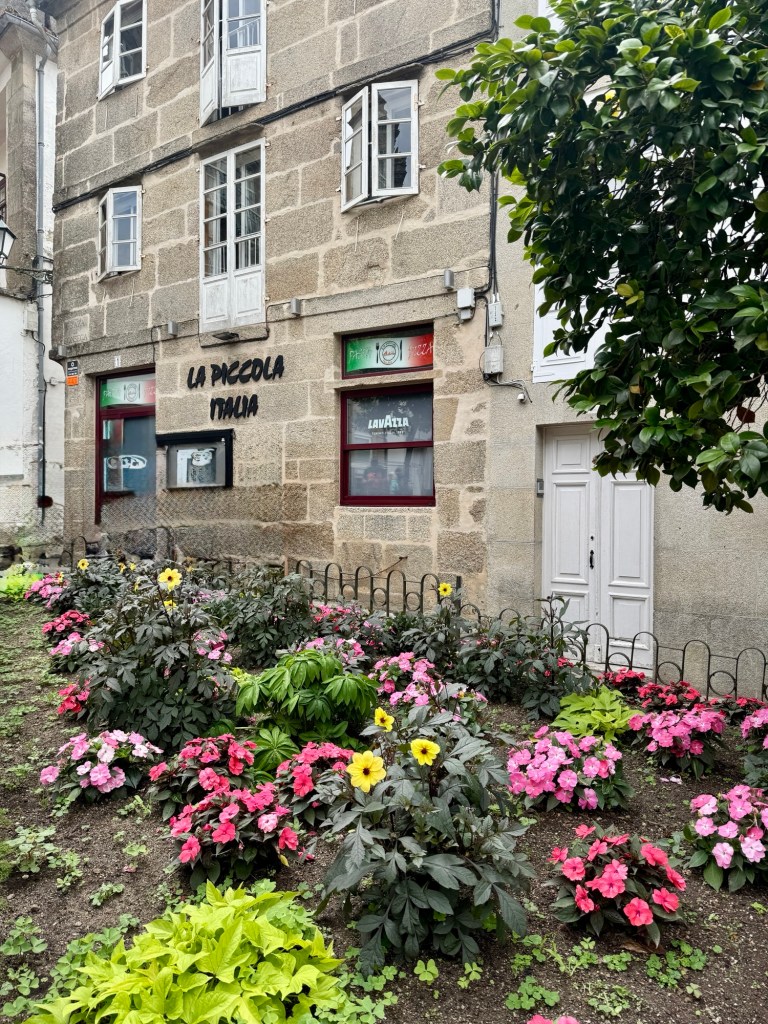

There are pilgrims everywhere… constantly arriving, often with their own version of the Camino limp or shuffle. There is contagious excitement in the air and I love this place. I think it has to be one of the happiest places on earth.
I, with my obsession with climbing high places, book to go to the cathedral rooftop and tower… offering a unique perspective of the city and the cathedral itself. Of course it involves many steps but the panoramic views and getting up close and personal with the stunning details of the cathedral make it all worthwhile. I really love visiting churches and cathedrals but this one will, I think, always remain the most special in my heart.
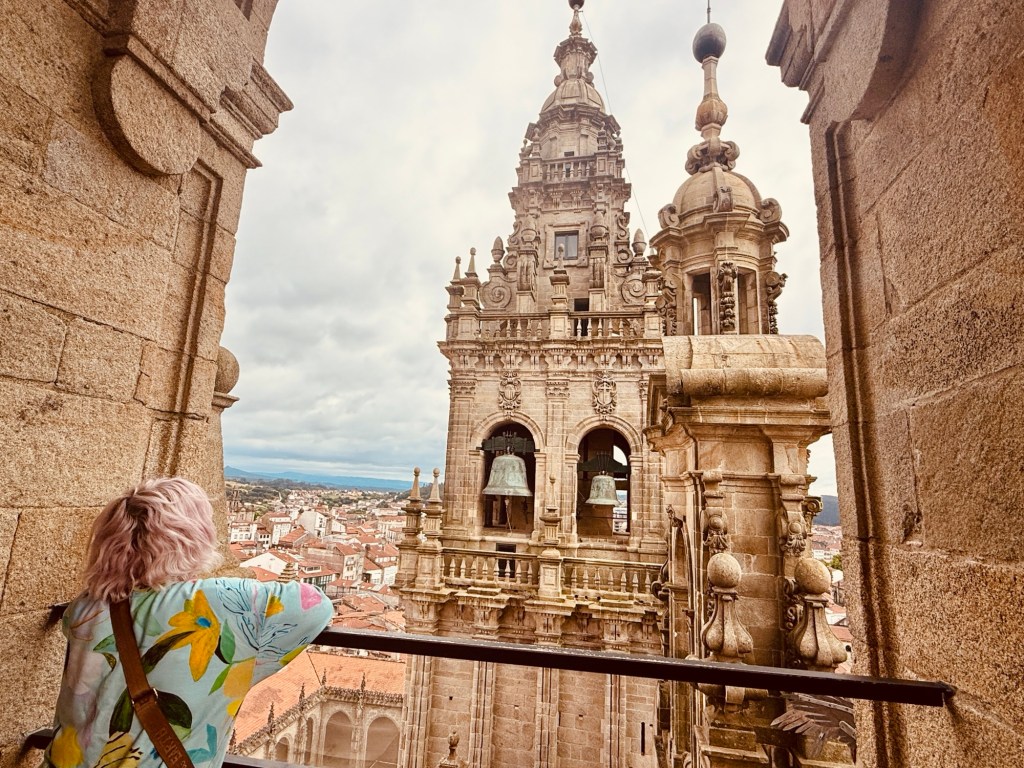
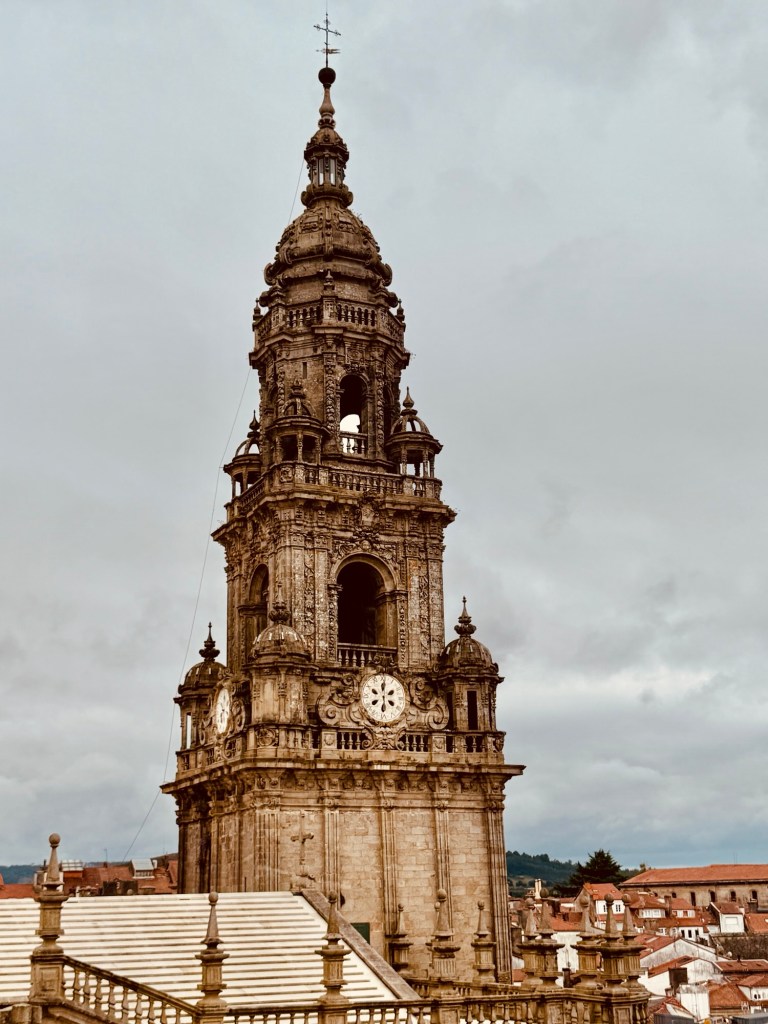
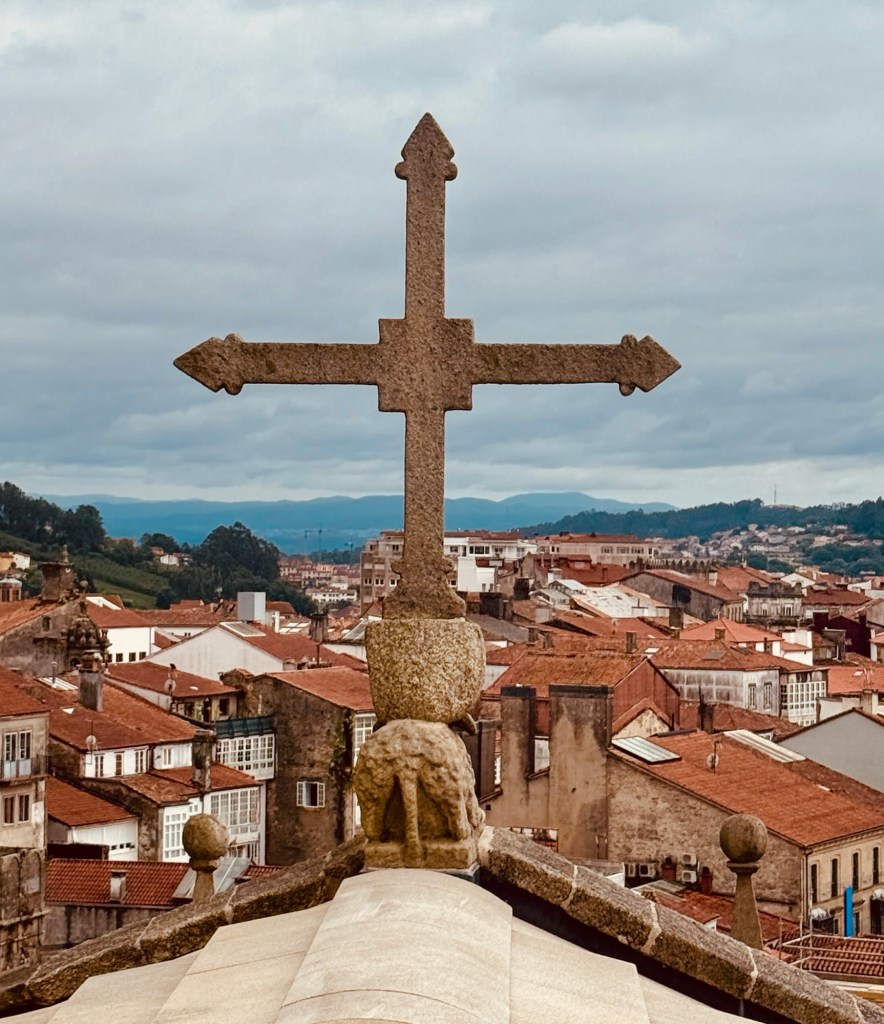
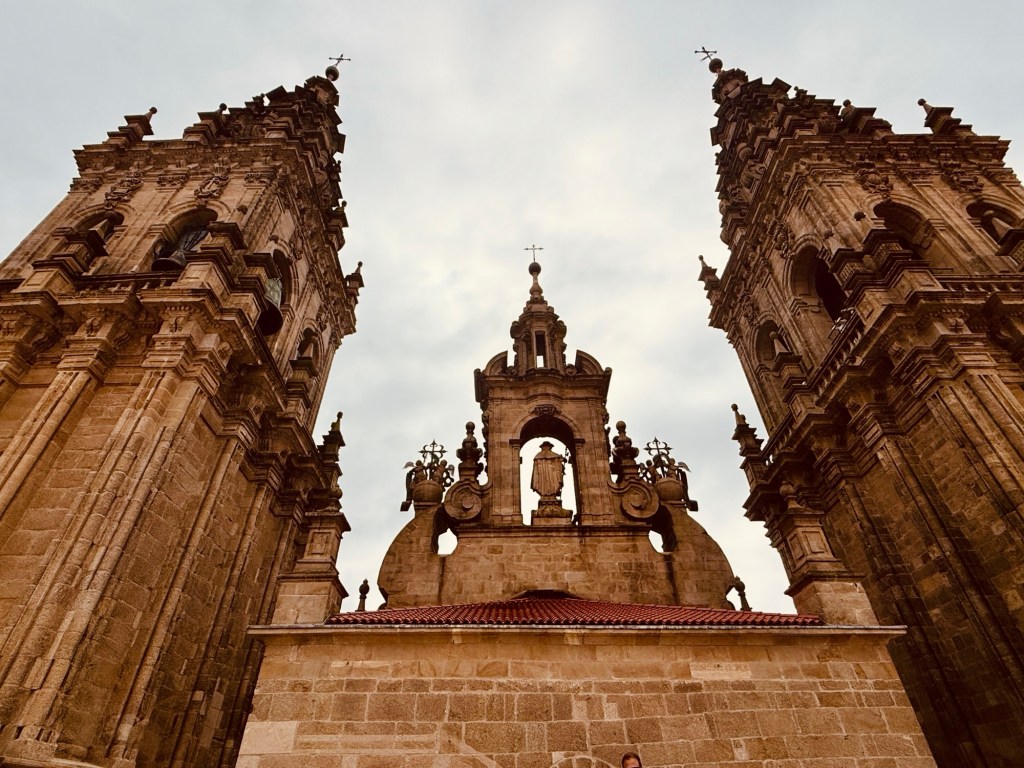
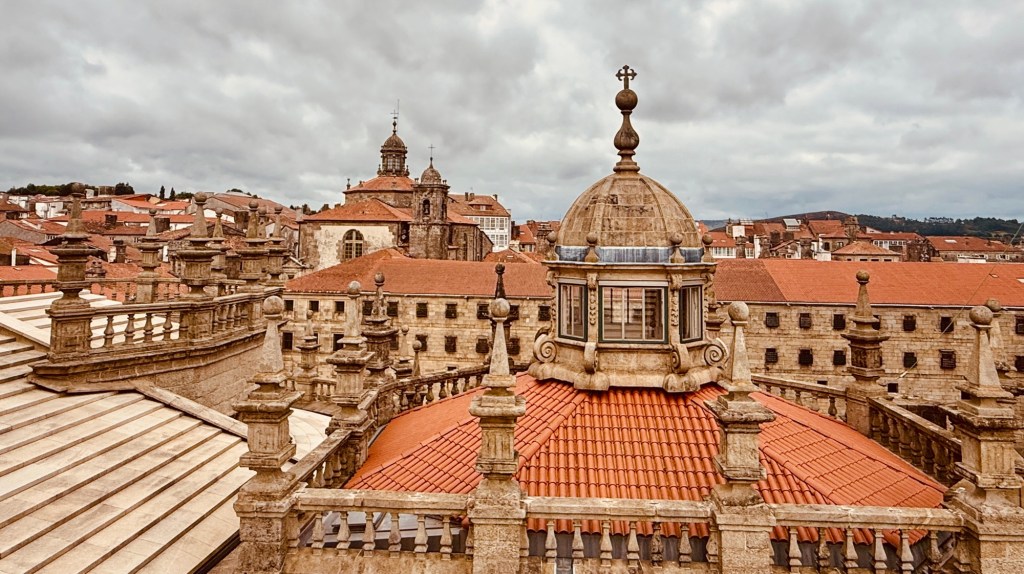
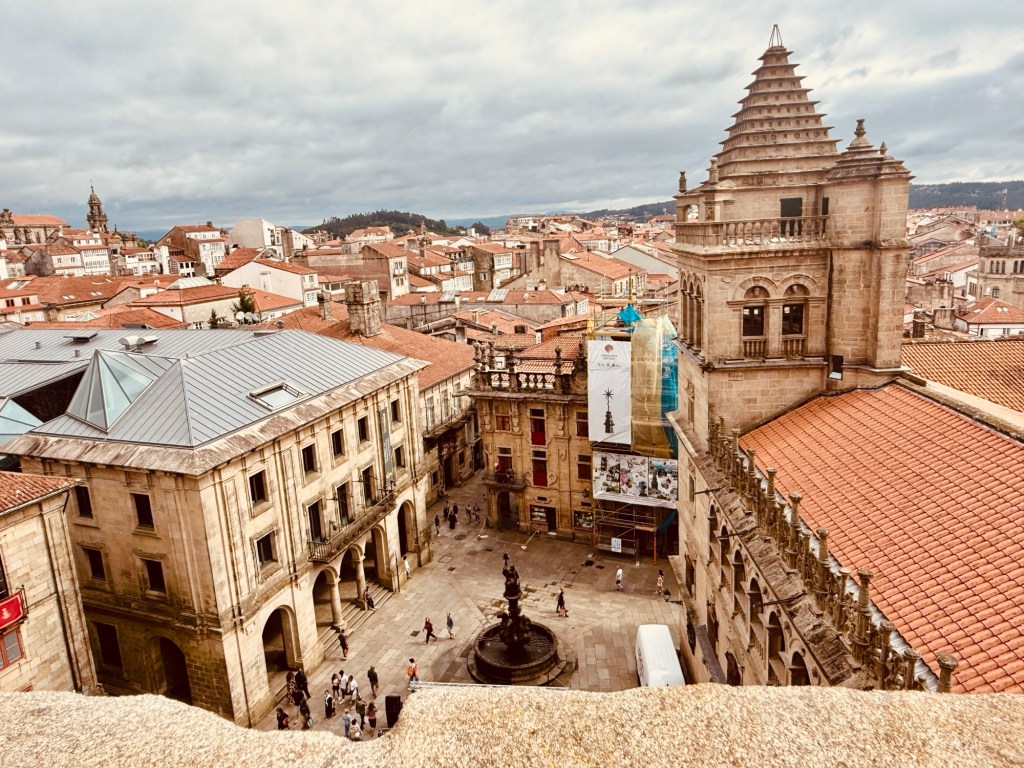
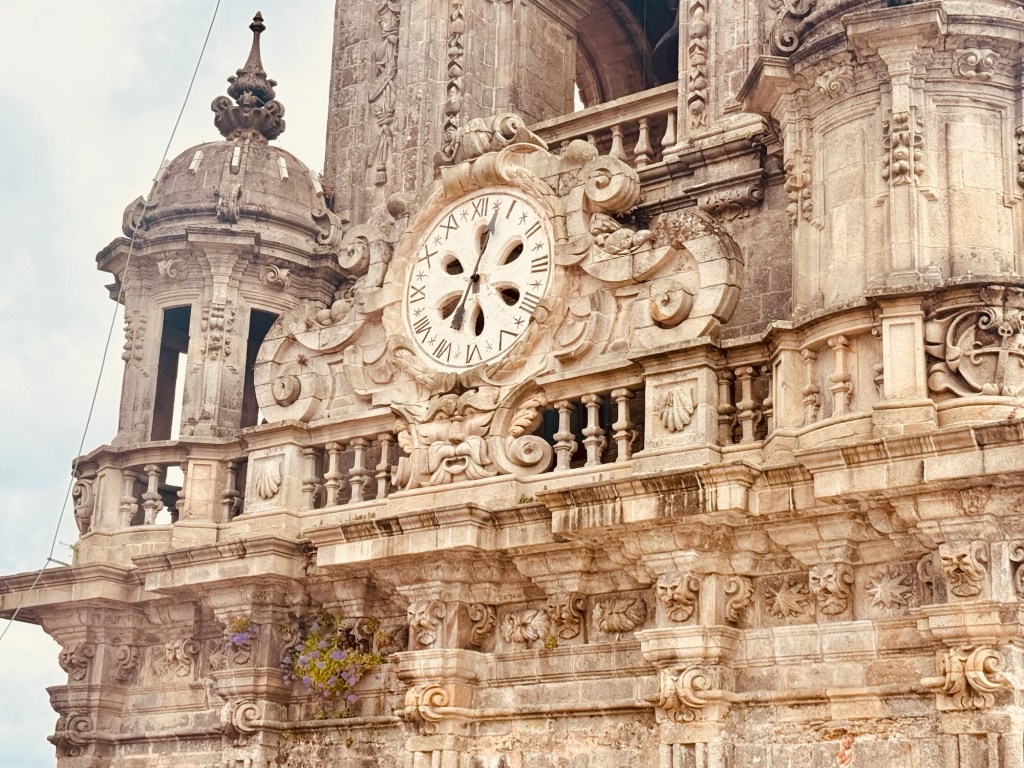

Randomly wandering the streets we stop in to visit a small church and find that a small choir (Matrem choir) is about to sing so we stay and are completely blessed by the angelic voices.
The day before we leave we decide to do a tour to the “end of the world”. It takes us through beautiful countryside dotted with little old churches and hórreos, vineyards, hydrangeas and wildflowers with the coastline on one side. All these things we have become so familiar with as we walked but now we watch them by through the windows of a bus.
We drive along the stunning Costa da Morte coast and stop at the Ézaro waterfall that plunges into the sea from about 40 meters high…
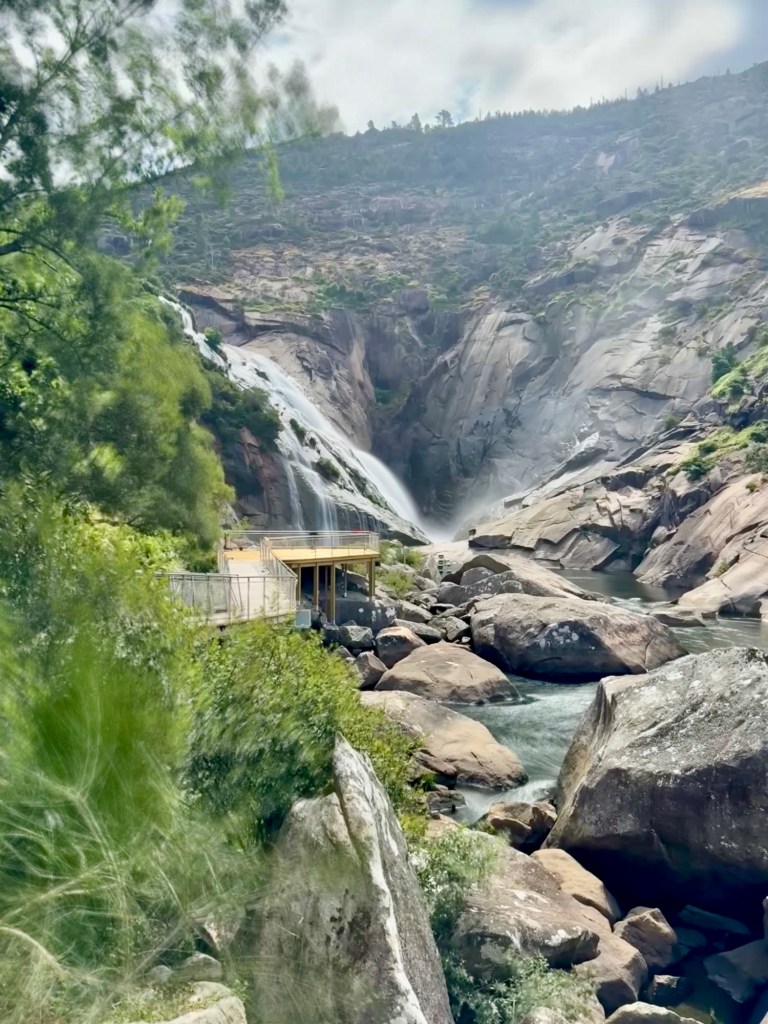
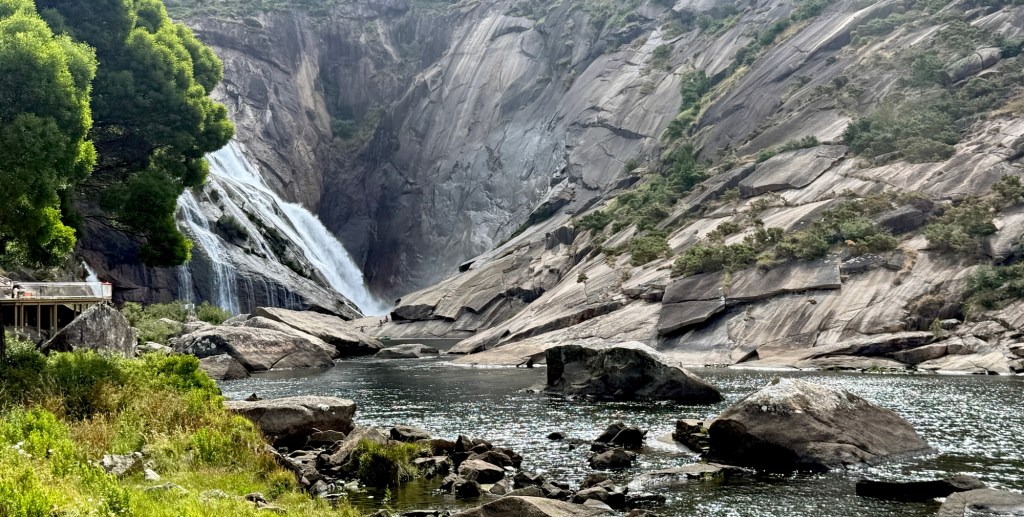
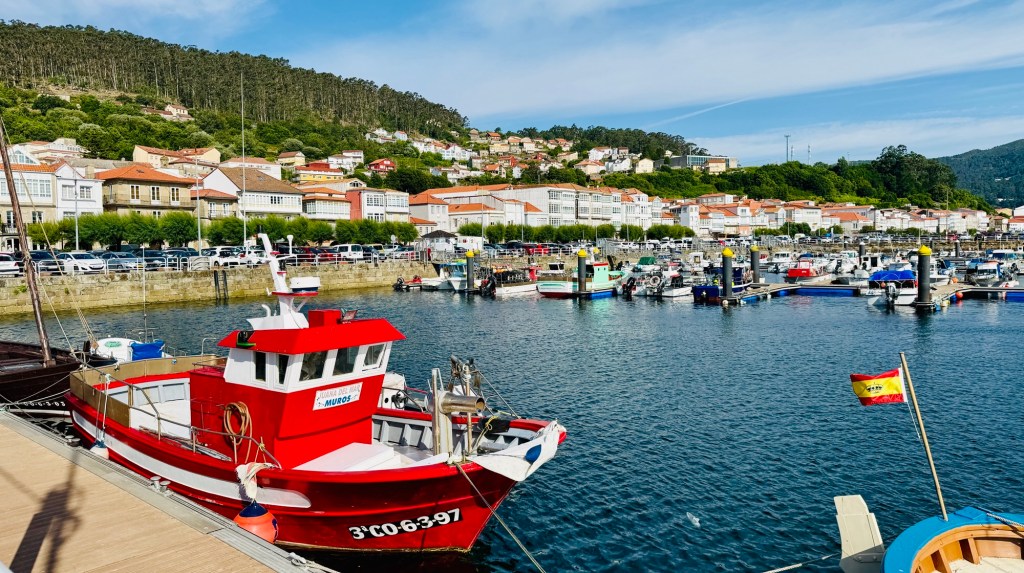
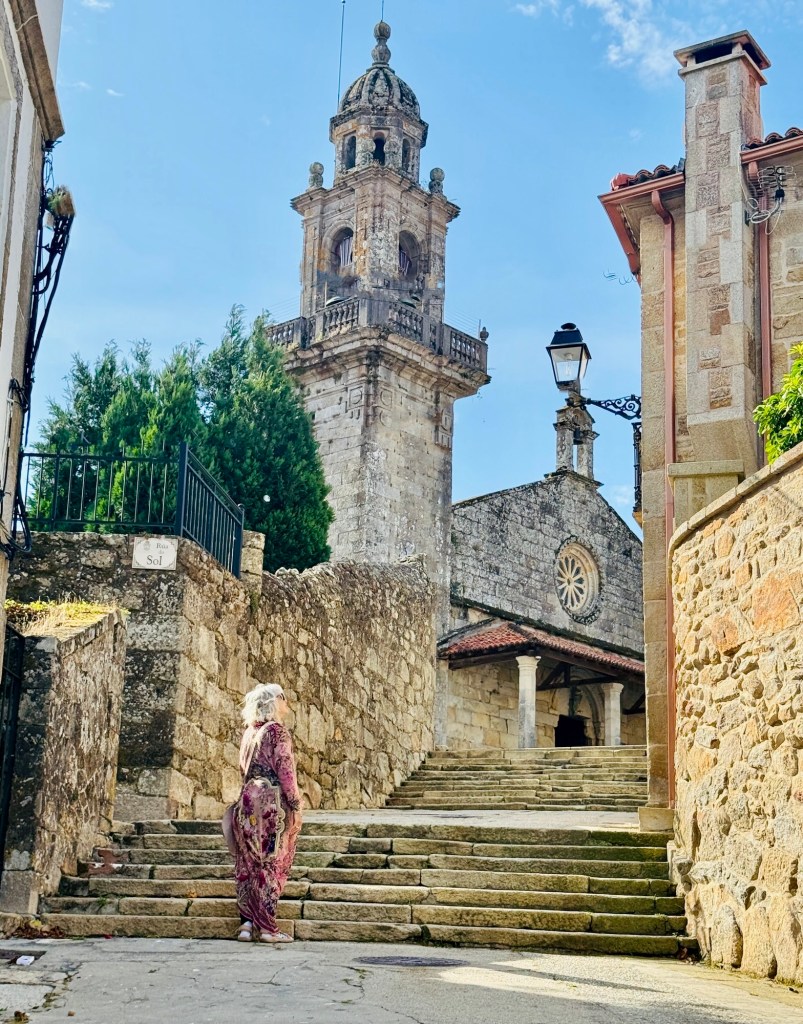
… and onto the fishing village of Muros where we walk through the historic centre and up to a church st the top of the hill.
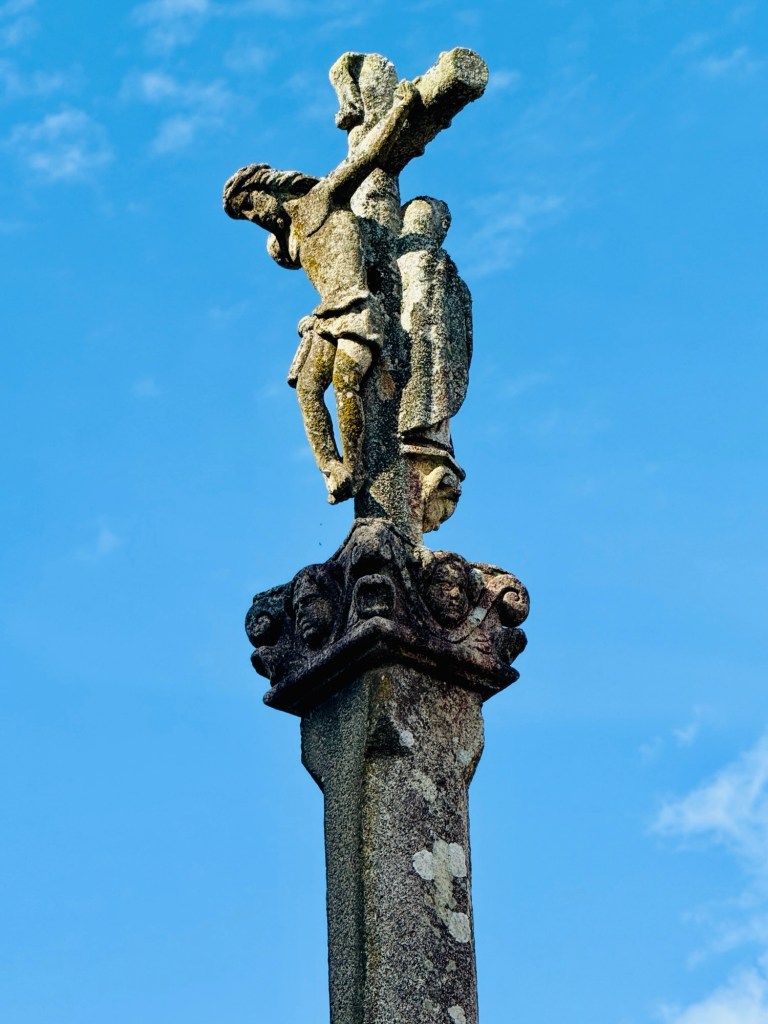
We visit the Muxía Sanctuary, also known as Santuario da Virxe da Barca, a significant pilgrimage site in Muxía, Spain, dedicated to Our Lady of the Boat. It’s a place where Christian and pre-Christian traditions intertwine, located on a rocky promontory overlooking the Atlantic Ocean. The sanctuary is closely associated with the legend of the Virgin Mary arriving in a stone boat to encourage Saint James, and it’s a popular destination for those completing the Camino de Santiago. So many stories around St James in this part of the world but some believe that by a miracle of God, the body of the saint, after his beheading at the hands of the Romans, was carried in a boat back to Muxía where it was discovered many years later and taken to Santiago 🤷🏼♀️
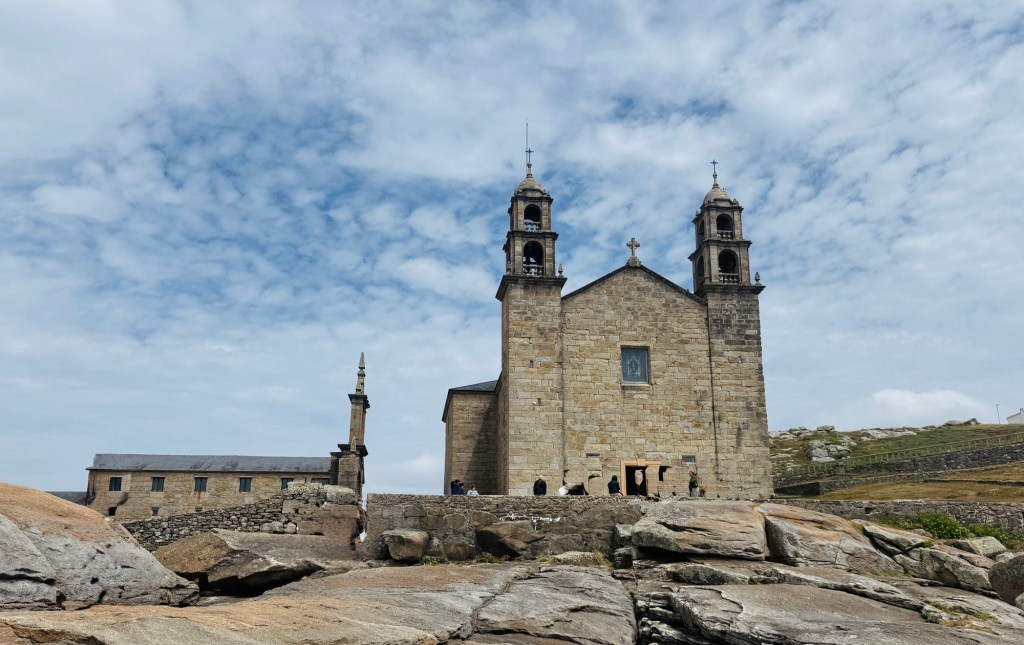
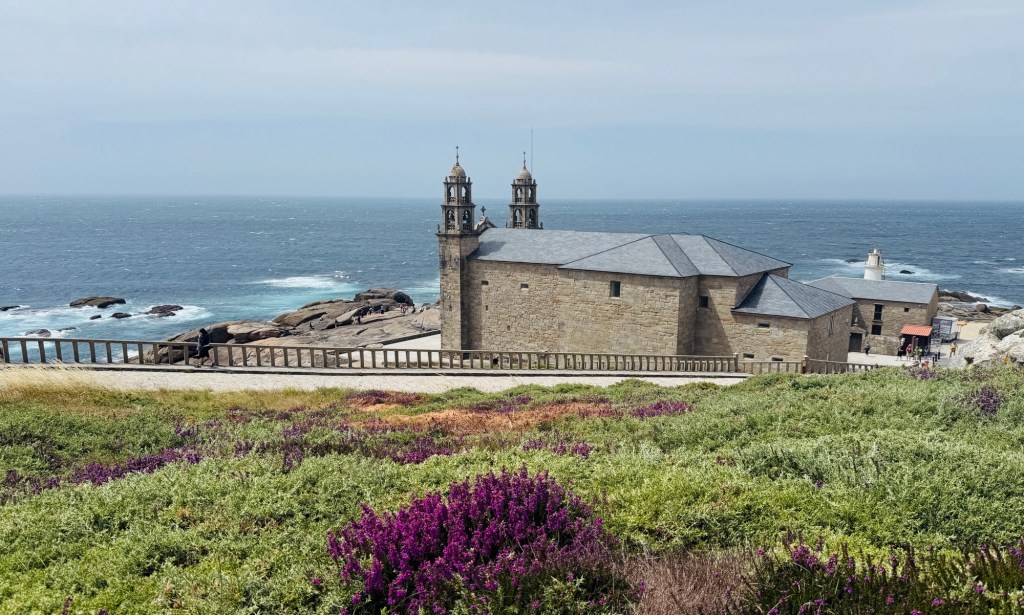
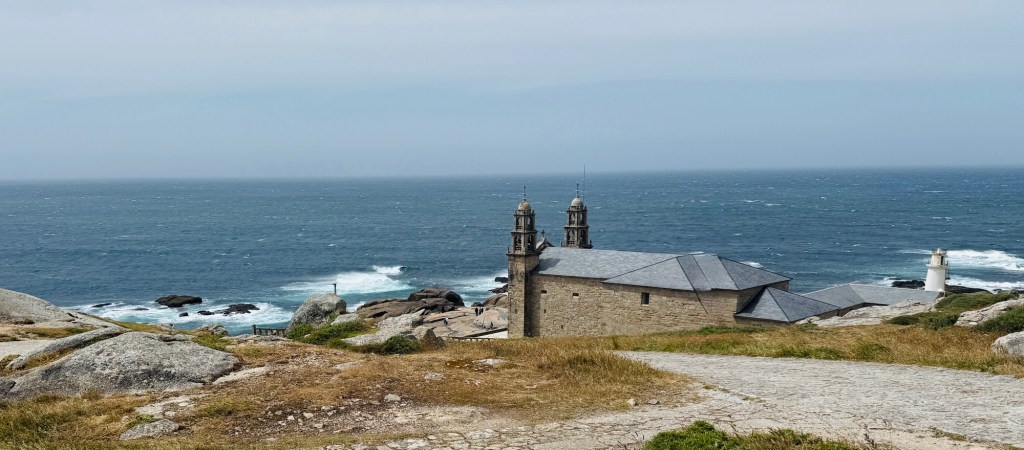
The weather was pretty wild and I seriously struggled walking against the wind.
We had a short break in the absolutely gorgeous little medieval village of Ponte Maciera which is the first stop after Santiago for those continuing their pilgrimage. I can just imagine the unexpected blessing of walking into this stunning but pretty unknown rural village… built around a magnificent bridge of Roman origin… full of legends…
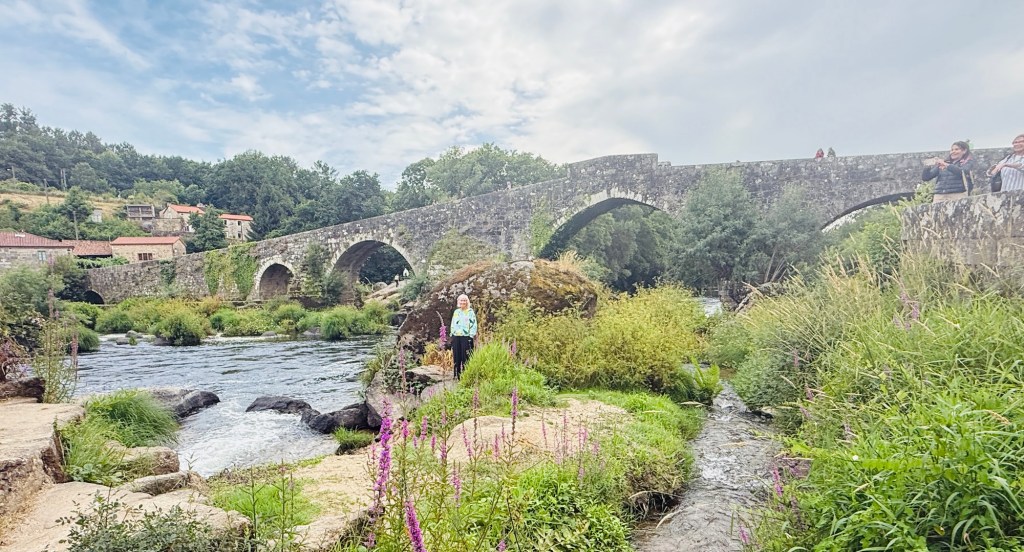
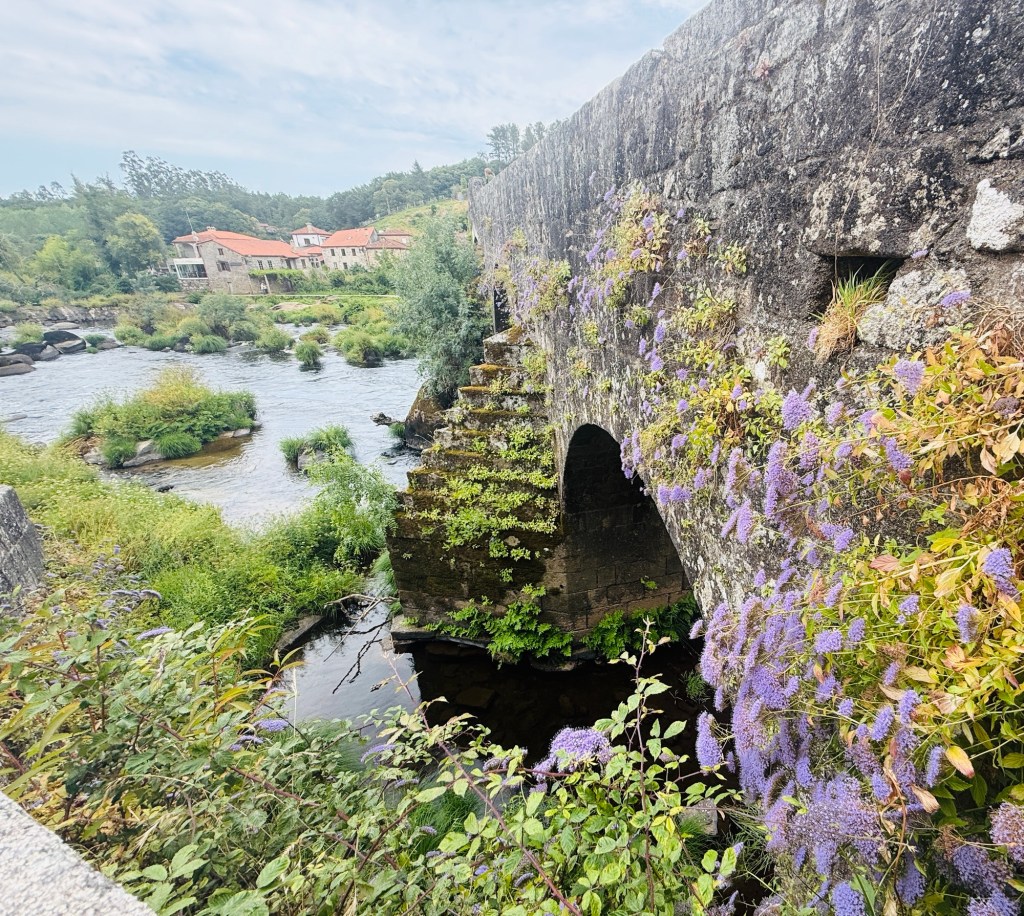
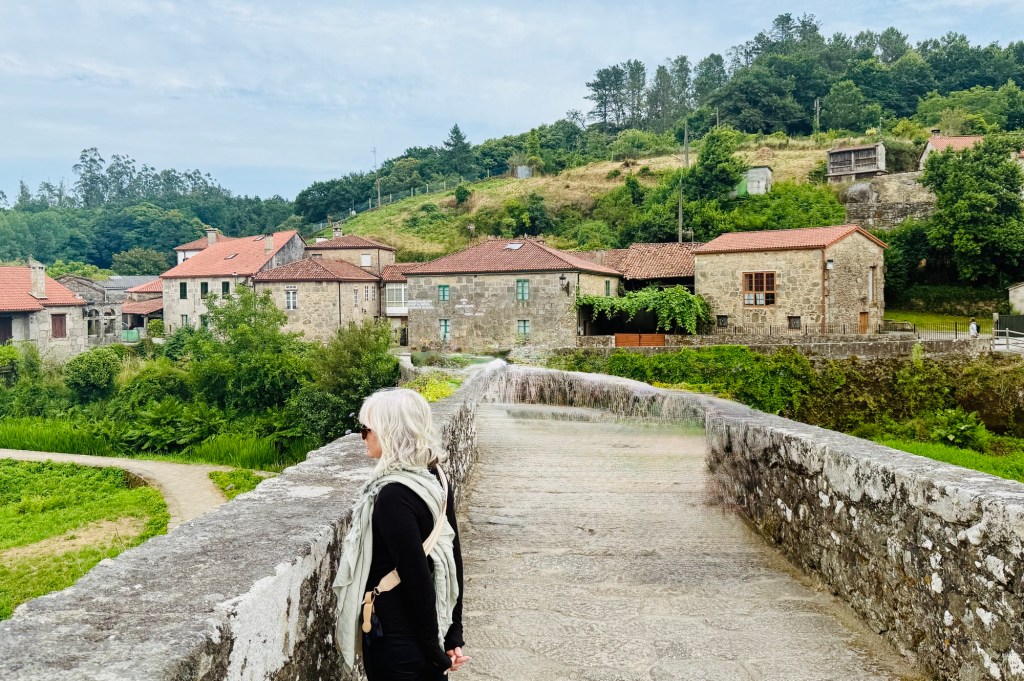
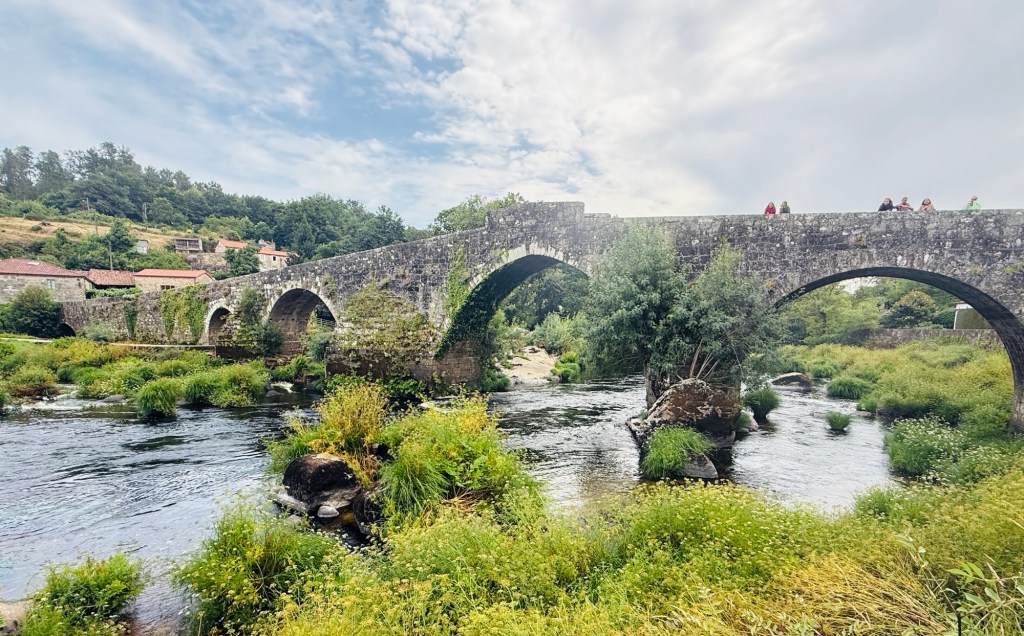
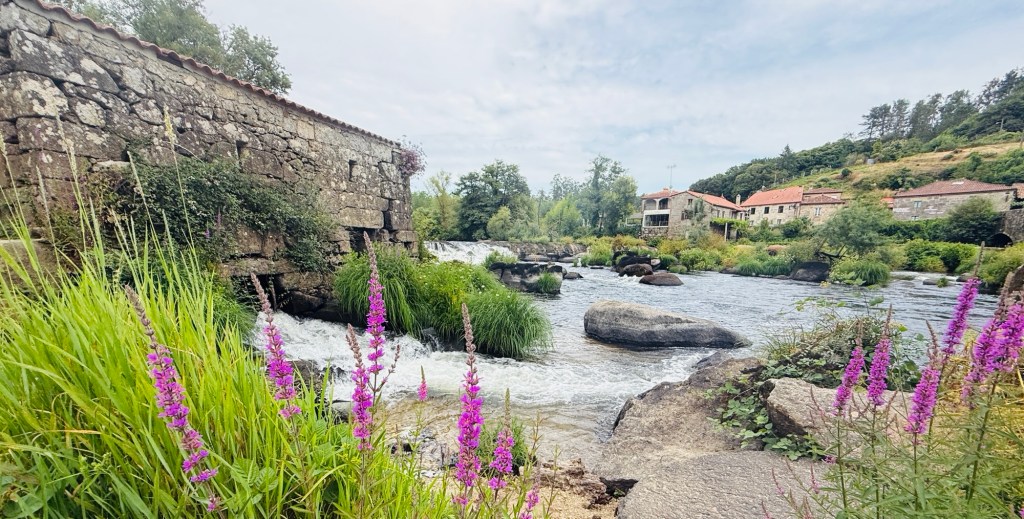
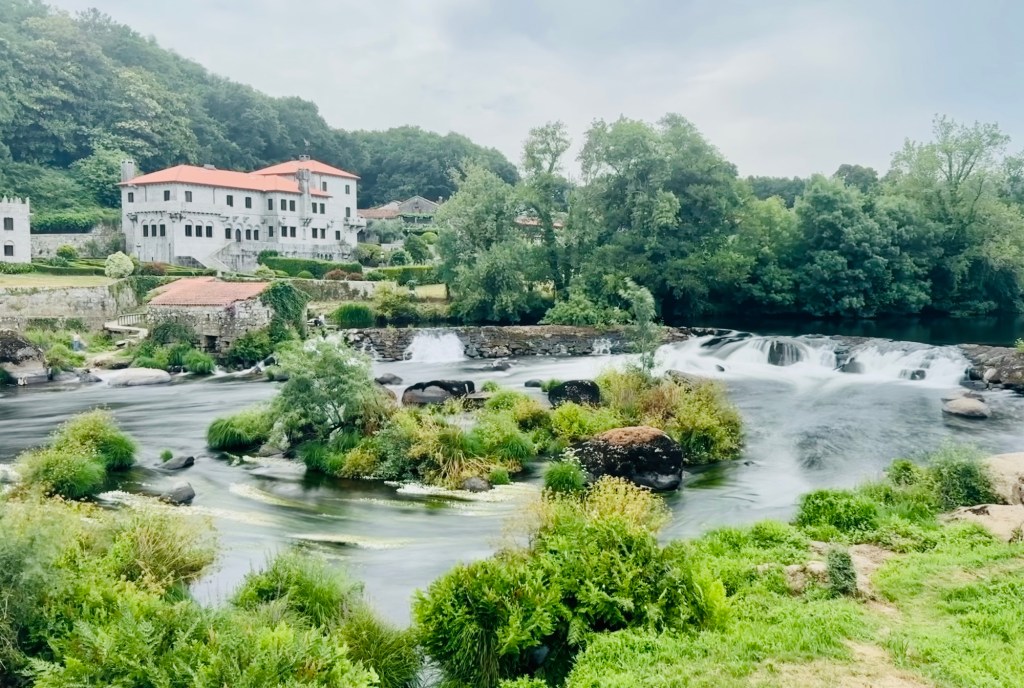
… over the river Tambre, surrounded by a natural environment difficult to match, between the flow of the river and the green of the Galician forests that surround the area. A true haven of peace. And a gorgeous town with its ancient mills, hórreos and cobbled streets.

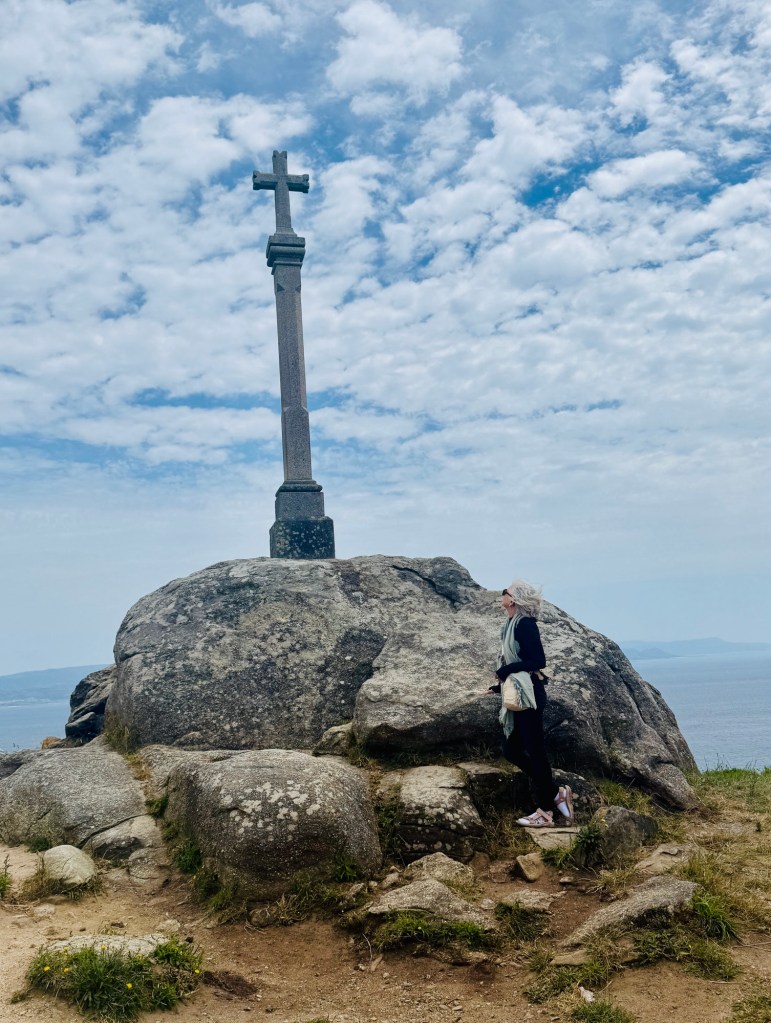
And of course, the ultimate destination… “the end of the world”… where the West ends… where the sun goes to bed and seems to be swallowed by the sea… the last point of Europe… the End of the Earth or the classic End of the World… many are the epithets that are and have been applied to Cape Finisterre. This cape is one of the most magical places in Europe, and while most believe the Camino ends in Santiago, many pilgrims say that the journey continues to Finisterre, the legendary “end of the world.”
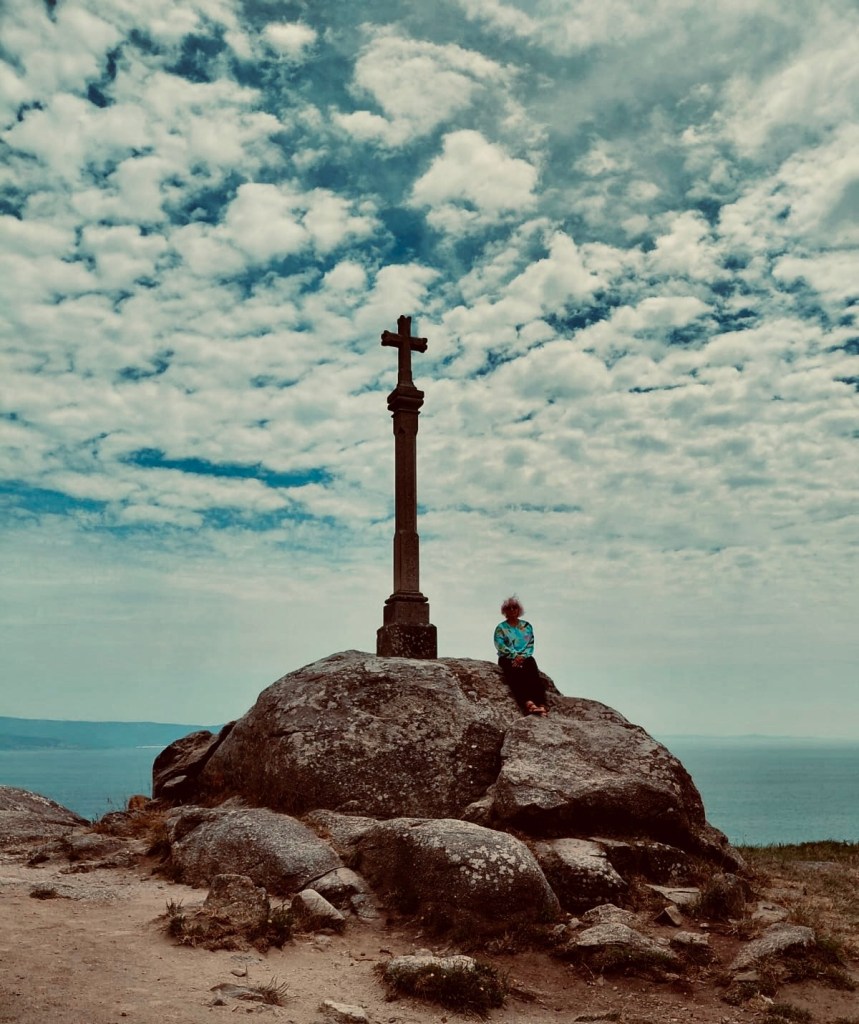
Early pilgrims would travel from their home to Santiago and onwards to Finisterre. Once they reached Finisterre, they would collect a scallop shell as proof they had walked the Camino de Santiago. Upon their return home, they would produce the shell to receive absolution of their sins from their priest. Some believe that a medieval pilgrim would use the scallop shell as a bowl for the food, wine, and water offered to them along the way.
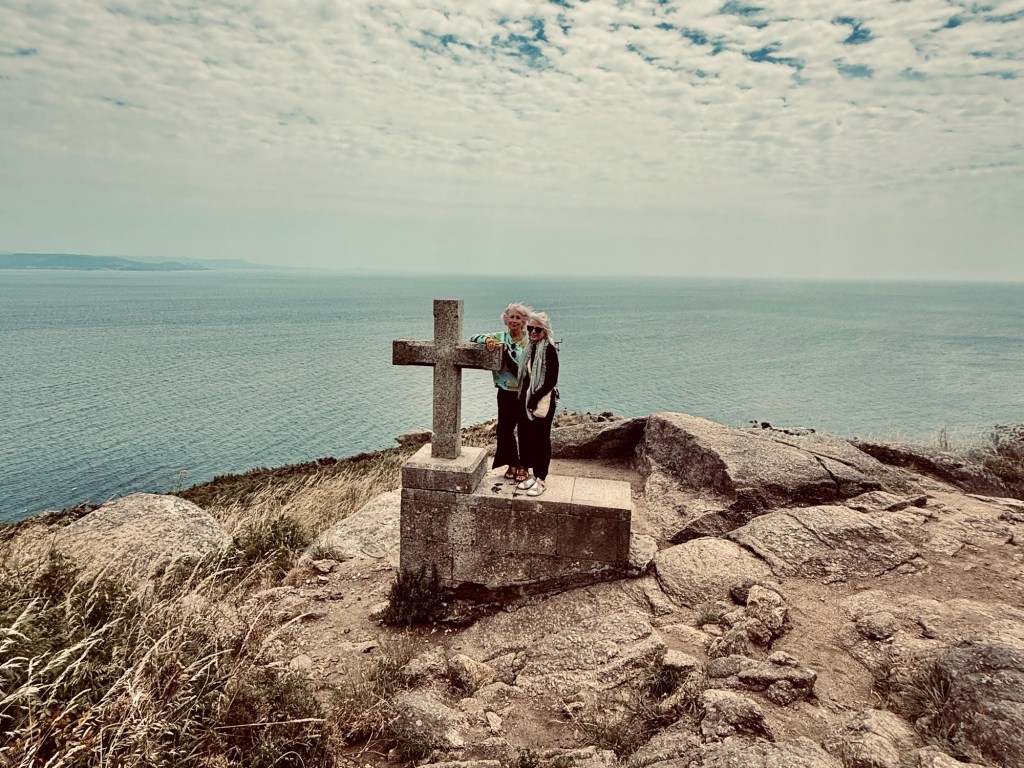
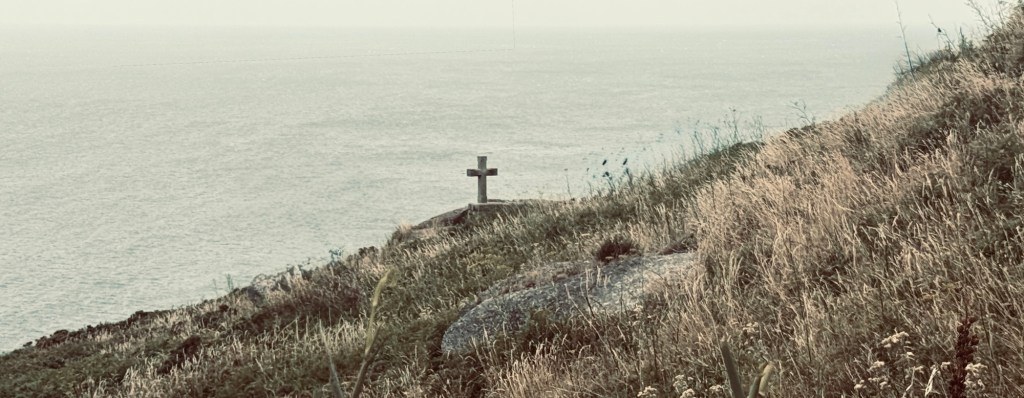
However, from the 13th century onwards, a fraudulent practice began to emerge with the rise of the number of merchants selling scallop shells. The Compostela was introduced at this stage as proof of completion of the Camino de Santiago.
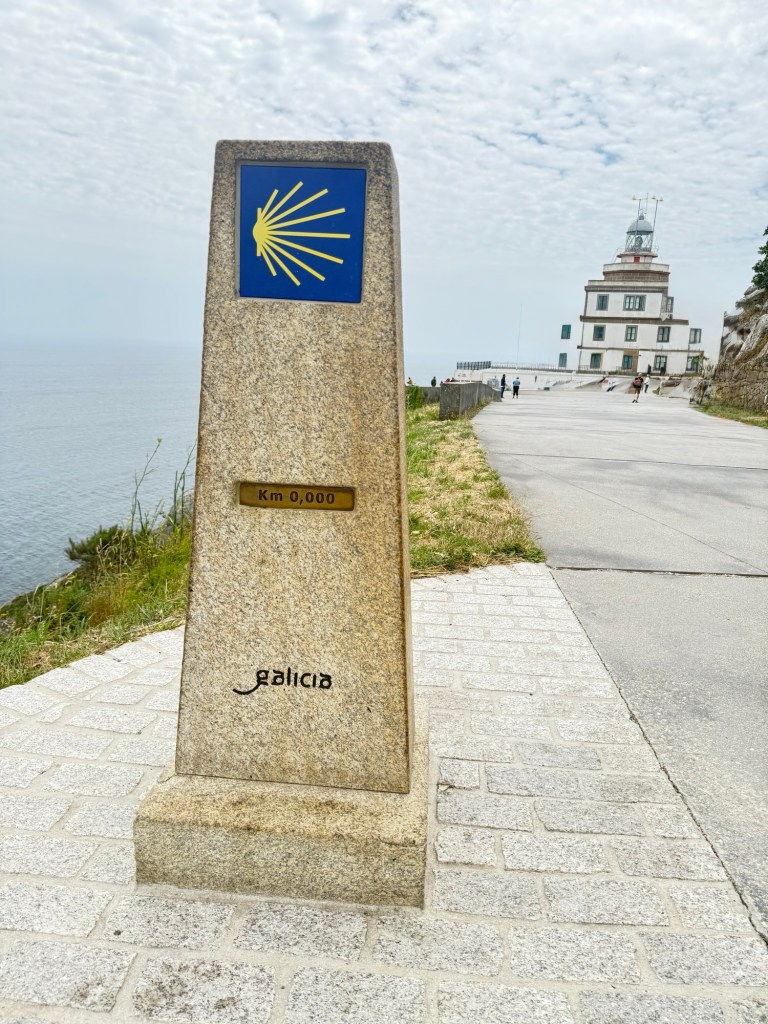
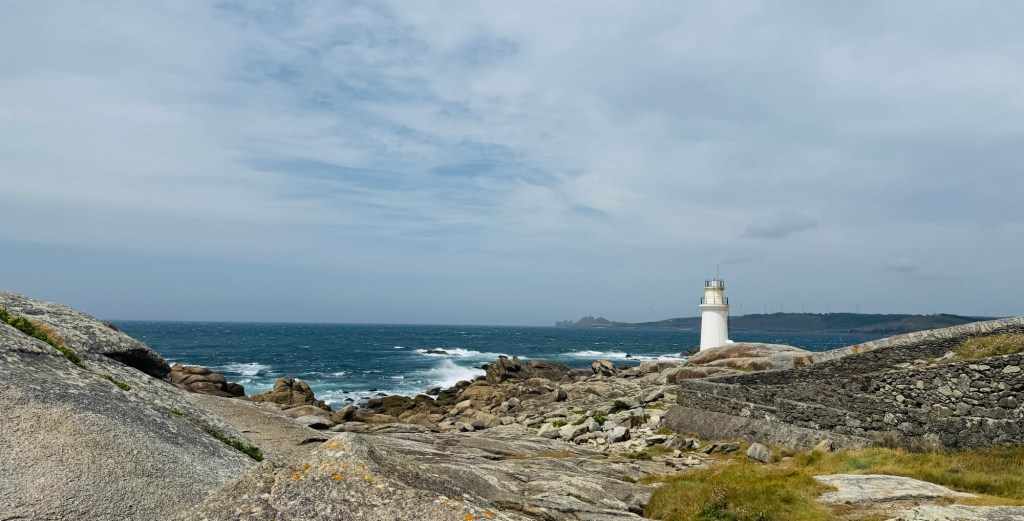
The 0.00km marker at Finisterre signifies the end of the traditional Camino de Santiago pilgrimage route, specifically the Camino Finisterre. It’s located at the lighthouse on Cape Finisterre, marking the westernmost point of mainland Spain and symbolizing the “end of the world” as perceived in ancient times I would love to have continued walking to this place… one last stretch of reflection , beautiful wild nature and pure emotion…. but it was not in our plan this time. Maybe next time… and yes I think there might be a next time. And Anne is already planning hers for next year. But sitting here… at the end of the world… with breath taking views of the endless horizon… alone with my thoughts and powerful emotions.. it felt like a perfect ending. I threw a couple of rocks… with all they symbolise… that I had been carrying since the beginning and felt peace come. What will be will be. I didn’t want to leave but sadly the bus was waiting.

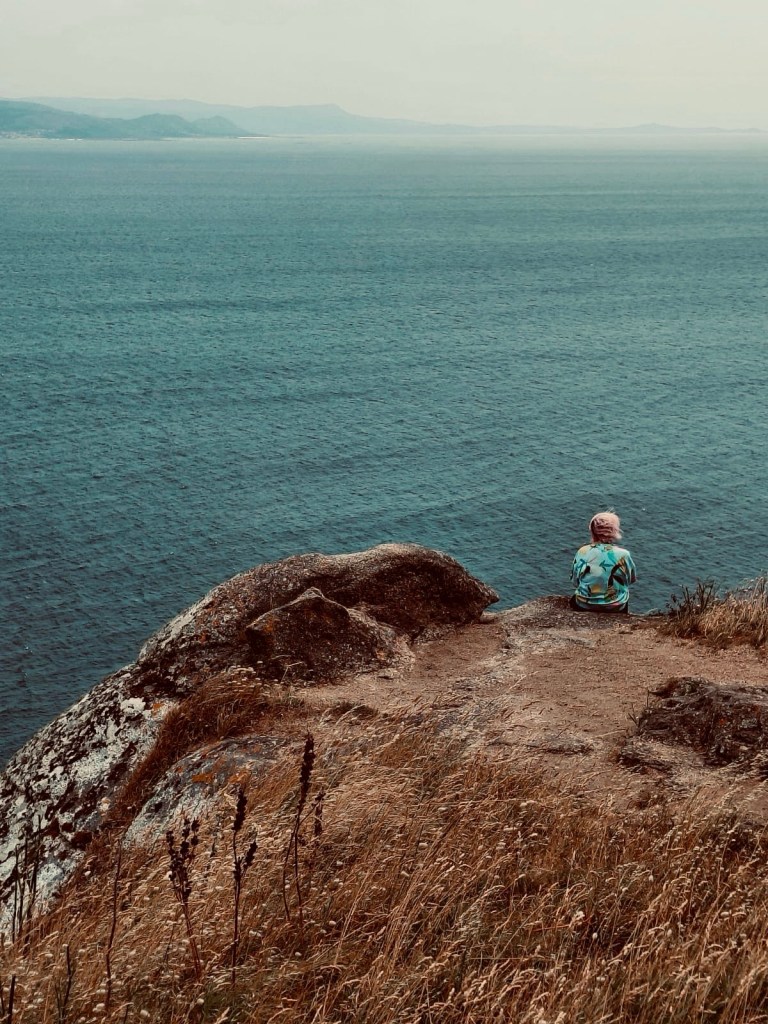
I am sad as we say our goodbyes to beautiful Santiago de Compostella and its magnificent cathedral… so much emotion tied to this place that will forever remain special to me. But as per my quote in the beginning of this blog, it is now somehow a part of me. And perhaps it is not goodbye… just farewell.
And just because I’ve been posting so many pictures of Anne’s back for the last few weeks… here’s one of her front (notice the socks with the sandals- her new style).

-
We did it!
“Everywhere is walking distance if you have the time.” – Steven Wright
Day 21
We did it! Not that I ever really doubted we would but certainly at times I wondered why we were.
We started early… well before sunrise, for the first time. There’s an urgency this morning that has not been there before. The alarm is set for 6.00 am, no coffee, no breakfast… just a realisation that today is the day! 20ish kms to Santiago and the end of this adventure.
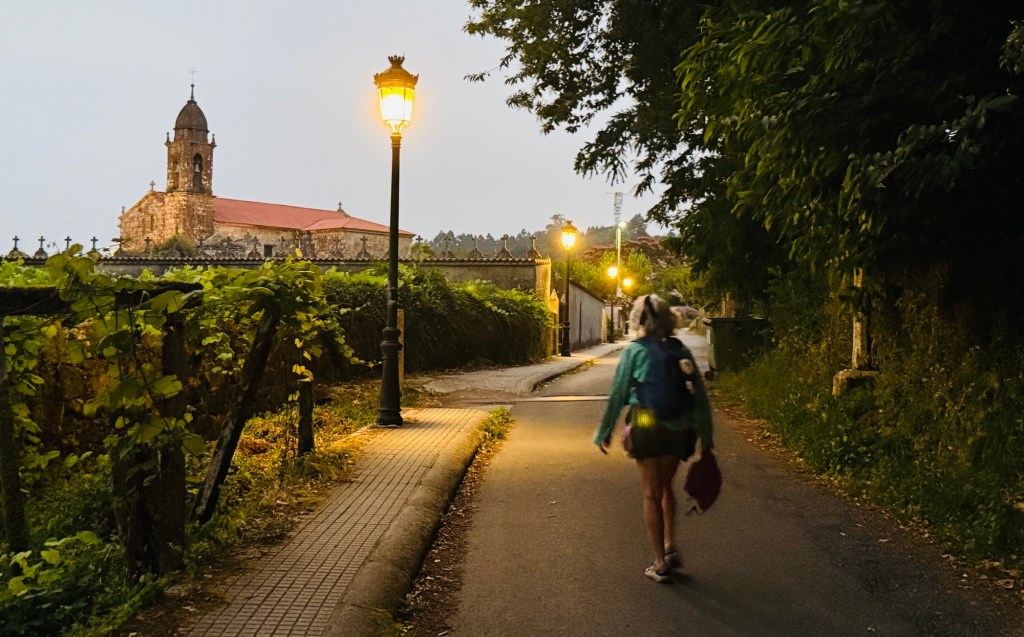
It’s not black outside but the streetlights are still on and it’s chilly- something I did not expect. Part of the reason we have decided to leave so early is because yesterdays heat is expected to continue today and we want to get as much of the walk completed before it’s too hot. Apparently the whole of Europe is in the middle of a heat wave. But it certainly doesn’t feel like it as I leave in just a little tank and shorts.
There is a little mist over the landscape as we leave Cruces and we travel through little hamlets full of stone houses with pretty courtyards, past the very familiar cornfields, vineyards and small market gardens, fruit laden lemon trees and water sources.
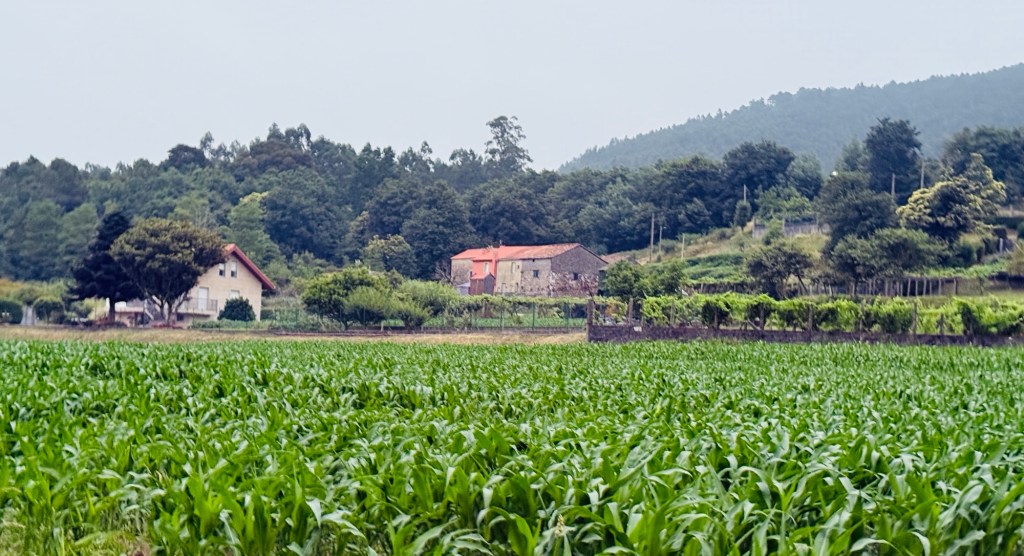
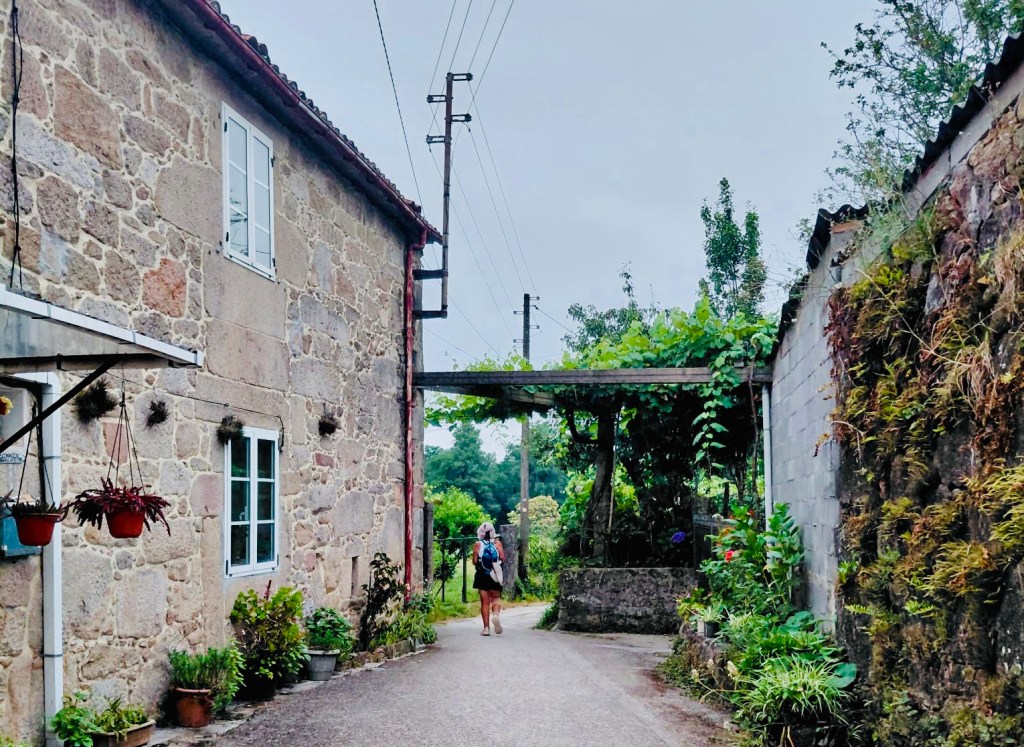
There are churches… although they are sadly, rarely open.
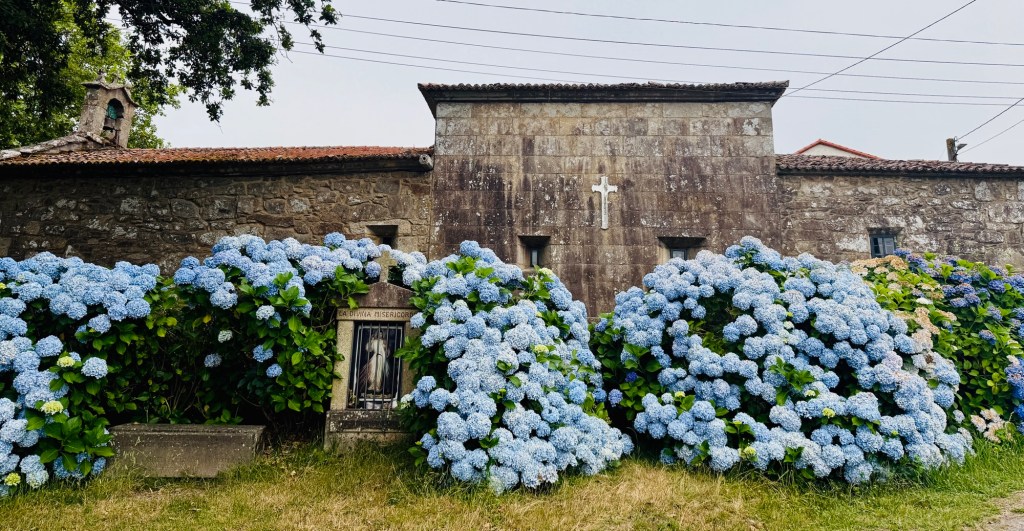
And of course the ever present wildflowers.
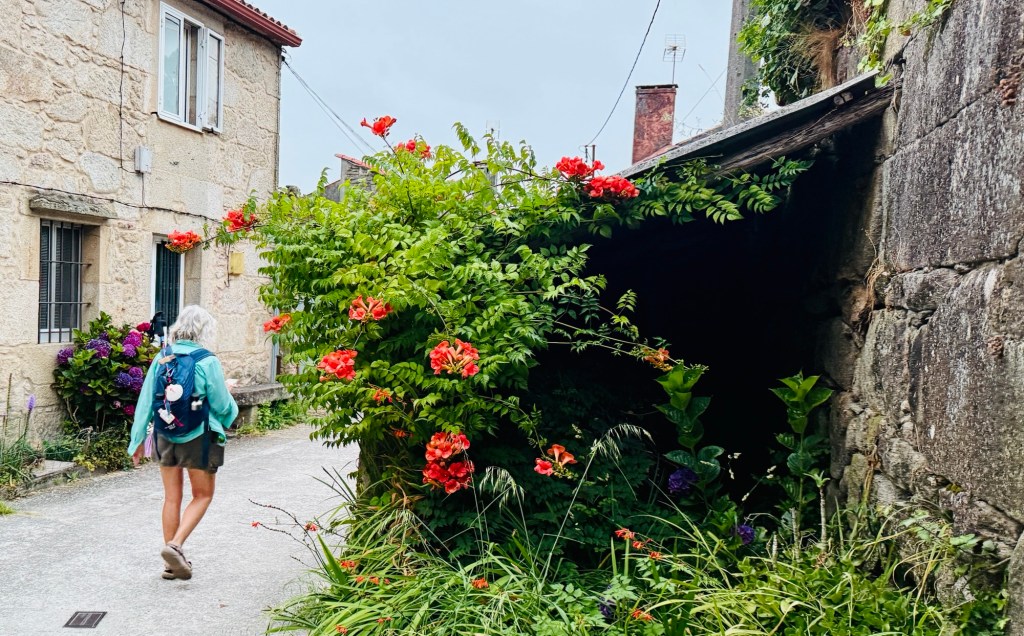

There is some climbing, but also some beautiful forested areas that I enjoy so much.
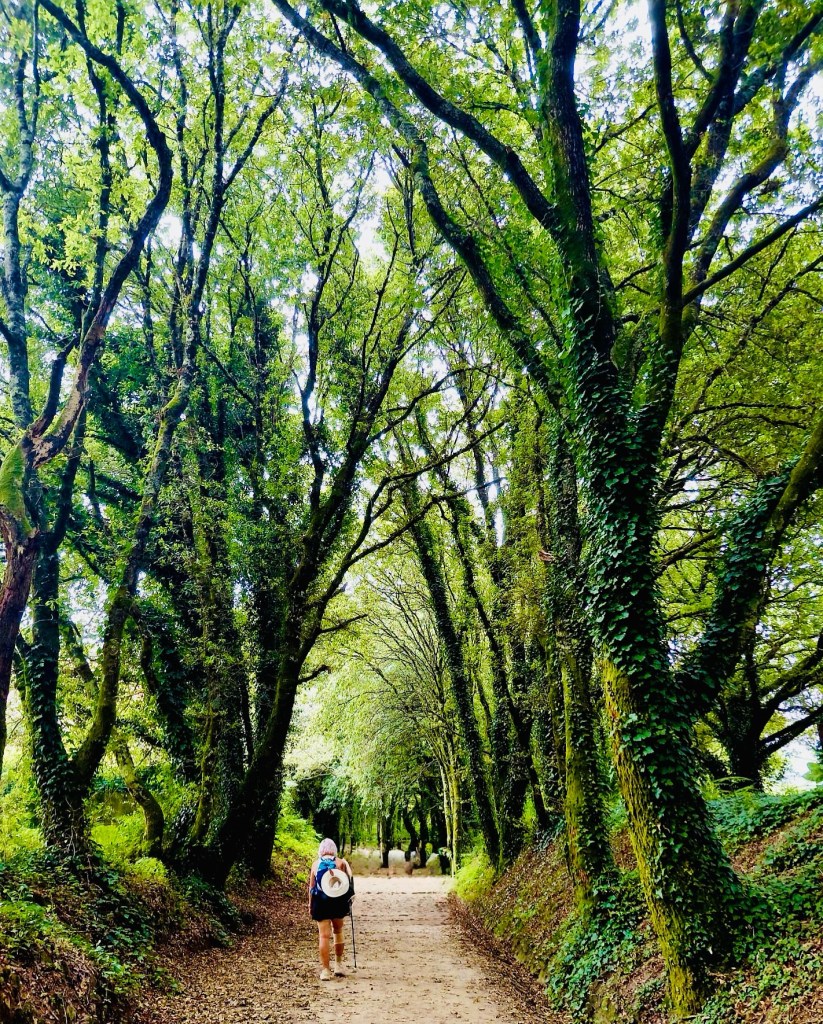
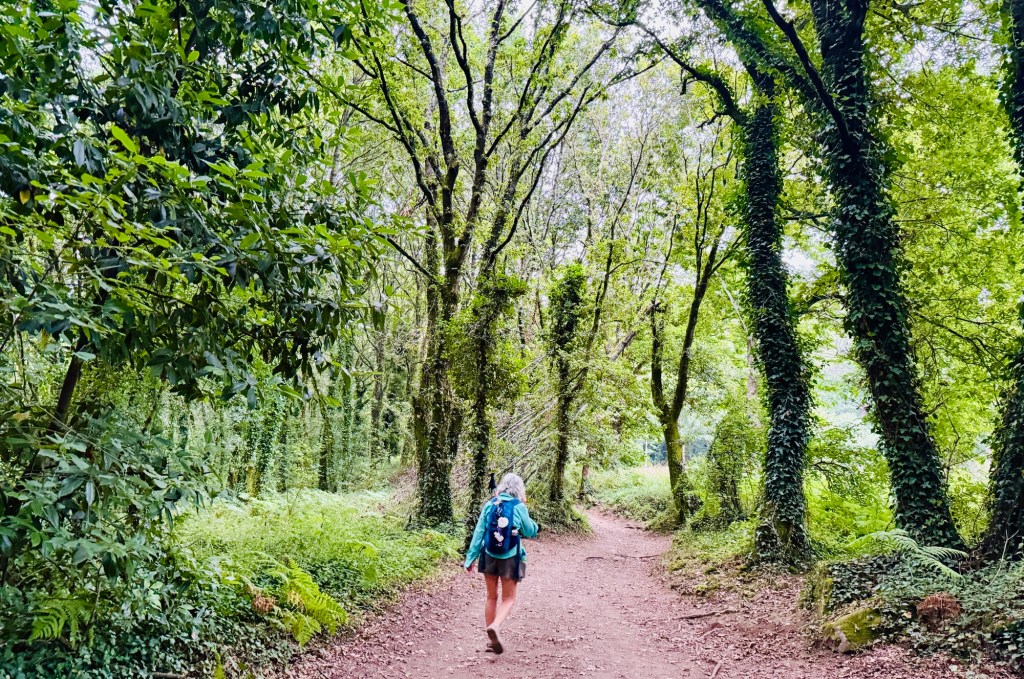
Twice today in these beautiful peaceful woods, we suddenly hear music in the distance and eventually pass buskers playing for the pilgrims as they make their way towards Santiago. A little Camino blessing for our last day.
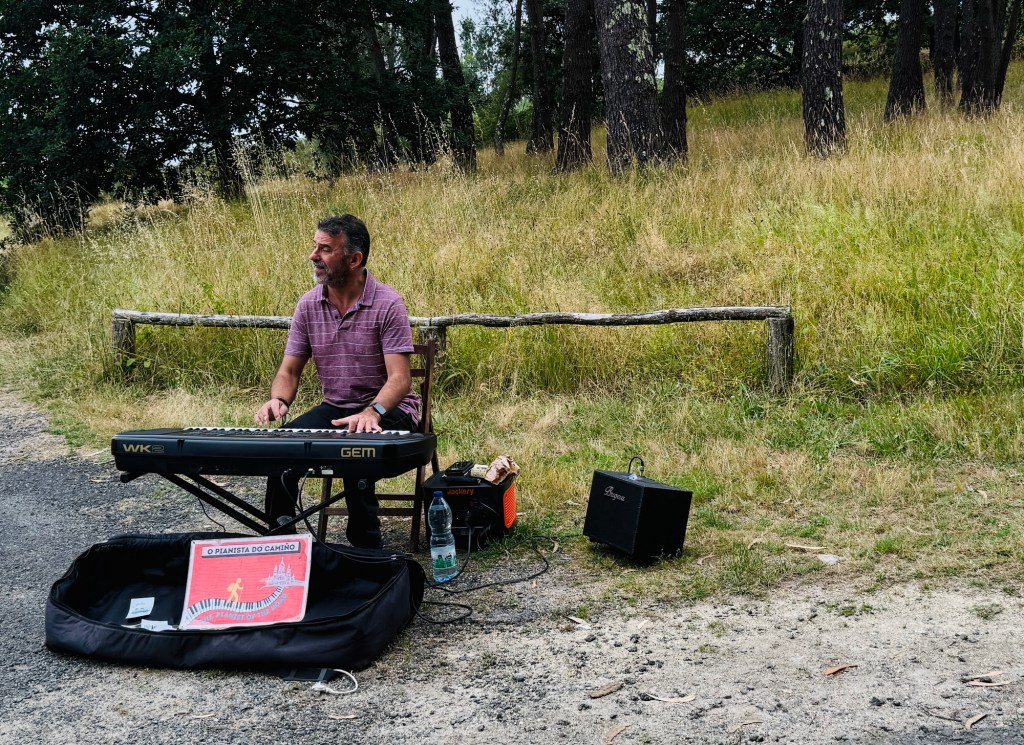
We pass businesses that produce the hórreos and stone crosses that are so much a part of the Galician countryside… and cats… one of which Anne thinks is a goat 😂. And we haven’t even had wine.
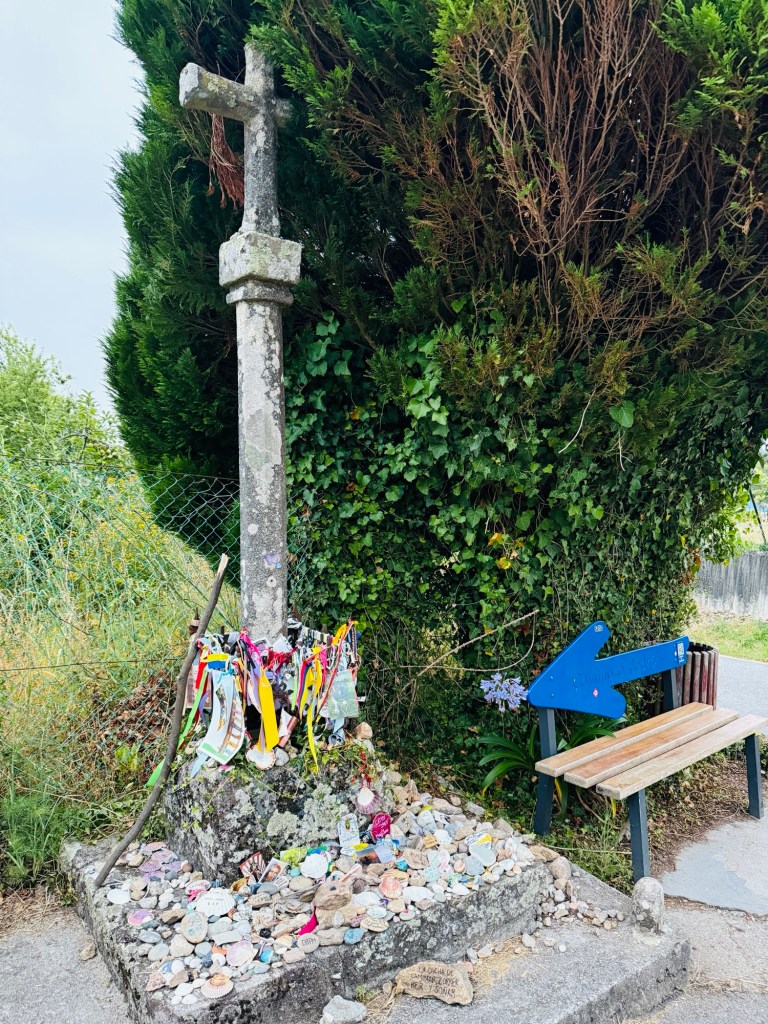
I am annoyed at our lack of focus as early on we twice miss our turns and end up adding kilometres onto an already long day. And after yesterday’s brutal walk we certainly don’t want extra kilometres… as we were expecting more of the same… hot and horrible. But our prayers to keep us cool were certainly answered and at times I even pulled out a scarf that yesterday I was using to try and shade myself… but today I wrap it around my shoulders for warmth. It is a blessing… the top temperature today ends up being 24° instead of 34°. And today is also mostly a beautiful walk… perhaps because we know it is our last… at least for this time. And every time I passed by a noticeable feature, I couldn’t help wondering whether this would be the last shrine, hórreo or stone cross on this Camino.
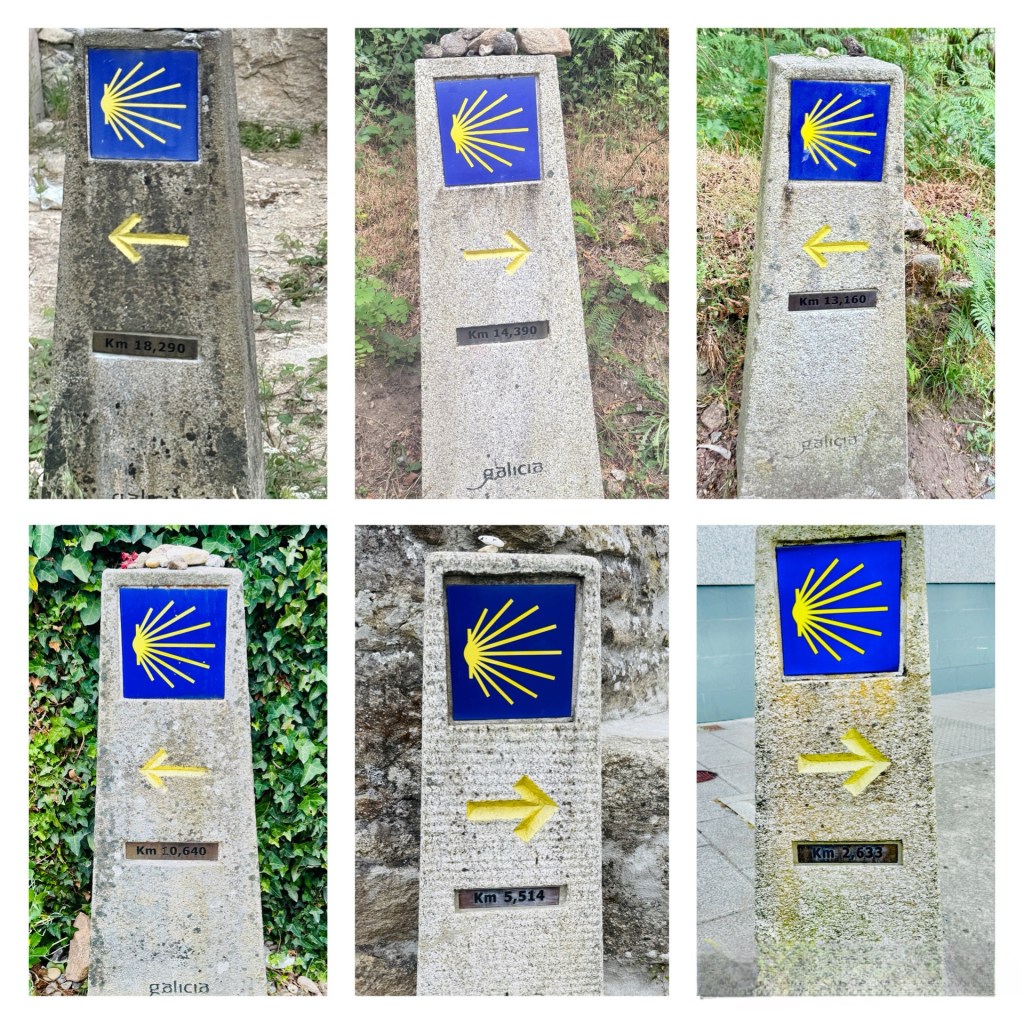
The waymarkers that used to be only every few kilometres or so are now coming thick and fast as we are on the final day. But whereas, at the start of the Camino, we can’t wait to knock off some mileage… fast forward to now, I wish the pilgrimage would maybe be just a little bit longer. But it is still exciting to watch to numbers go down into single digits.
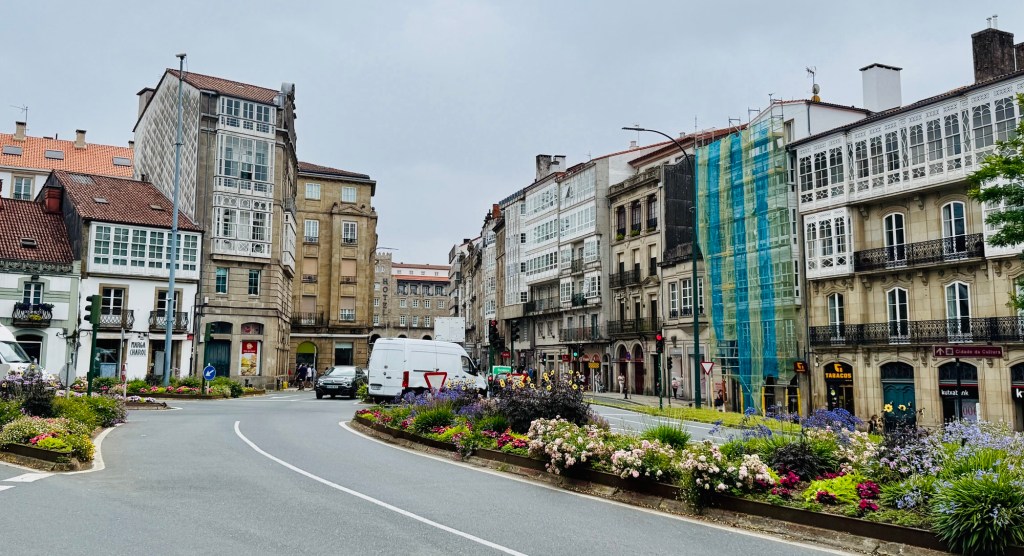
Eventually we do see Santiago in the distance although it still takes quite a while to reach it… and it comes with all the trappings a city brings, noise, cars and thousands of people. It’s a bit of a shock to the senses but we are full of excitement as we enter the old town which means we are very close.
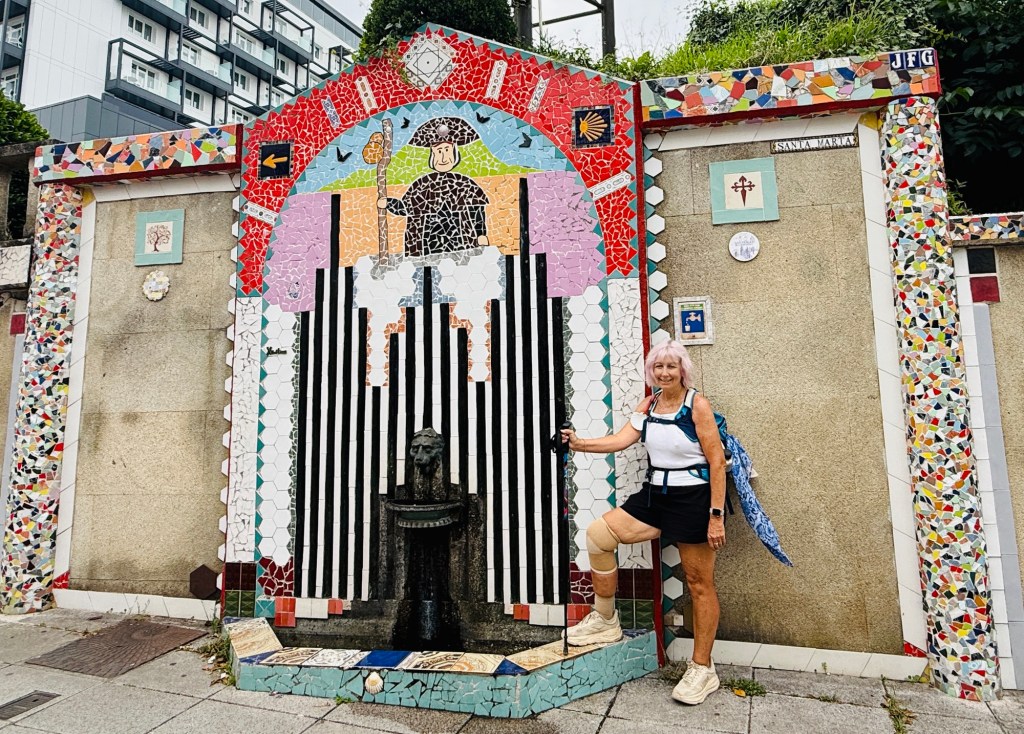
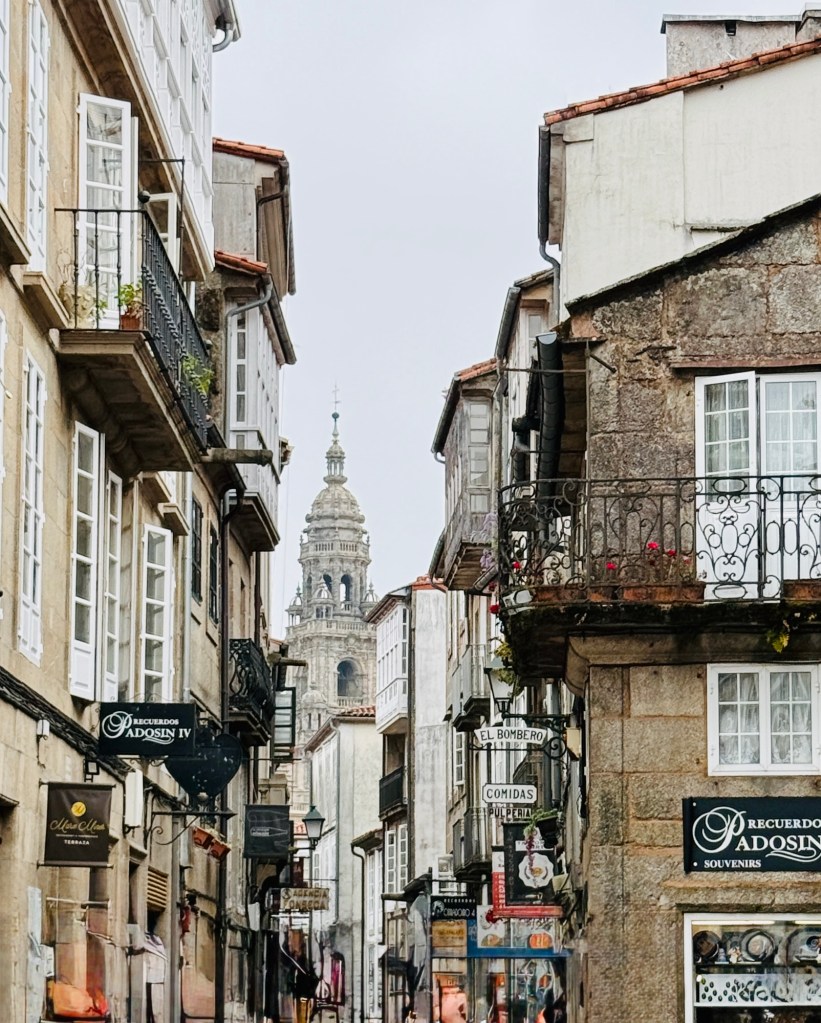
My tears begin when we turn into one of the narrow cobbled roads and we can see the cathedral spires.
We Facetime our friend Sue who has closely followed our journey, and she walks in with us. And then we see some of our friends we have made along the way, waiting to welcome us with hugs and congratulations. We did it! We are here!
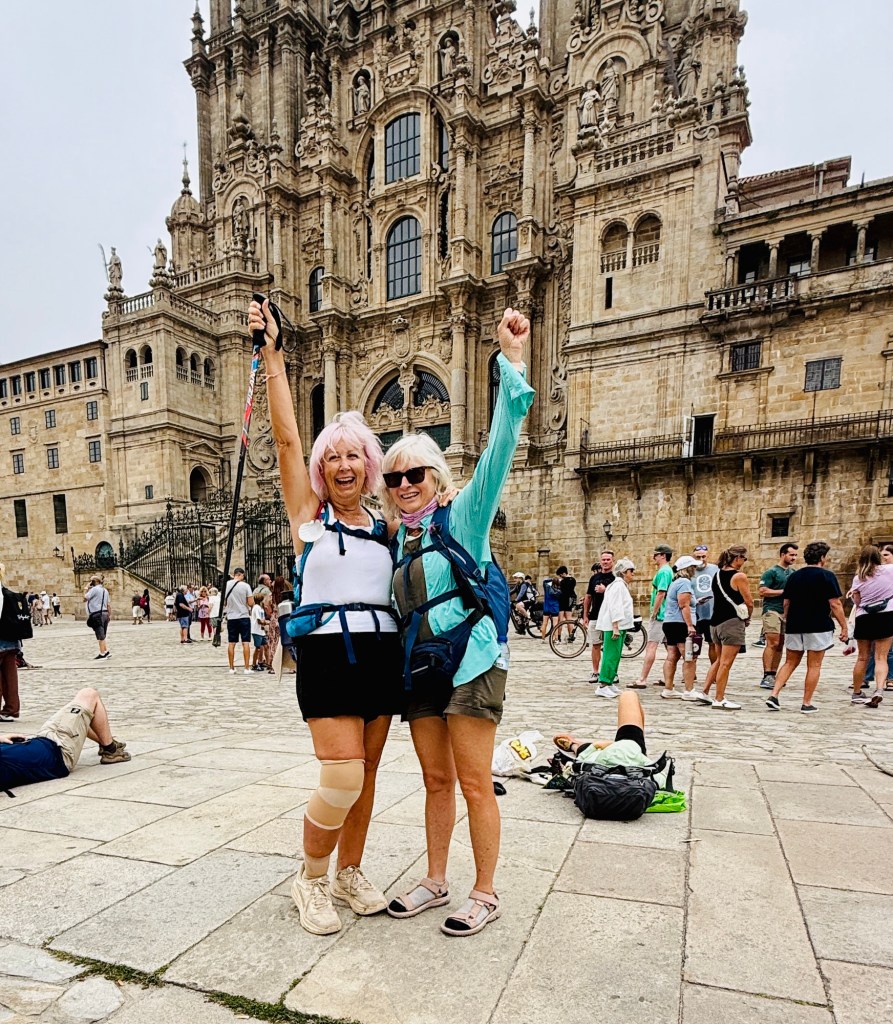
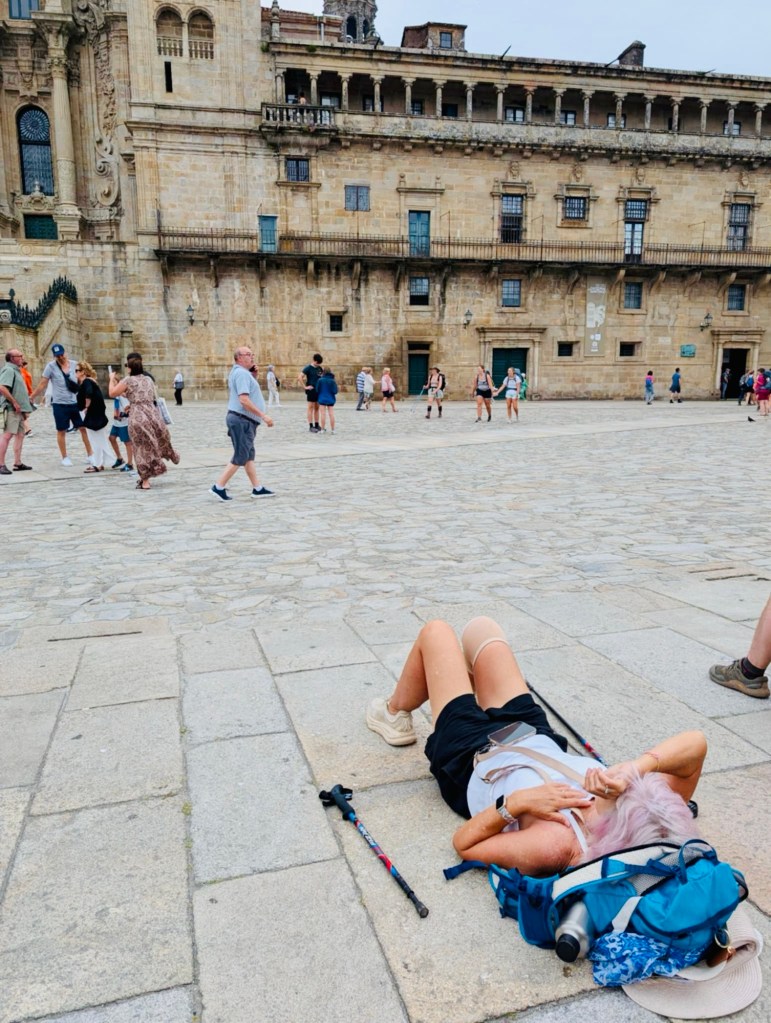
And I am laughing and crying as are people all around us at reaching their goal at last. The energy here in the square is undeniable and everyone is so happy. I sink to the floor and lay for a while with my head on my pack and just look up at the cathedral.
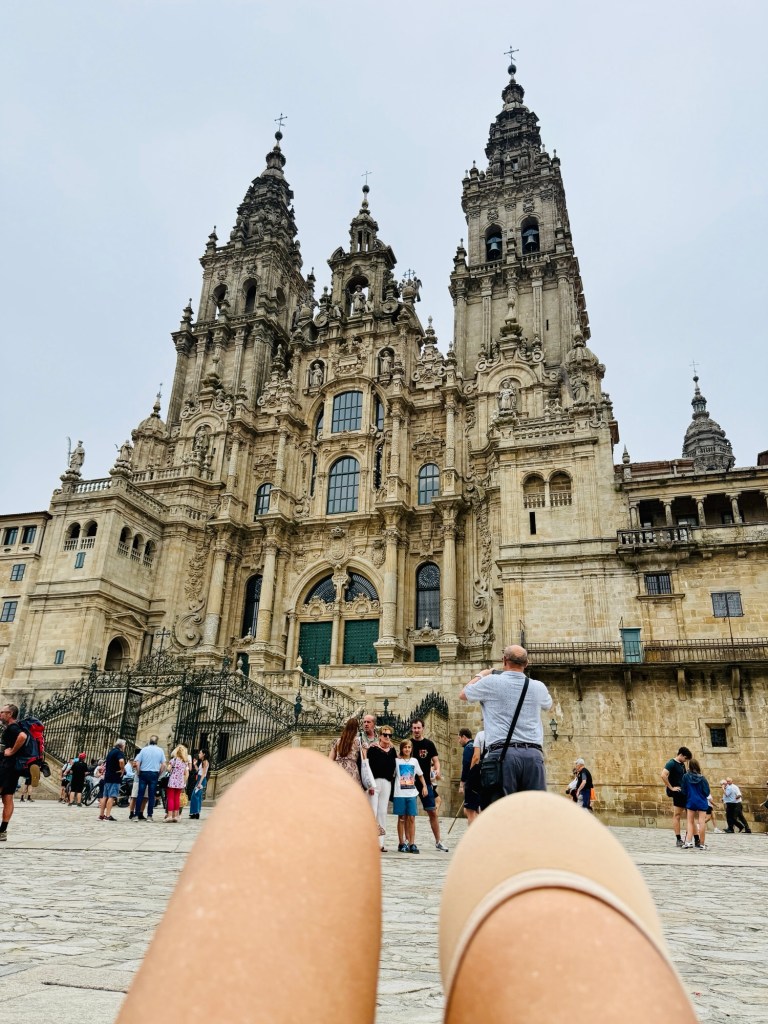
Even though I have seen plenty of pictures of the cathedral, it still did not prepare me for the majesty and stunning detail of this place. It may not be extraordinarily tall or big by modern standards… but in my mind and I think for most pilgrims, this cathedral is just about the most magnificent structure on earth… epitomizing all the pain and joy of our pilgrimage.
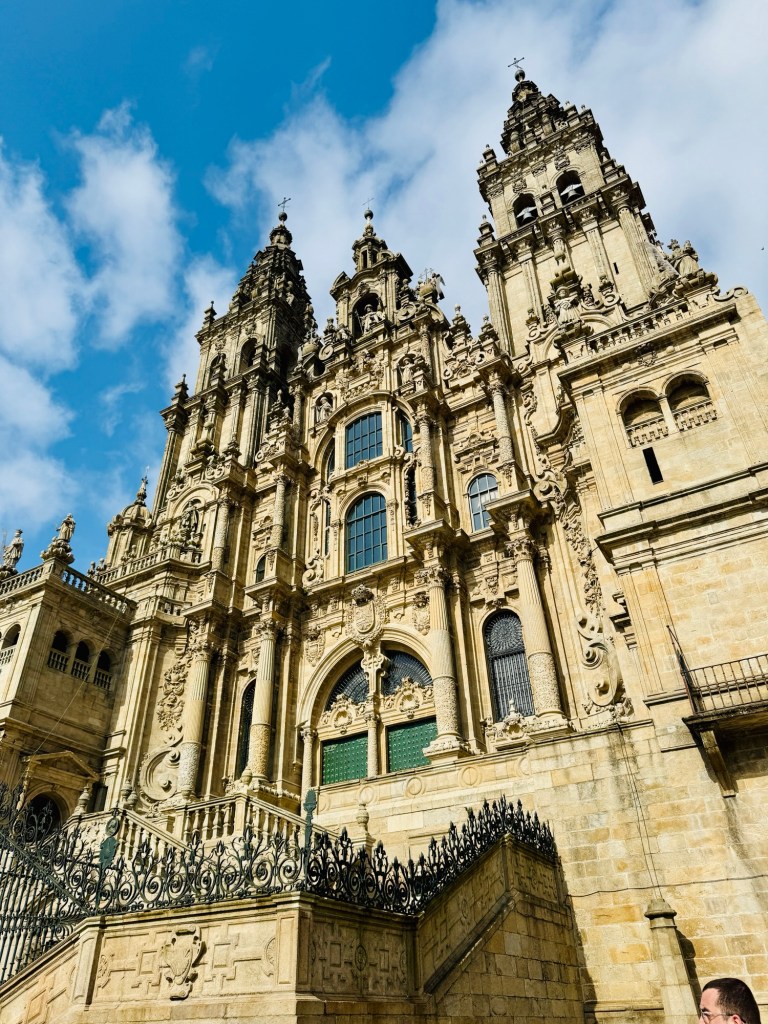
We soak up the atmosphere and breathe in the joy of everyone around me. Three weeks of walking in all kinds of conditions has brought us here. Feeling jubilant and pretty damn proud of ourselves… tempered by the sadness that’s it’s over.
Steps today- 37,026
Kilometres today- 24.9
Flights climbed- 9
Temperature- 24°
-
The Way of Saint James
The moment my legs begin to move, my thoughts begin to flow.” ~ Henry David Thoreau
Day 20
It is our second last day today and the last of the Variante Espiritual. Leaving Vilanova de Arousa was definitely a change because it was by boat.
The route that the boat follows is called the Translatio and to understand its significance, you first must understand the significance of this portion of the Camino Portuguese, known as the spiritual variant. After Christ was killed, the apostle James travelled to the Iberian peninsula to try to convert the muslim Moors to Christianity. He wasn’t terribly successful and he converted only a few people, yet when he returned to Jerusalem with two of his disciples, he was tortured and killed. James disciples then returned his body to Spain in AD44. When the boat carrying the remains reached the coast of north western Spain, it travelled up the Ulla river, and the body was taken ashore near the current city of Padron. The body was then transferred to a wagon and taken to the place where the city of Santiago de Compostela now is located. It was buried and centuries later, a cathedral was built on the site of the grave.
Apparently there are 17 stone crosses along the river banks indicating the route.
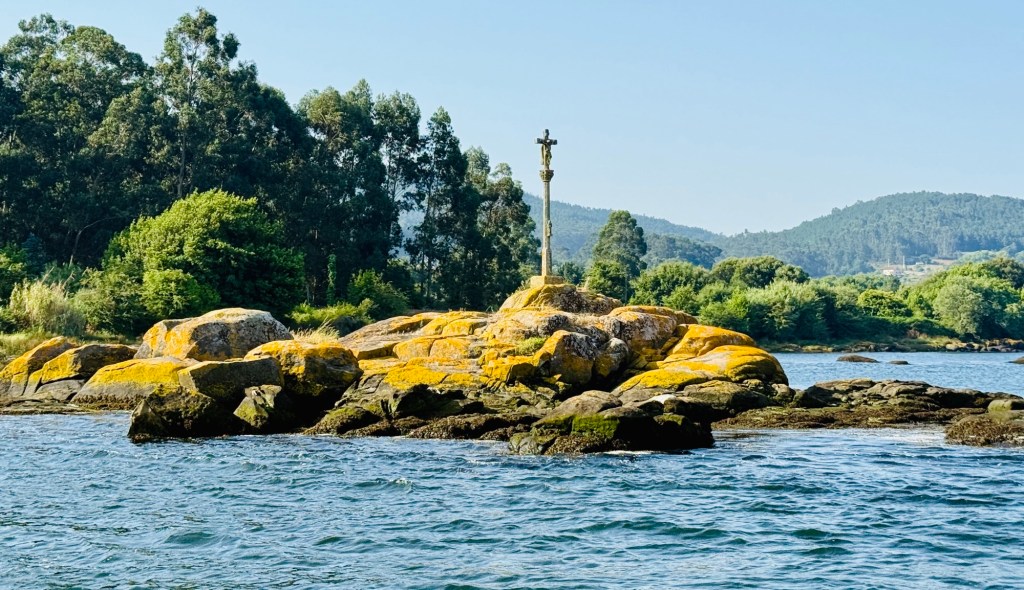
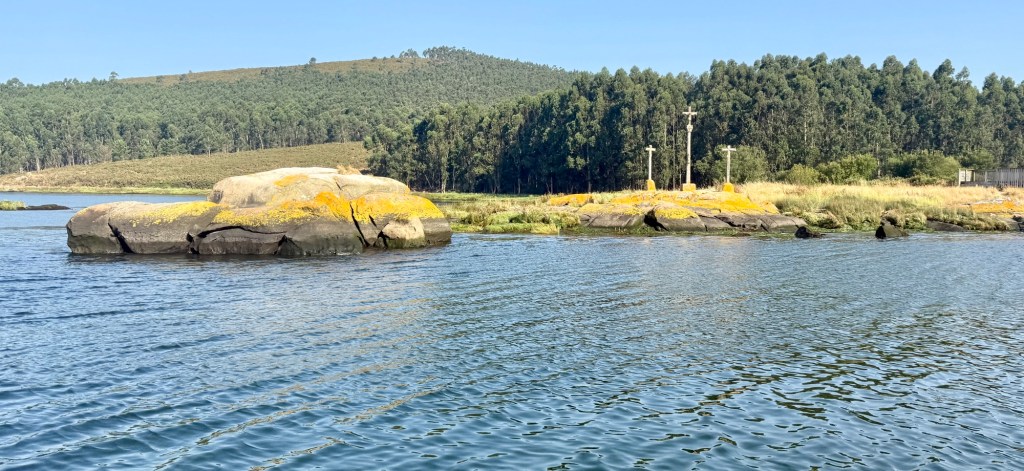
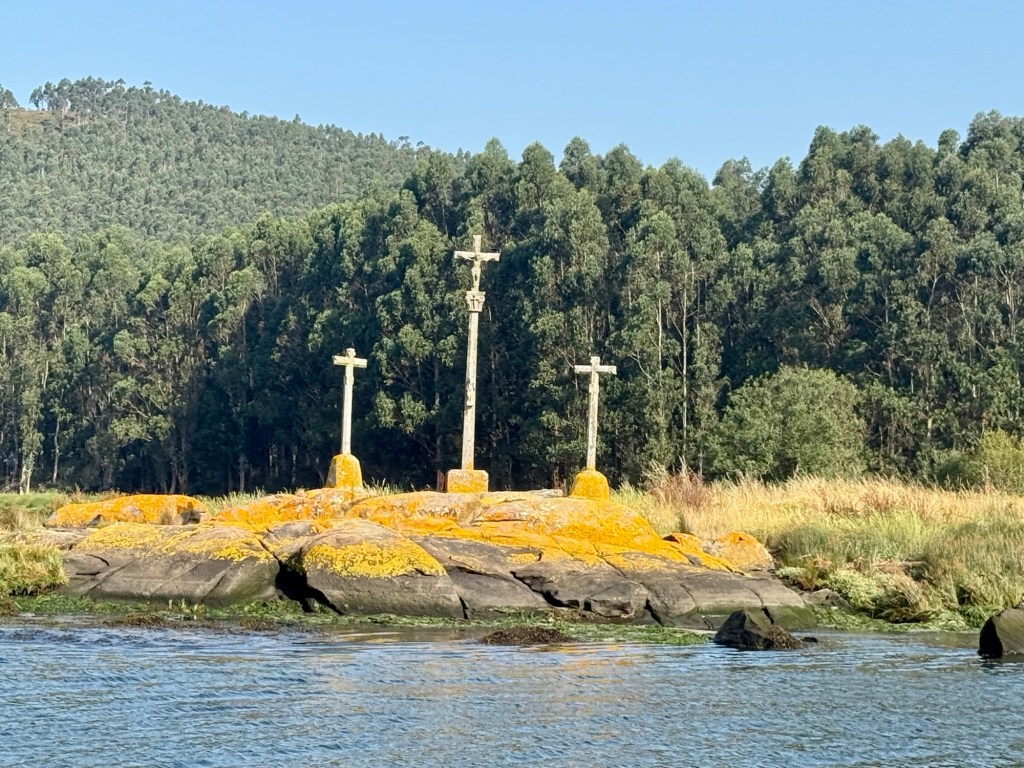
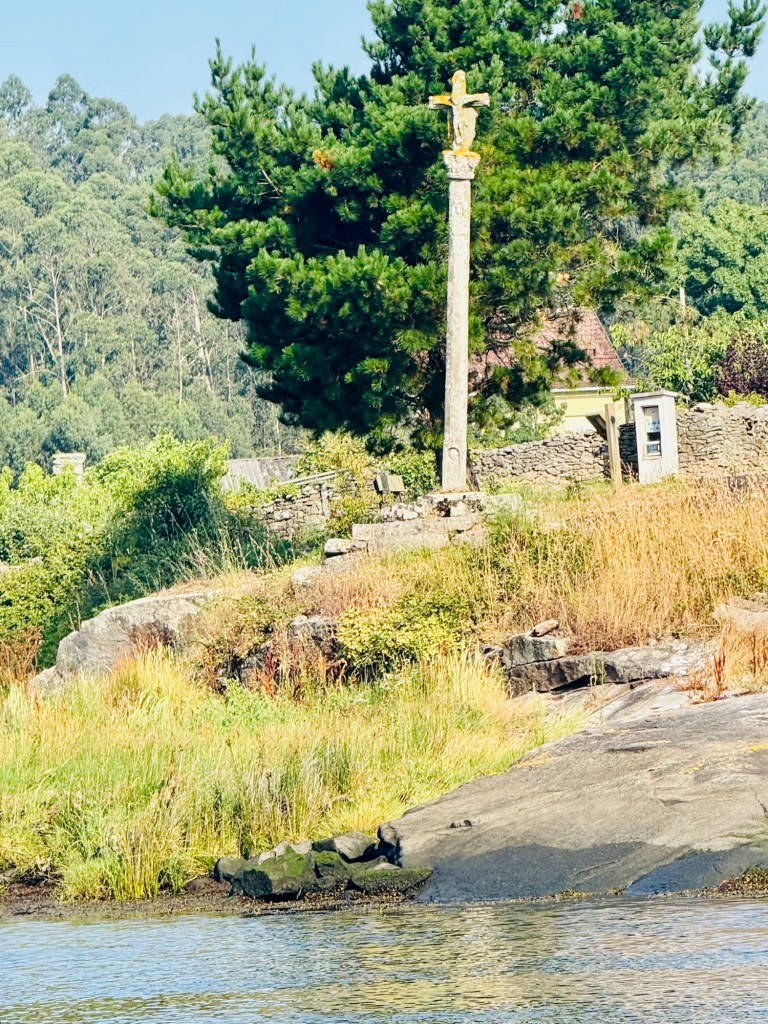
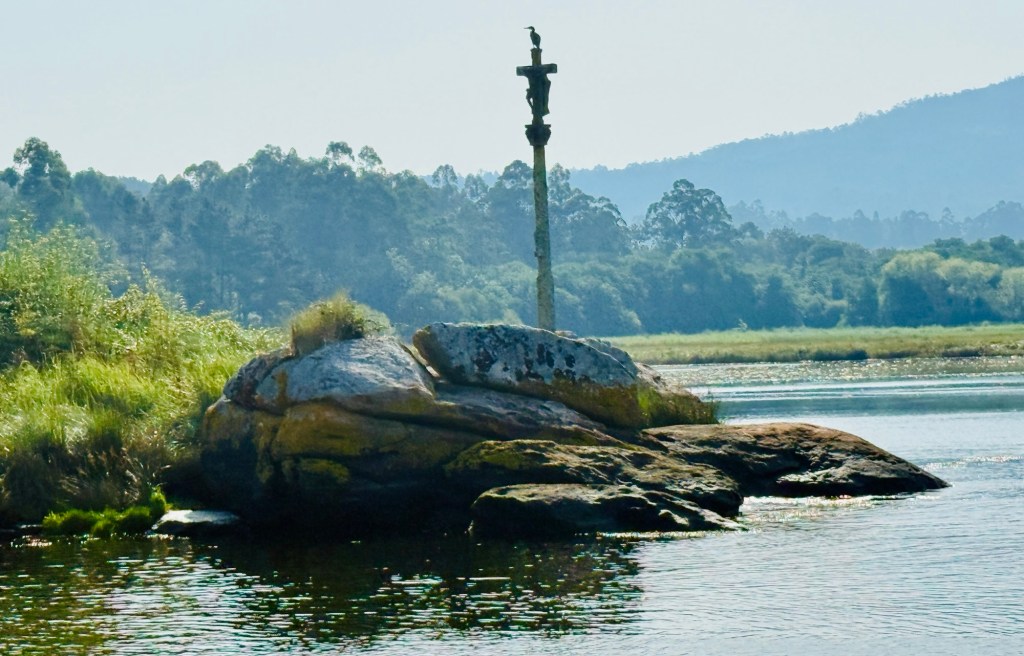
The captain pointed out some of them as well as other points of interest like the Torres do Oeste watchtower ruins which are the only remains of a 12th century castle…
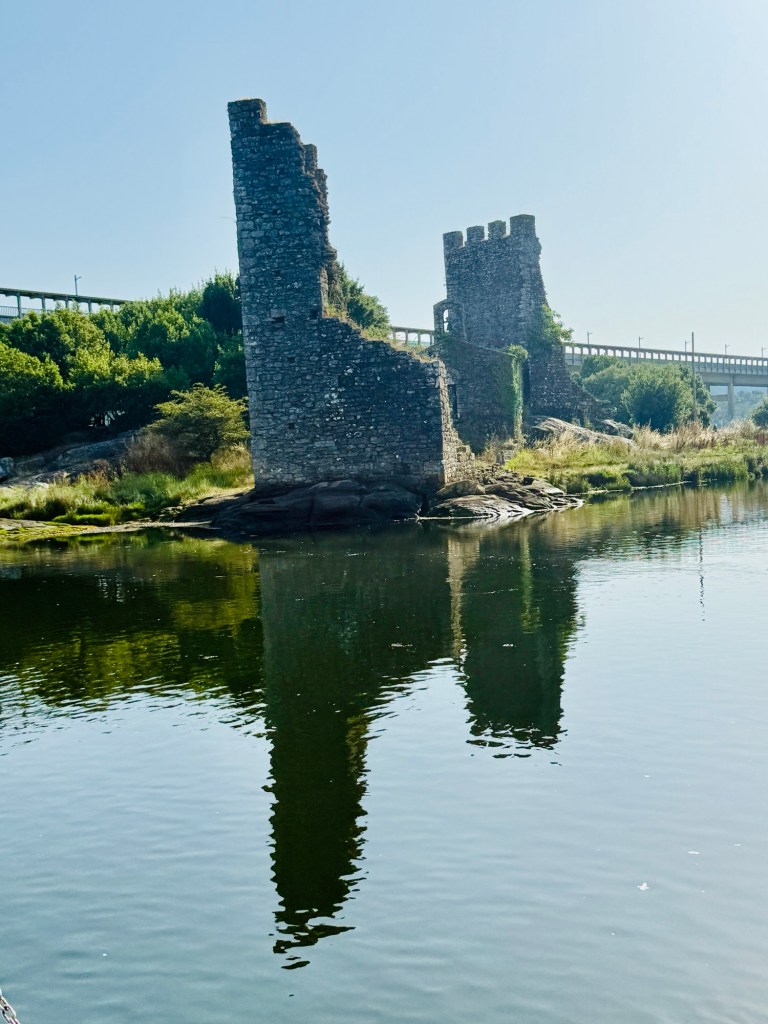
… and the mussel farms which are big business in the area.
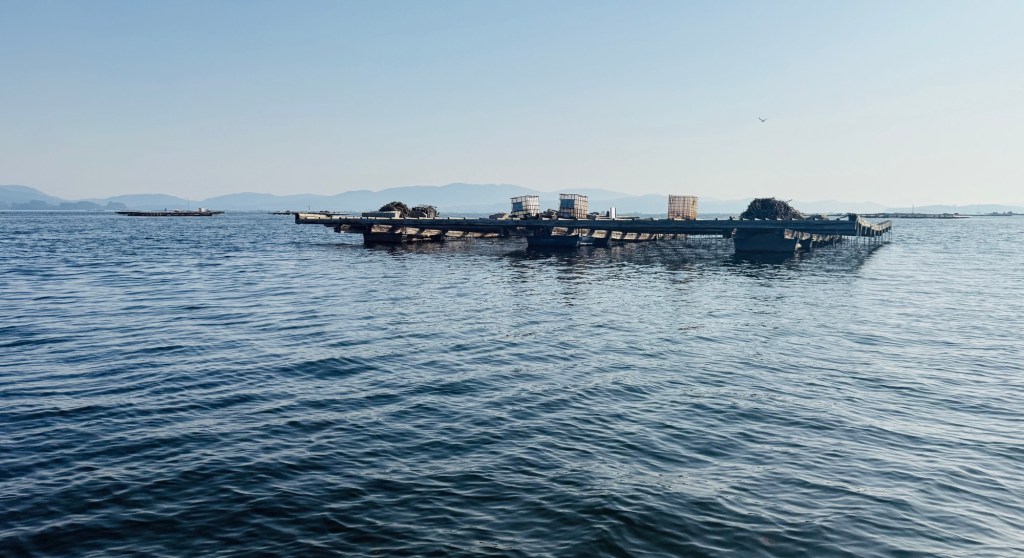
The scenery is beautiful and very peaceful and the boat journey had an almost meditative effect on me.
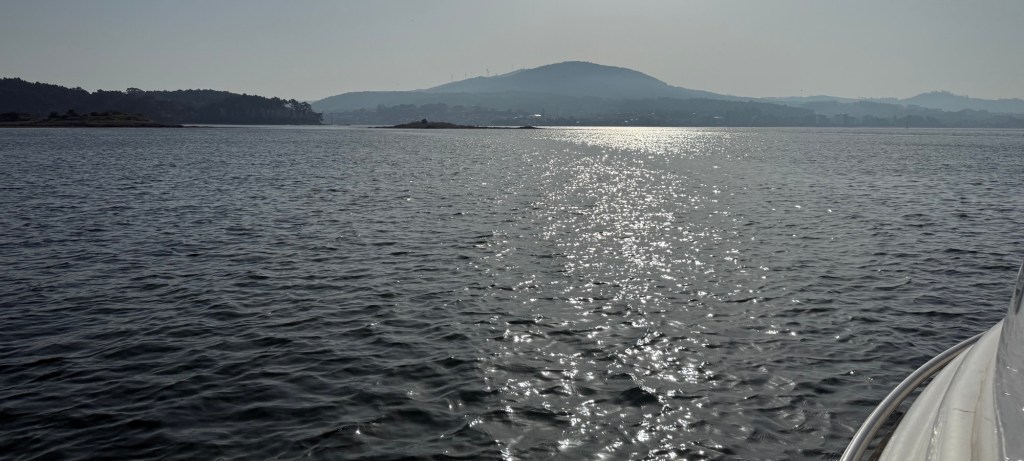
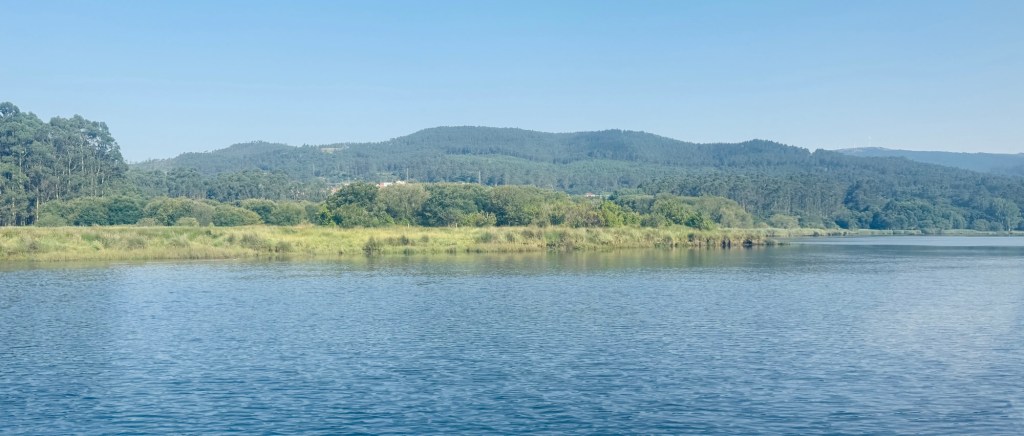
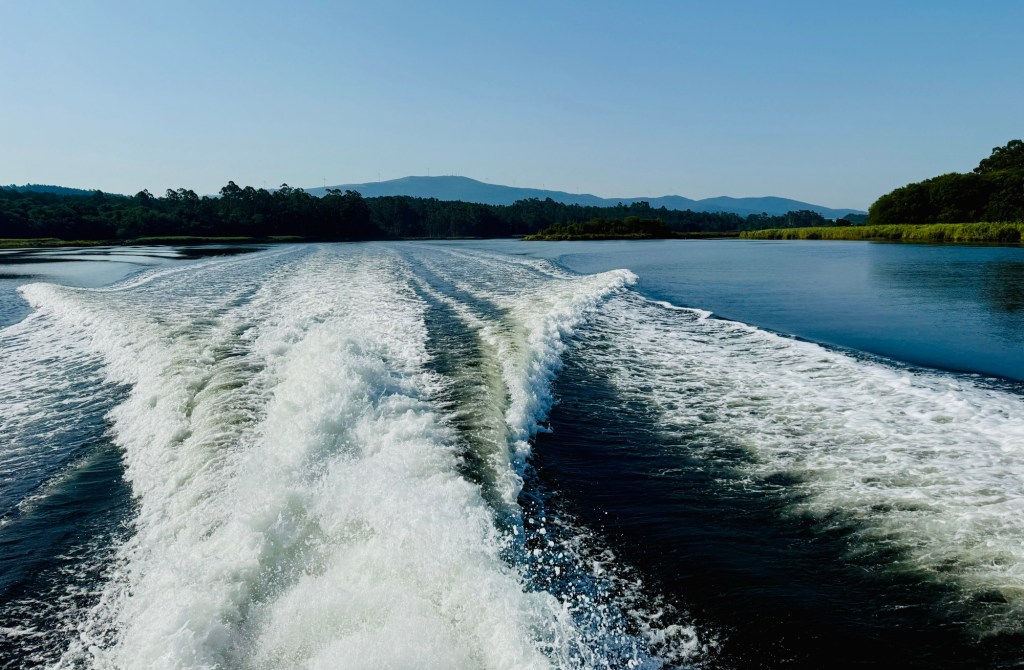
And with my cross obsession, it definitely can be described as a highlight of the Portuguese route. I also met my hero of the day… the gorgeous Gigi Tree. Gigi is 71 and is doing the Camino on a little scooter… not only ‘doing the Camino’… it is her 60th Camino and the tenth time on the Spiritual Variant… her favourite route. We bonded over coloured hair and I just loved her vitality and passion. She has her own YouTube channel The Perpetual Pilgrim and is also an author and musician. What an inspiration.
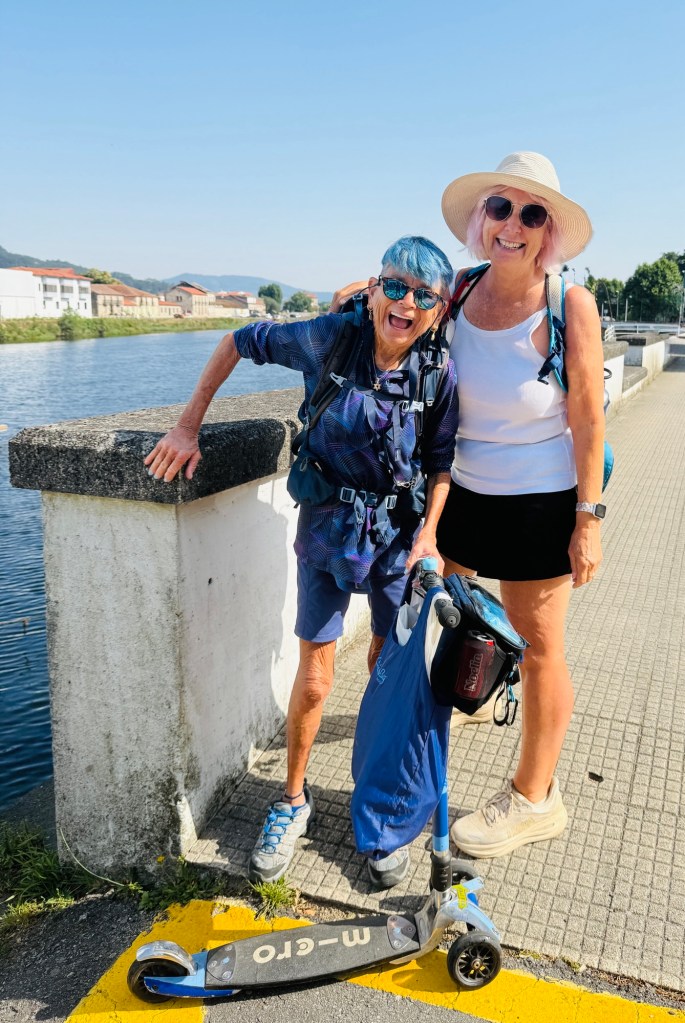
Reaching our final destination of Pontecesures, just south of Padron, we’d covered a total of 27km in less than 90 minutes. If only every day was this easy! We walked over an old bridge… into Padron…
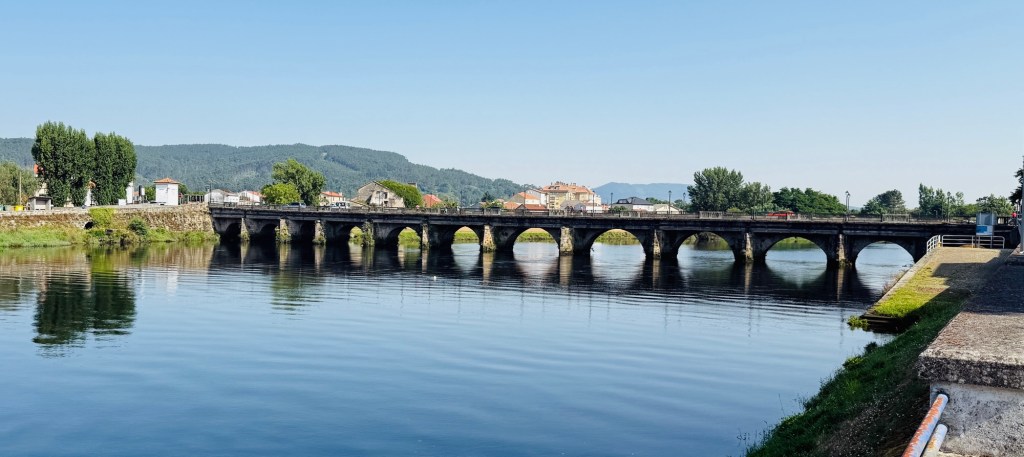
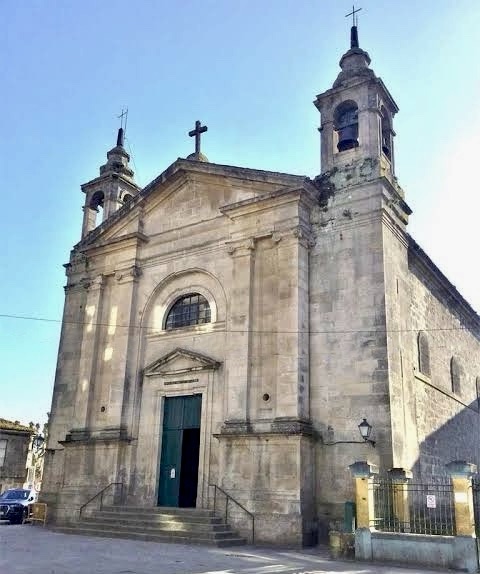
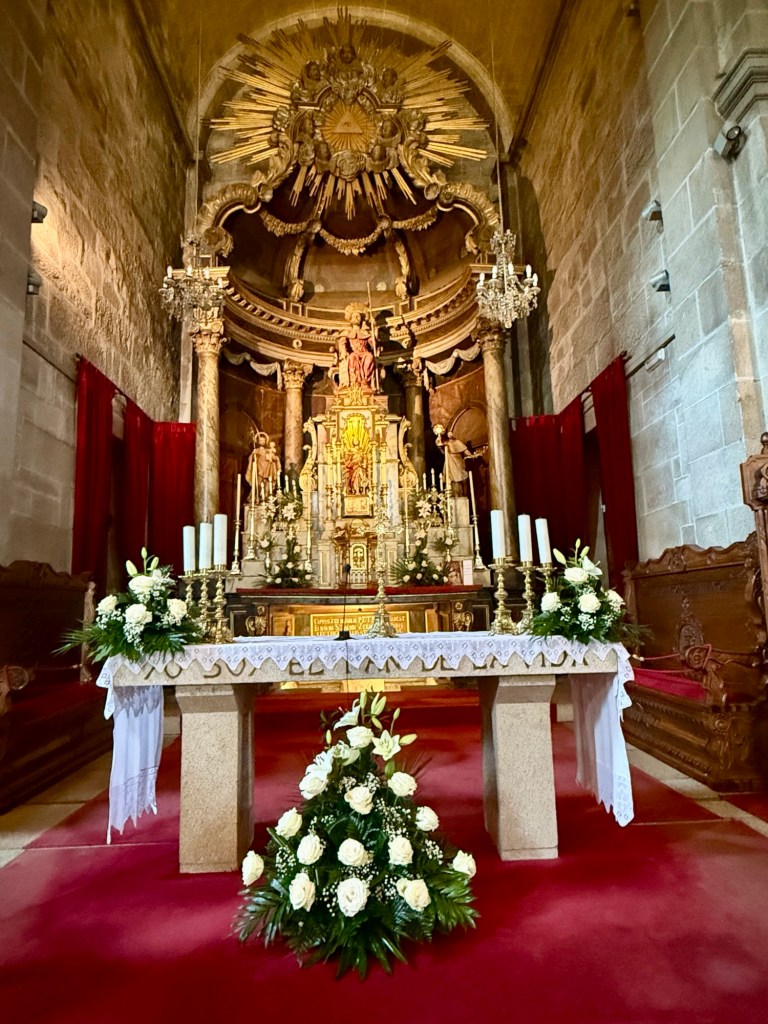
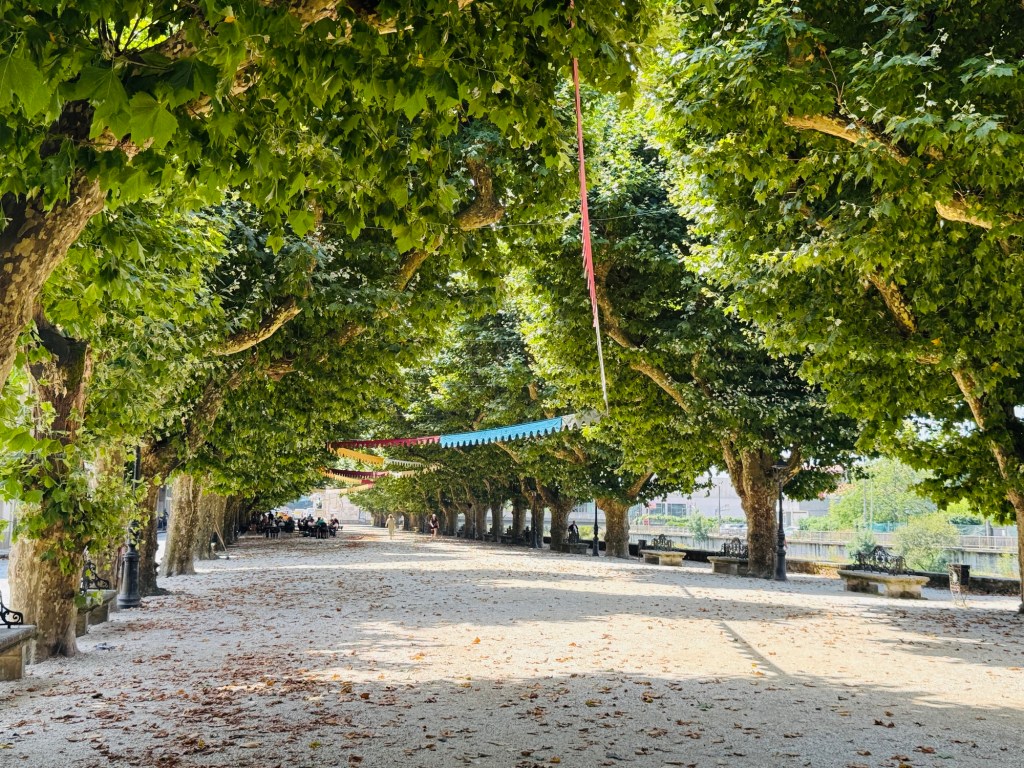
… the town known for the traditional dish called Padron Peppers… simply peppers that have been fried in olive oil until their skin blisters and then seasoned with salt… which is literally in every menu that we see (although it is seasonal)… walking along a wide, sycamore tree-lined avenue with the Igrexa de Santiago Apostolo de Padron at one end. The church is another which is dedicated to St James. When his body was brought back to Spain by boat it was moored to a Roman altar stone called a pedron which, not only gave Padron its name, but is now located under the main altar of the church.
Just across the Santiago bridge from the church is a 16th century fountain. At the top is a carving of Queen Lupa being baptised by St James, while underneath you can see the boat transporting his body.
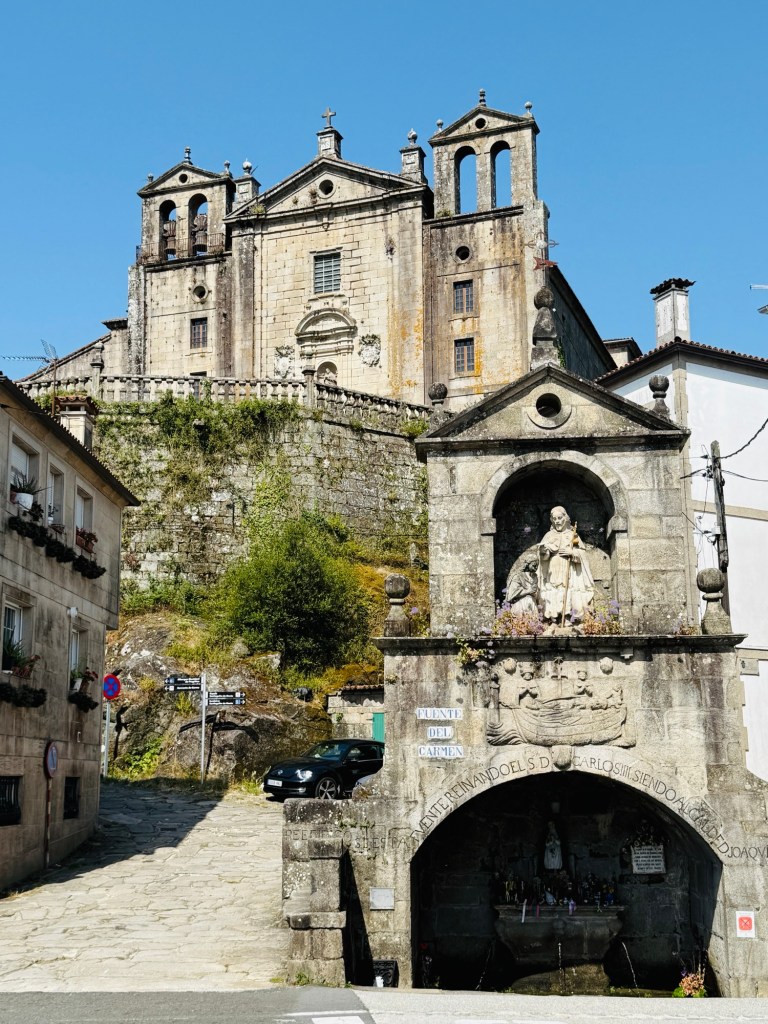
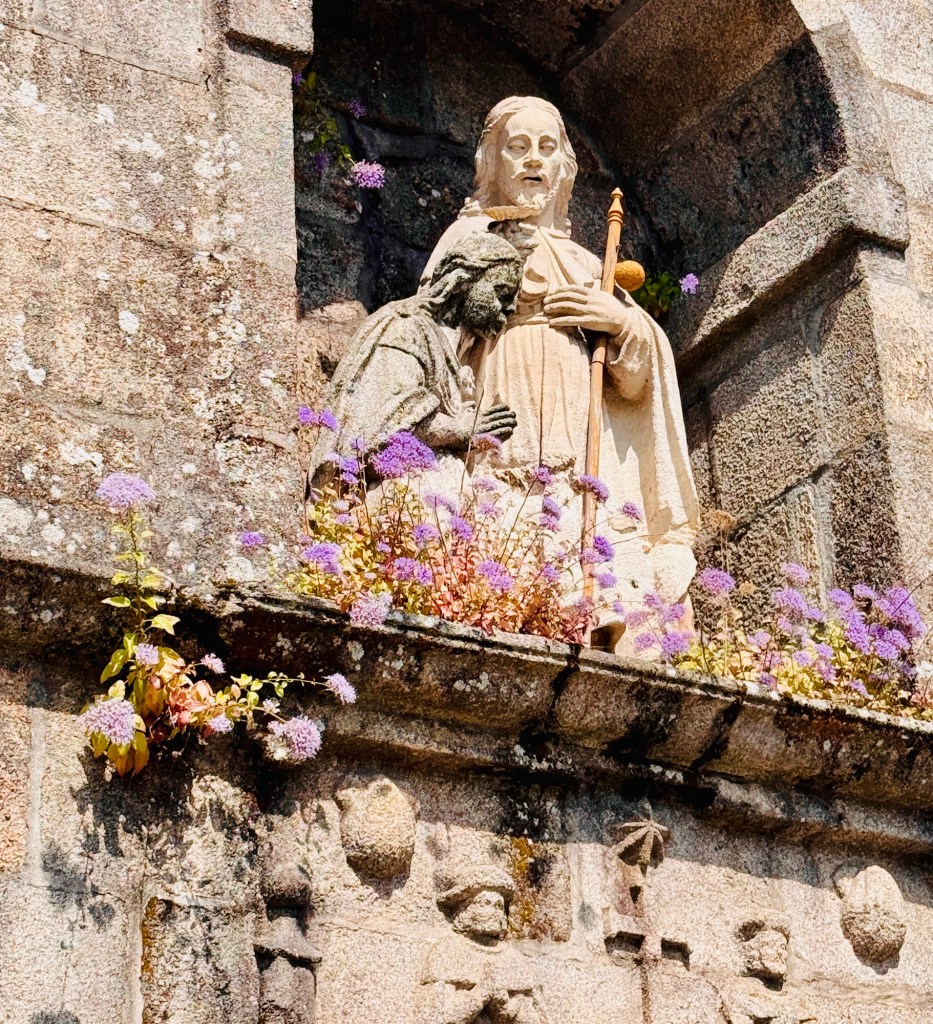
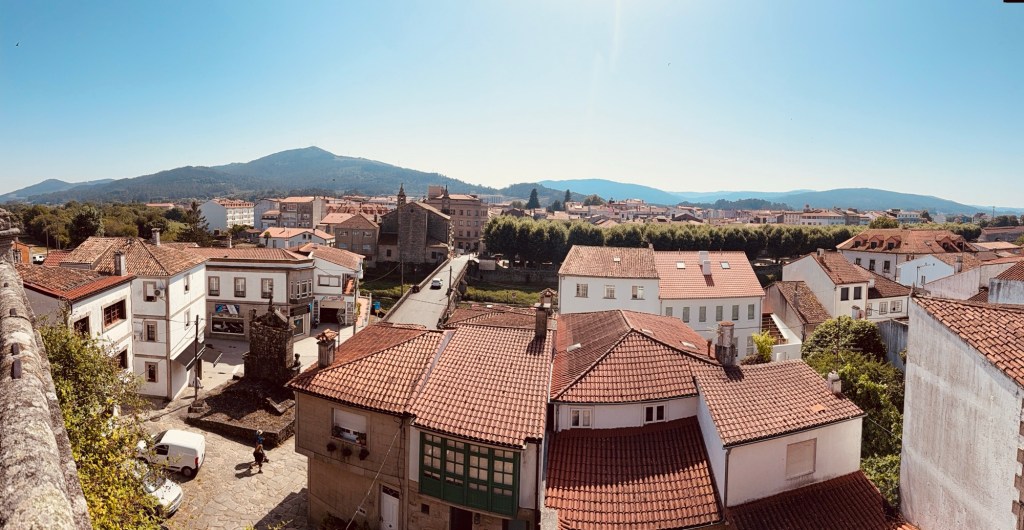
We then walked up to the Convento del Carme which used to belong to the barefoot Carmelites. It was not open but had a spectacular view over Padron.
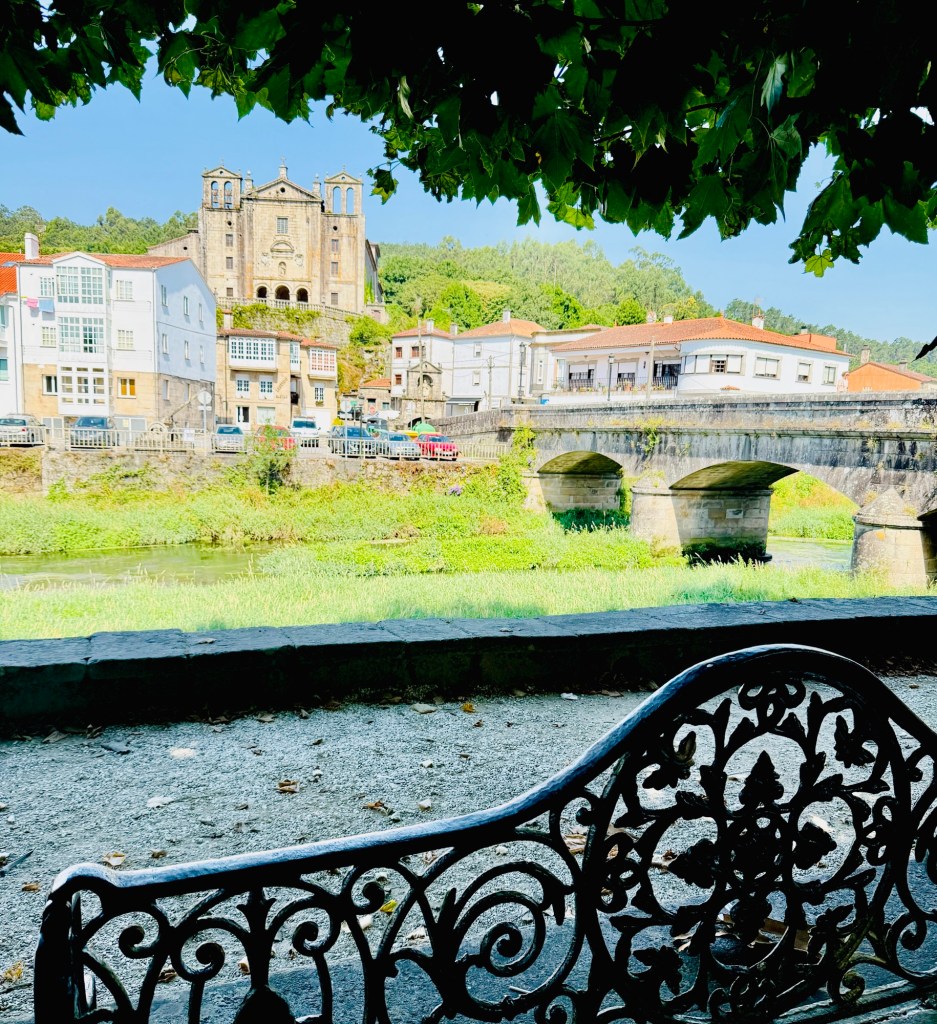
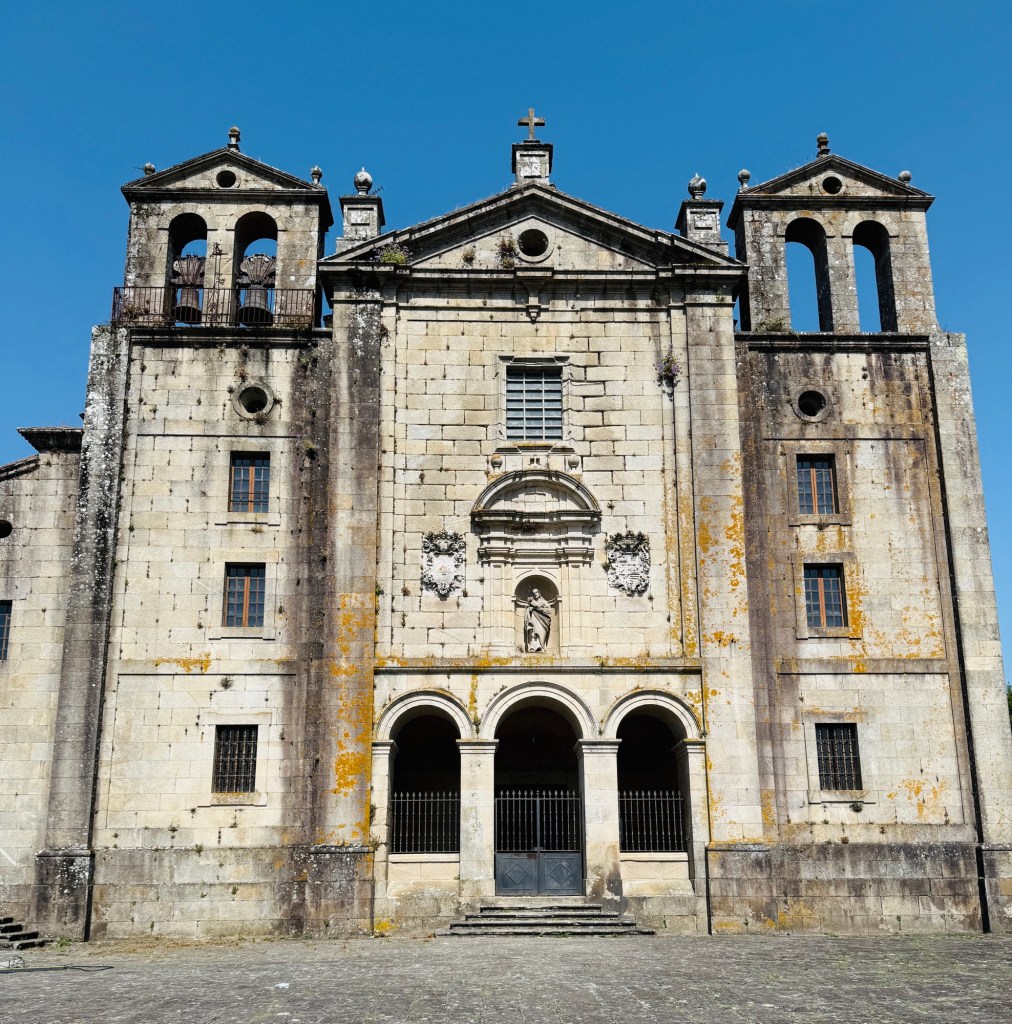
Up some steep steps (125 in total) is the Santiaguiño do Monte where St James would preach from the rocks.
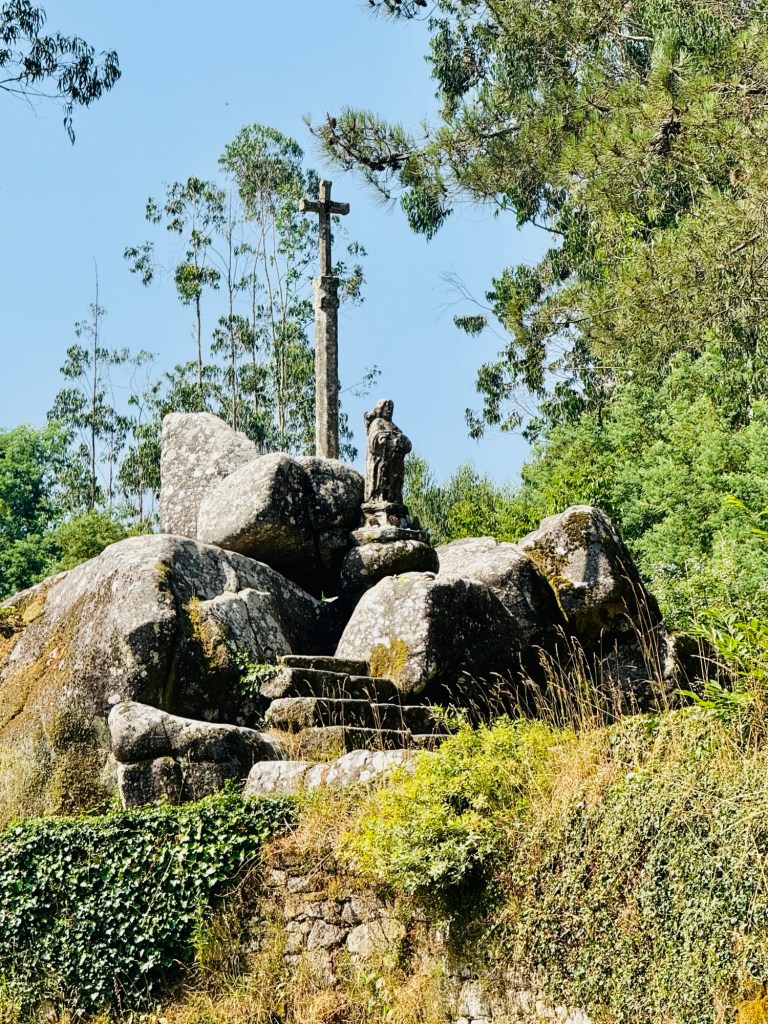
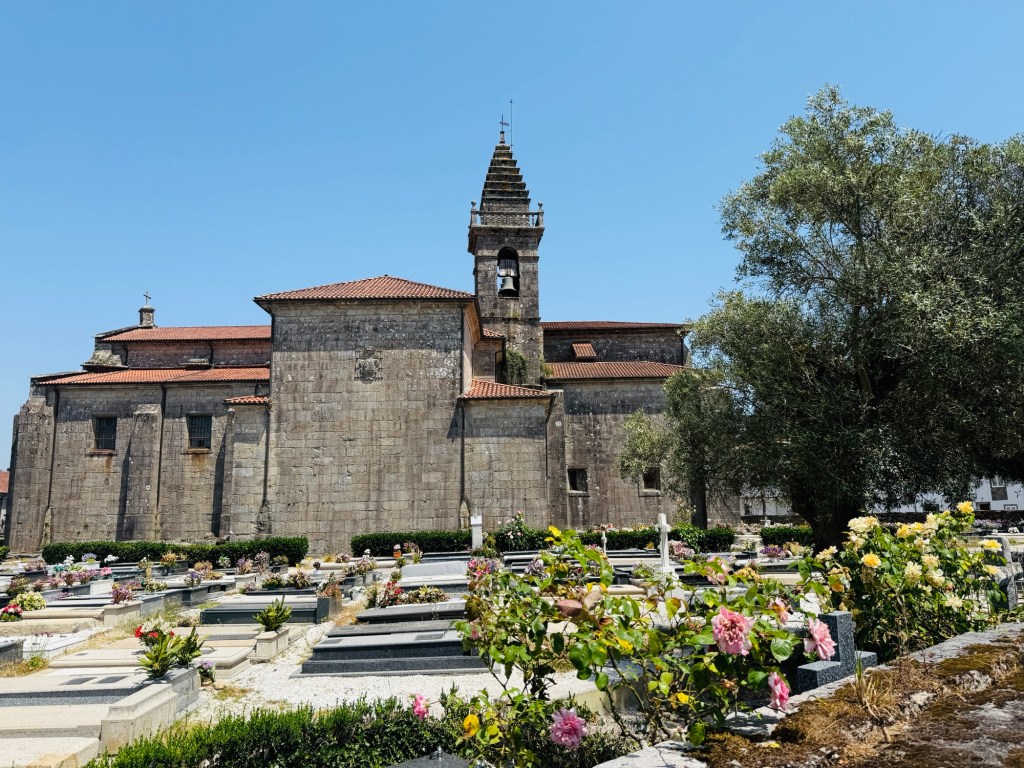
There’s a statue of St James here as well as a chapel and fountain that I used to refill my waterbottle. In the 16th century pilgrims would climb the rocks on their knees praying on each of the steps so I can’t really grumble about simply walking up them with my pack on my back… except it was hot!

We decided we may as well have lunch before setting off on our walk as we never know what facilities are available as we walk into each day. So we head back to the lovely shaded tree lined avenue we had walked down earlier and had some very average food before setting off.
It is a short walking day again today and we are thankful because we don’t actually begin walking until 1pm and it is 33° and still rising. And it was tough… with lots of walking near to the busy main road and very little shade. There were some pretty parts as the path goes through small country lanes and stone villages.
But mostly it was just hot and horrible. Drinking water was running out when we came upon a water source that have often been a welcome relief as we journey… whether to fill our bottles or to splash our faces and bodies with cool water.
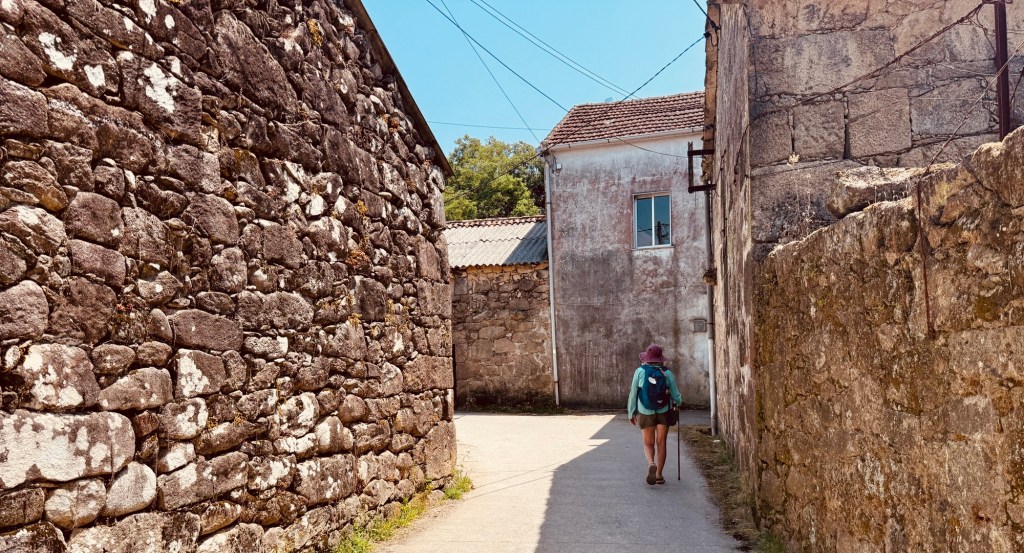
There has likely been hundreds of these that we have passed in the last few weeks… some are clearly springs that have been used by locals and pilgrims for hundreds of years… and I wonder how many others have given thanks for the gift of fresh cool water over the centuries.
As we are getting closer we sit on a rock in the shade and I put the details for our nightly accomodation into Maps. This is when I realise that our booked accommodation, though it says it’s in Cruces, is actually an hour away by car and not where we thought it was at all. There is no way this can work so I quickly get back onto Bookings.com to find an alternative. The amazing advantages of modern technology.
We arrive and find a beautiful church right next door to our hotel…

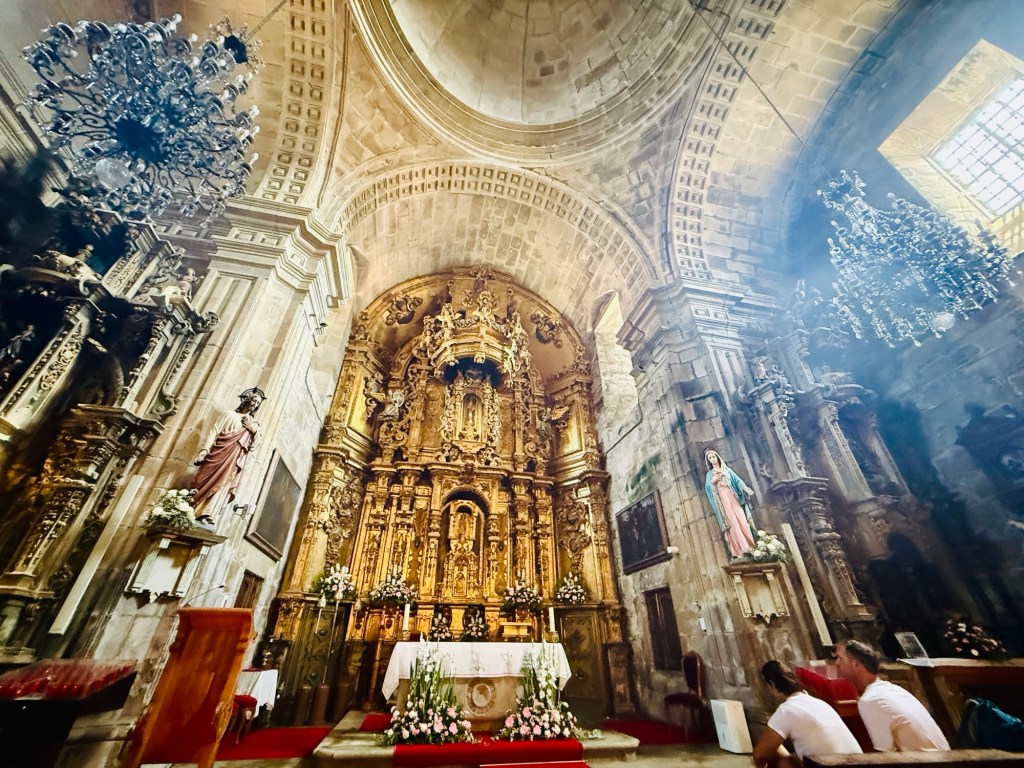
But more exciting is the discovery that there is a pool… which for an over heated and over tired pilgrim is like heaven on earth. Except I don’t have my togs with me as our main packs have been sent ahead to Santiago. Too bad and I head down anyway and swim in my tank top and undies. It was simply wonderfully refreshing and revitalising.
Tomorrow is the big day… our arrival into Santiago de Compostela and I know I will have very mixed feelings when we get there. And I know I will be hot and exhausted- 19km to walk and another 34° day coming up.
Steps today- 19,287
Kilometres today- 13.09
Flights climbed- 20
Temperature- 34°
-
Is it hard?
“If I’m an advocate for anything, it’s to move. As far as you can, as much as you can. Across the ocean, or simply across the river. Walk in someone else’s shoes or at least eat their food.” Anthony Bourdain
Day 19
When we leave this morning, we think it is a misty morning… maybe heat haze… but quickly realise the air is thick with smoke.
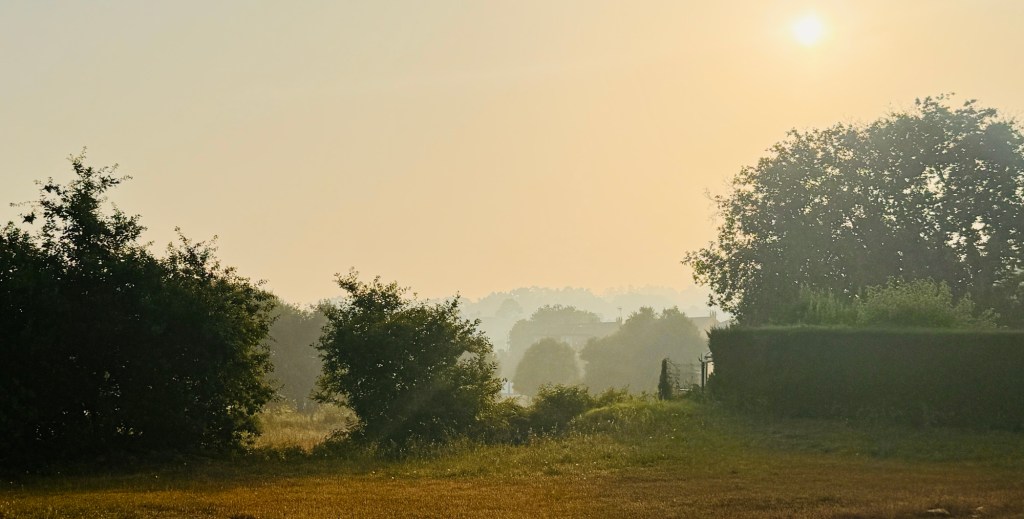
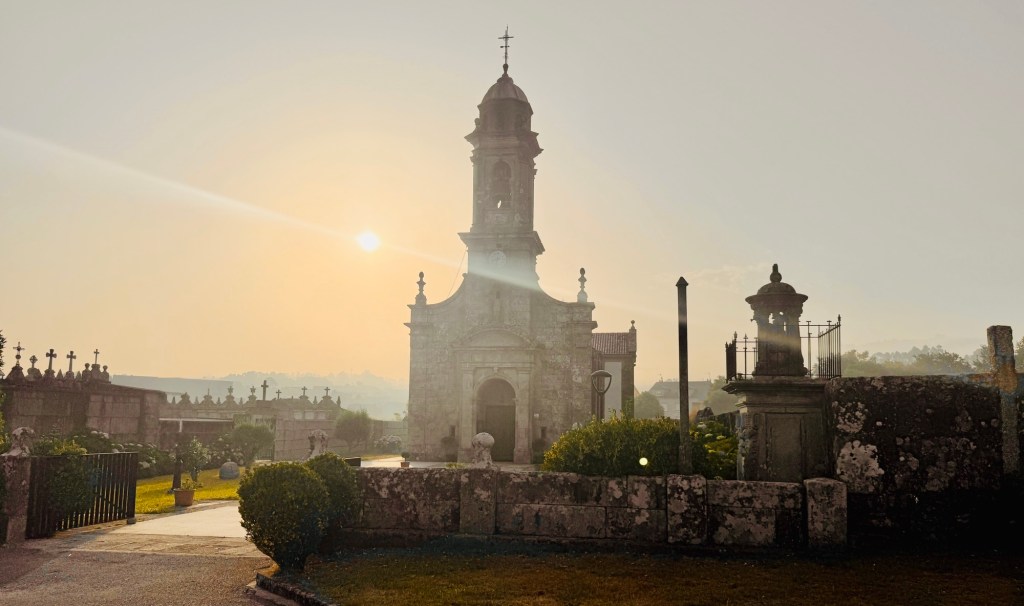
From the beginning, today is a hard day… compared to yesterday which was so beautiful it kept me distracted from my body. Not so much today. And many of our hottest days have at least started off cool, but today was warm from the outset. But we thank God for the shade this morning as we walk along the river, as I know that later there will be none.
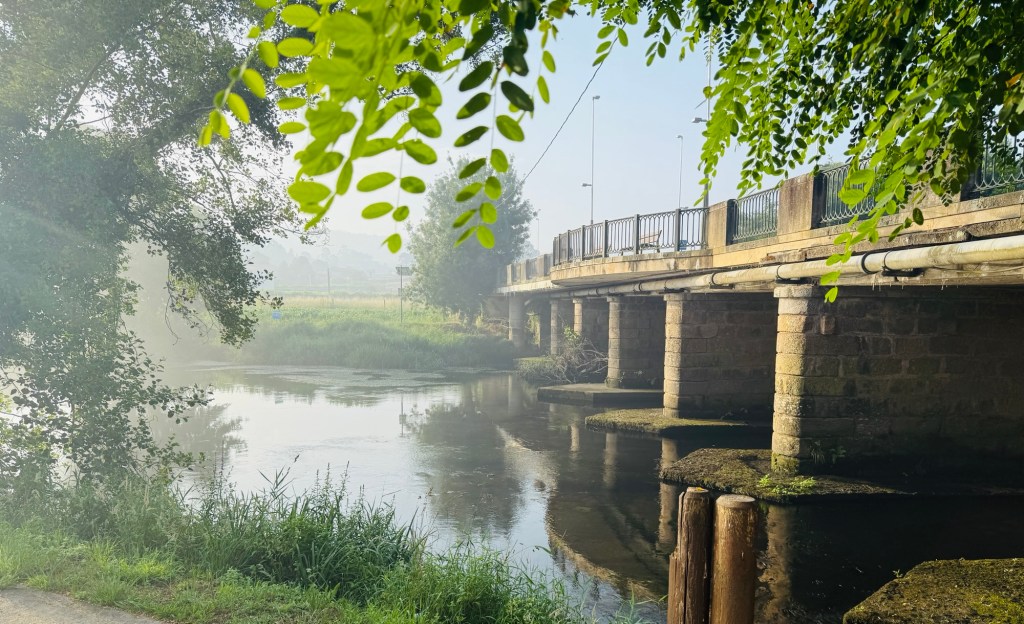

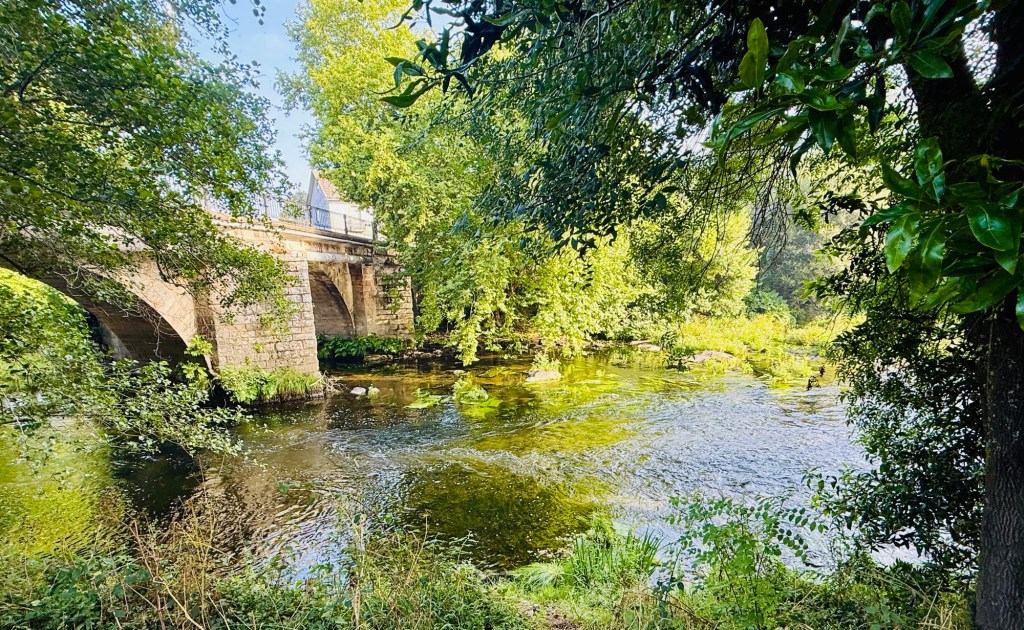
A few people have asked me if the Camino is hard… or how hard… and similar questions. And I would say definitely yes! It is hard. It is extremely tiring. It is hot… then a cold wind blows and it might even rain. The days can be very long… although we discussed at length before we left what we thought we would be capable of… not that I think you really know before you do it. You get cramps… you sleep in uncomfortable beds with bad pillows… or you don’t sleep because you are in pain or because there is a festival on with music playing until 4am etc etc etc.
I have some issues with my body that were always potentially going to make my life difficult… arthritic hyper-mobile hips that sometimes move out of place (but they’ve pretty much behaved themselves)… a badly arthritic knee that has caused me a lot of trouble for years (but has also been very well behaved)… my (probably arthritic) ankles, which are not usually an issue, have been my biggest problem. One foot has been at times very painful (Dr Google says likely stress fractures from all the walking on hard surfaces). I can suffer at times with pretty full on swelling in my legs and feet and I had hikers rash (exercise induced vasculitis) that feels like my legs are burning. So reality is that for me… and most WOACAS… some degree of pain is your constant companion.
The first week was particularly hard… I really struggled at times… while at this stage Anne was travelling well, even saying she felt she could do more than our 15-20km a day that we had planned. I, on the other hand would limp in with barely the energy to shower and put clothes on again. I would even feel really cold and get the shakes when we finally stopped for the day… apparently a combination of dehydration, muscle fatigue and “after drop”. But the second week I really noticed I began to feel stronger… I could walk longer with no pain… and still feel good at the end of the day. Or maybe just cope with the pain better. I also realised that it did help to take medication… which was kind of difficult for someone who is very anti Big Pharma and never takes anything. Third week feeling pretty good although the ankles are always painfull… you just learn how best to cope. Anne developed blisters, which is extremely common on the Camiño and it’s probably the main thing that makes people’s lives hell while they walk. It means she’s in constant pain even on shorter days… so blessed that we are generally not doing days nearly as long as most people on the Camiño.
But the thing is, when I started the Camino, I didn’t think it would be easy. And it’s hopefully not the focus of your attention… almost not important. They say that nothing good comes easy… and there are so many positives to outweigh the negatives… the awakening nature… the sound of the wind and the ocean… the birds or the soothing sound of flowing streams… wonderful conversations and connections, a cold glass of wine after a days walk… the strength and self-belief I have found in my body despite its issues of aging – these are the important things. So the Camino is not a walk in the park, but despite all its difficulties, it is still a most uplifting and worthwhile experience. Life-changing for some.
We pass through a few small villages…
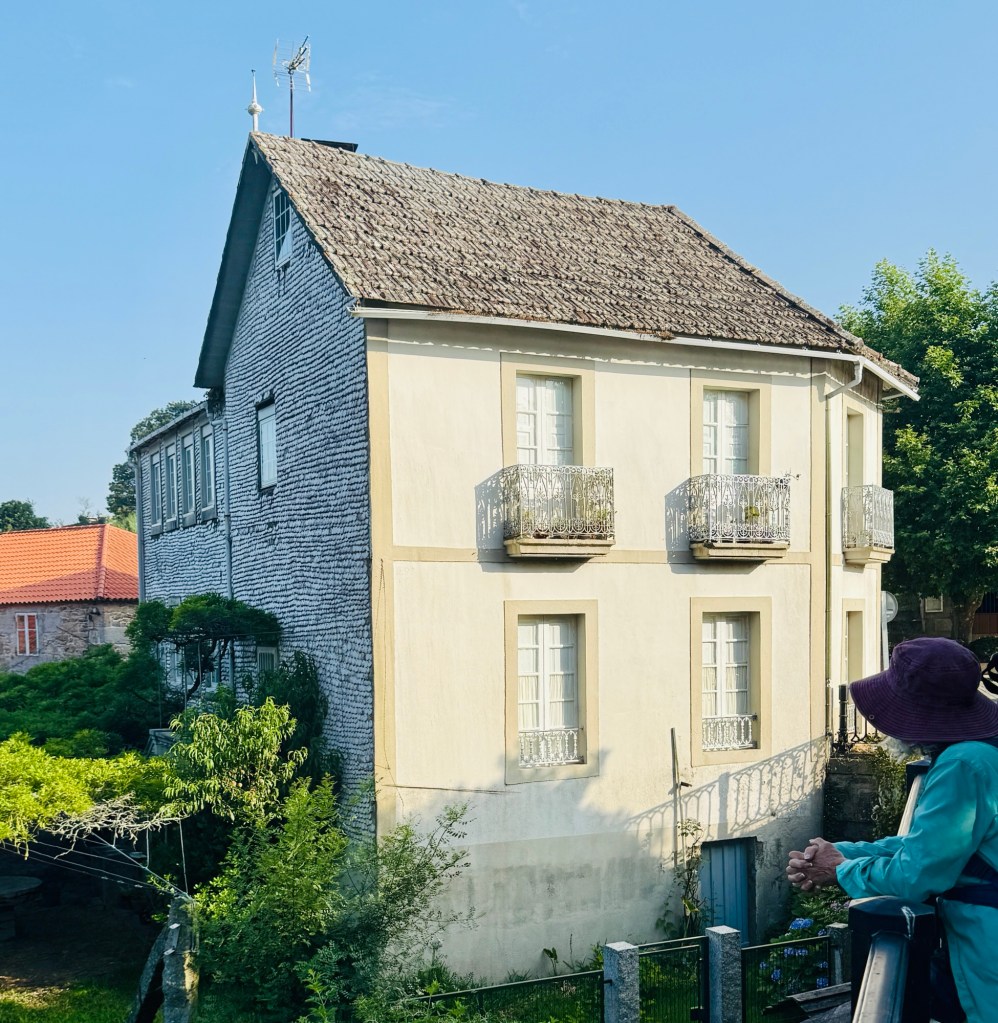
If you look closely, the entire side wall of this house is covered in scallop shells… the symbol of the Camino 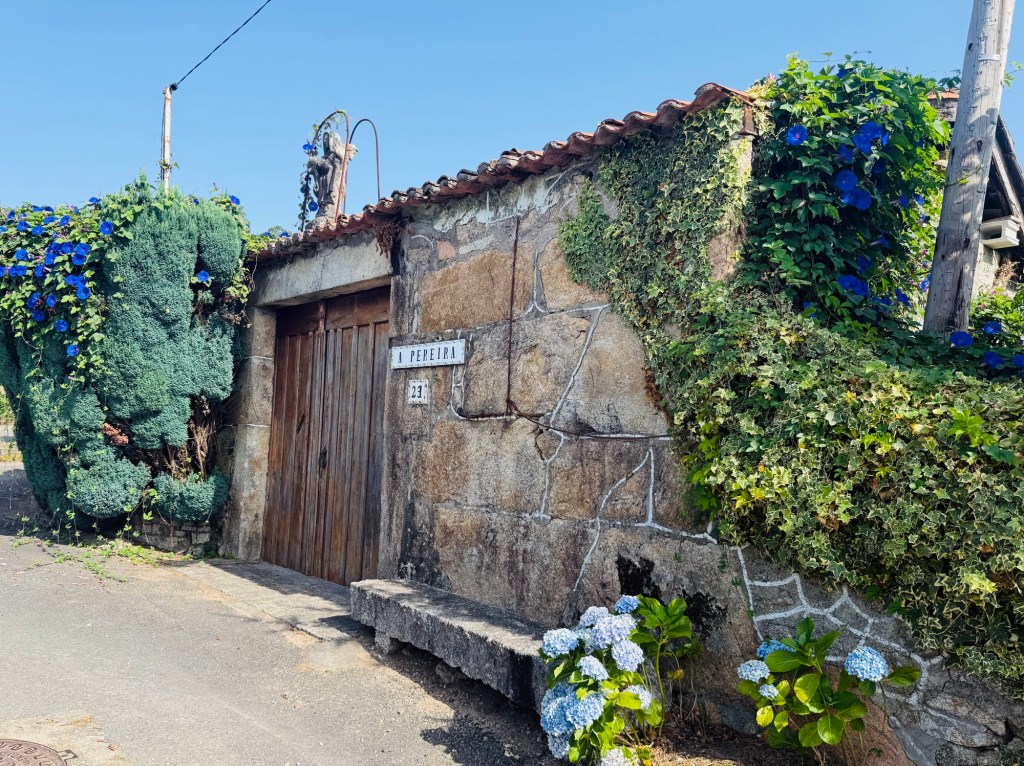
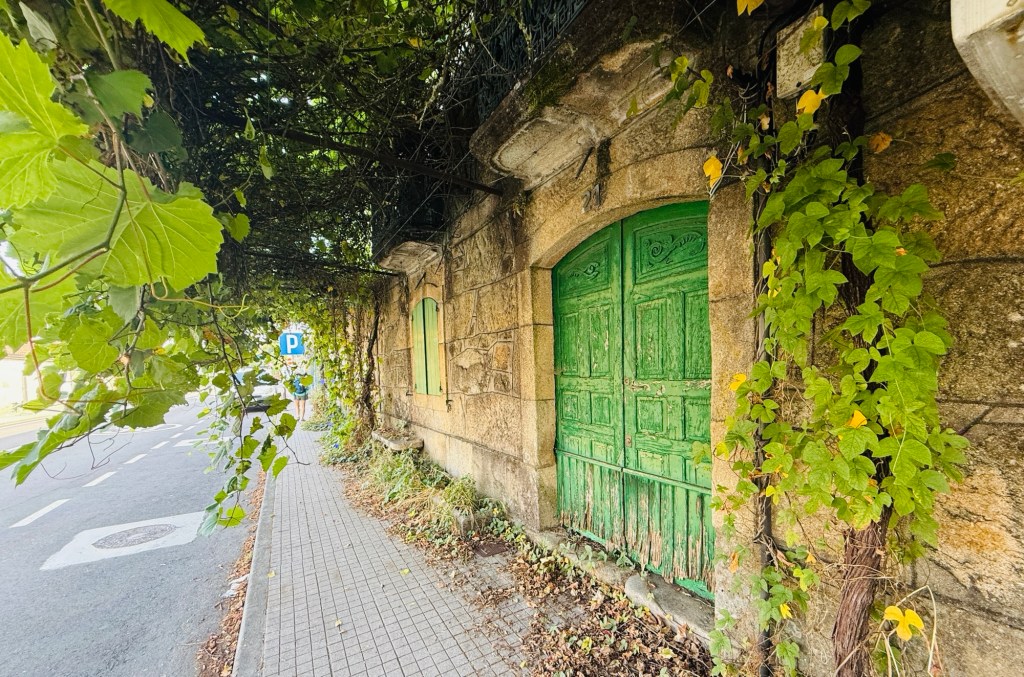
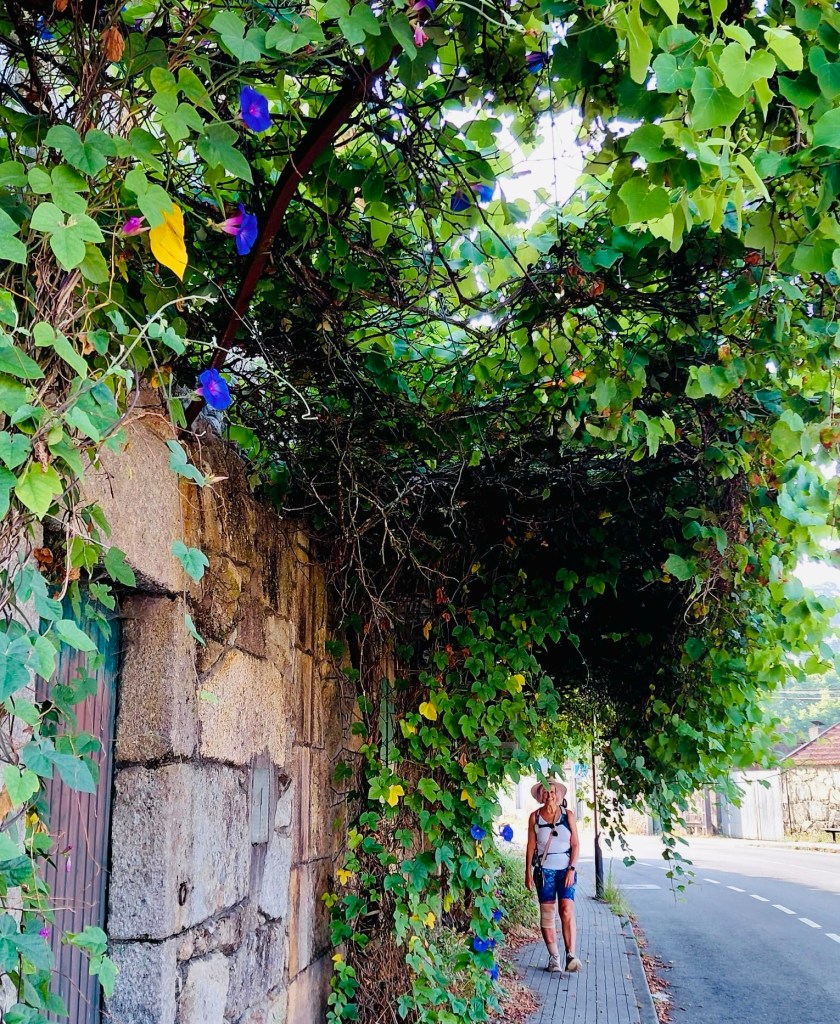
… with pretty houses and gardens
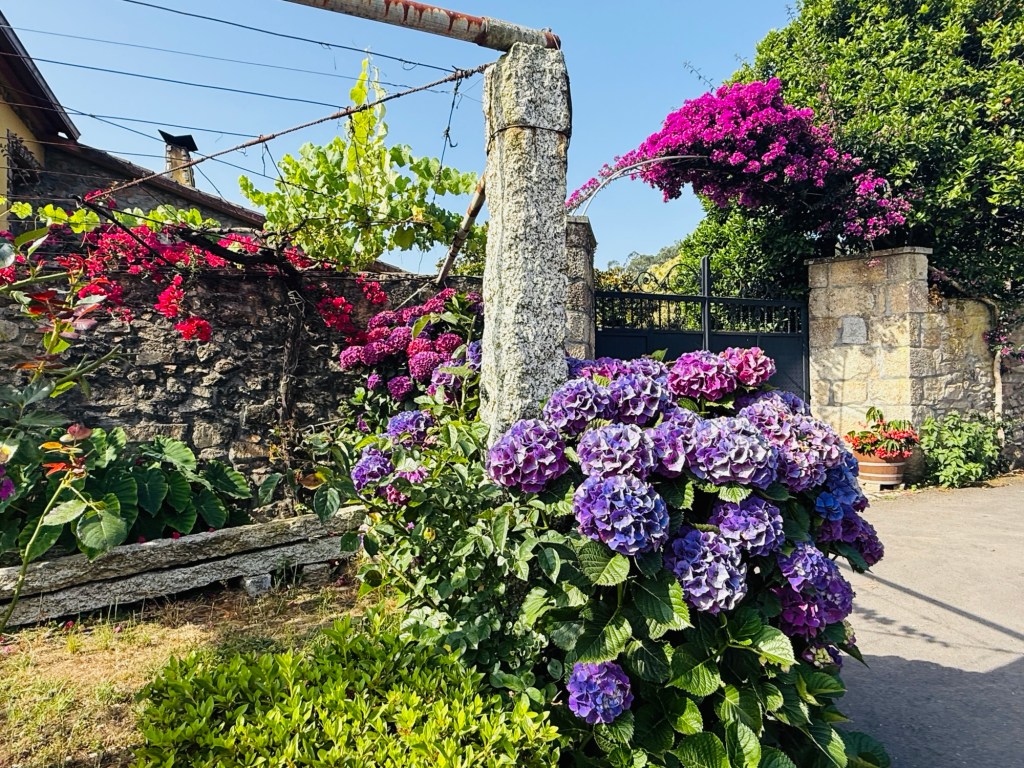

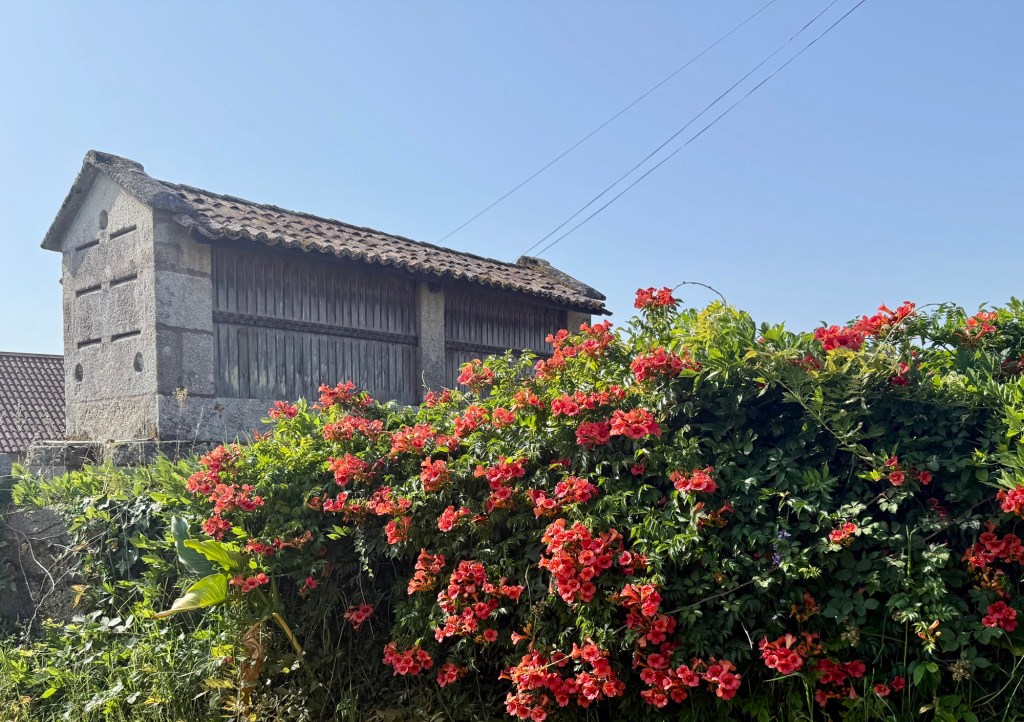
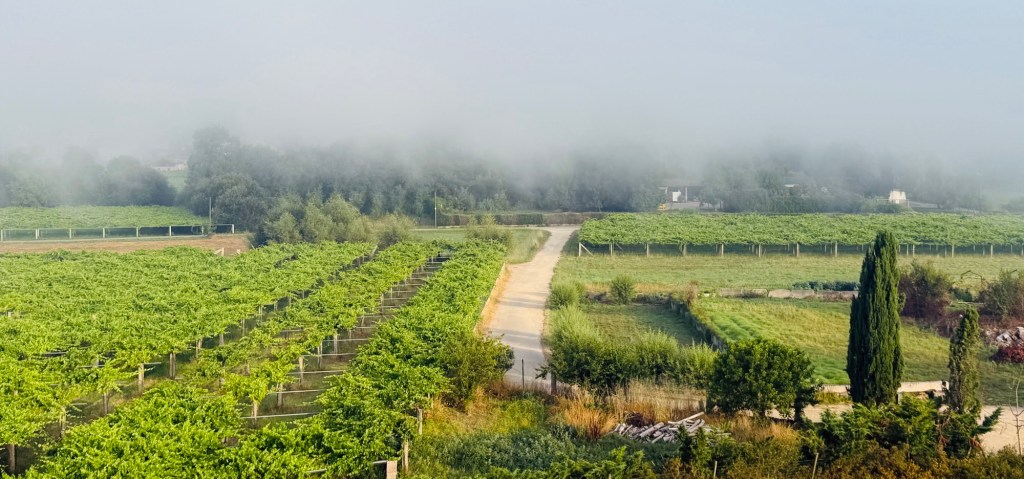
… through wine growing country with vineyards galore then uphill and through a eucalyptus forest… I am surprised how often we have seen both gum tree forests and eucalypts… so reminiscent of home.
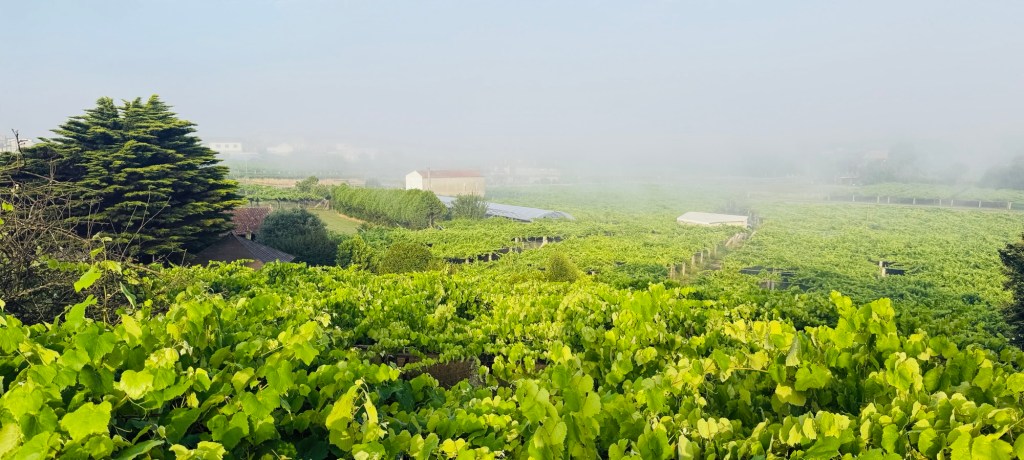
There are a few opportunities to stop at cafe/restaurants and we stop briefly to have an ice cream before continuing on. There is a lot of road walking today which has never been my favourite but at least there is not a lot of traffic.
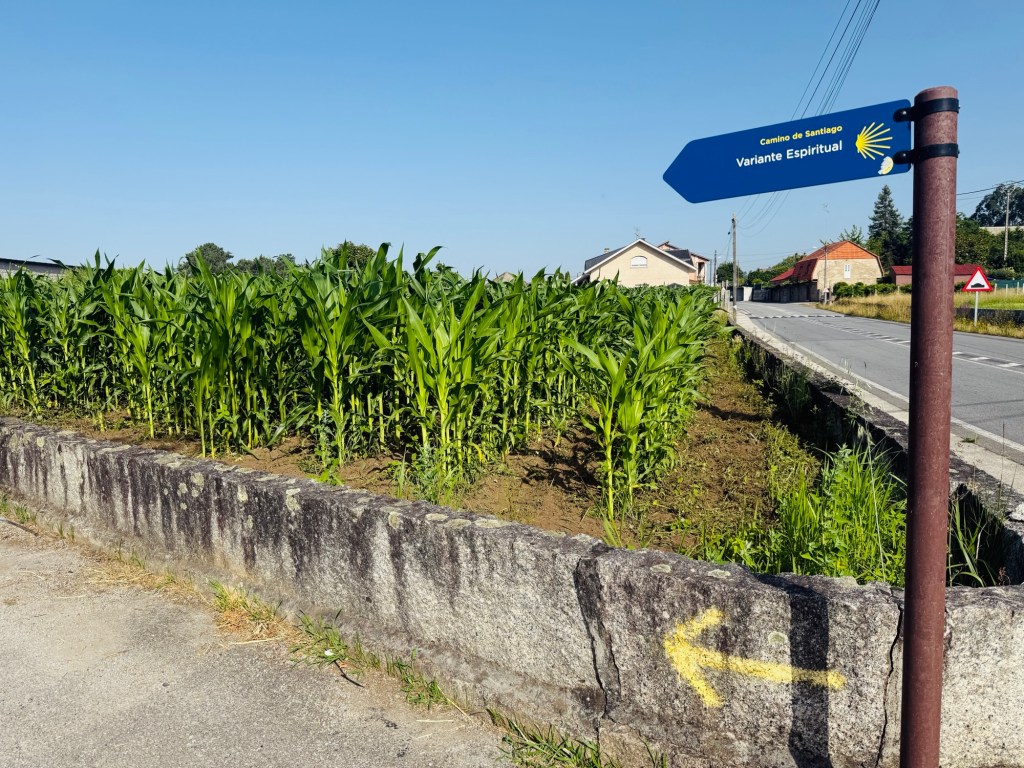
We pass a couple of small churches and go into a very busy service. It is hot and there is nowhere to sit and the singing is so off that we don’t stay. Later there is a small chapel that would normally give us a stamp in our credentials but it is Sunday and it’s closed. We may not get one at all today and we’re supposed to get two a day. Maybe later 🤷🏼♀️
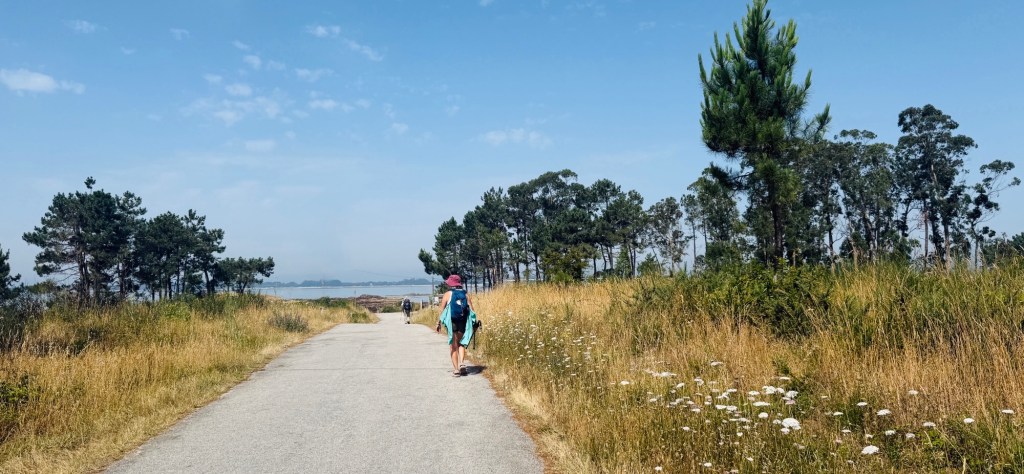
Eventually we reach the estuary of the Rio de Arousa and follow along the coastline…
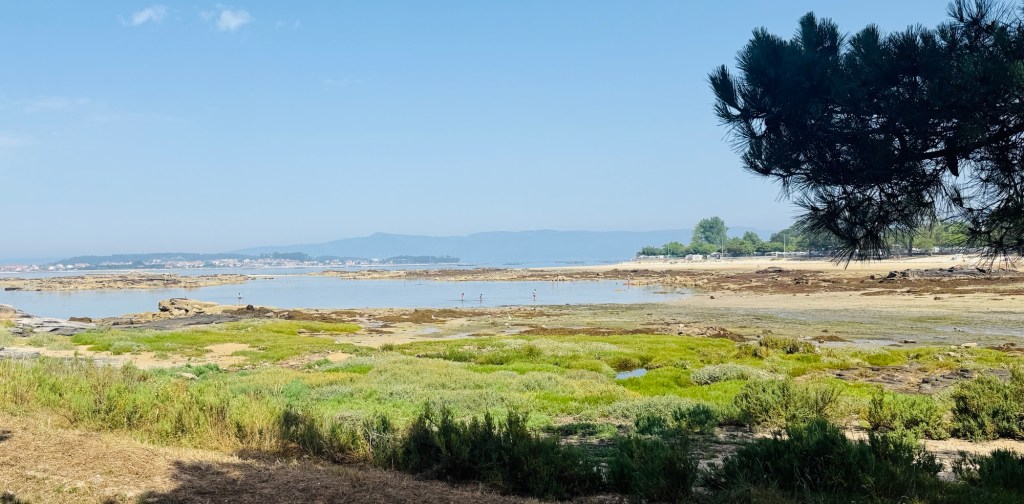
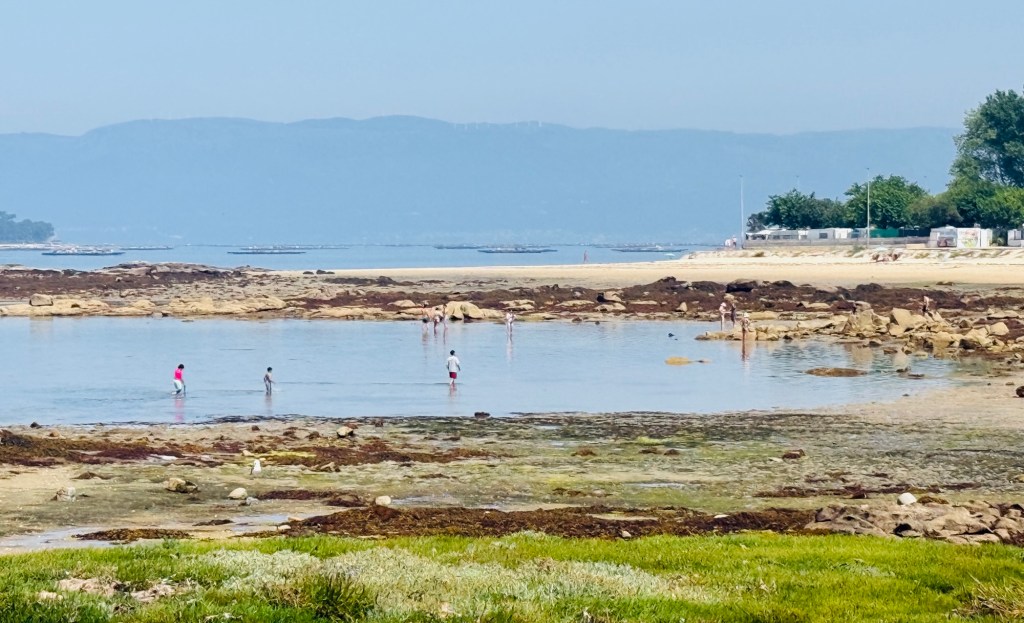
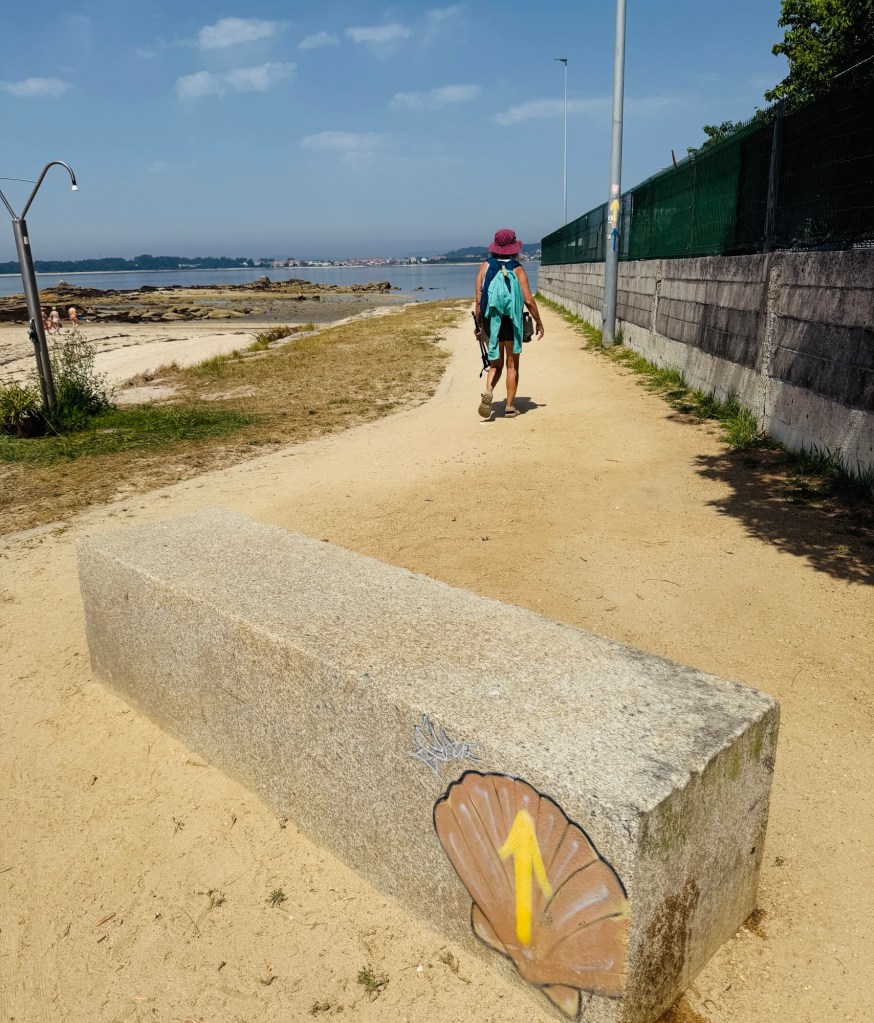
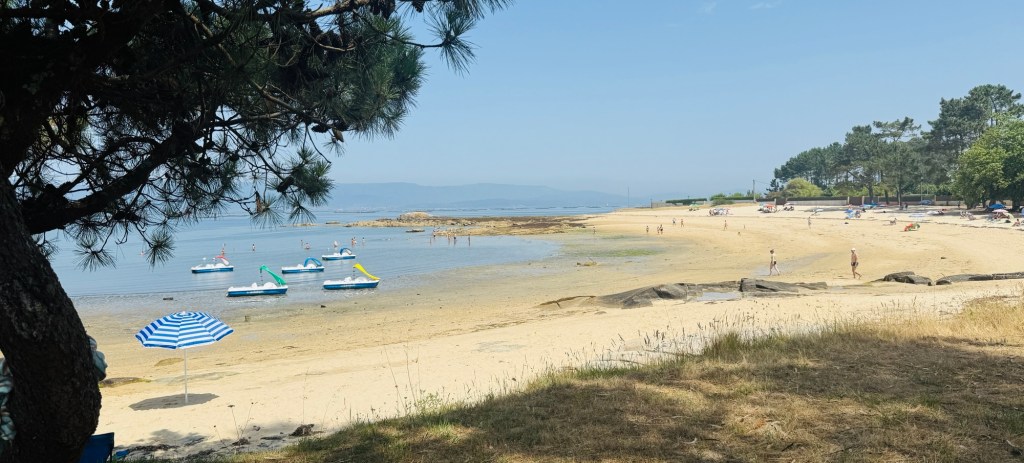
… before crossing a pedestrian bridge into the town of Vilanova de Arousa itself.
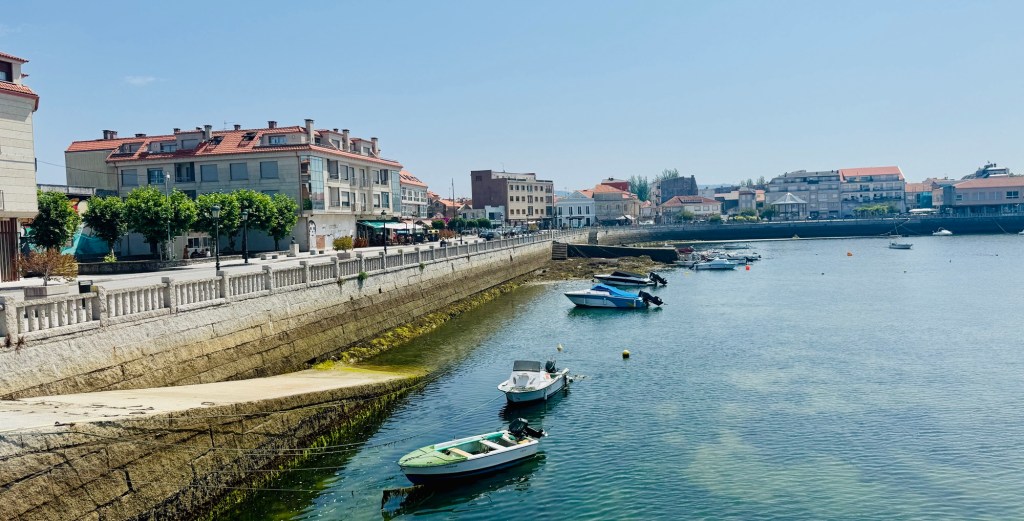
We find our accomodation… an apartment in a lovely stone building in the “old town” area and are thrilled when we find we can enter immediately rather than wait for the proposed 4.00pm check in. Our bags have not arrived so we rest a while hoping they will come soon but eventually give up and go out without a shower or change of clothes or shoes.
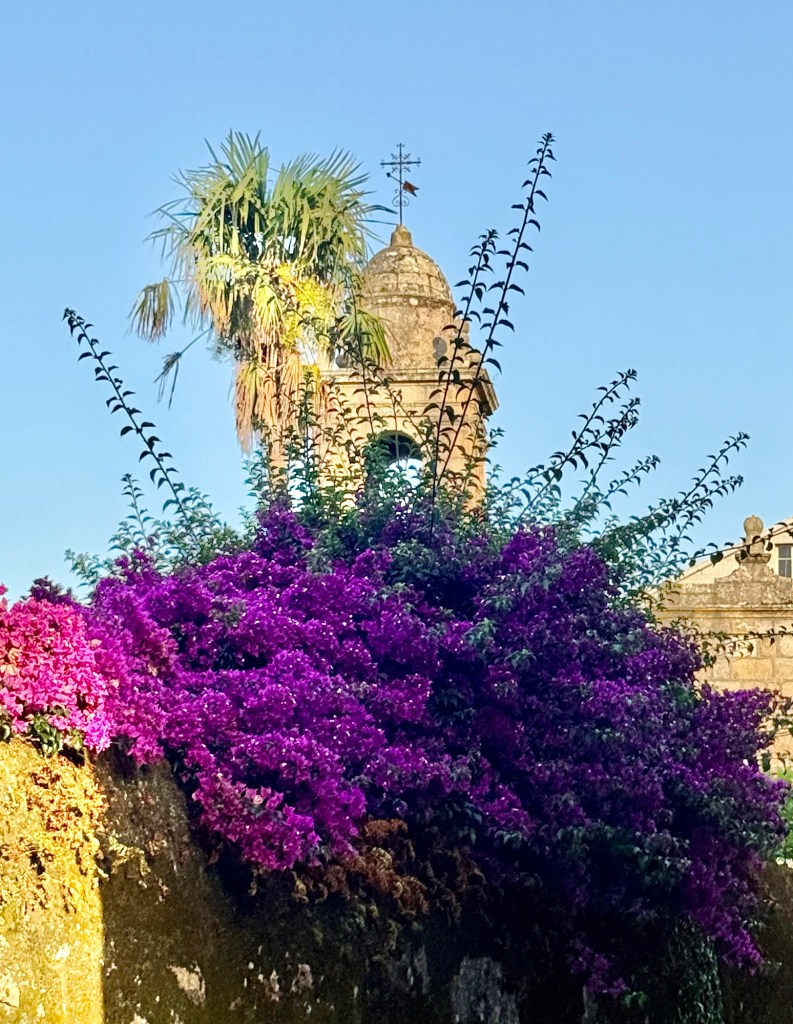
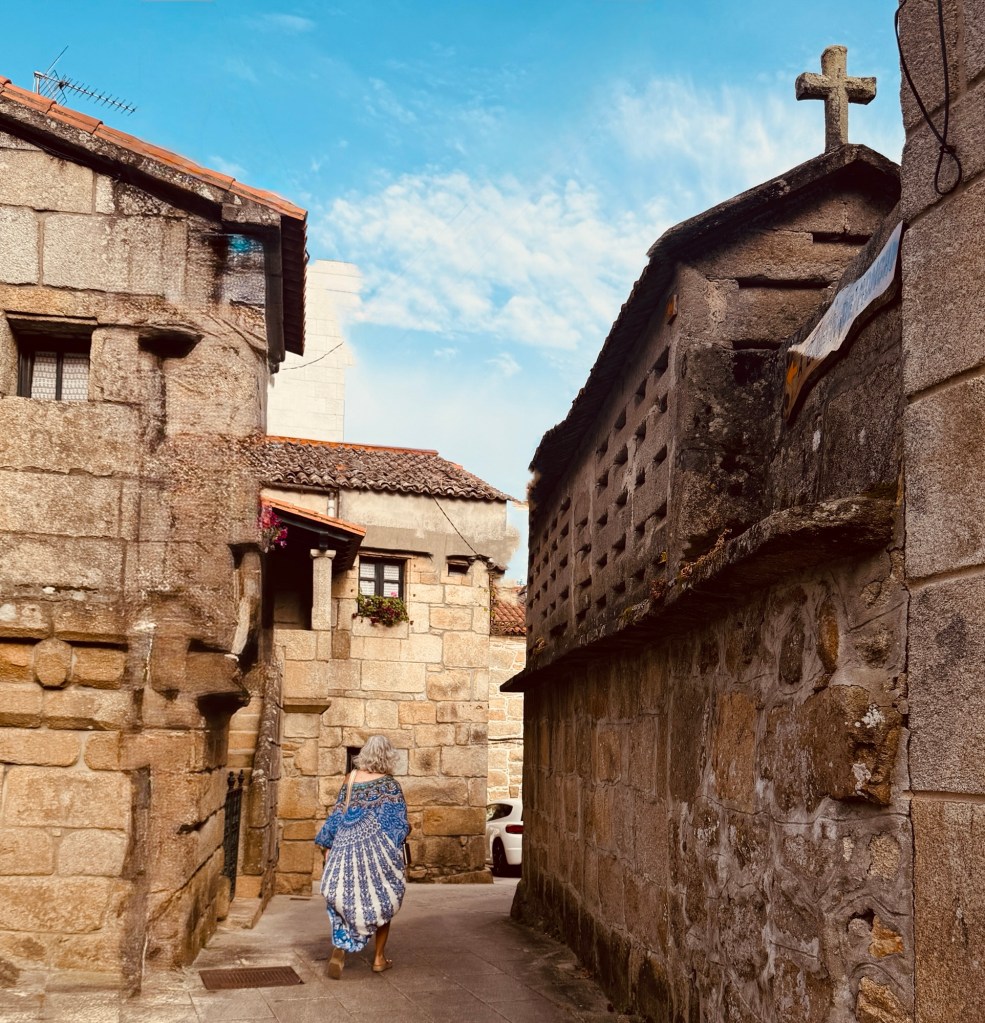
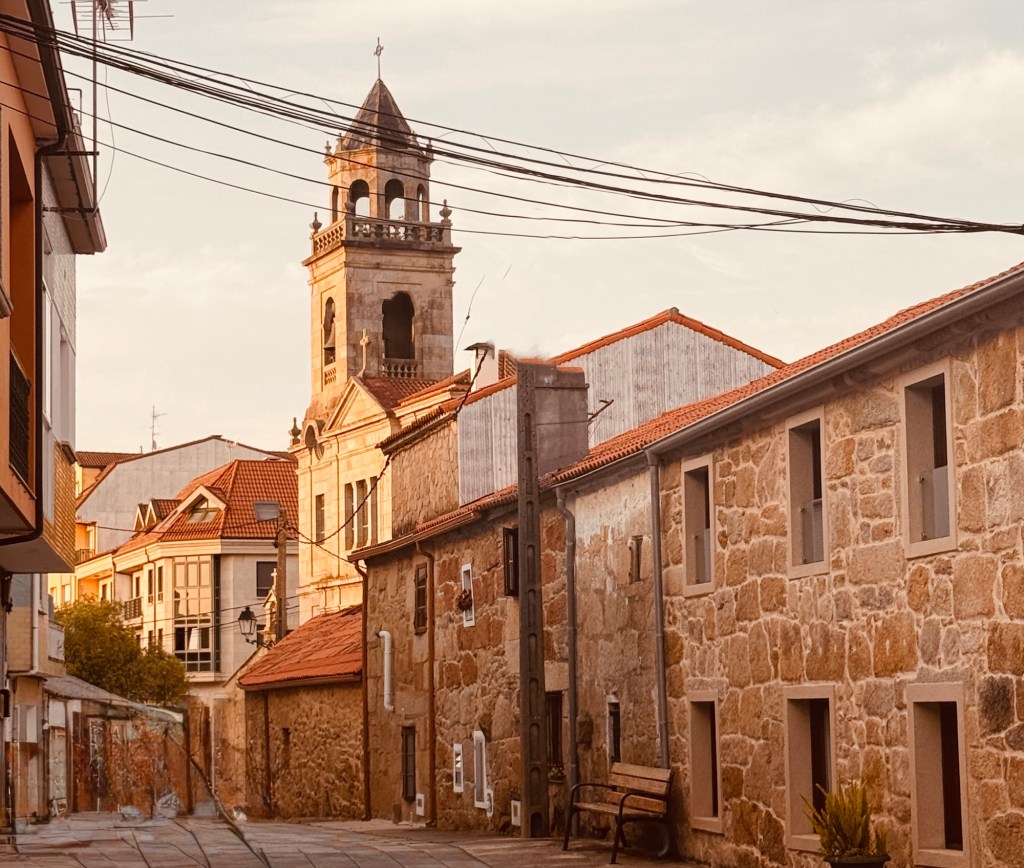
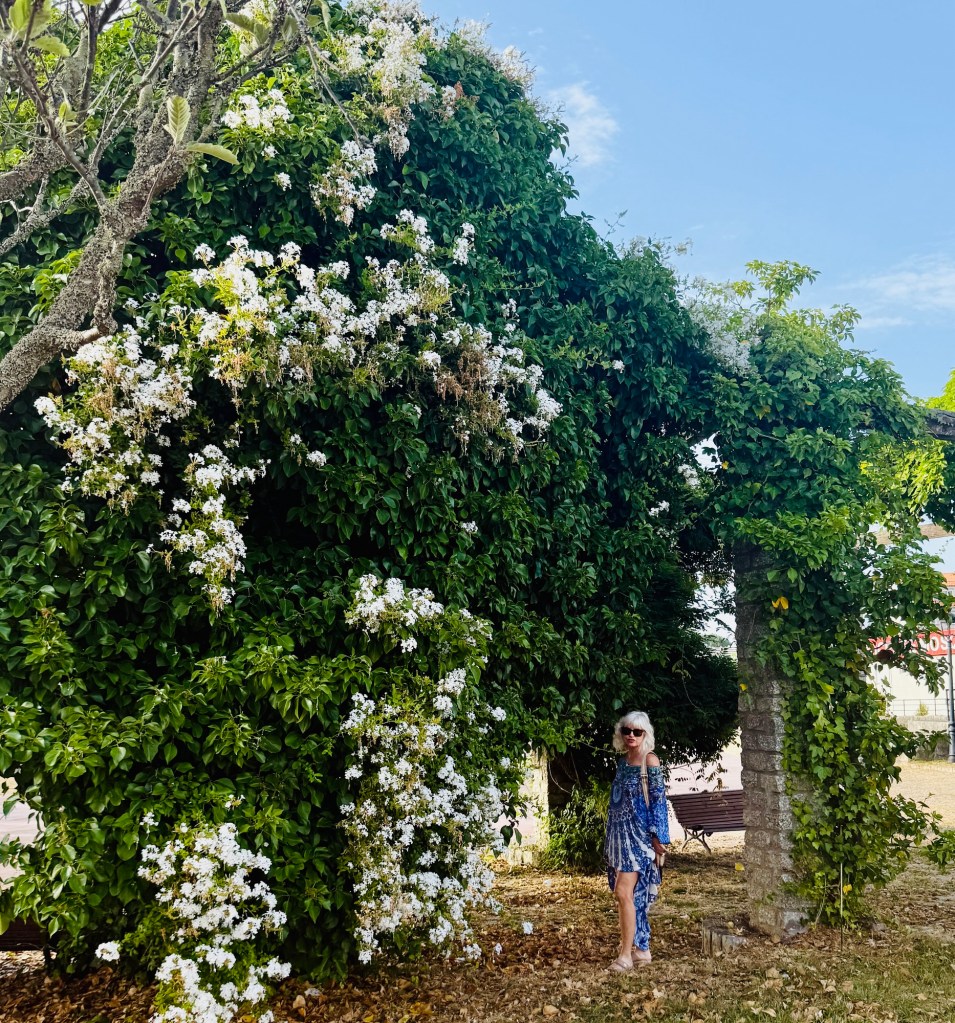
We wander the pretty old town filled with churches, stone buildings and houses covered with flowers…
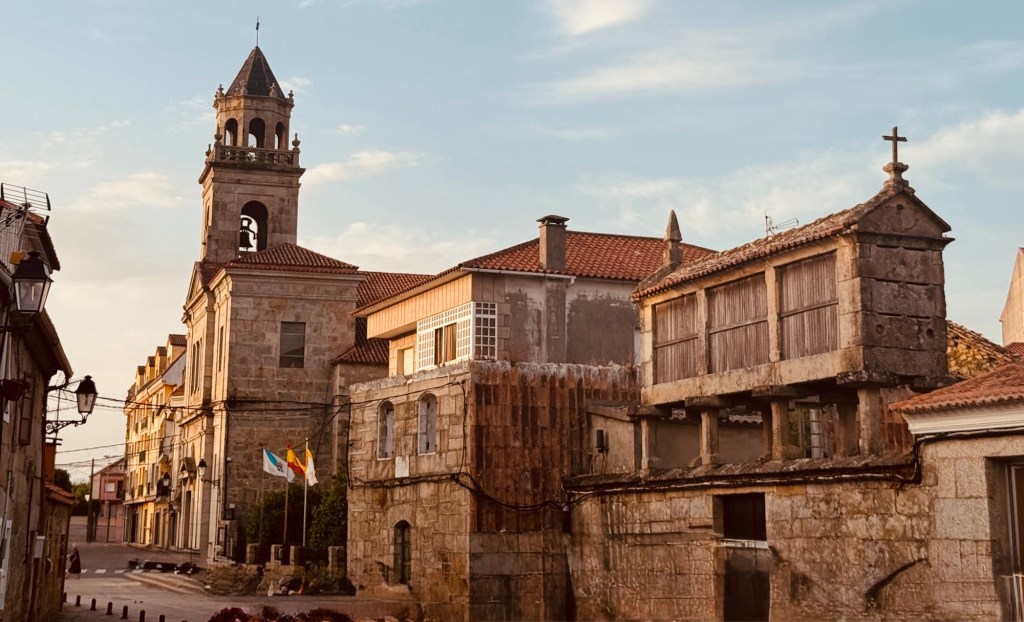

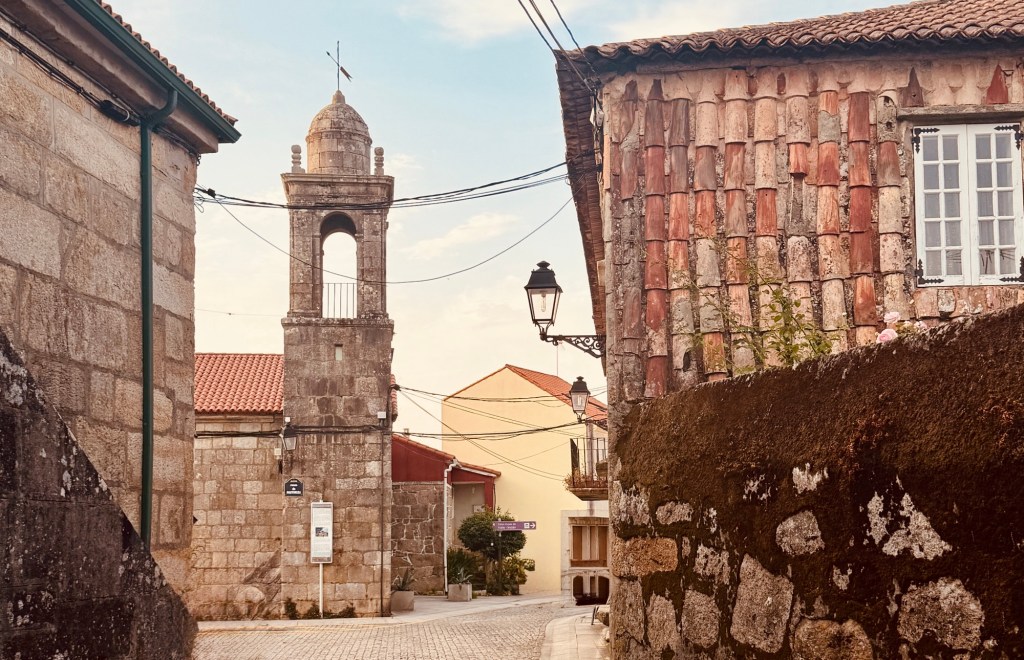
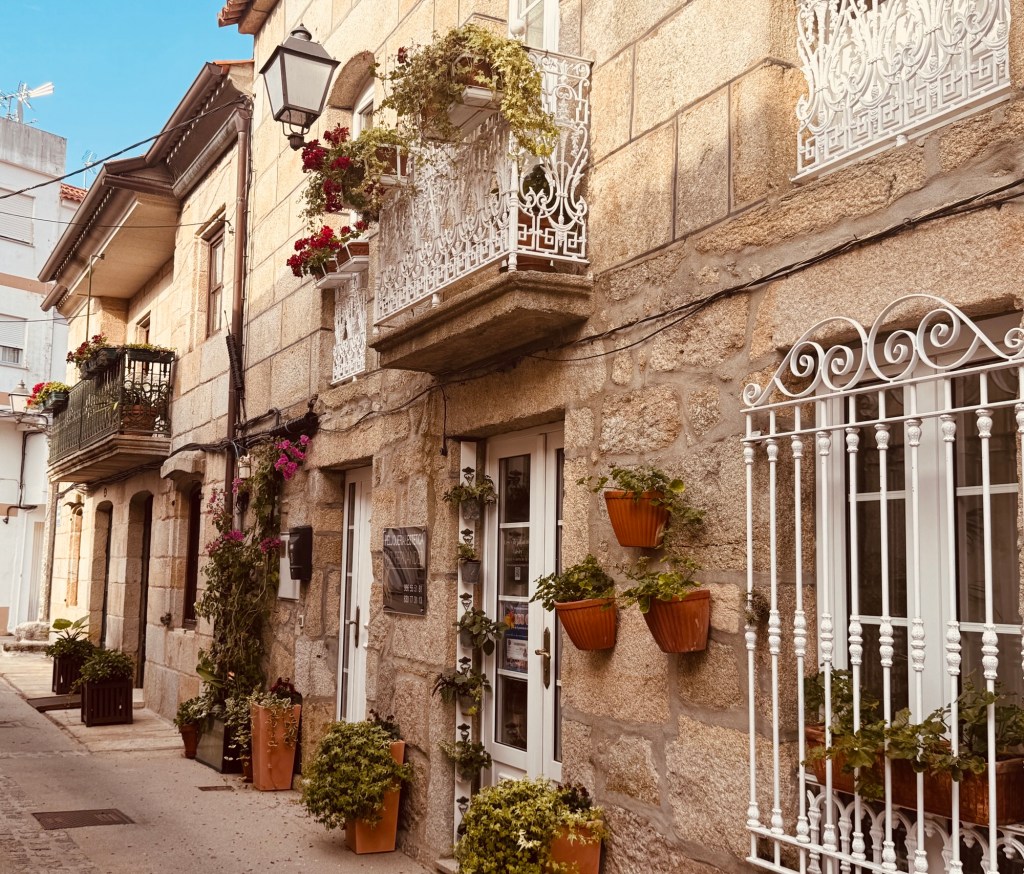

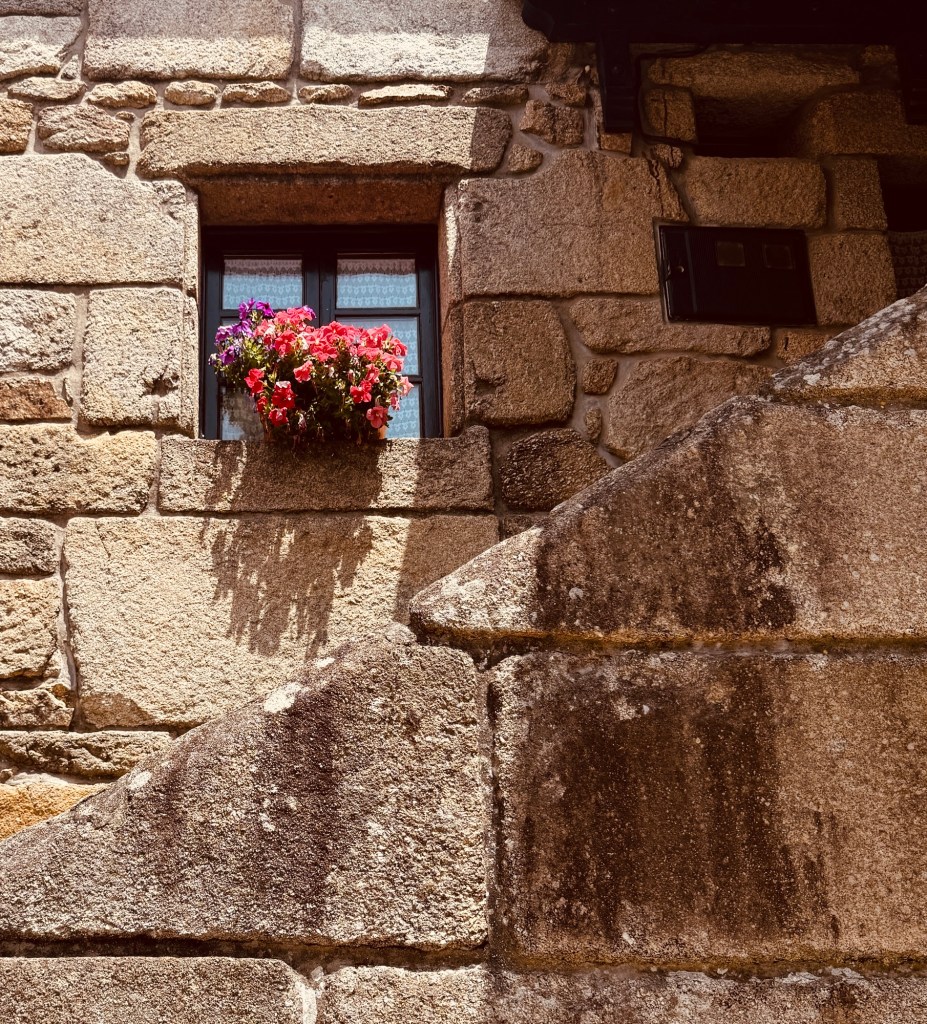
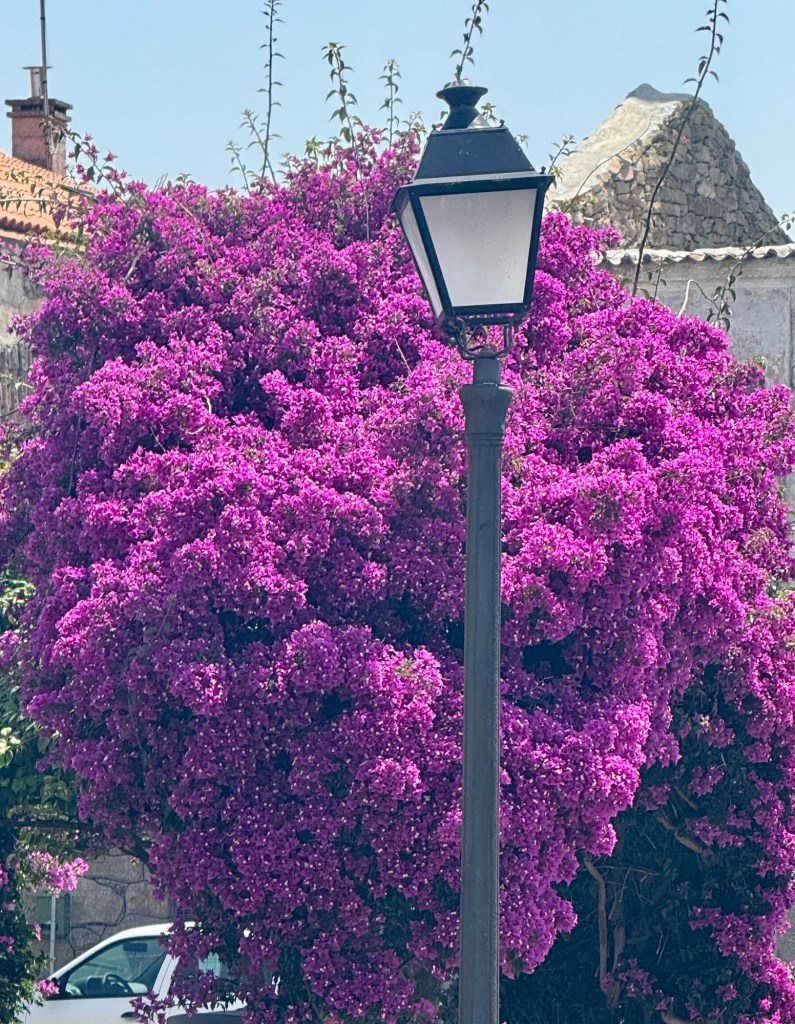
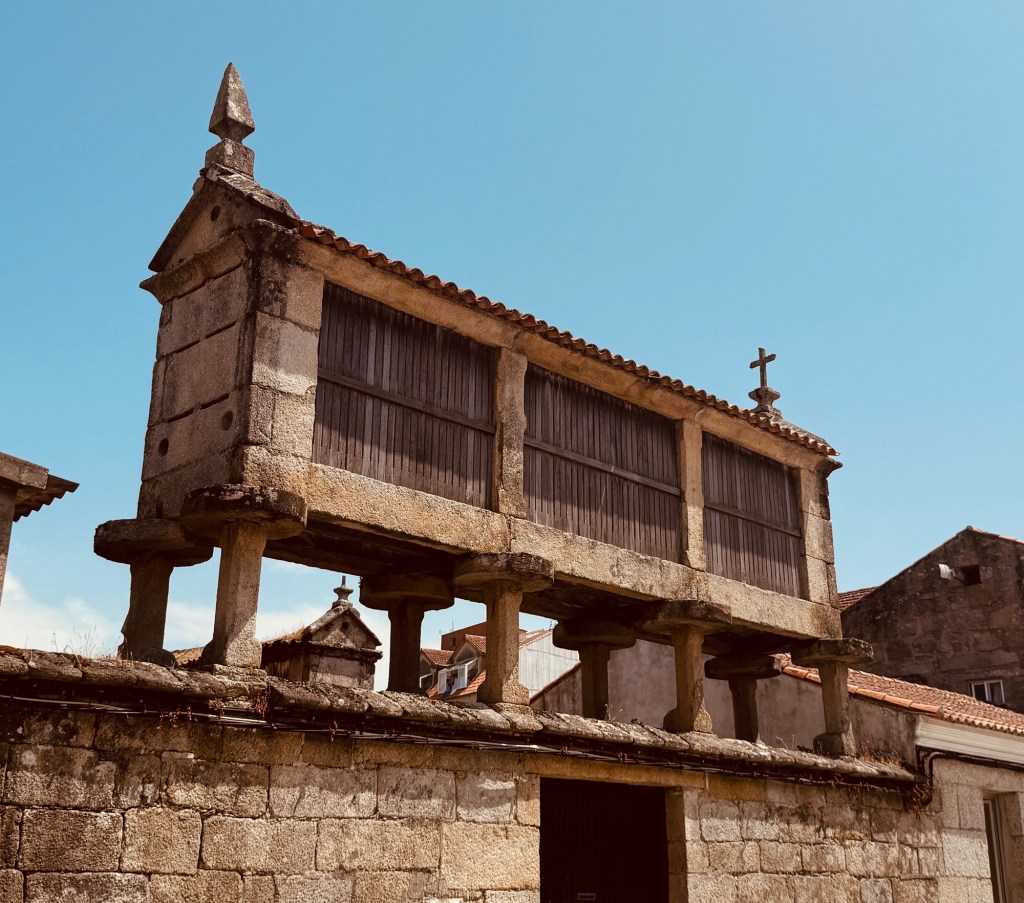
… and discover a gorgeous little vine covered courtyard restaurant off the street and eat some delicious food and drink the local Alberino wine that we love… and almost feel human again.

We like it so much we make a booking to come back tonight. When we get back to the apartment our bags have been delivered… always top marks to Top Santiago!
We rest, shower and change and eventually head back out to see a little more of the town and have dinner.

Another big day tomorrow- we’re really on countdown now… our second last day coming up.
Steps today- 27,224
Kilometres today- 18.97
Flights climbed- 6
Temperature- 30°
-
Ruta da Pedra e da Agua
“The beauty is in the walking — we are betrayed by destinations.” Gwyn Thomas
Day 18
Of any day on our entire Camiño, this is the one I had been looking forward to. I had heard so many people say that it is the most beautiful day of the Portuguese Camino and possibly of all the Camino routes. While I know that opinion is subjective, even the name made my heart beat faster… Ruta da Pedra e da Agua (the Route of Stone and Water). I knew I would love it and I wasn’t disappointed.
We walked through our little rural town of Armenteira…
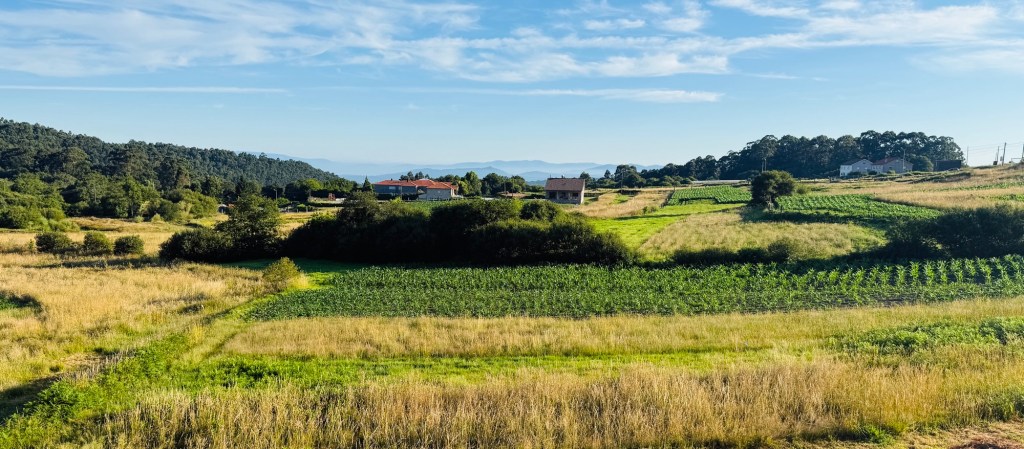

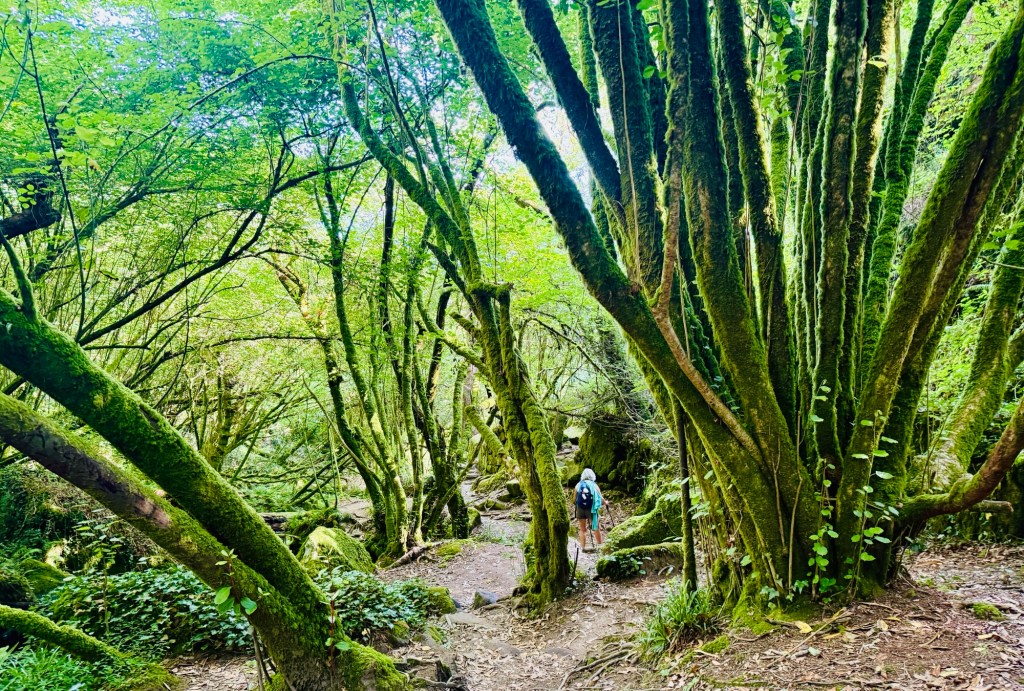
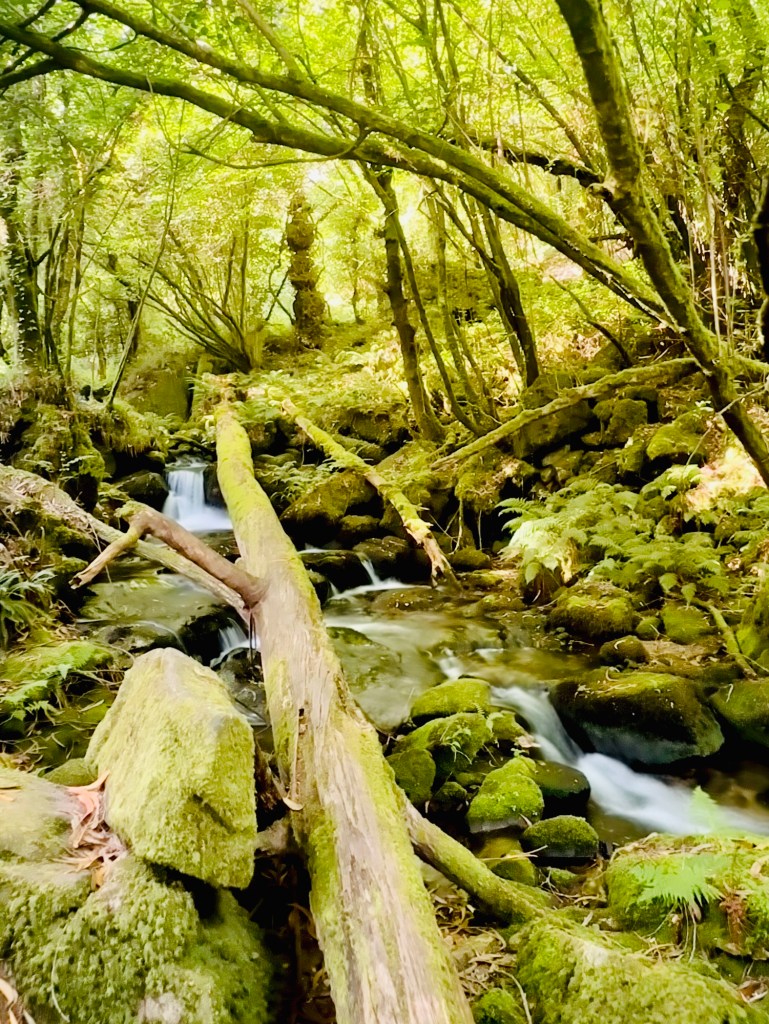
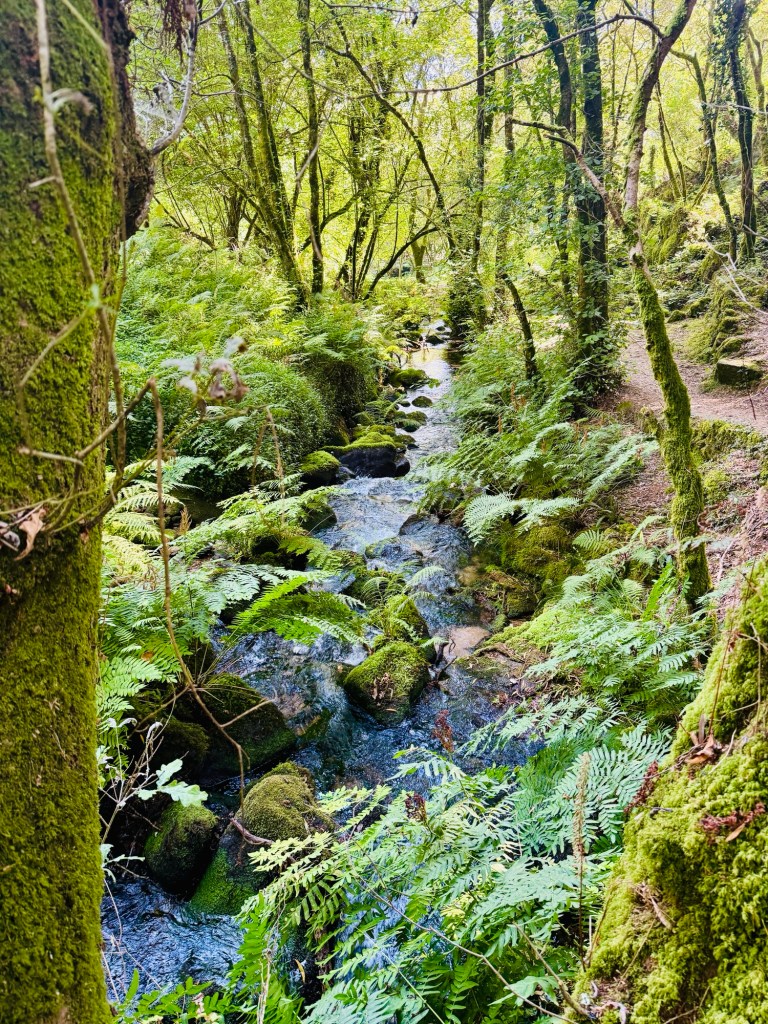
… and very soon arrive at the turnoff. This picturesque trail follows the river for the entire day… and weaves through ancient abandoned water mills (muiños), cascading waterfalls and moss-covered rocks and fairytale woodlands, offering a sense of tranquility and communion with nature. Within minutes of entering the forest I was in tears, overcome with the beauty of creation.
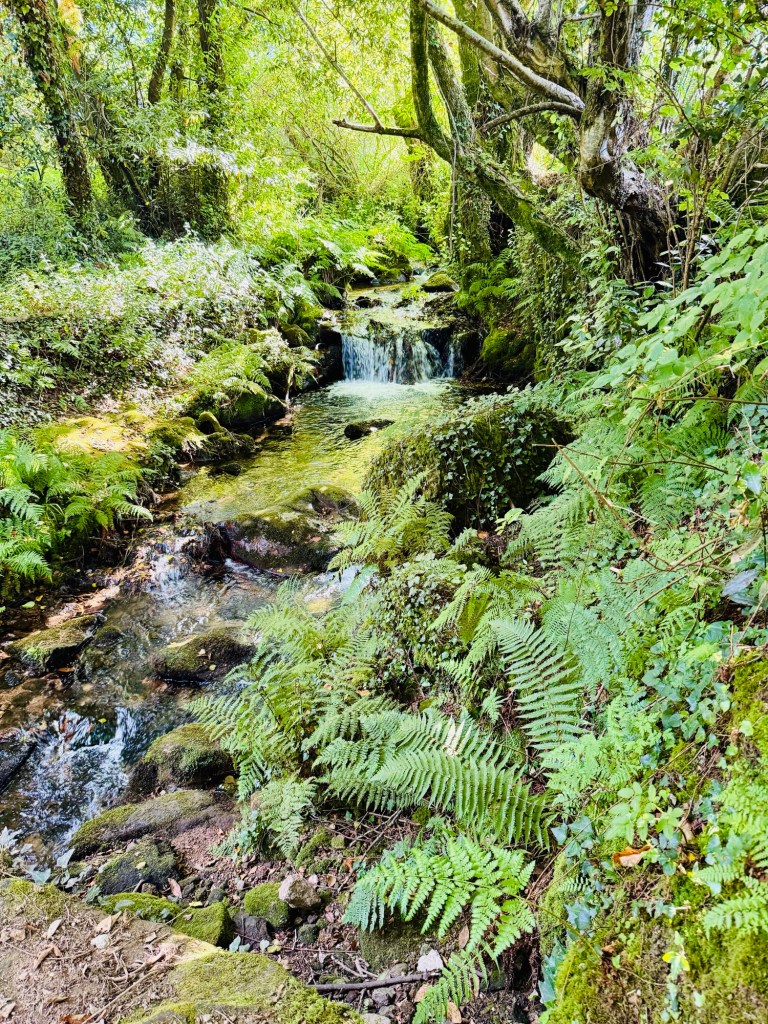
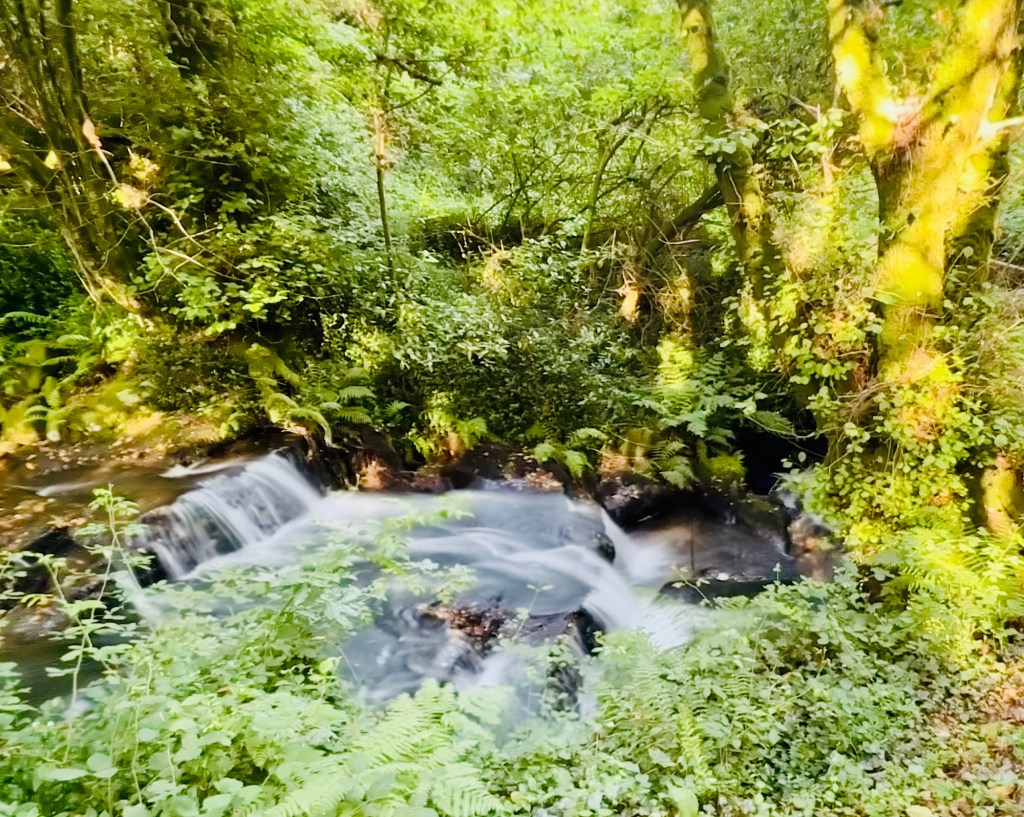
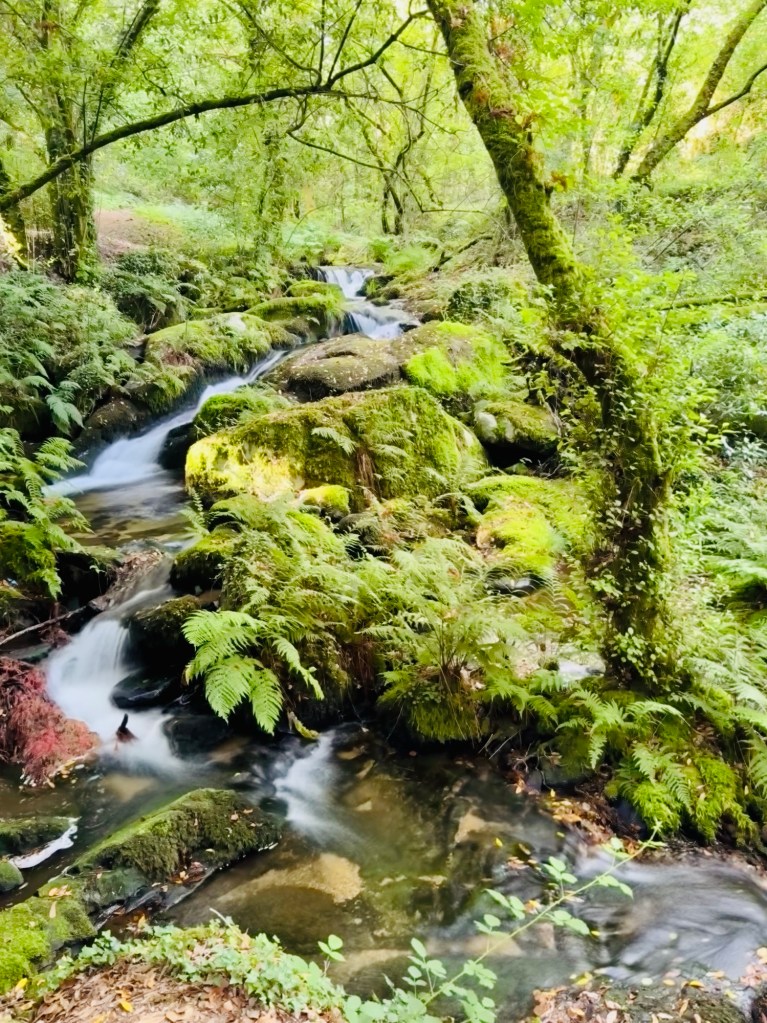
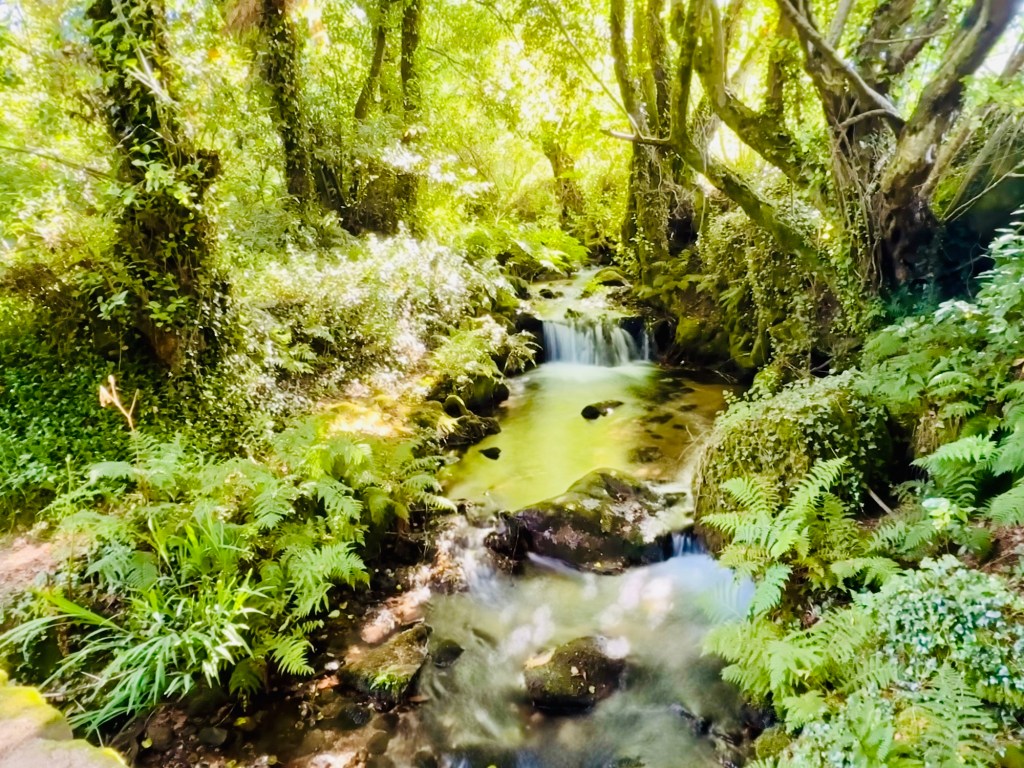
Over the next 5 kilometers along the Ruta da Pedra e da Auga we passed at least 20 muiños in many different stages of preservation…
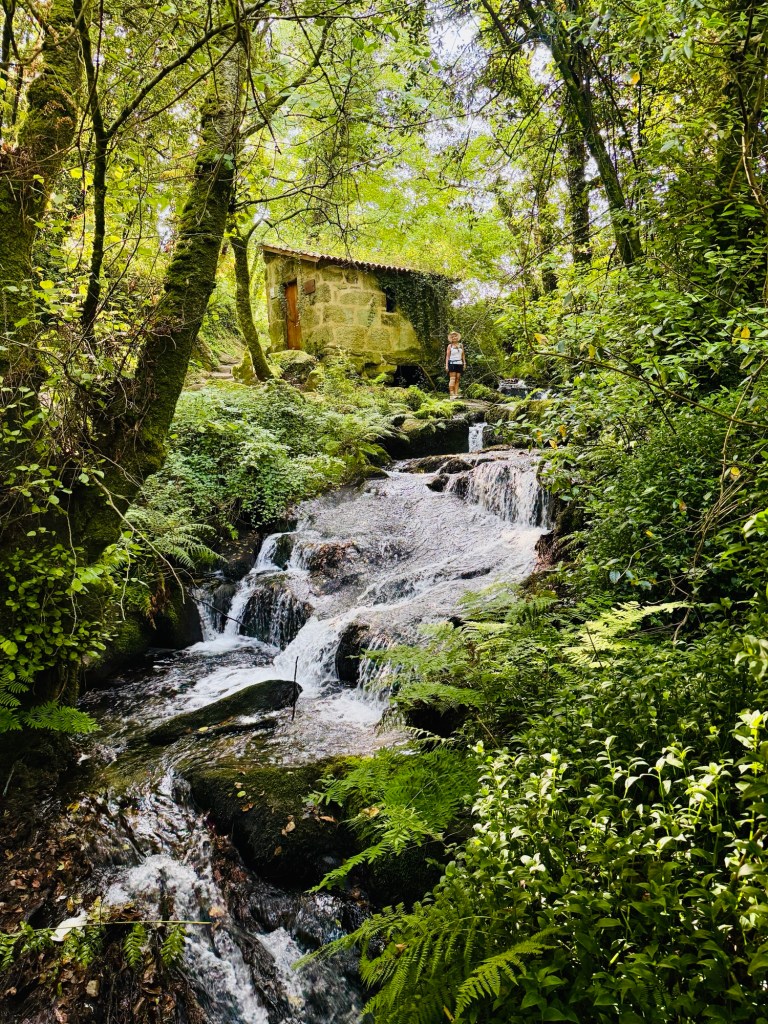
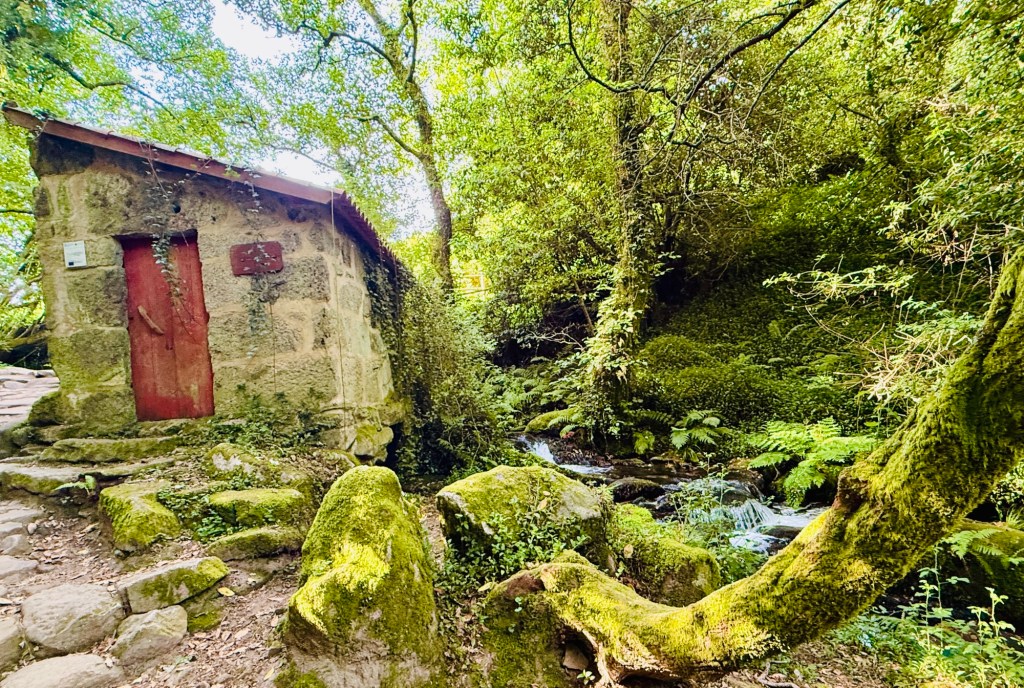
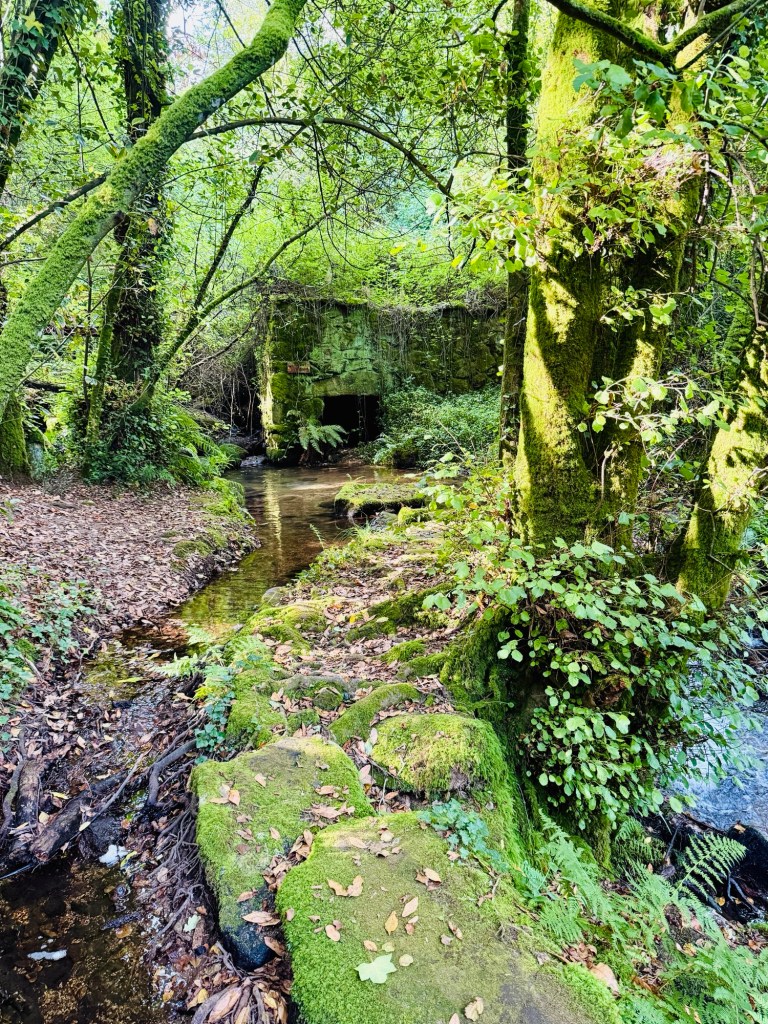
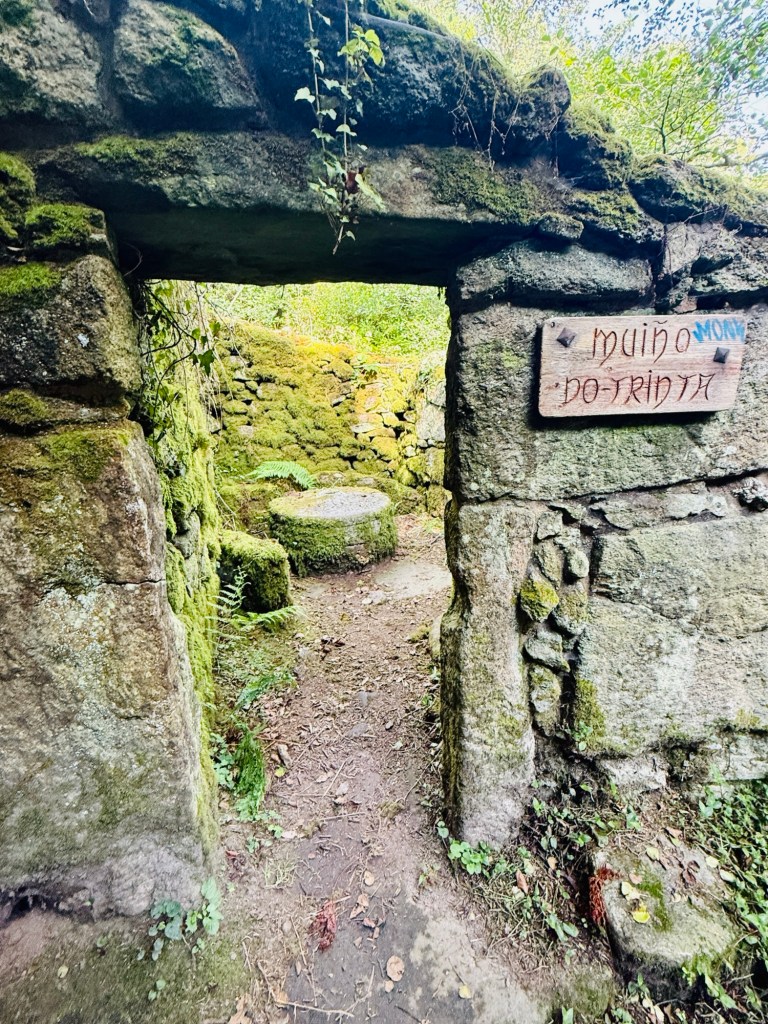
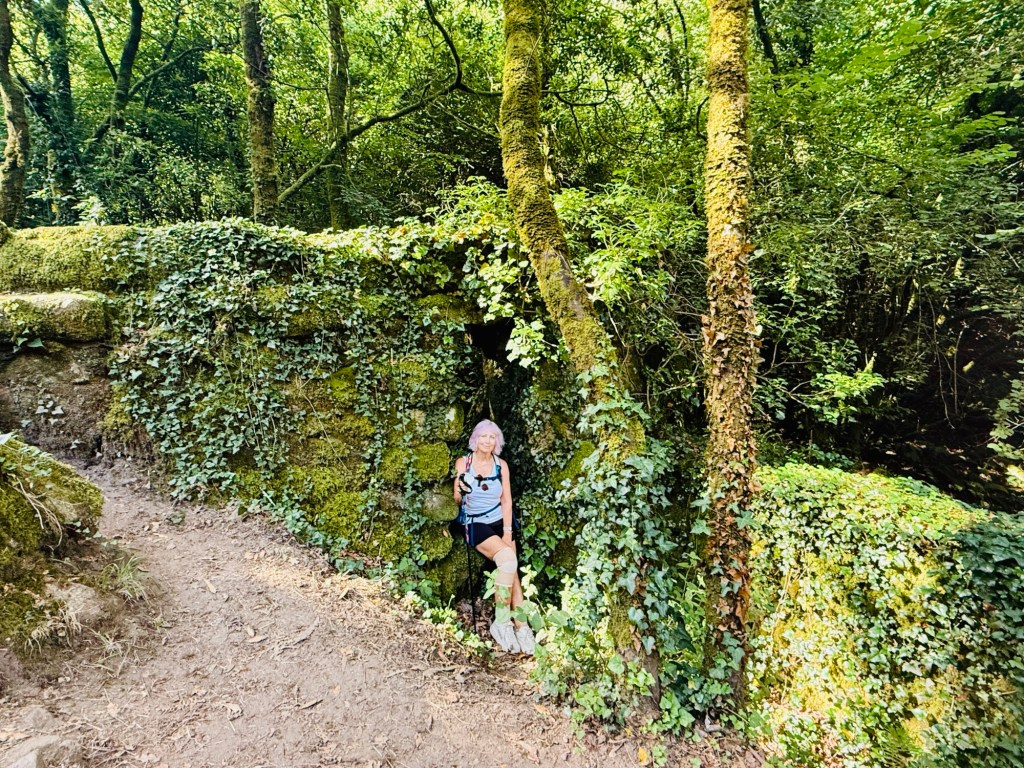
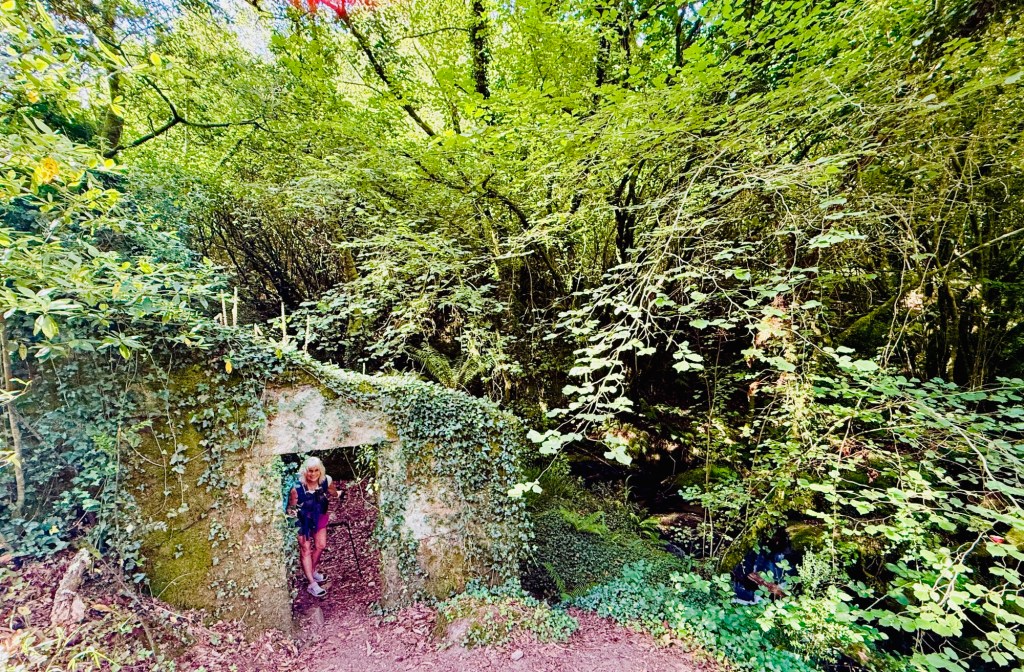
… stairways that led us down by the river banks… canals that channel the water into the mills…
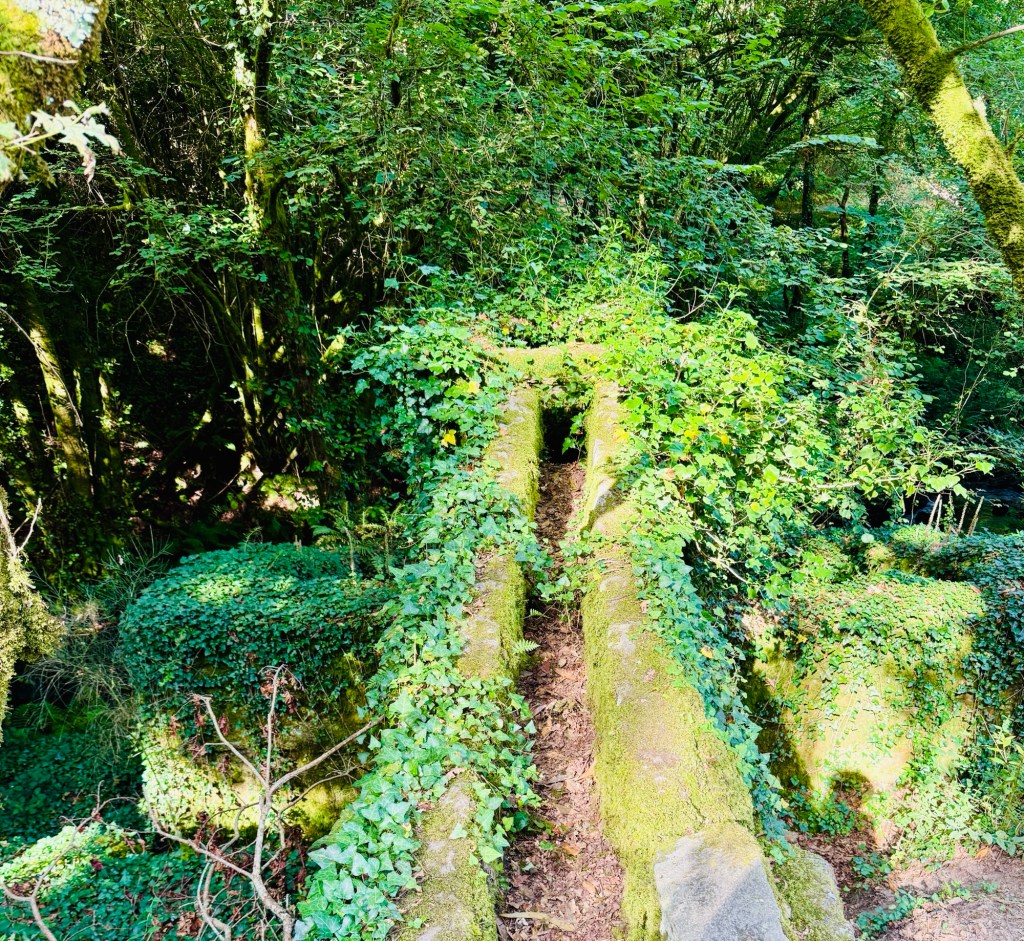
… several more cascading waterfalls…
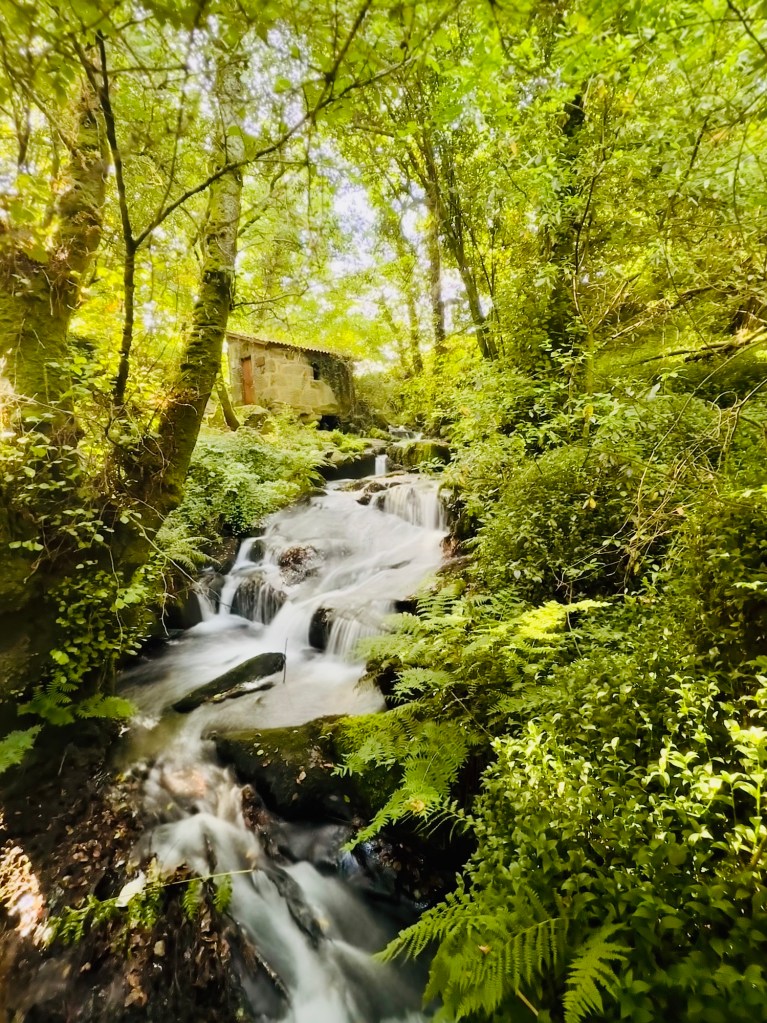
… and still, freezing pools you just have to paddle in …

… moss-covered rock walls…

… and filtered sunlight on beautiful ferns giving lots of shades of the most intense greens you have ever seen.
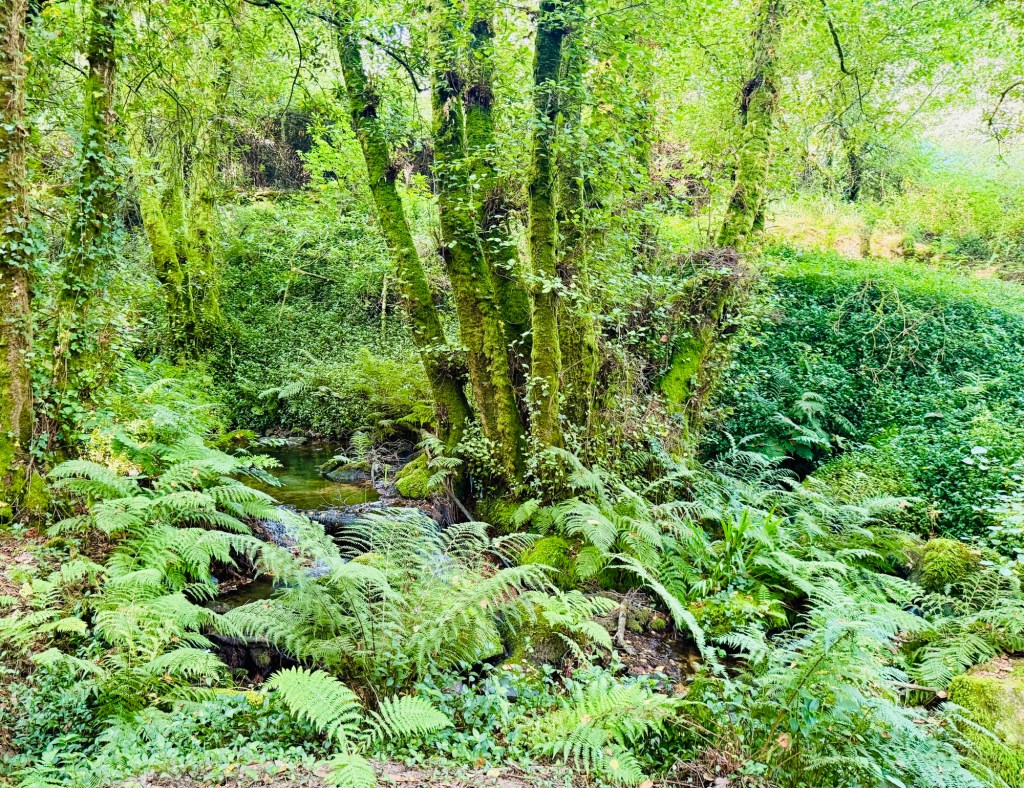
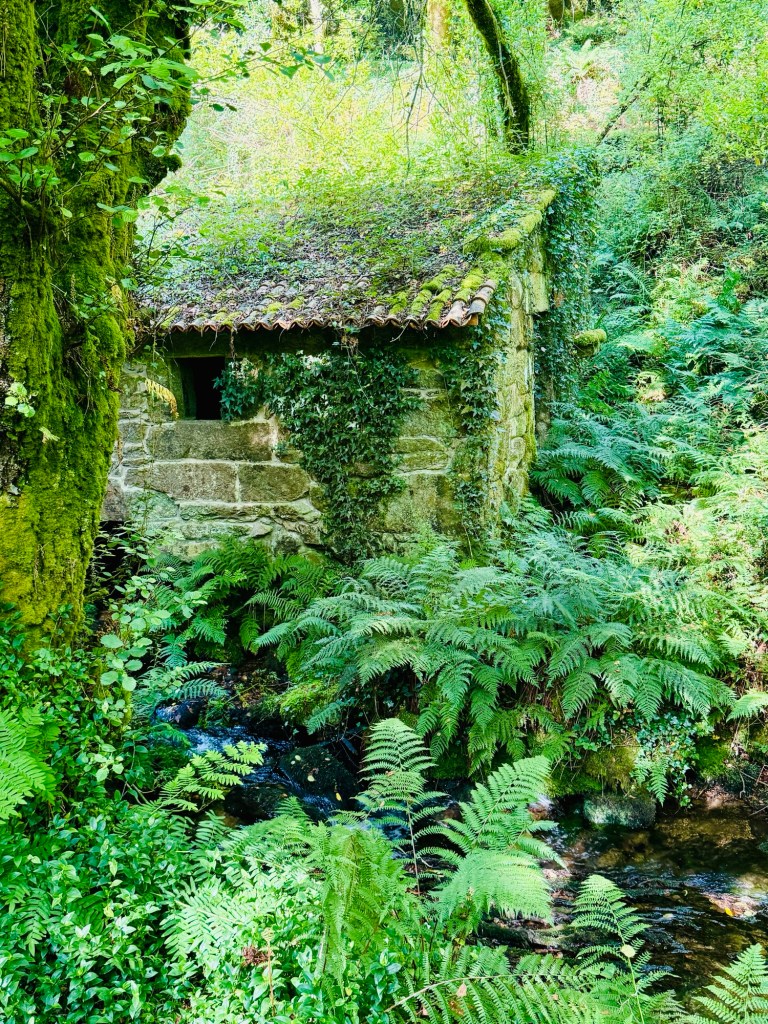
Many will know that I am obsessed with moss… it makes everything feel so alive and there is a thick bright green layer of spongey moss blanketing the rocks and trees.
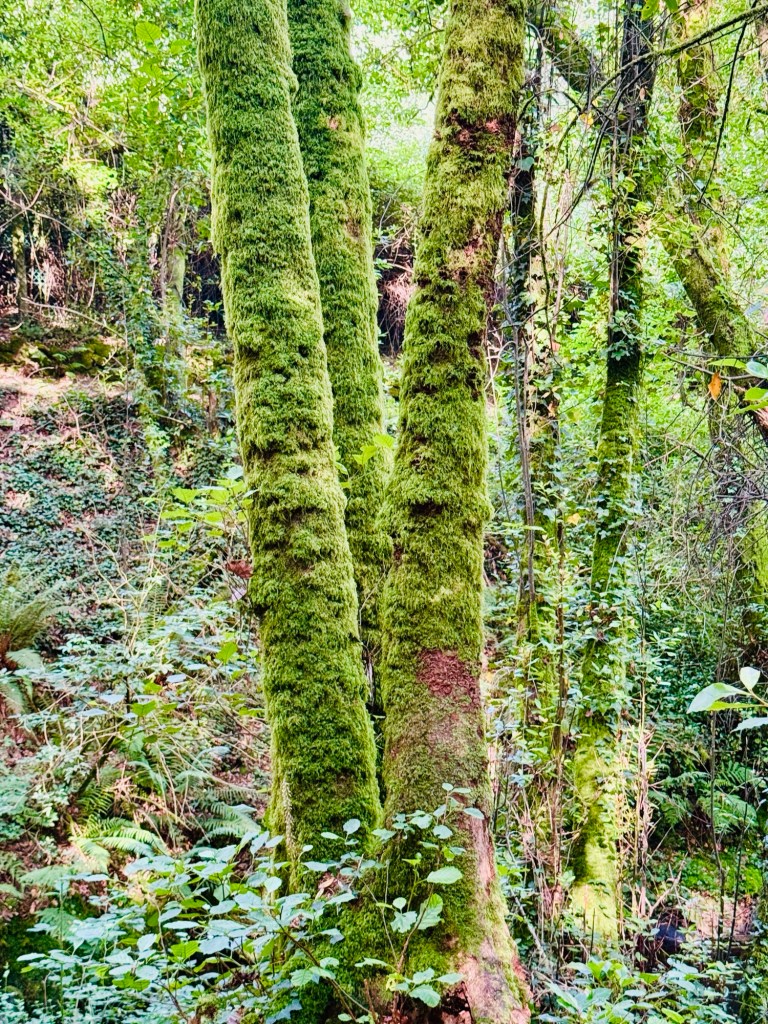

This is a magical place that is a walk back in time! All day the soothing sound of gentle water accompanies us, birdsong surrounds us and butterflies flutter around us everywhere.
“Nature lulls me in her enchanted woods; soul flowing through greens, and roots, and tangled loves.” – Angie Weiland-Crosby
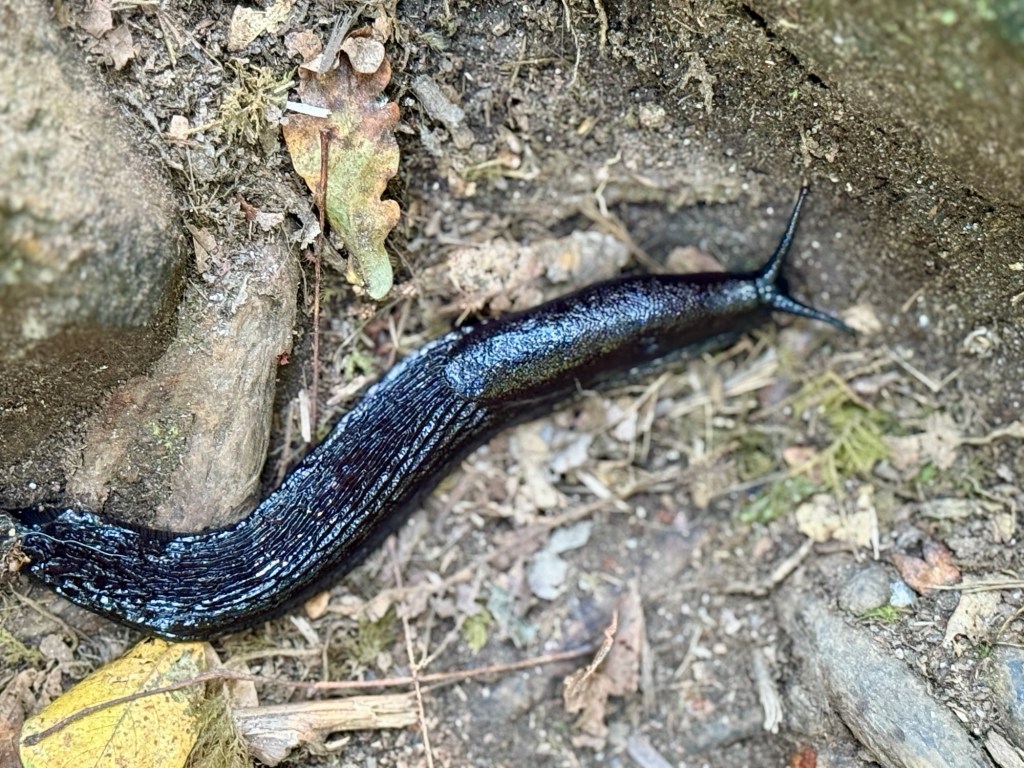
Aaaand….. there was some kind of huge slug too 😂
We meet up with another family walking the Camino together who have stopped for a swim, where I decide to paddle. Jenny and Carson are travelling with their spirited eight year old, Caden and ten year old, Jane. What amazing parents to take their children adventuring like this and show them what a big wide wonderful world we live in… definitely my heroes of the day.
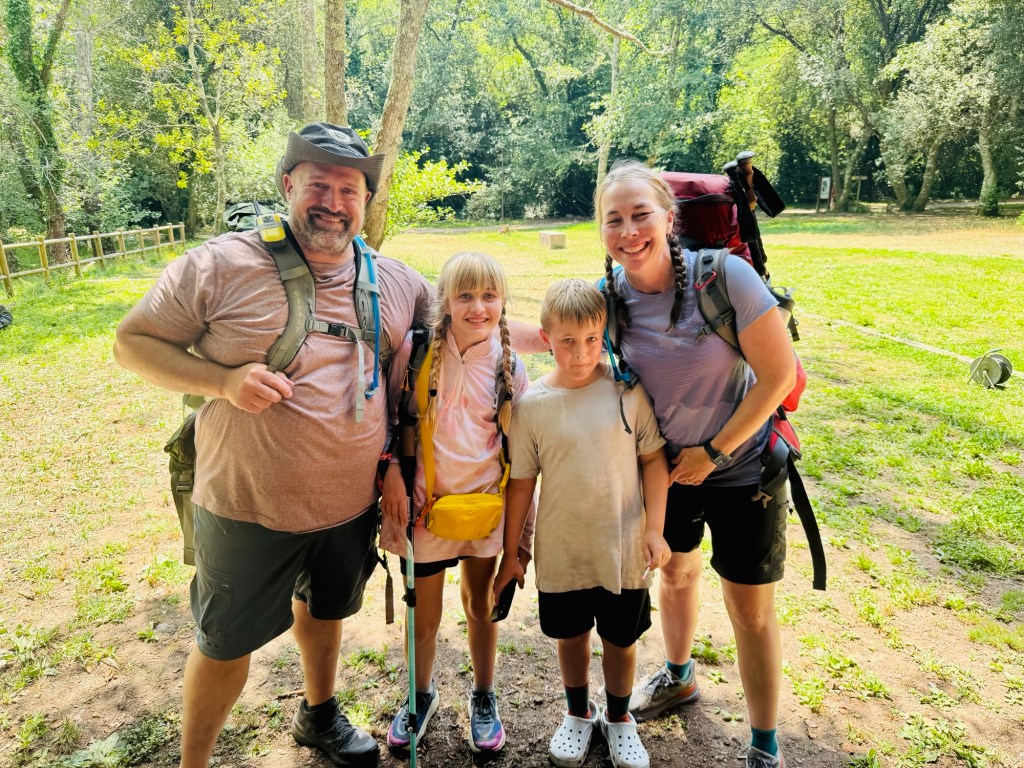
Today we were slow… but mostly because we wanted to relax and breathe in its compelling beauty… lost in time and space… a feast for our senses. This peace will have to sustain me when we rejoin the hoardes on the road to Santiago. I feel I’m not made for the hustle culture. I was made to witness the blue sky… the sound of birdsong… to walk amongst ancient trees and listen to the babbling brooks and cascading waterfalls. I was made to fall in love with the peace of this world and all the astonishments it has to offer. It’s hard to carry this when everything returns to normal.
This route is also slow because most of the way it is quite steep and rocky and full of jutting tree roots, just waiting to trip us up…
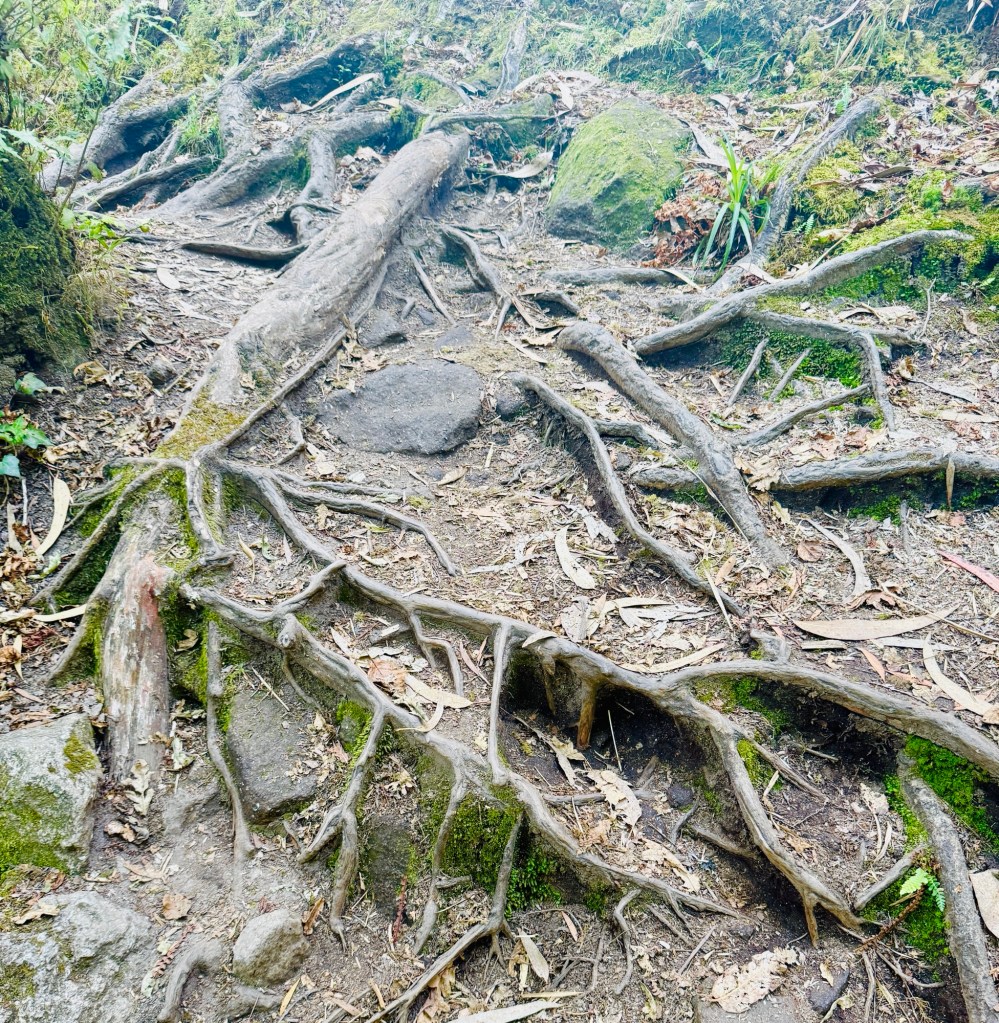
… but eventually it does widen and flatten out a bit as the small stream joins the Rio Umiathe.
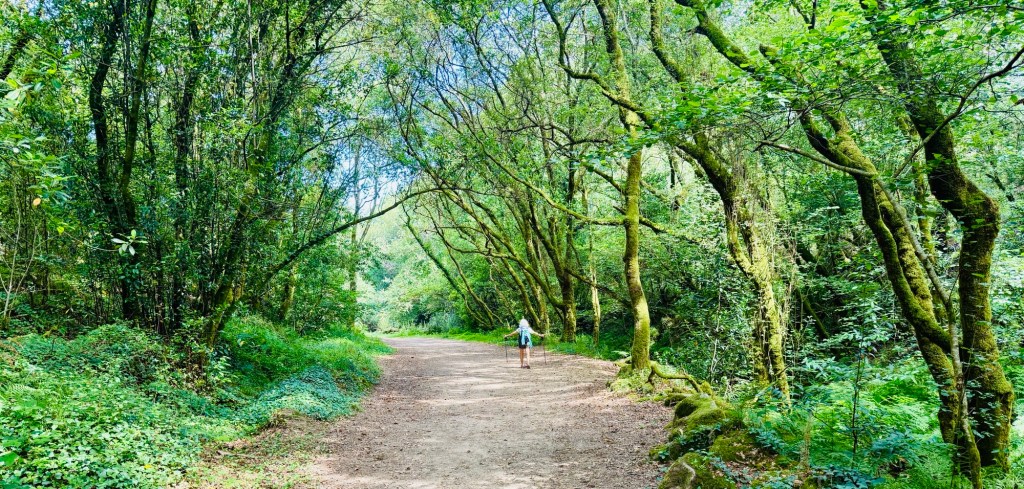
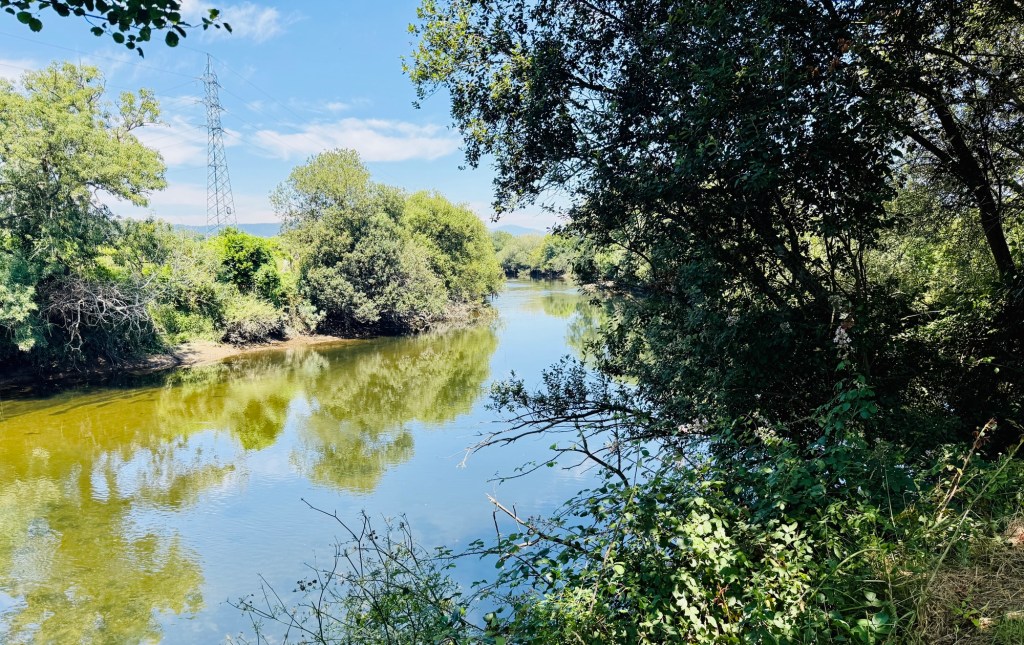
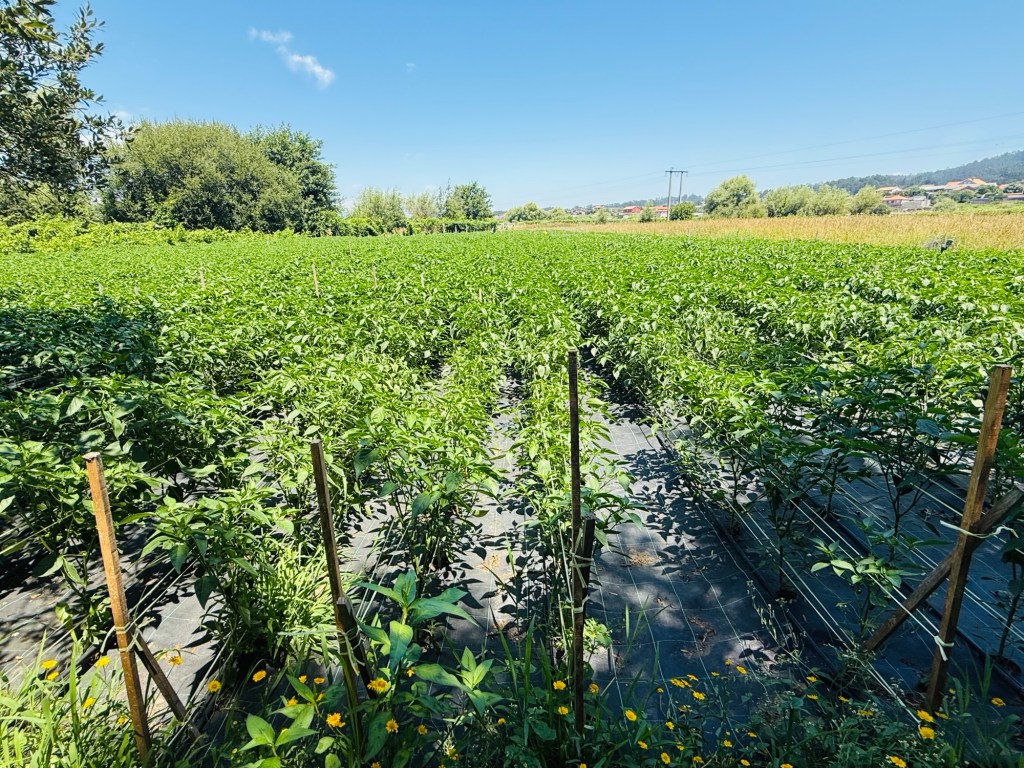
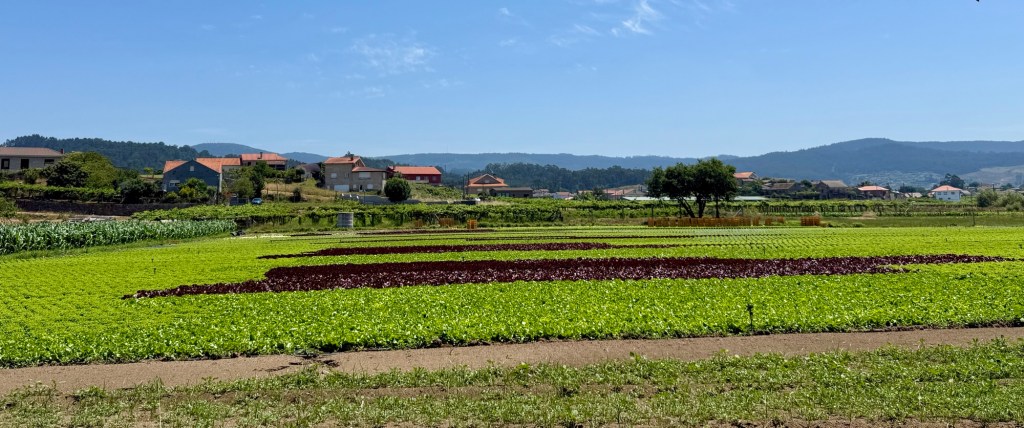
We continue along the river even once we’ve left the forest… bordered on one side by the river and on the other by small villages, vineyards and fields of Padron peppers that are so popular here in every place we eat.
We stay in a cheap hotel/hostel that we only booked last night when I realised the one we’d booked was too far off the trail. It feels like we are the only ones here. We walk to the end of the street and eat pizza for dinner and are glad to get back for an early night. It will be very hot tomorrow, as it will be each day now until the end… and we will not have the comfort of shaded woodlands as we did today. Actually not looking forward to the walk and Anne’s feet are still causing her grief. Please say a little prayer for us as we head into our last few days… 🙏🏼🤞🏼
Steps today- 17,808
Kilometres today- 12.93
Flights climbed- 9
Temperature- 33°
-
A Special Blessing
As we stretch our legs, we stretch our minds and our souls. St. Augustine, himself a great walker, remarked, “Solvitur ambulando; it is solved by walking.”- Julia Cameron in Walking in This World
Day 17
I am a little sad to leave the gorgeous town of Combarro… but we head out and straight up. And up. It’s another one of THOSE days… and we’ve been warned several times that it is a difficult.
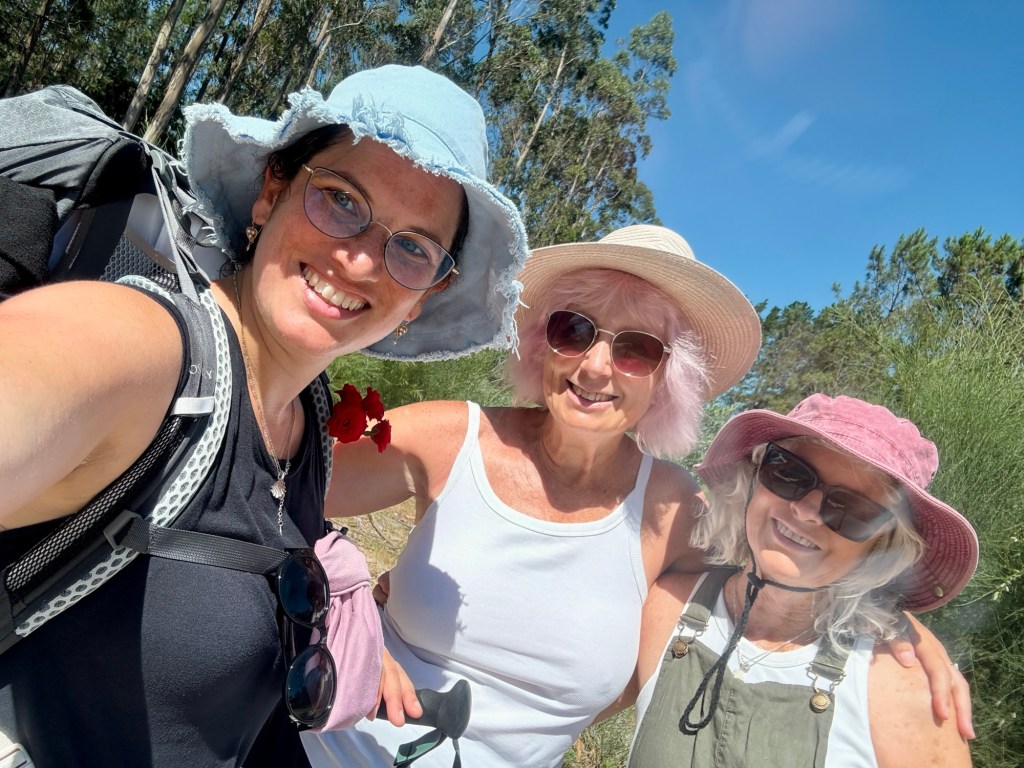
We miss a waymarker and some construction workers called out to us that we had missed a turnoff… and we are very grateful. We meet another pilgrim Adi (who has just missed it as well)… who spends half her life in Israel and half in London and we walk with her much of the way today.
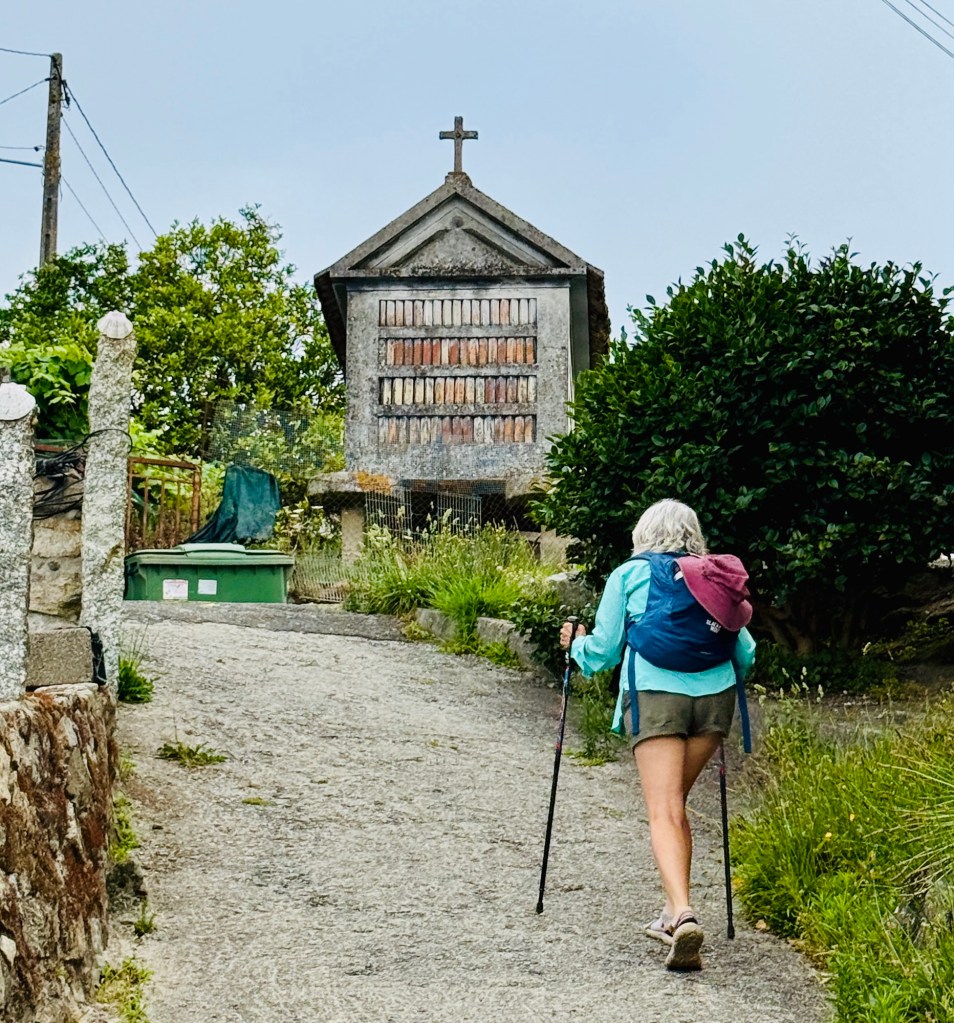
From the beginning, the trail is a steady fairly steep climb above the village… through narrow residential lanes but the higher we climb, the more rural it becomes… and we walk past medieval homes and hórreos…
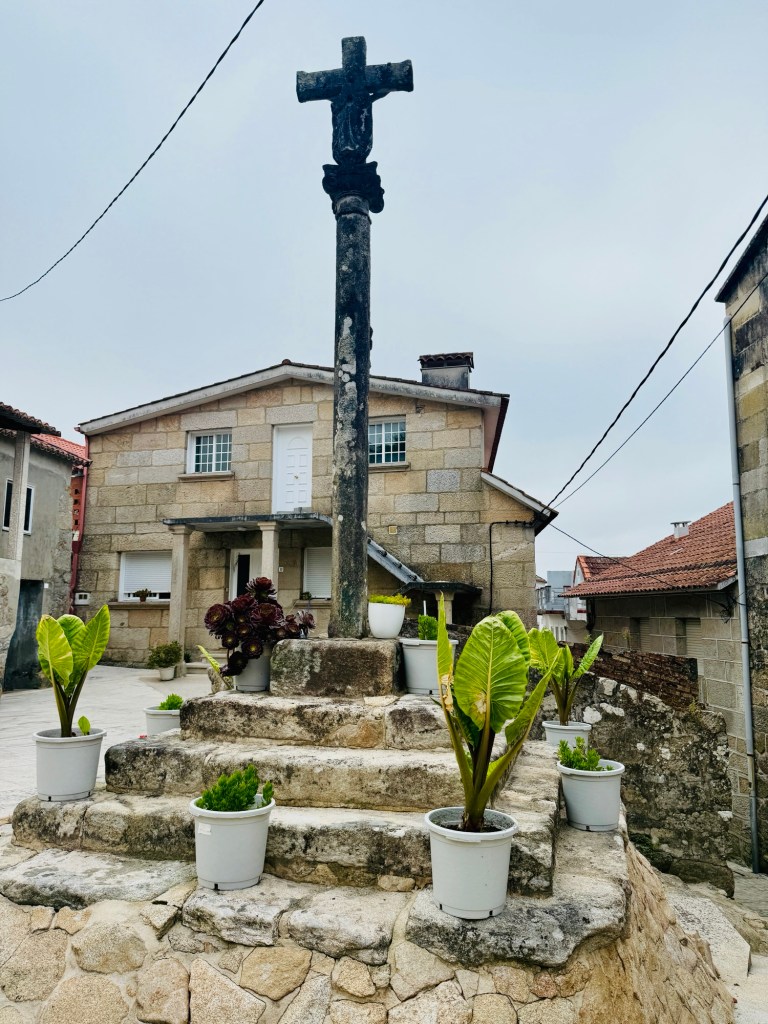
… stone walls and crosses…
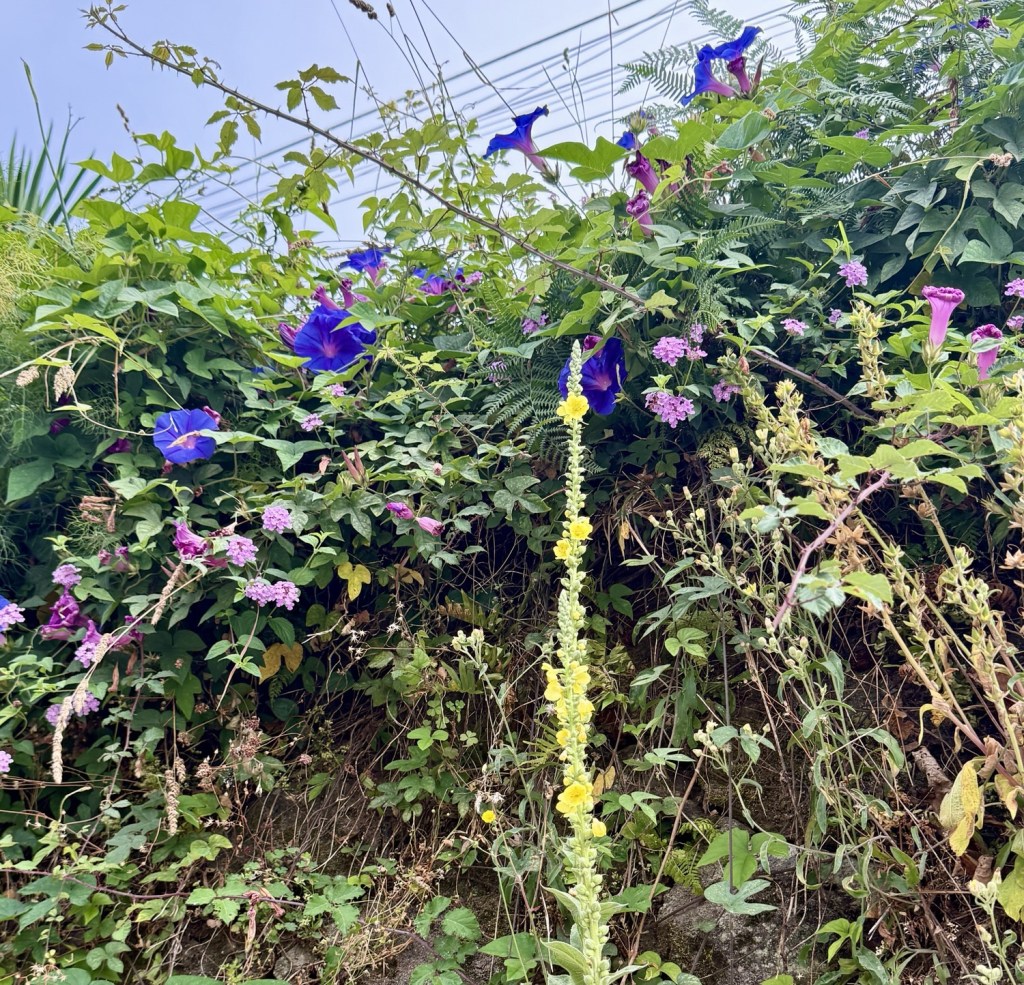
… through quiet roads, vineyards and woodlands… and of course the ever present wildflowers…
… literally for about 7 kilometres. Up all the way. We take it slowly, with regular stops to turn back to admire the breathtaking view (and catch our breath)!
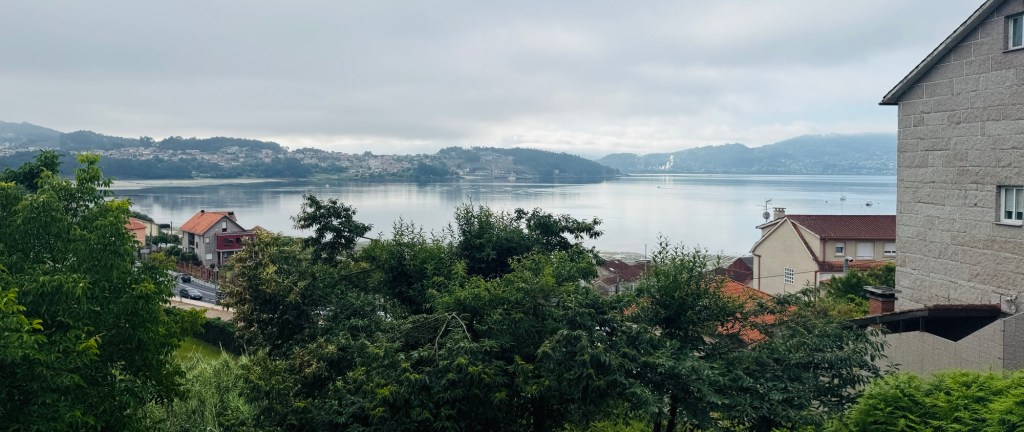
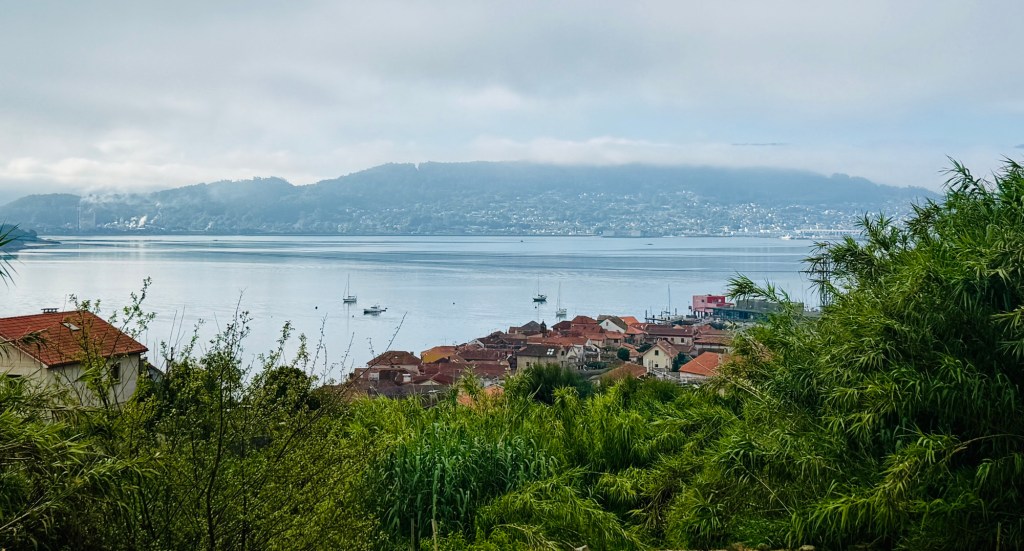

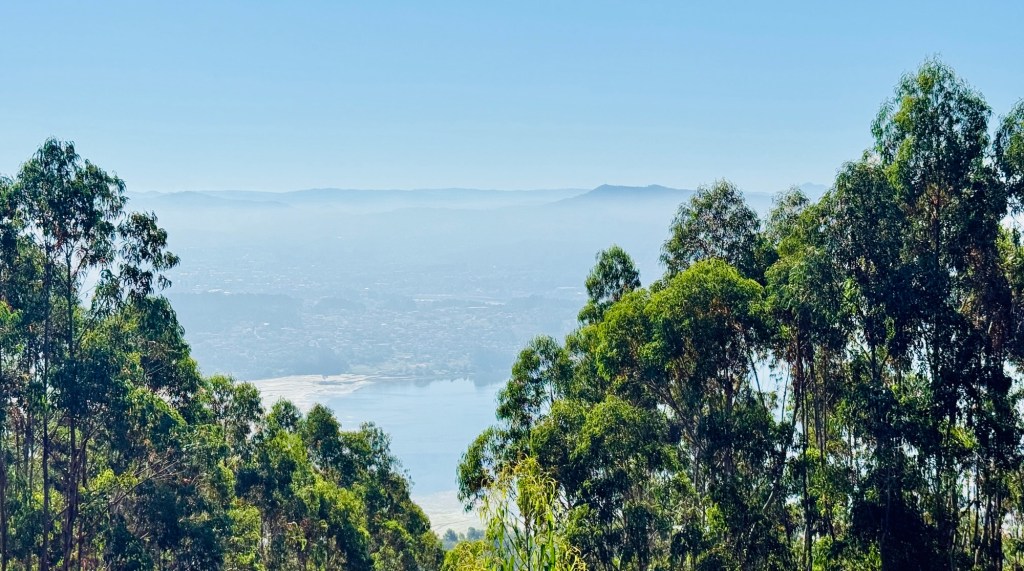
It is a lovely walk, much of it through forest and quite shaded, which is great as it has become quite hot again with a high of 28° expected today. Anne does really well despite the challenging and ongoing hill and it really isn’t as bad as we were led to believe.
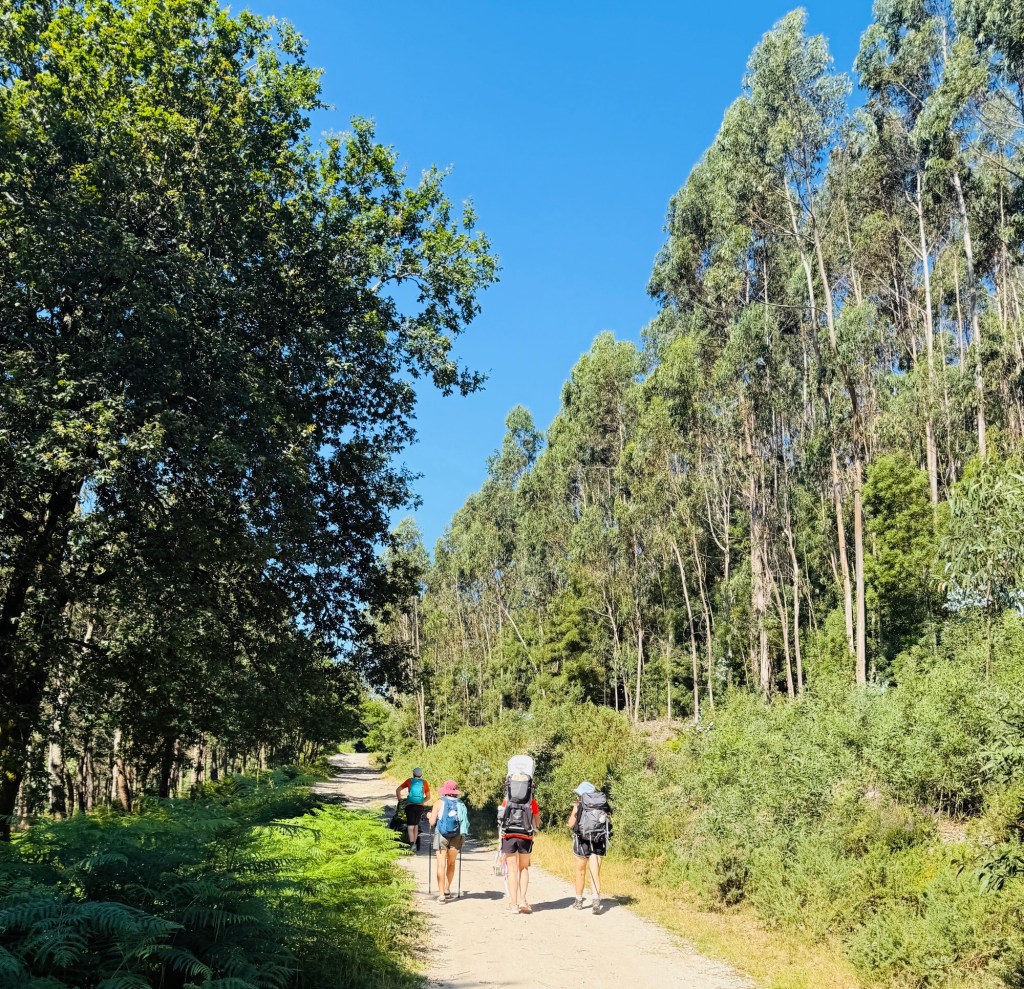
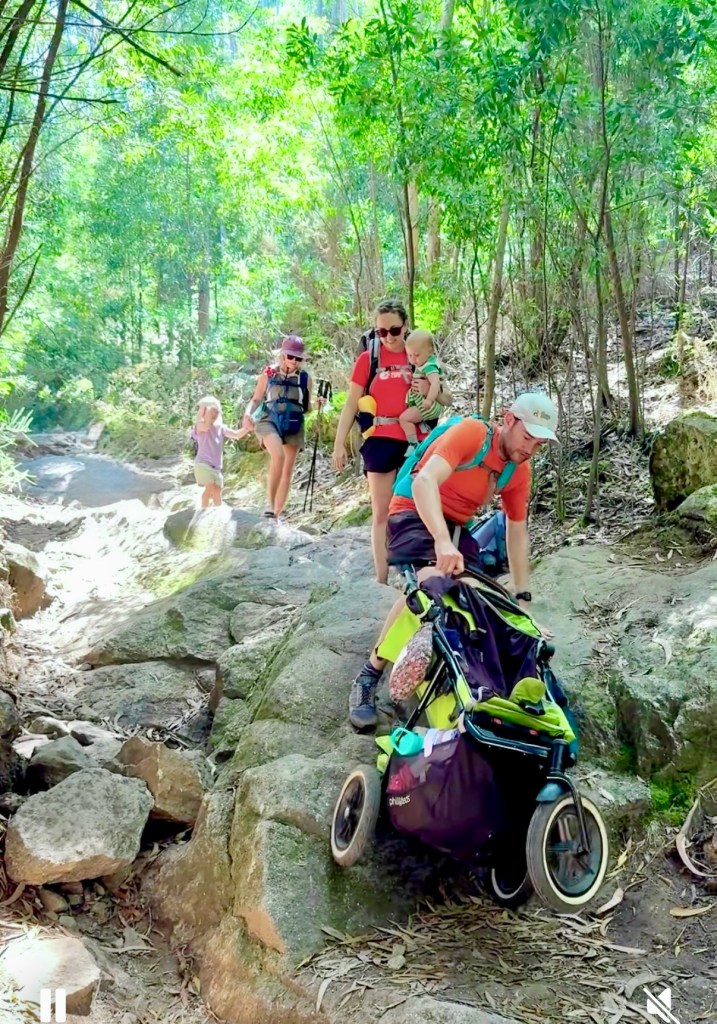
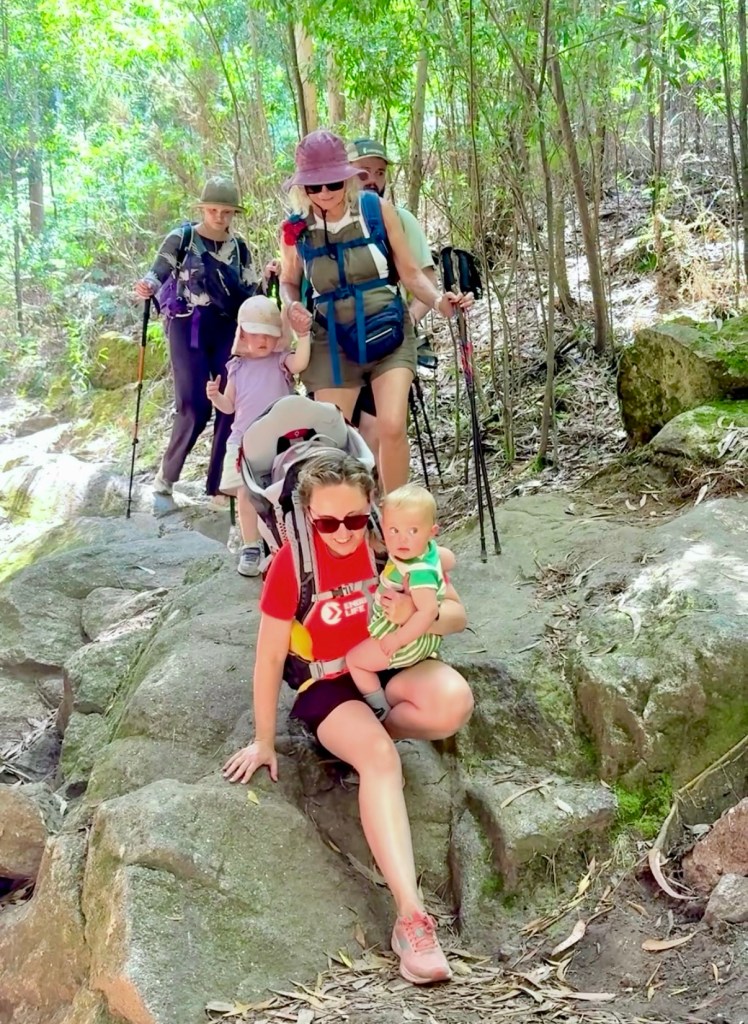
We also meet up again on the trail with our family of “heroes of the day” from a little earlier in our walk- Sam and Eddie, with their kids Issy and Olivia. Still going strong and having a ball.
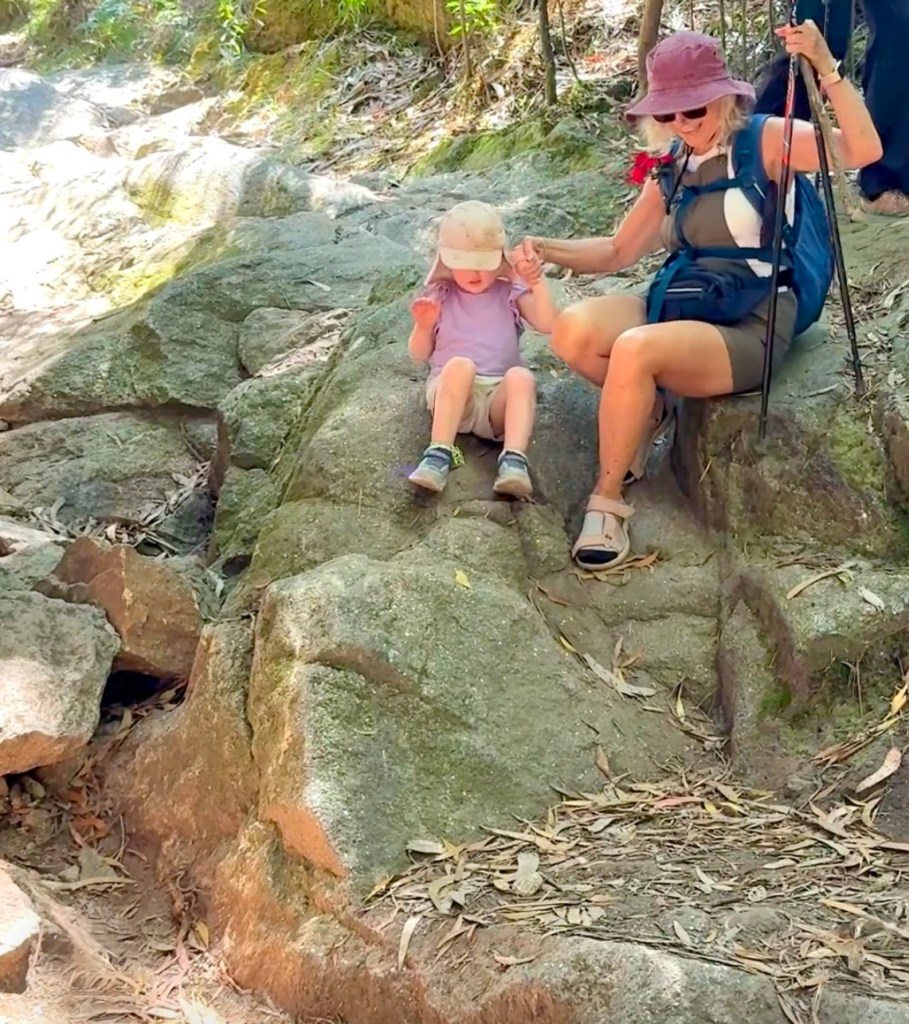
But what goes up must come down and the path begins to drop, mostly through forest trails… but just before it ended, it dropped dramatically into a steep and very rocky descent- virtually impossible for a family with two kids and a pram. It was very tricky and we were thankful to be with Sam and Eddie to be their Camino angels for today and help them down. The Camino always provides. What amazing parents to take their kids on such an adventure and teach them that there is a big wide wonderful world out there.
While they continue on the road, we turn off on the trail and cross a charming little bridge over a stream.
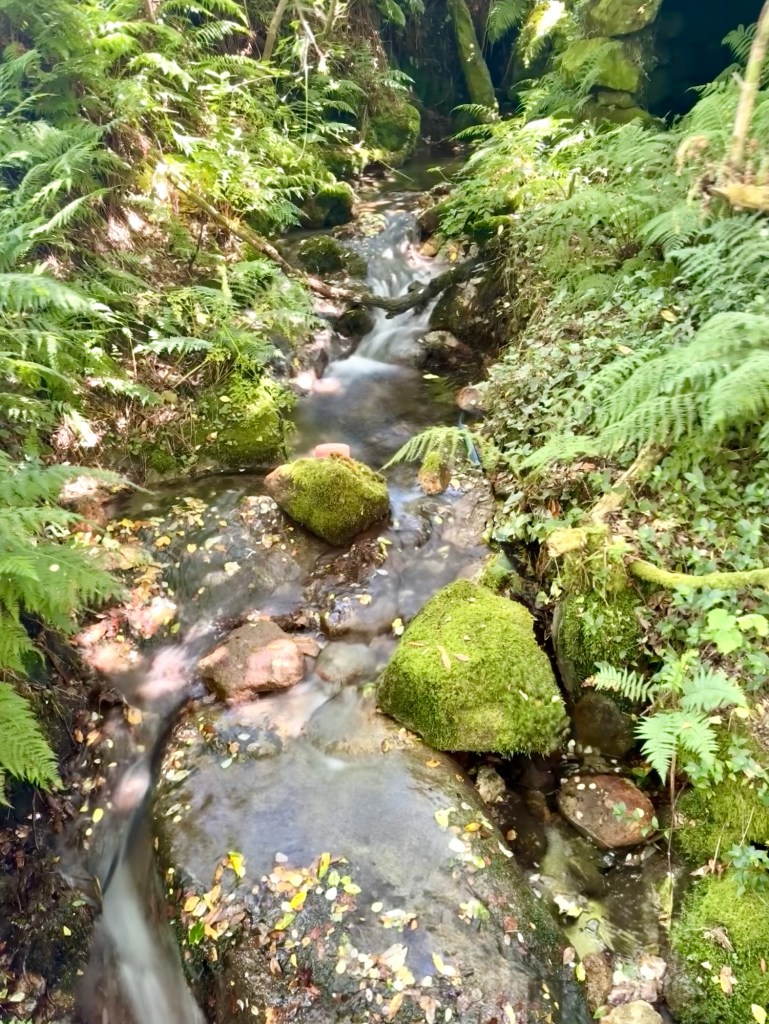
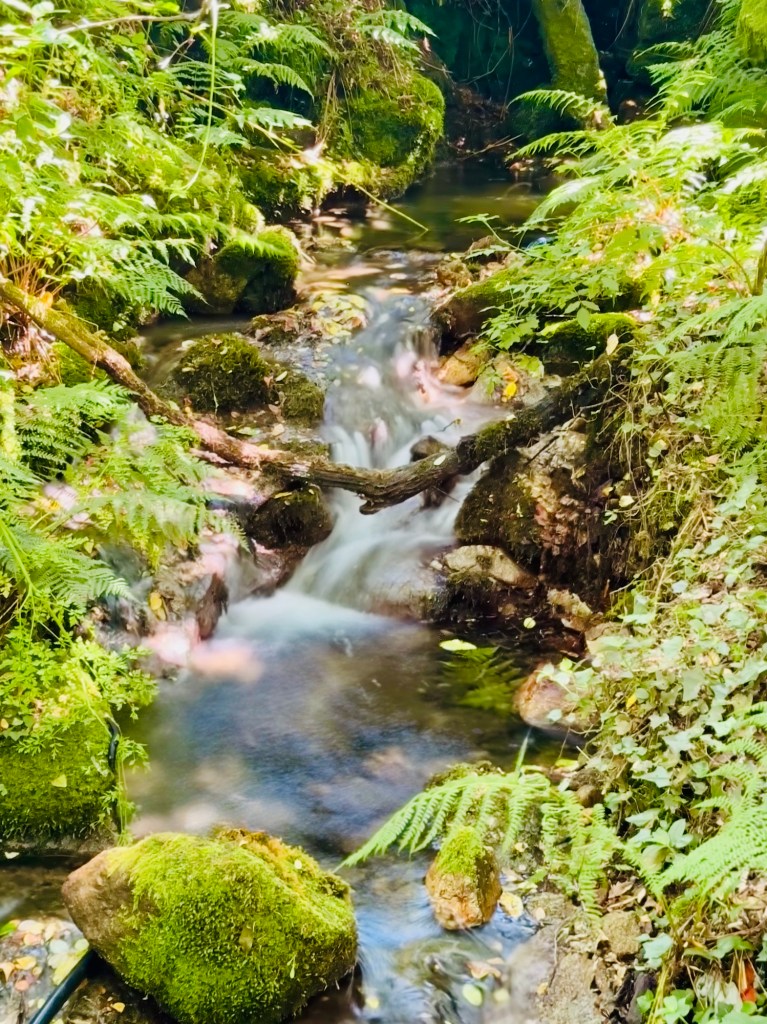
We then take the quaint path all the way to our destination: the tiny village of Armenteira.
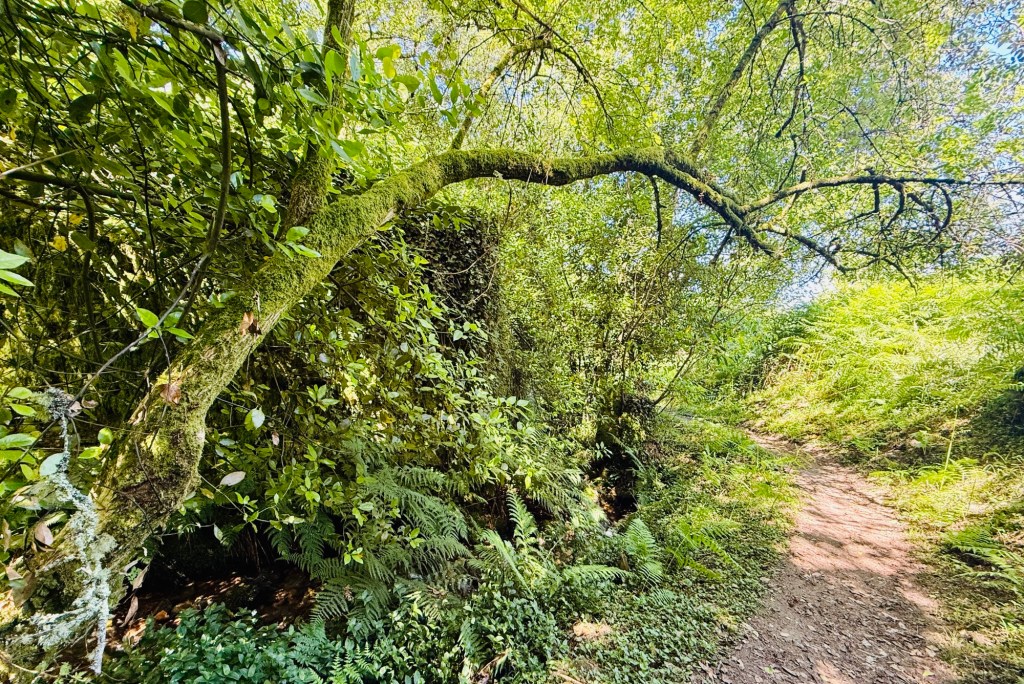
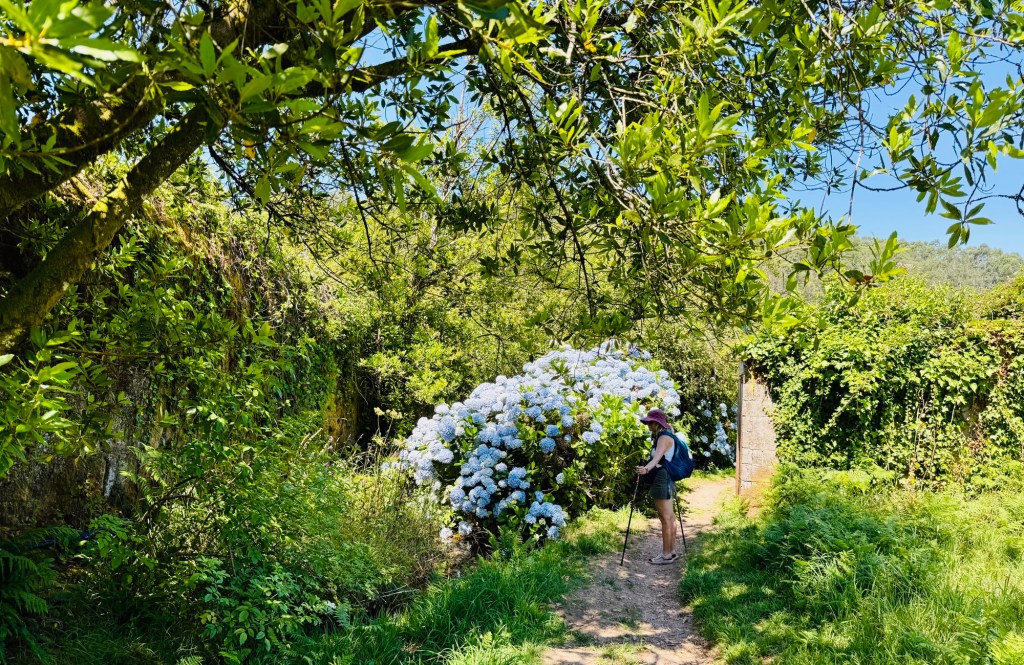
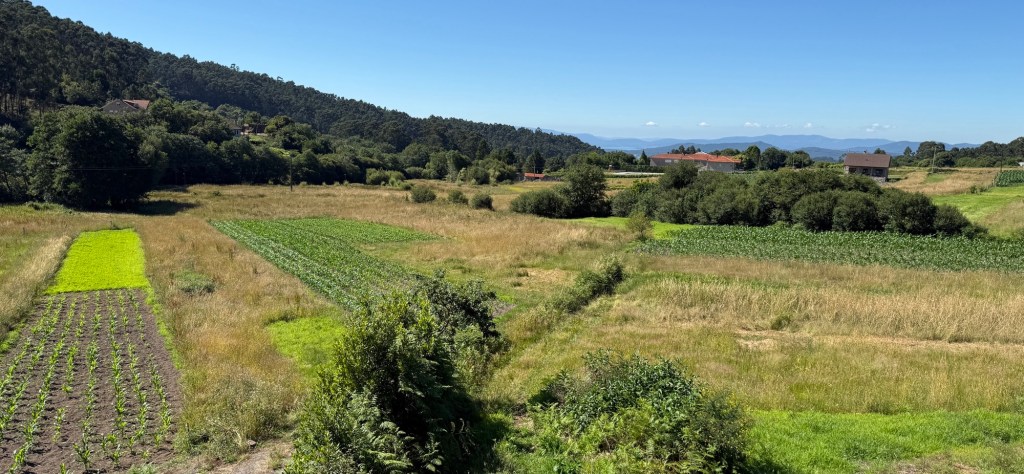
It’s hardly even a village with no downtown area; only the Café Bar O Comercio (our lunch and dinner spot since it’s the only place in town), a few stone homes, and Armenteiras’ claim to fame: the beautiful ancient Cistercian monastery, the Monasterio de Armenteira.
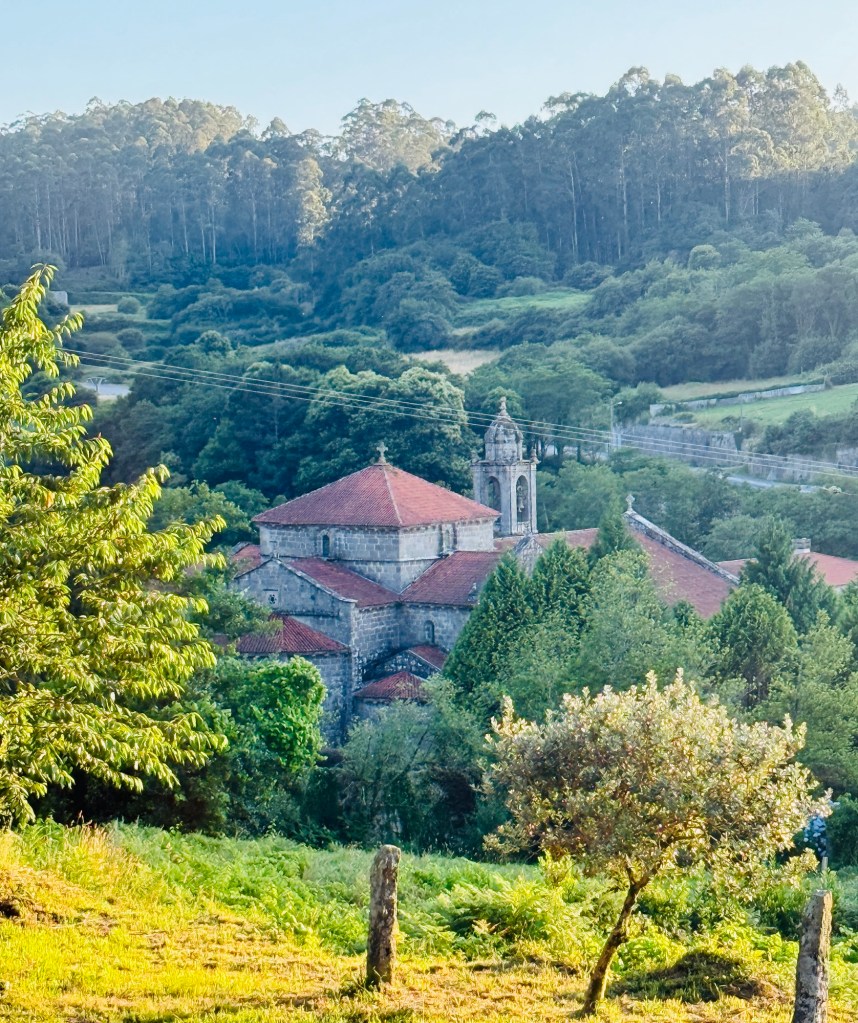
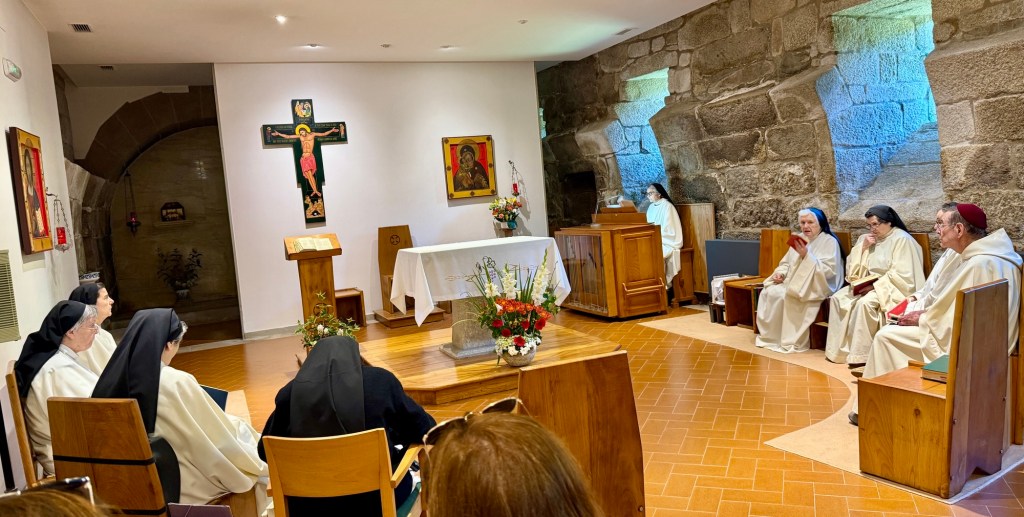
This wonderful place, tucked away in a serene green valley, is a place that transmits peace and spirituality, where you can only hear the sound of the spring water gushing, in harmony with nature. It offers a peaceful respite for tired pilgrims and is run by a group of Cistercian nuns who continue to maintain the monastic traditions of offering a place of peace, prayer, and reflection. In hindsight, I wish we had decided to stay here… I think it would have been lovely… although you can’t book ahead… you just have to take your chances of still having rooms available when you arrive (this is the traditional way of the Camino but too stressful for us).
There was an immediate sense of other-worldliness as we arrive by the cross in the courtyard of the 12th century monastery…
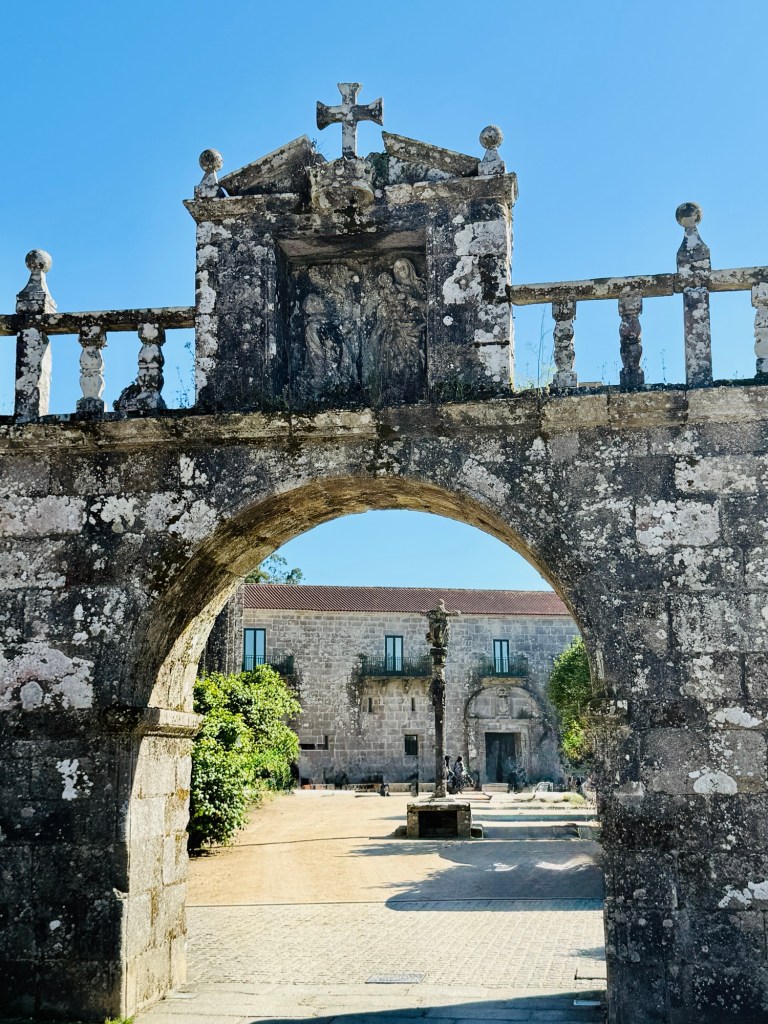
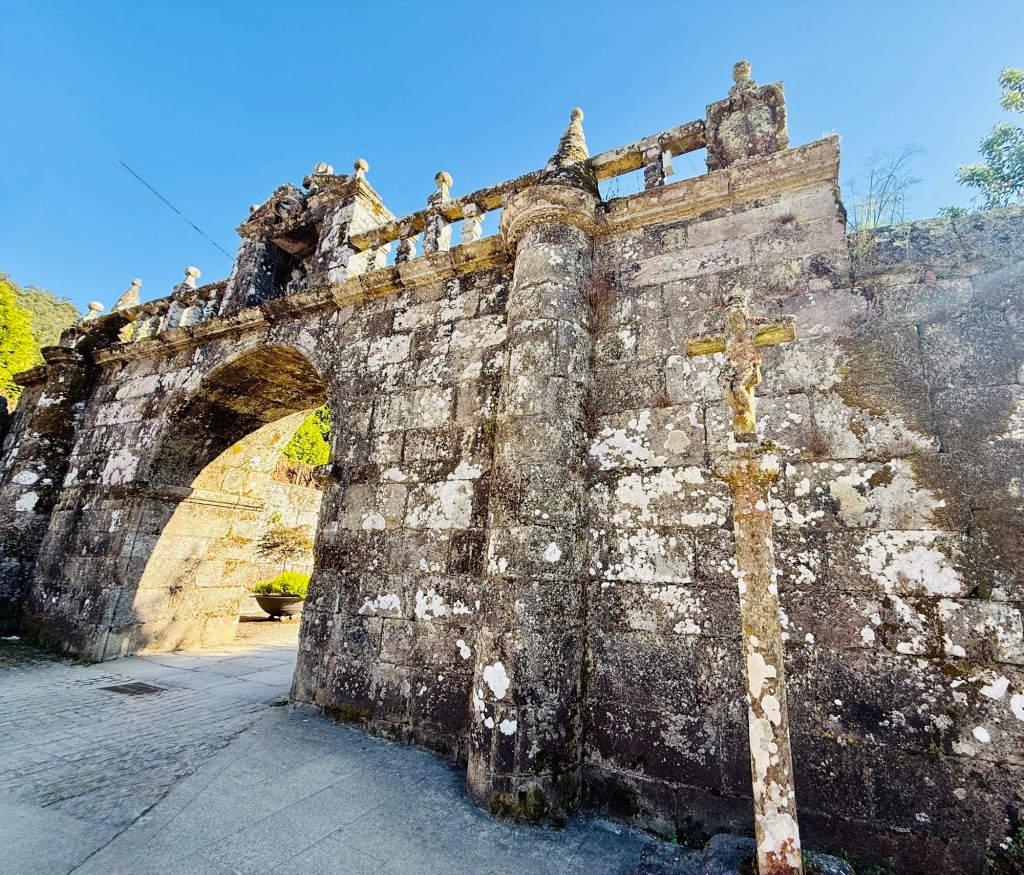
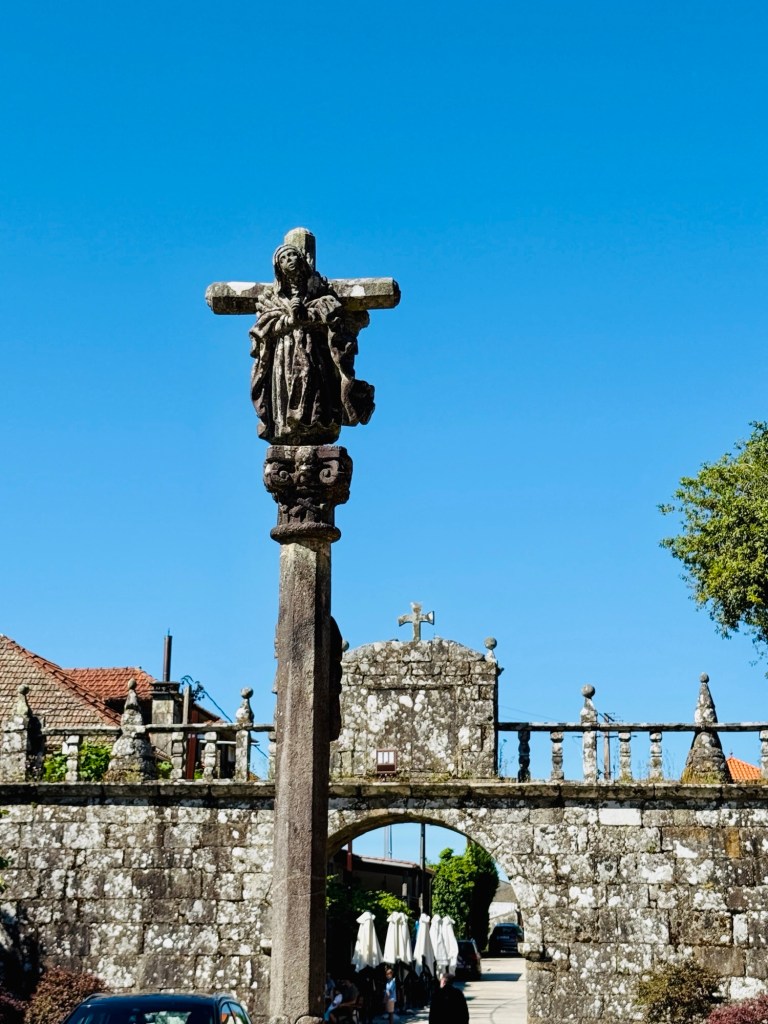
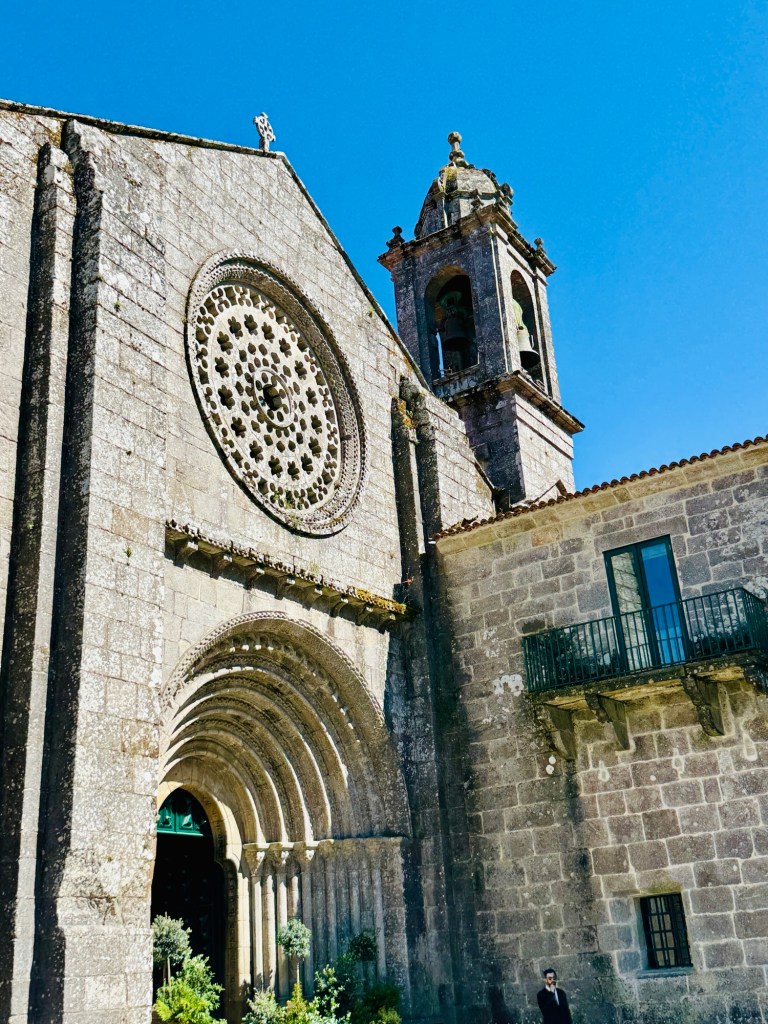
… although it is busy as they have a wedding happening in the church. The building’s impressive Romanesque architecture, is crowned by the magnificent carved rose window of the cathedral that illuminates the interior.
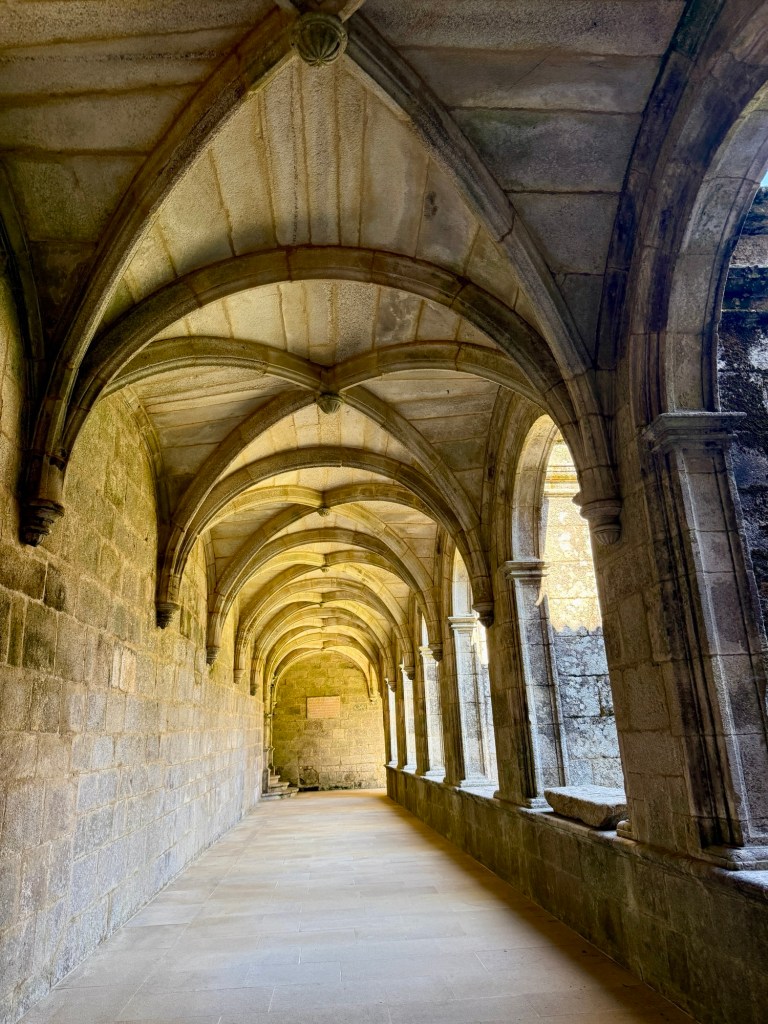
We walk around the cloister that always seem to create a sense of sanctuary and separation from the outside world. I love these places.

Later, we visit the church once the wedding is over….
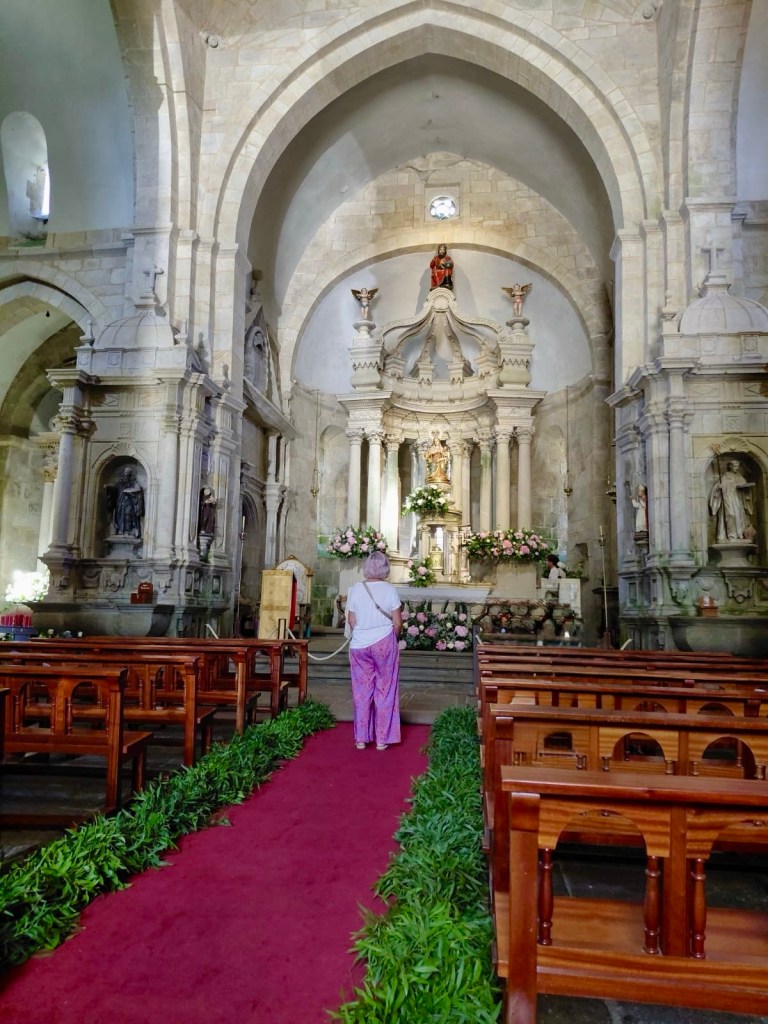
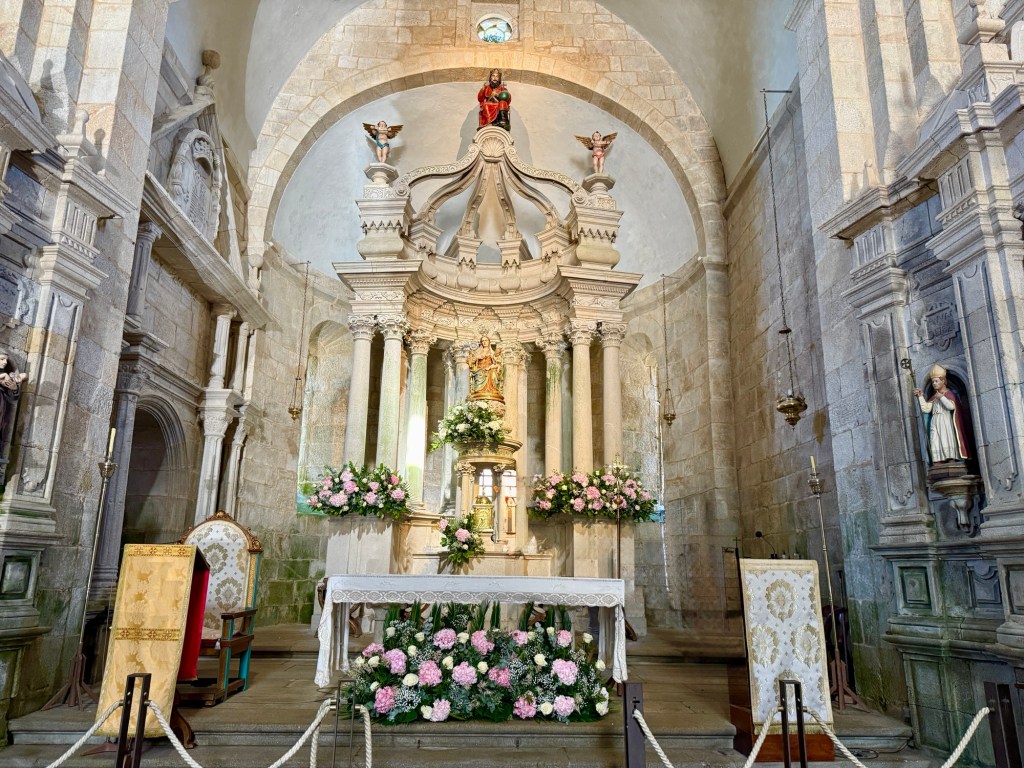
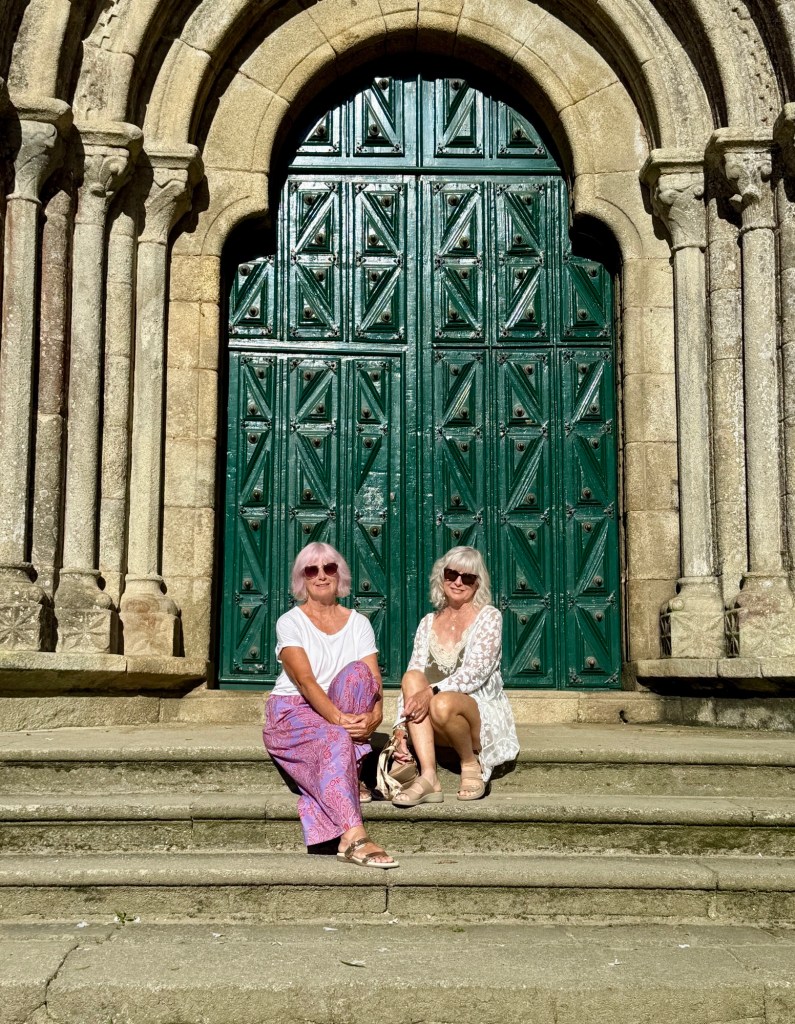

And then have the very special privilege of attending the daily pilgrims blessing hosted by the cloistered nuns. Beautiful and emotional and a perfect ending to a lovely day.
Steps today- 20,426
Kilometres today- 13.78
Flights climbed- 18
Temperature- 28°
-
Hórreos and Cruceiros
“In every walk with nature one receives far more than he seeks.” – John Muir
Day 16
Leaving Pontevedra there were not the hoards of our previous walking day although maybe that’s because we had a later start… but there was still quite a lot of pilgrims on the road. I was a little anxious as I knew we at some stage would diverge from the main path and I didn’t want to miss the turn off… and I really wanted to get away from the crowds.

Stunning hórreos surrounded by hydrangeas not far out of Pontevedra Today is the start of an alternative route- still part of the Portuguese Way but known as the Spiritual variant… it is supposed to be less crowded and more serene because the main route, as I’ve mentioned, has become so crowded since all the routes have merged.
The Spiritual Variant, allows pilgrims to follow the journey made by boat by the remains of St James and joins up again with the Central Route at Padrón. This route is often referred to as the origin of the Camino de Santiago. Legend has it that after St James’s beheading in Jerusalem, his body was stolen by his disciples and placed on a stone boat which eventually reached the Rio Ulla where it travelled upriver to Iria Flavia. which is near present-day Padrón. This route is part of the Spiritual Variant.
We did miss the turn off but I realised pretty quickly when I checked my Camino Ninja app. We backtracked and left all of the other walkers behind and enjoyed the solitude of a quiet and beautiful walk through the Galician countryside… vineyards and farms… a few uphills but nothing dramatic.
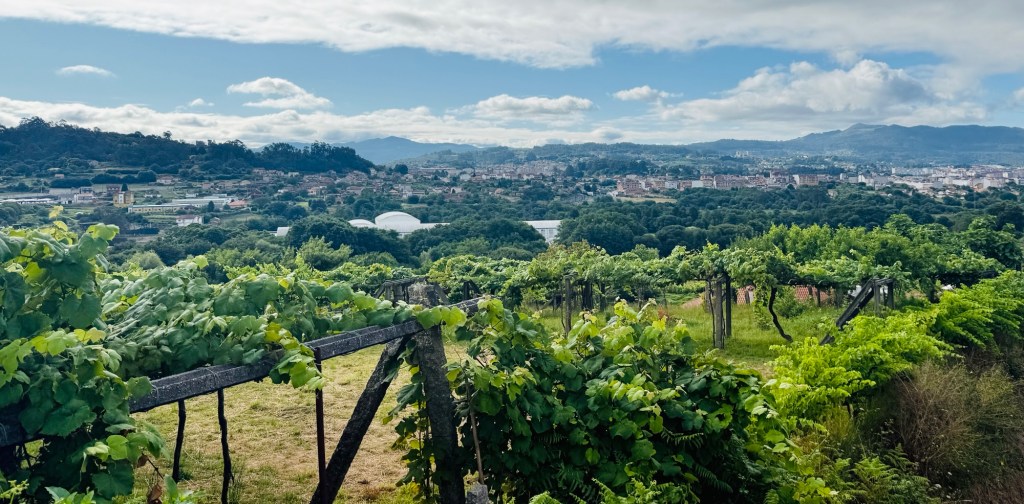
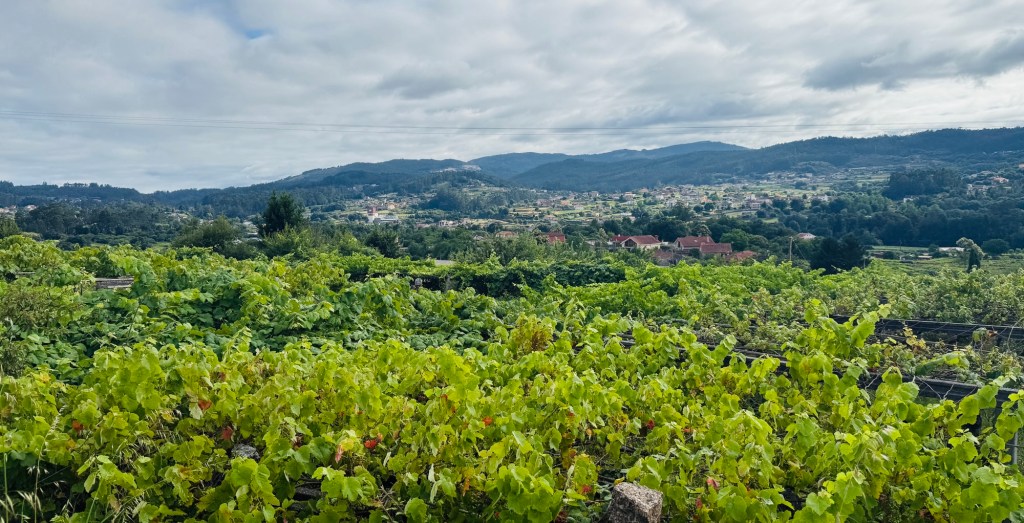
Our pace is slow as Anne’s feet are very sore even after our rest day… but we are blessed that our planned stages for the next four days are much shorter than many of the stages we have been doing.
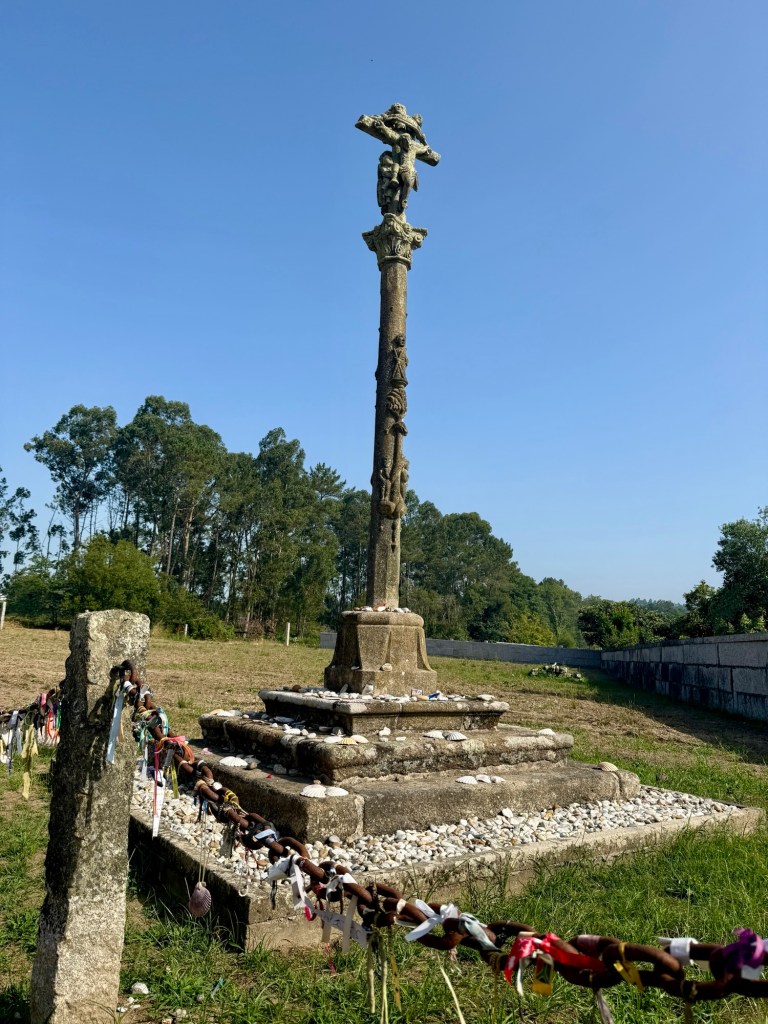
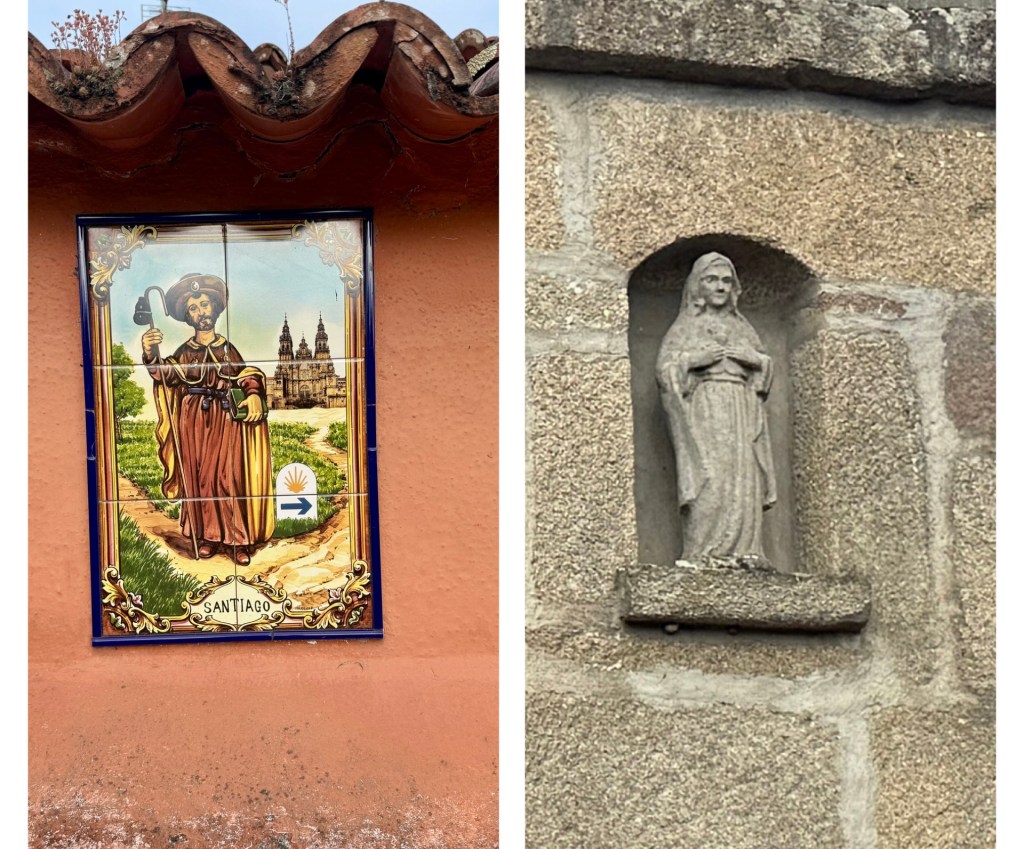
There are many stone crosses dotting the countryside…
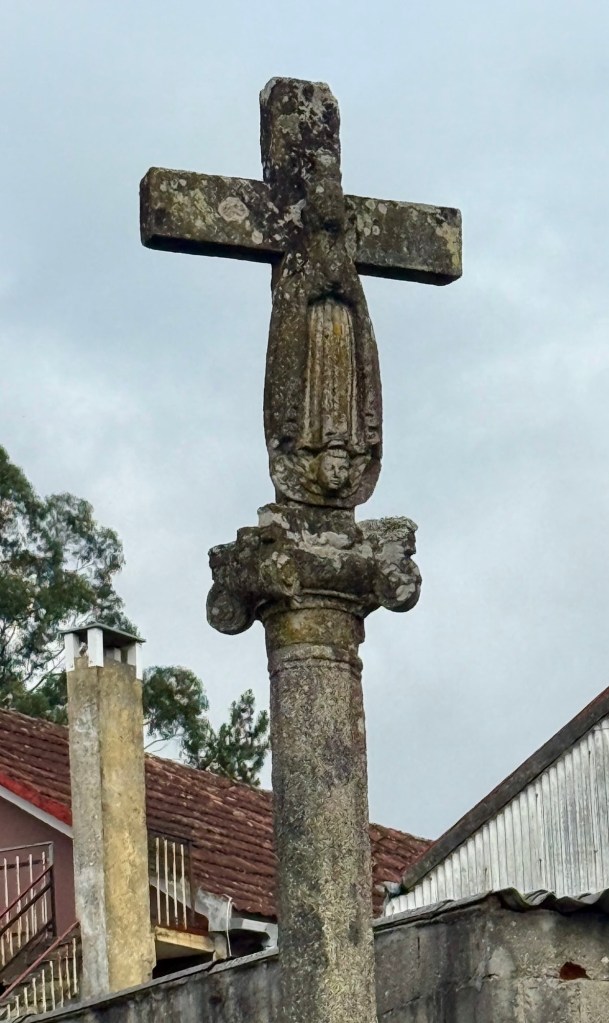
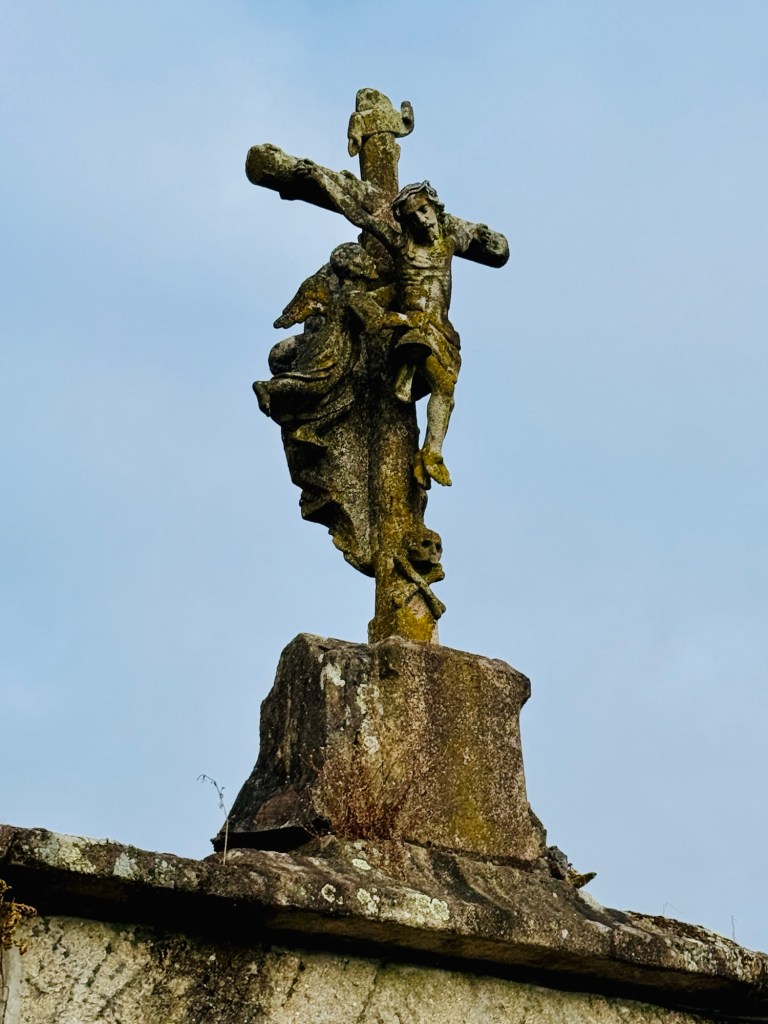
… and other small signs that we are on the Way of St James.
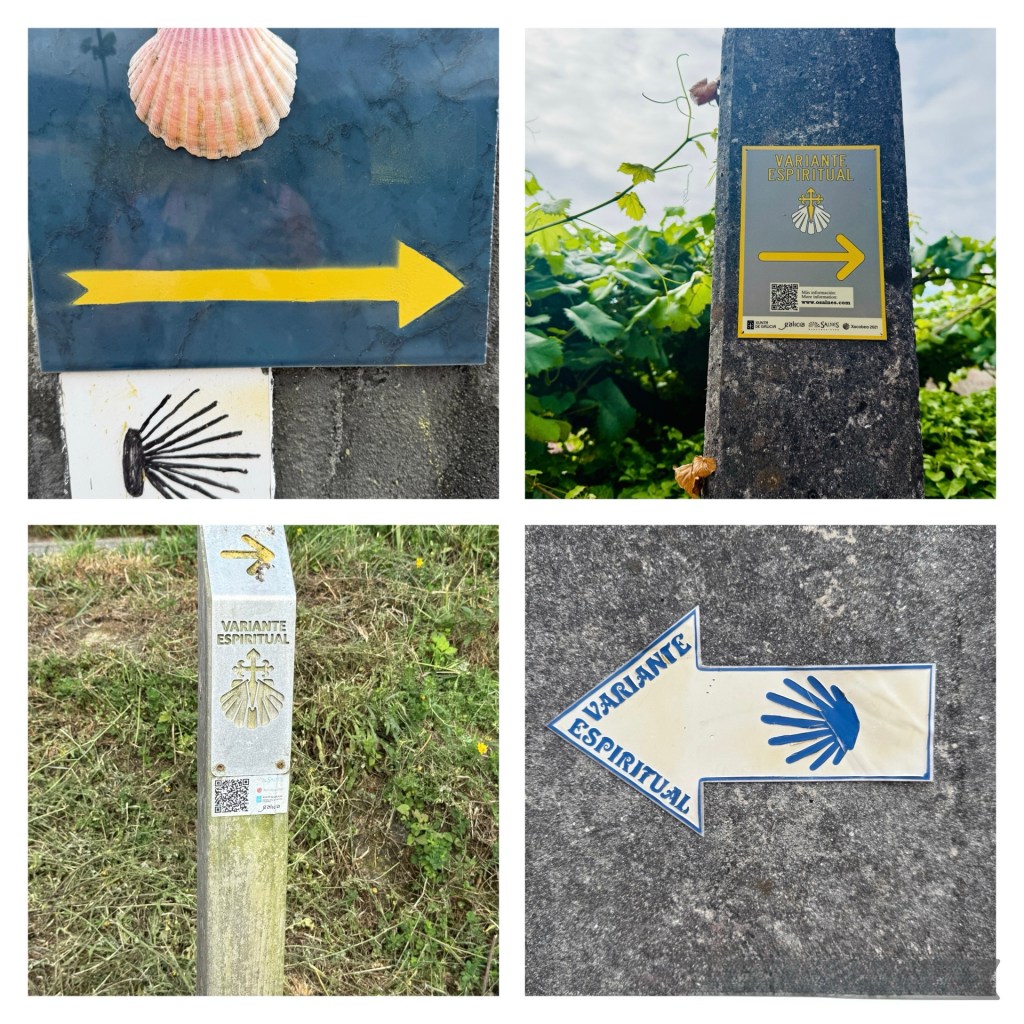
The waymarkers have changed as well, with the Spiritual Variants own distinct insignia: a scallop shell with a Cross of Saint James. Personally, I think this is the single most beautiful Camino symbol I have seen, but though the route is very well sign-posted, they are not always as obvious as the blue and yellow ones we have followed all this way… definitely easier to miss.
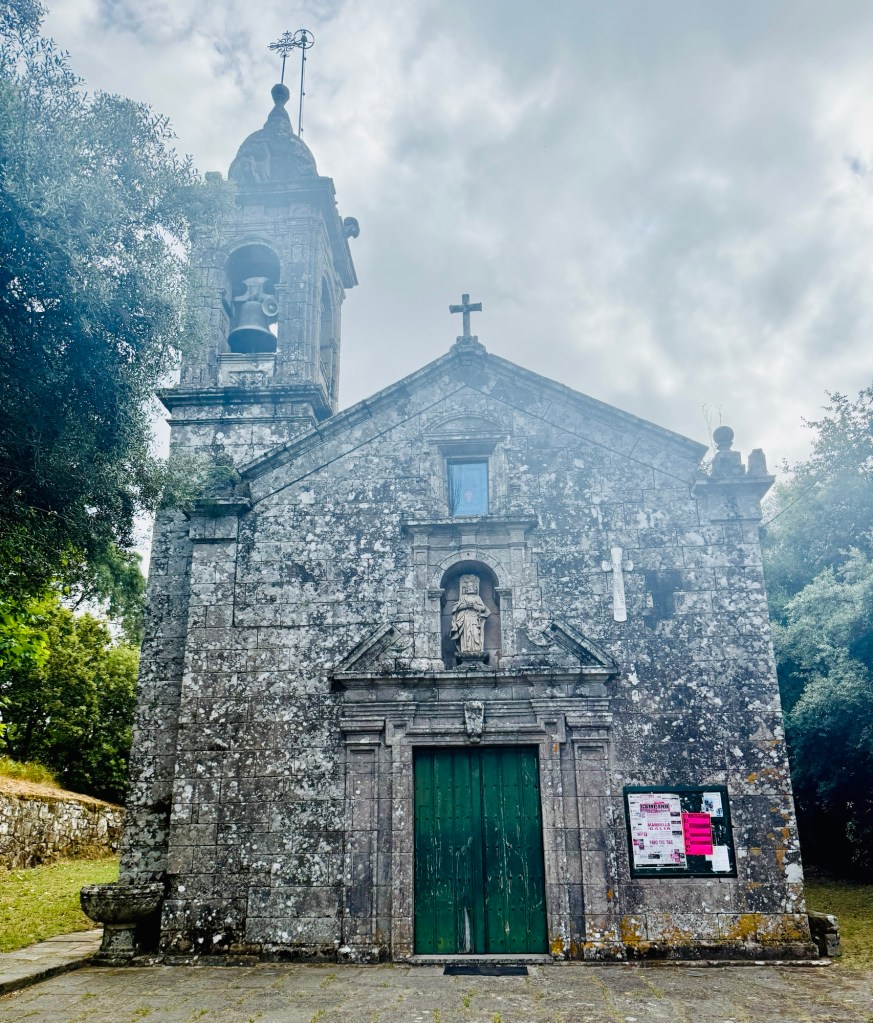
We come across a small church- the Igrexa de San Pedro in Campaño but it is closed…
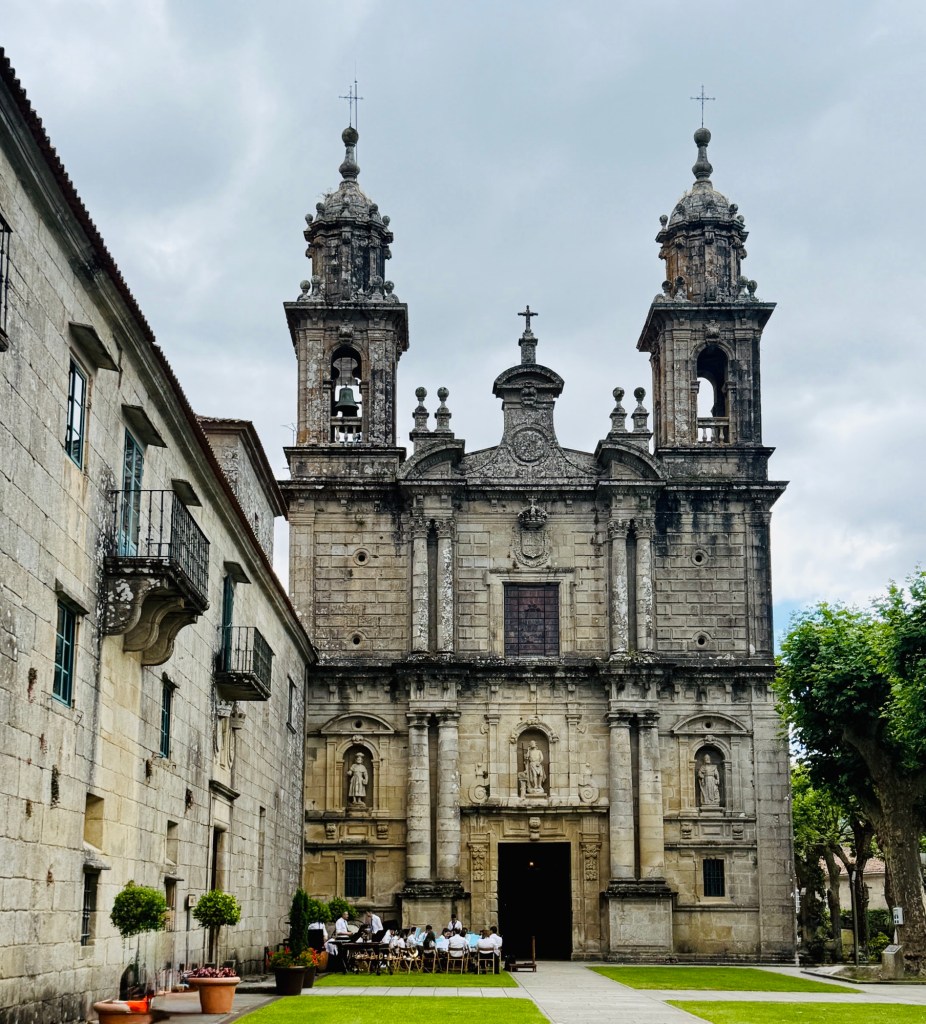
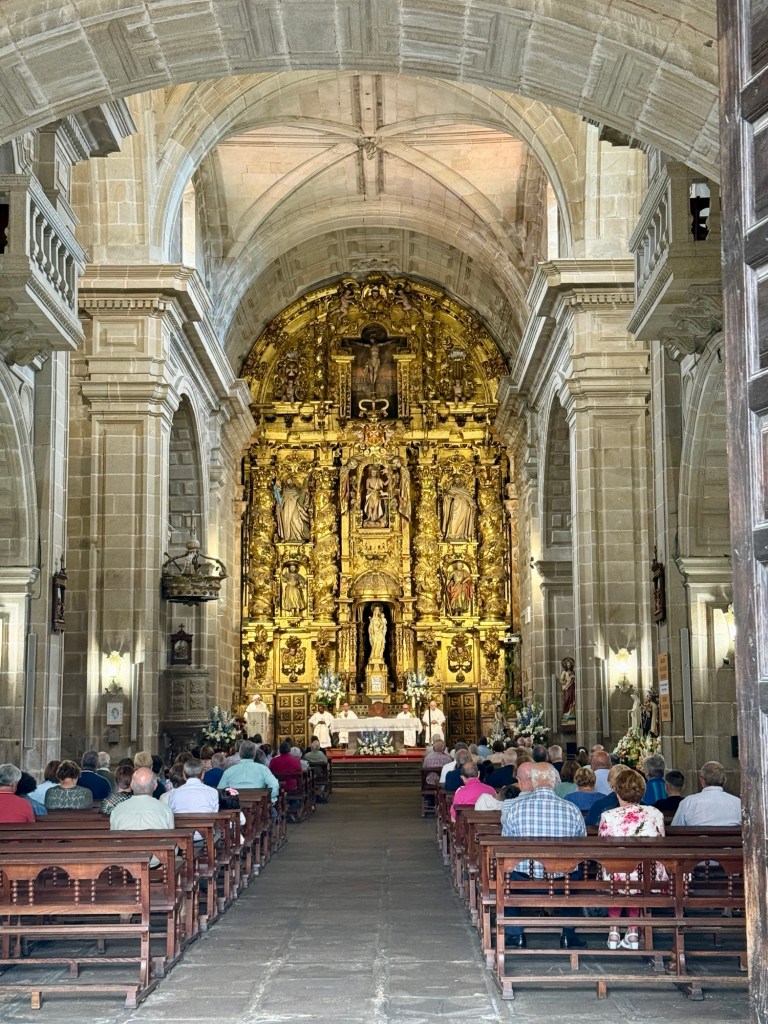
… so we stop nearby for a coffee and fresh orange juice before continuing downhill to the Monasterio de San Xoan in Poio. There is a service on including a choir and a concert band and we sit and rest and soak it up.

And eventually continued down to the absolutely charming old coastal town of Combarro.
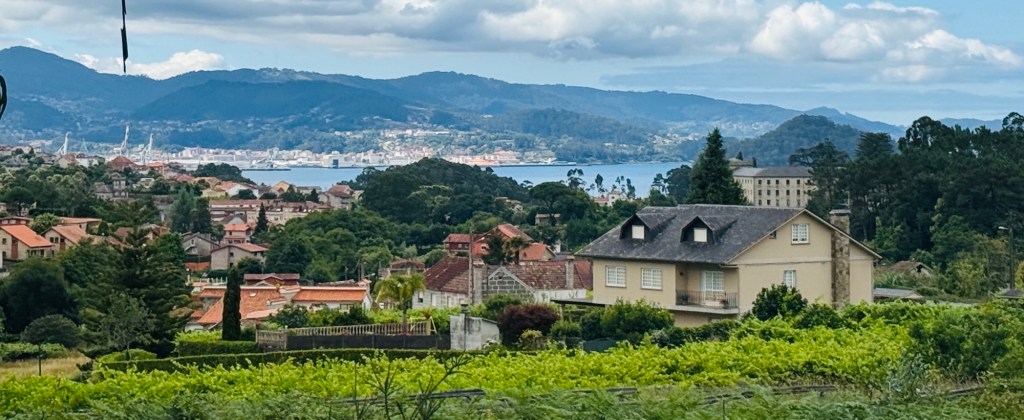
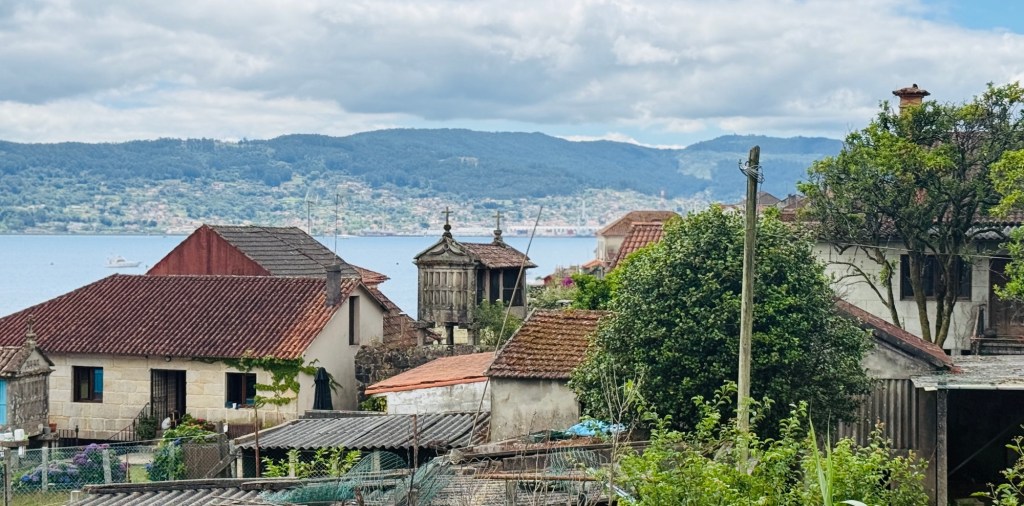
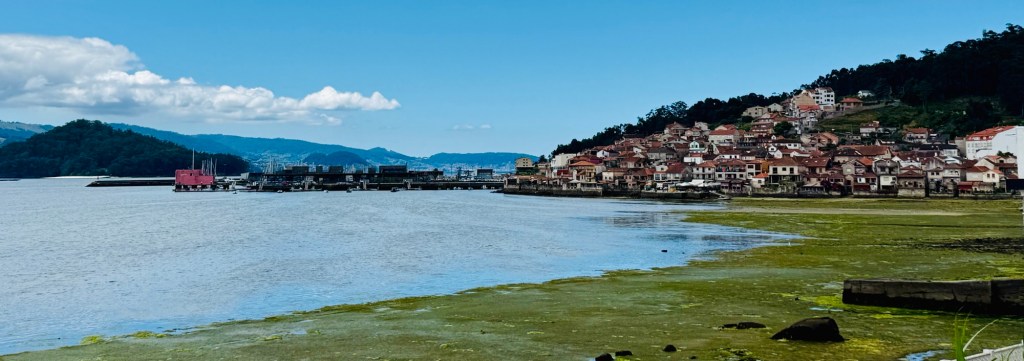
I had heard this town and its coastal scenery was lovely, and that was part of why we had chosen to make this a short leg and stay for the night… but I was unprepared for its fascinating uniqueness that just mesmerized me.
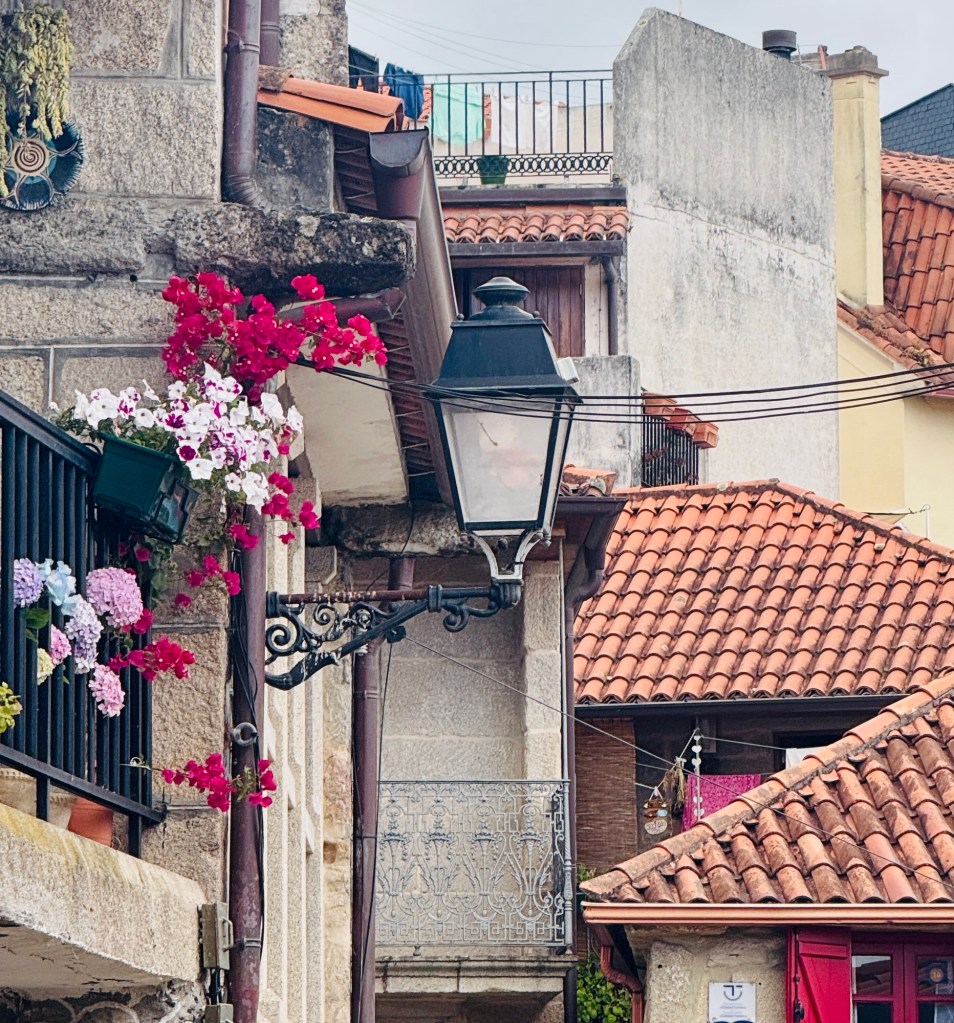
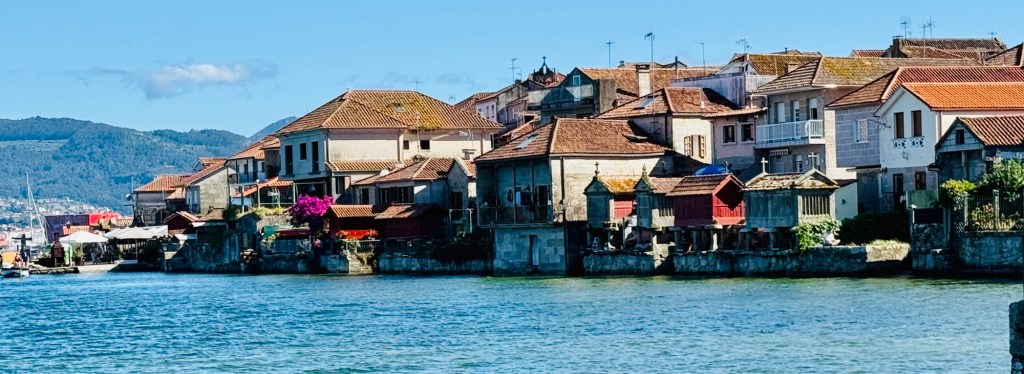
The historic quarter in Combarro has been declared a Property of Cultural Interest and is often mentioned as one of the most beautiful villages in Spain. Combarro is largely built of granite and it gives the village a distinctive feel. There are no cars on the narrow granite-paved streets of the historic quarter, which we explored on foot. The narrow winding historic streets are lined with stone Galician houses, tiny gardens and flowers everywhere…

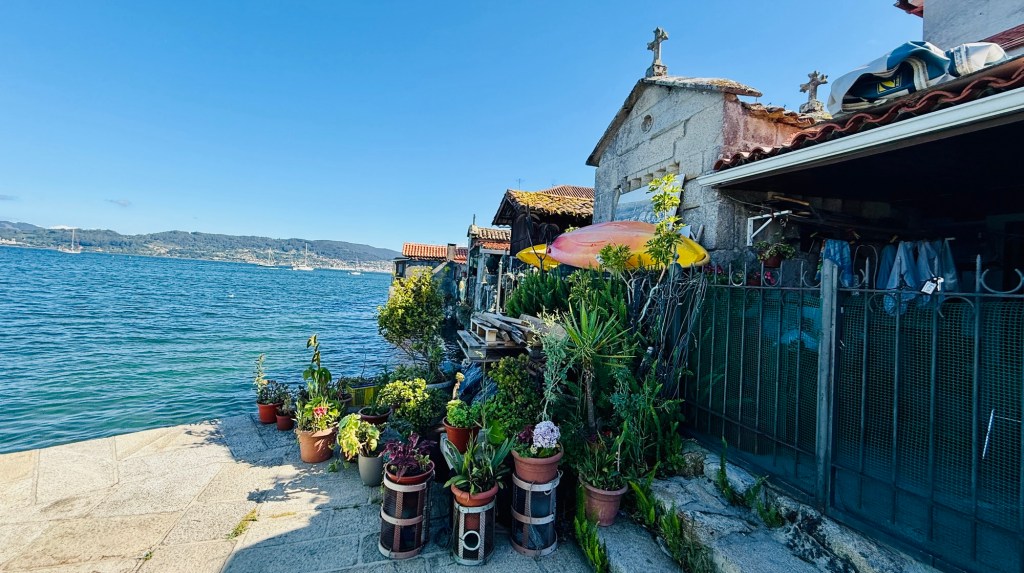
… stone crosses…
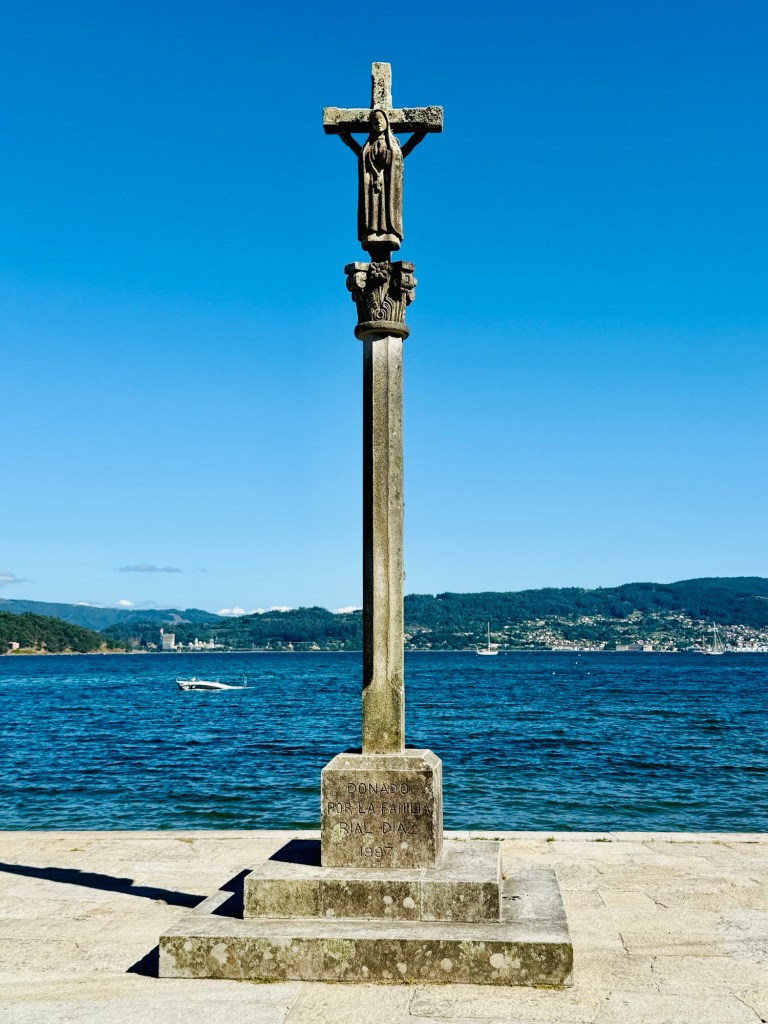
The crosses have the head of the Virgin Mary facing out to sea and a cross on the opposite side. Most of them are from the 18th and 19th centuries.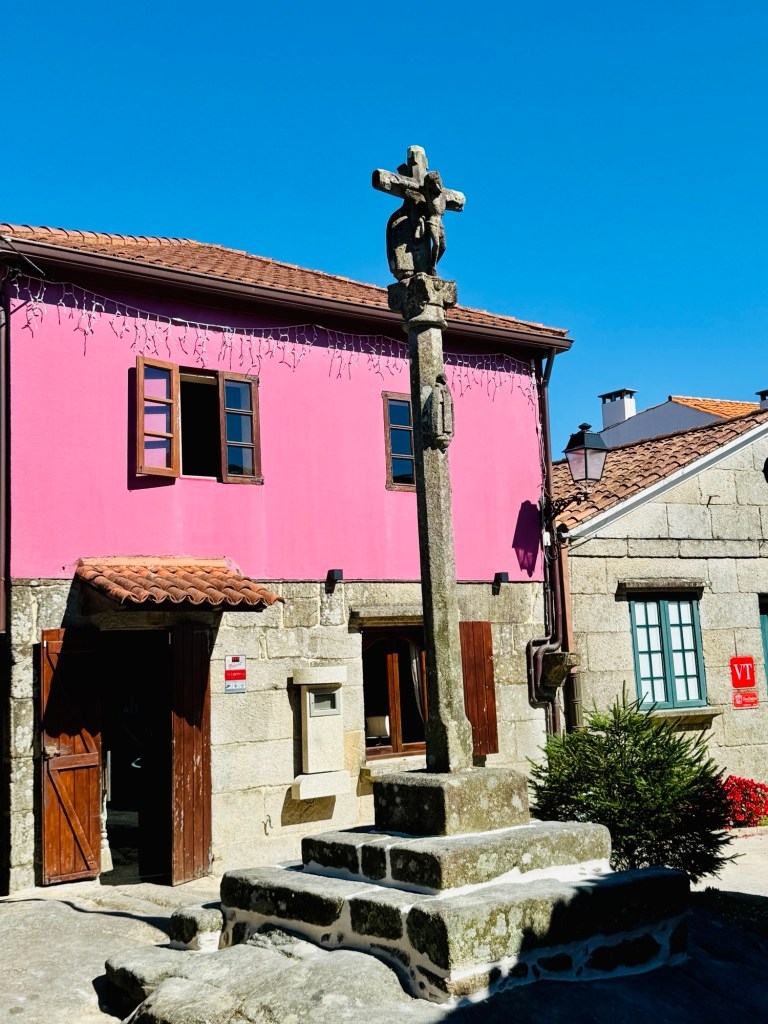
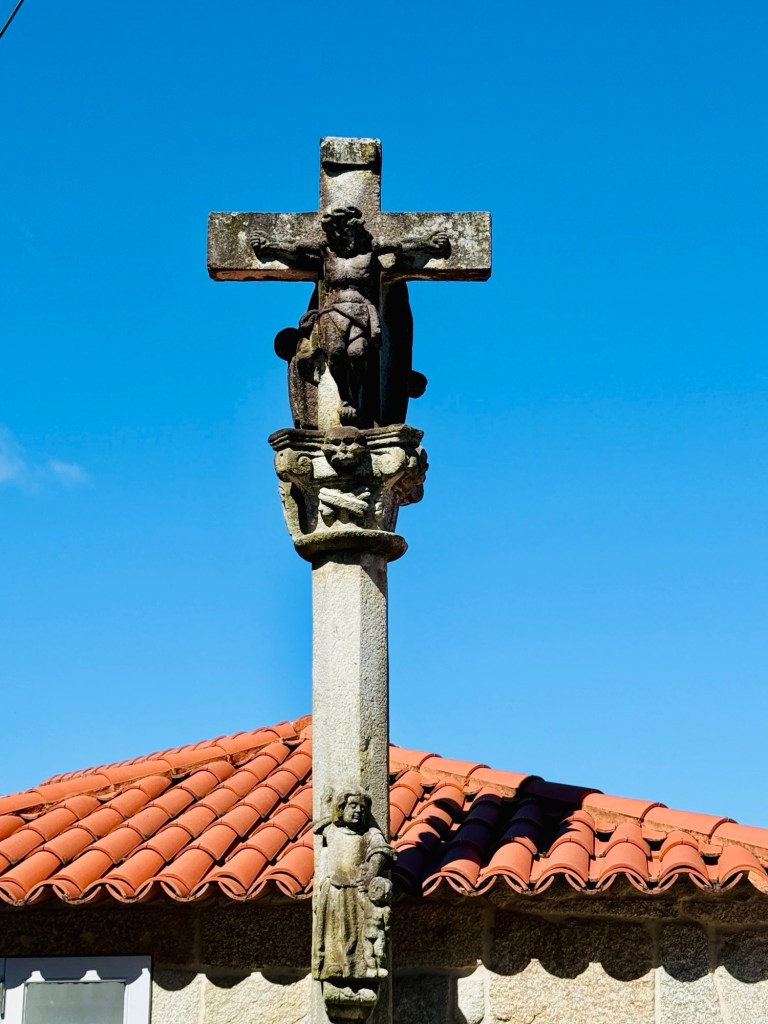
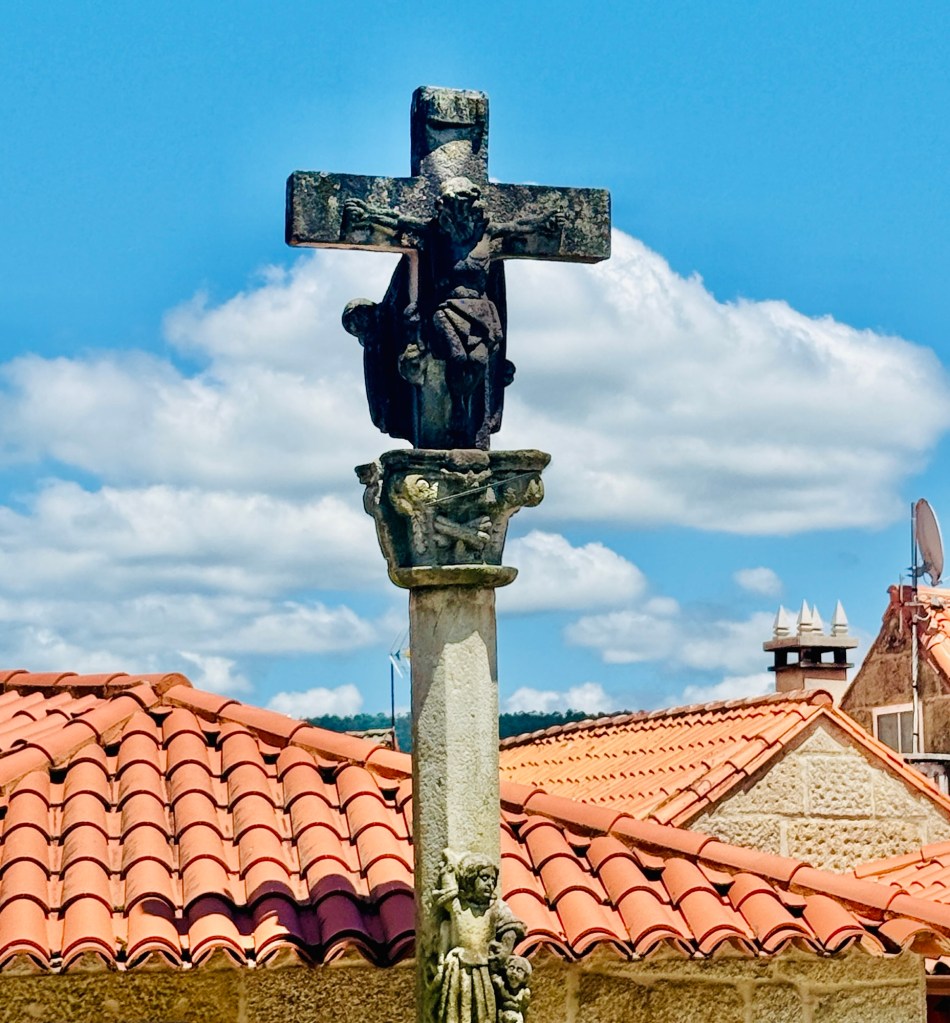
… and granaries…the casco histórico, or old town is truly something special.
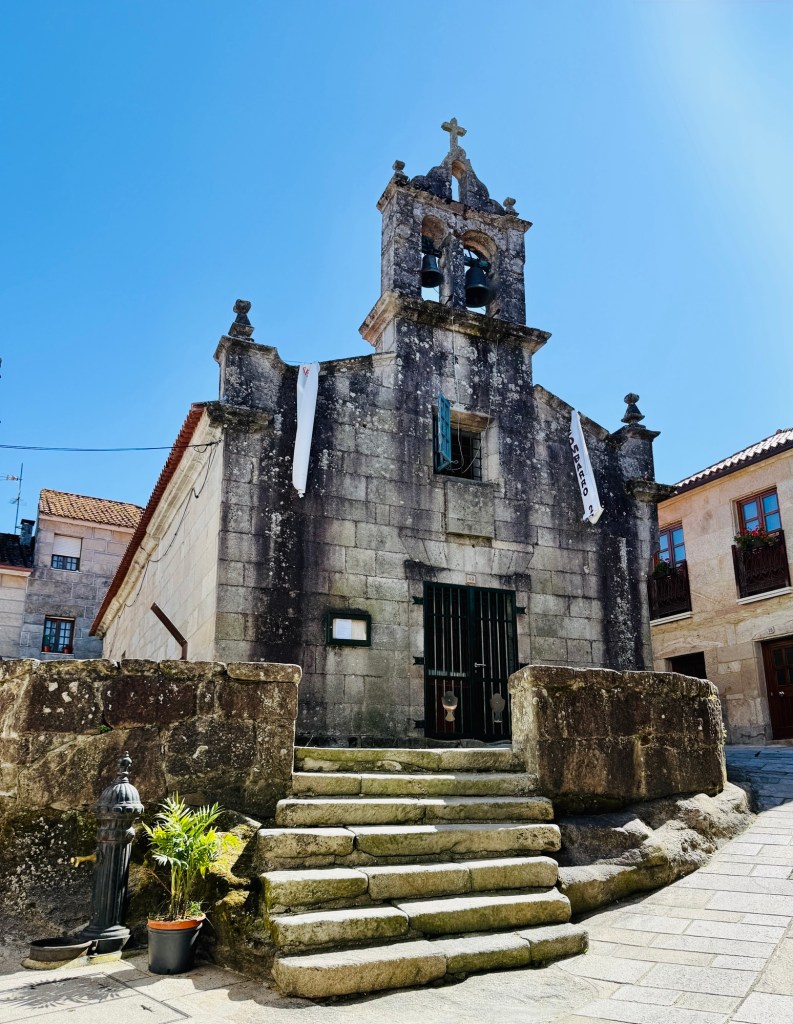
The small Igrexa de San Roque, a lovely church shoehorned into the space between housesRua da Mar is the main street passing through the old quarter and runs parallel to the estuary. This beautiful street is lined with taparias and other restaurants, craft, and souvenir shops (yes, it is touristy)…
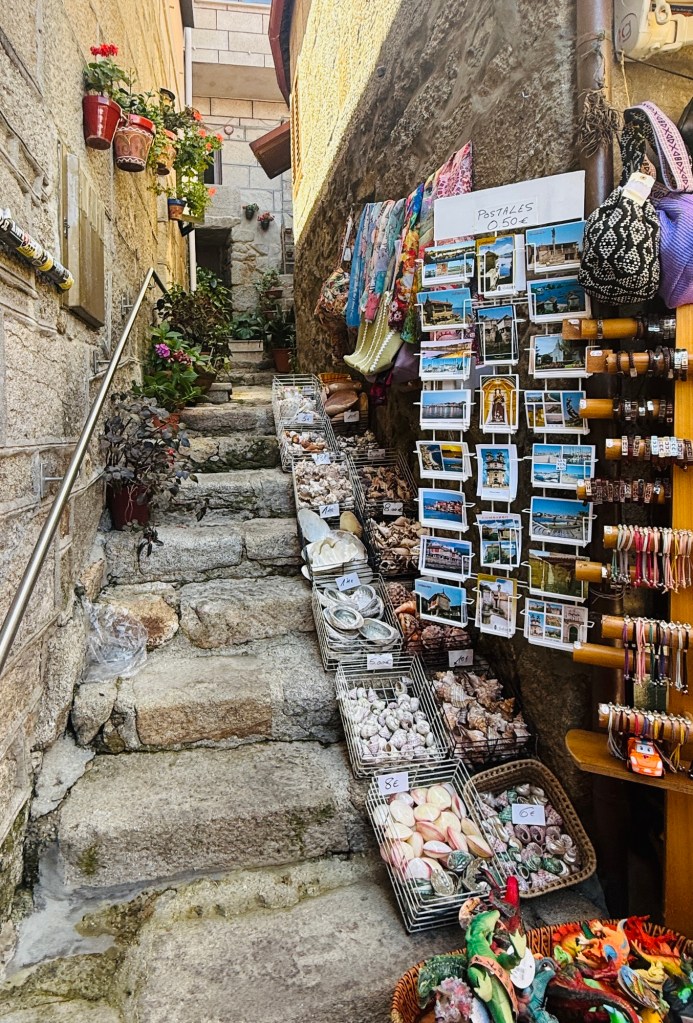
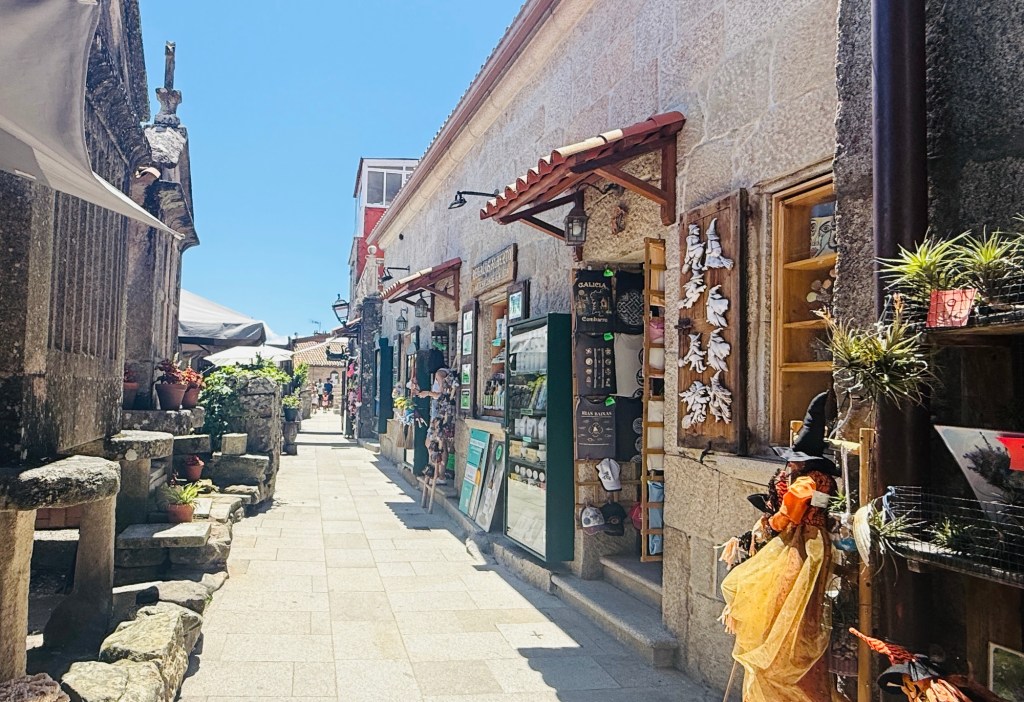
… and is a great place to see the unique raised granaries and sea houses with balconies filled with flowers, that are one of Combarro’s main claims to fame.
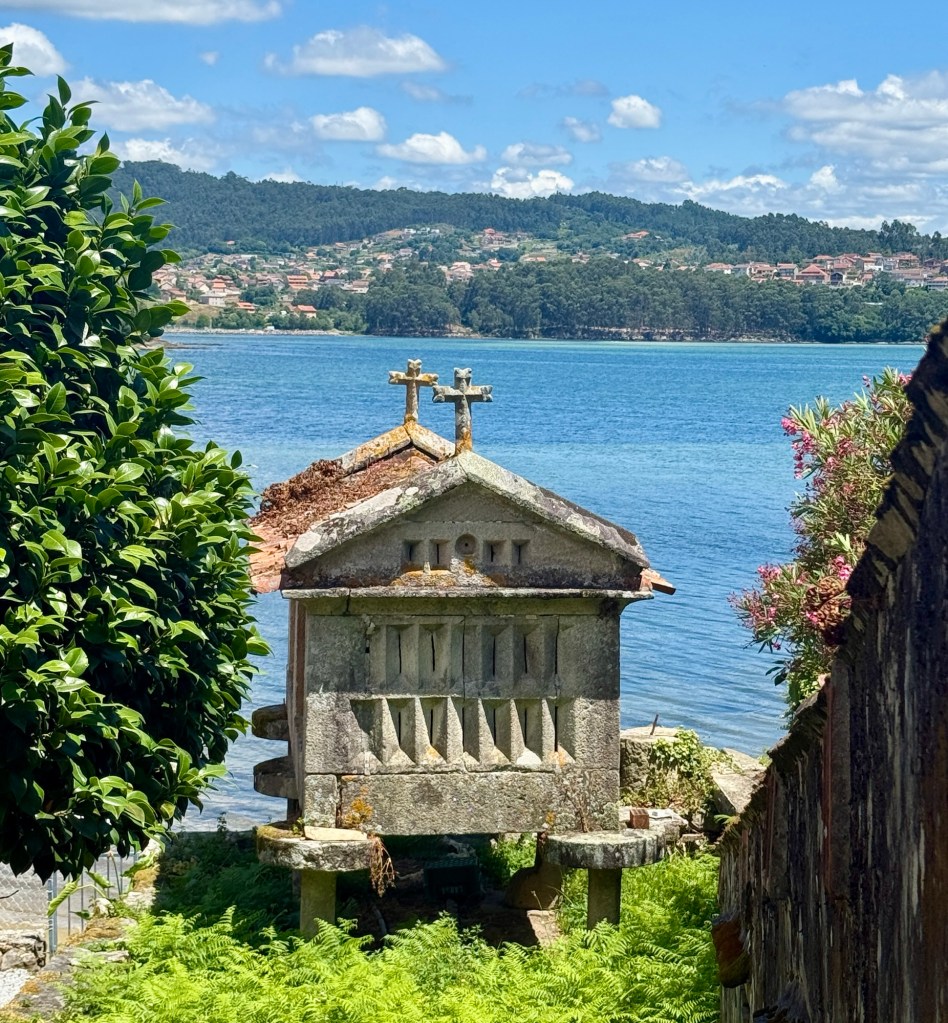
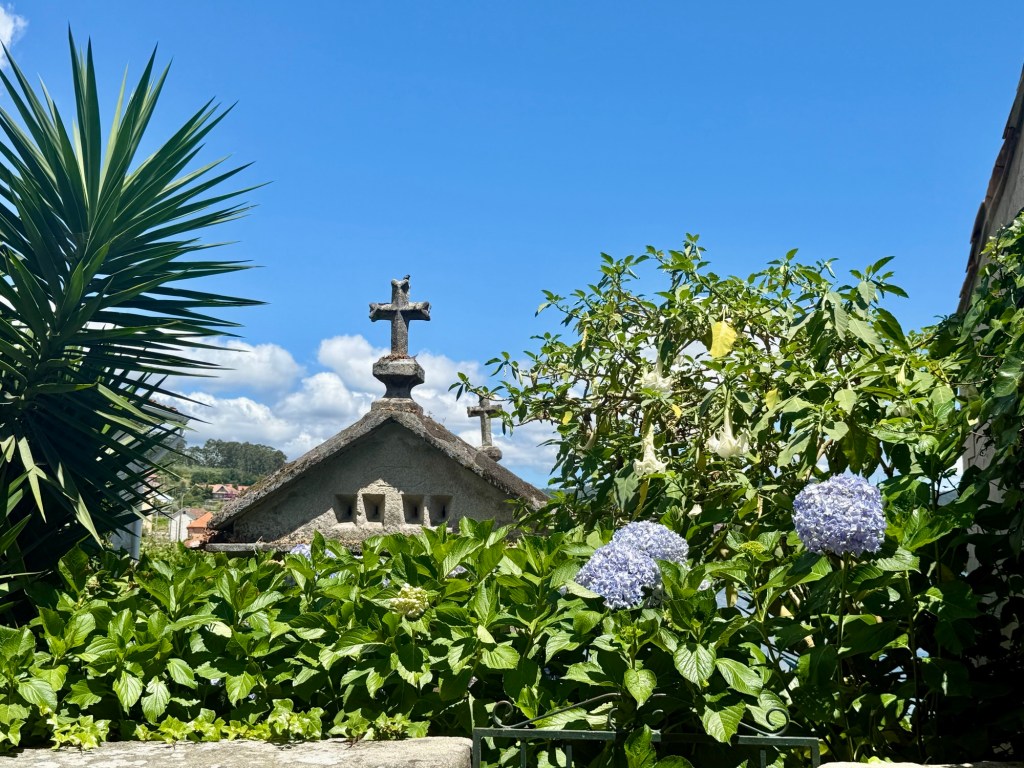
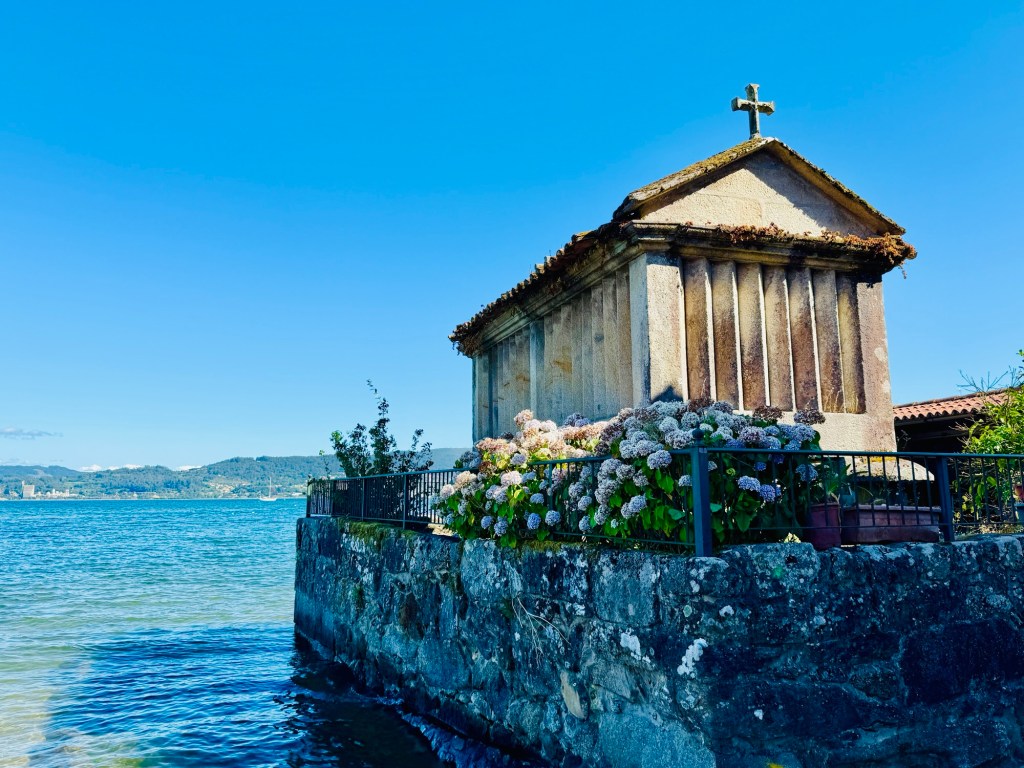
We have seen the hórreos regularly through our walk from Portugal to the point where I googled what they were. These hórreos, or raised granaries, were used to store and preserve corn, potatoes and other grains. They are raised on posts off the ground to keep rodents and moisture from getting in. The crosses and embellishments found on most of them were symbols for protection, in addition to a show of prosperity and wealth. Hórreos are protected structures in Spain, due to their historic value and by law cannot be destroyed.
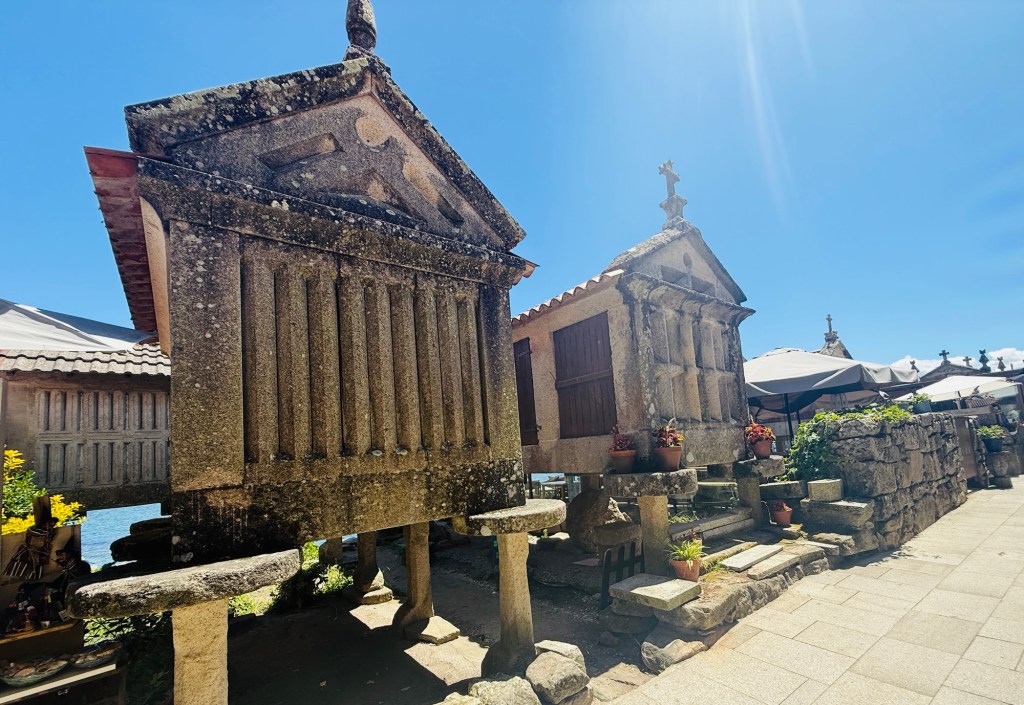
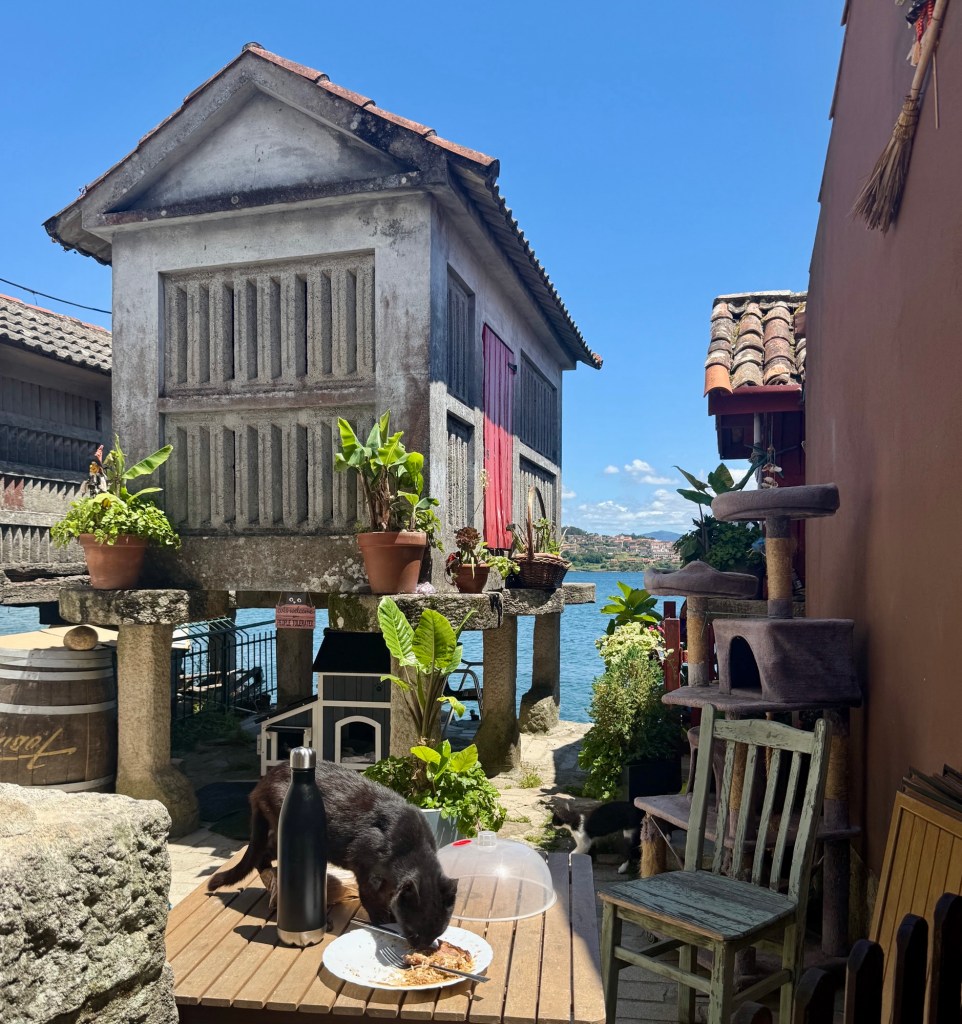
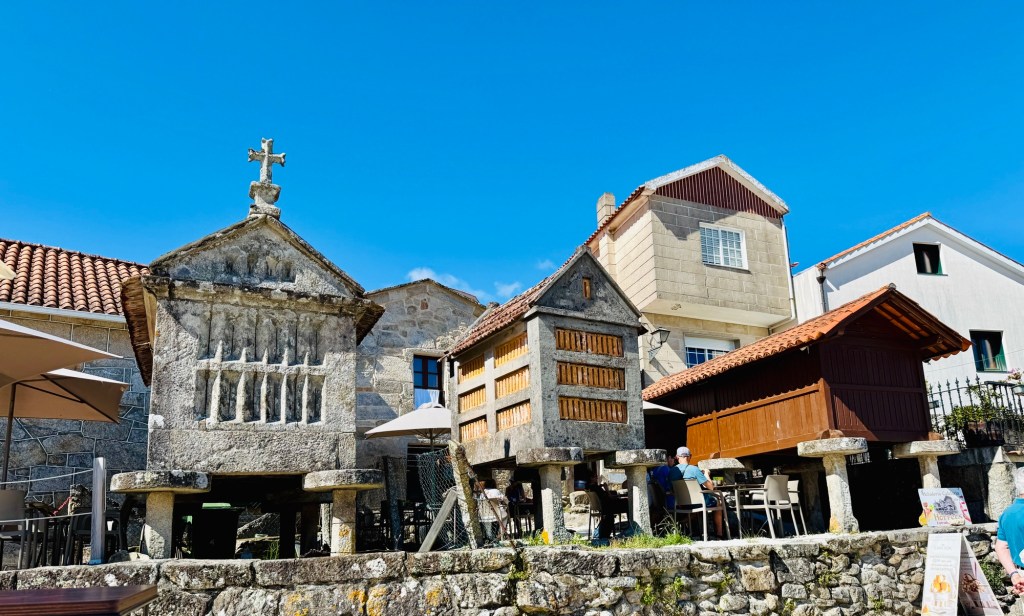
These amazing hórreos along with ancient stone sea houses (casas marineras)and stone crosses (cruceiros) dot the narrow medieval streets here… and line the waterway. There are 60 hórreos of which 30 are lined up facing the sea and 9 cruceiros in this little town. It was low tide when we arrived and we walked along the ‘beach’ marvelling at the ancient and unique architecture. Some restaurants are even built underneath them.
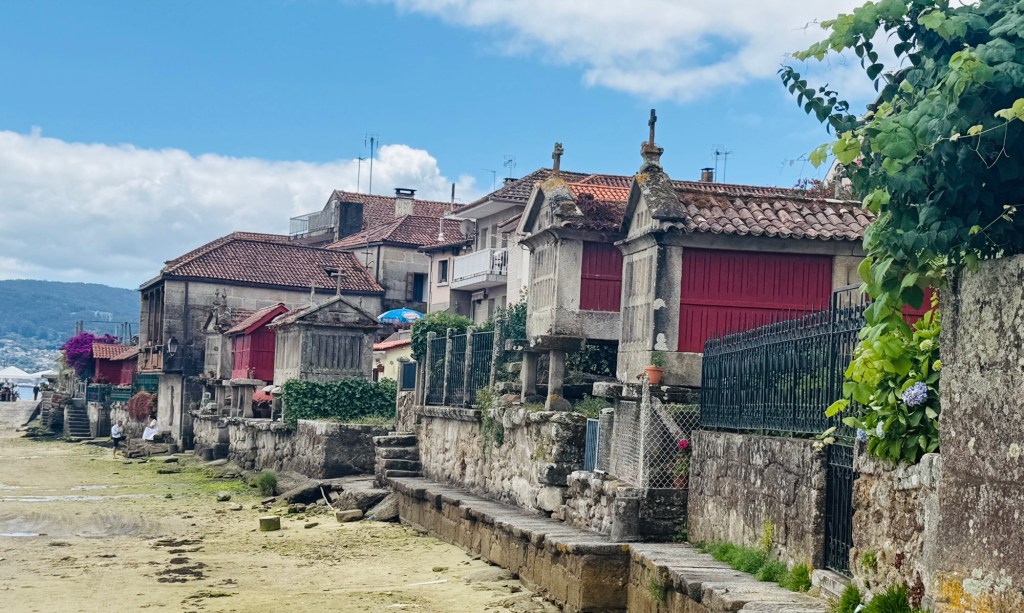
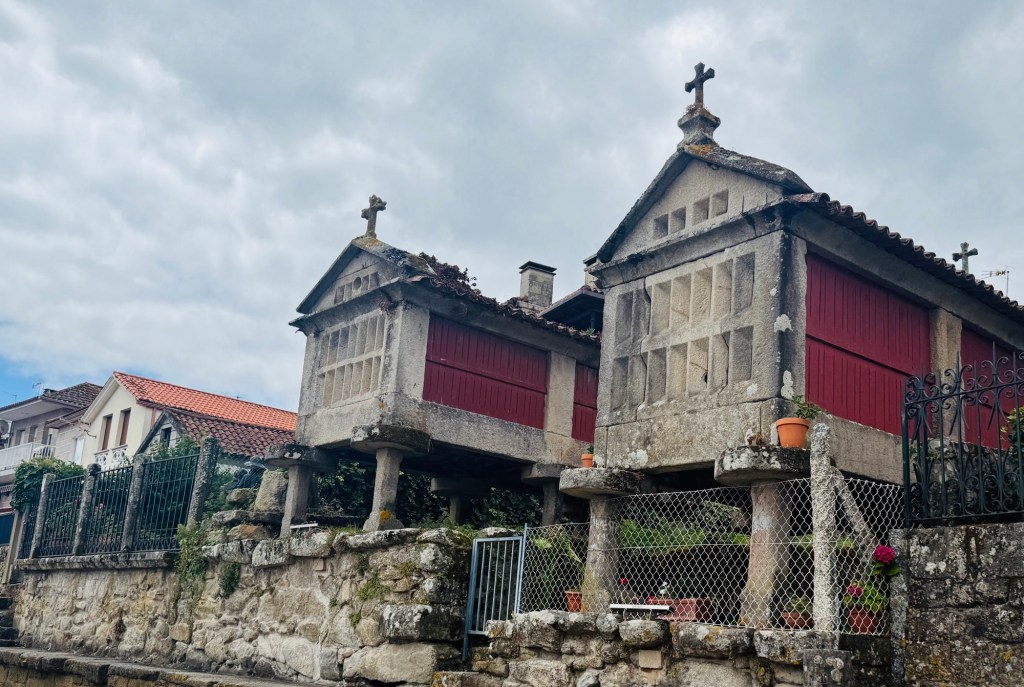
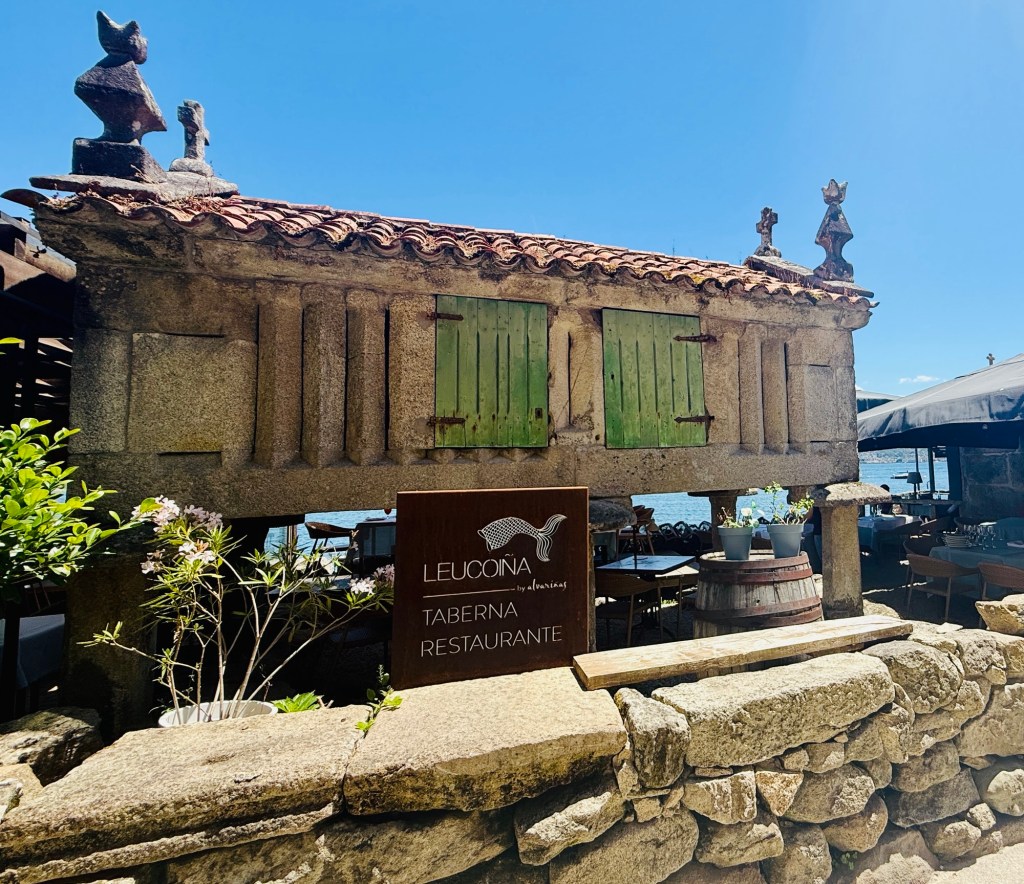
Speaking of restaurants… there are many… unassuming… right by the seaside… serving some of the freshest Galician seafood straight from the sea and often cooking it on a grill right beside the water.
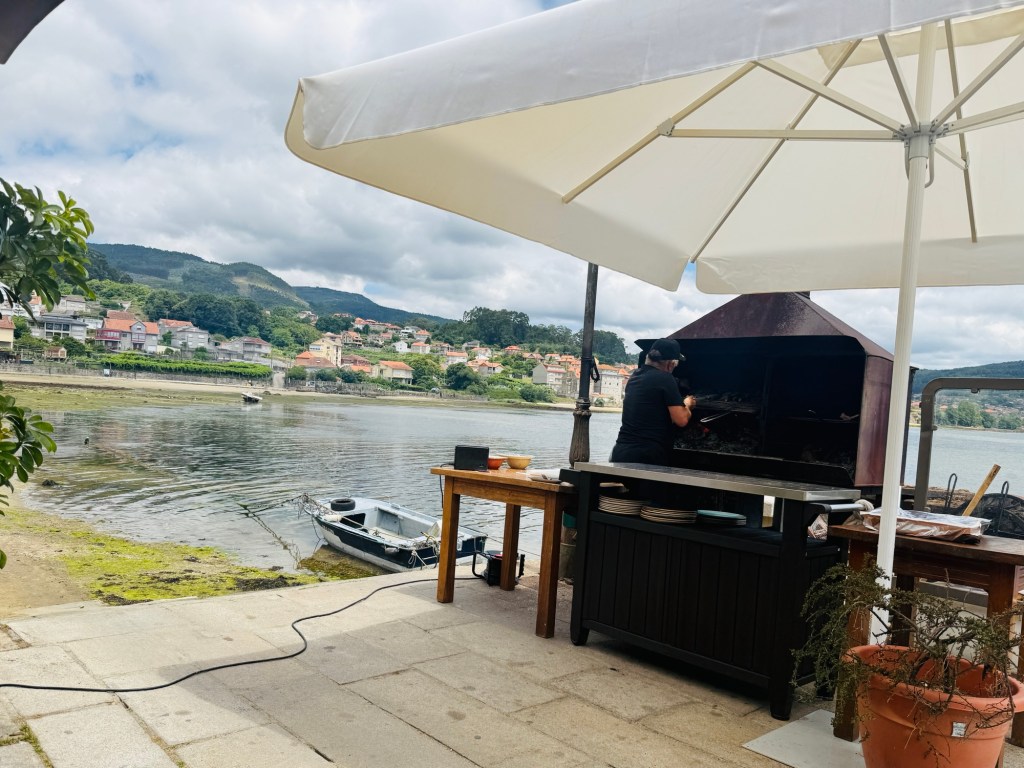
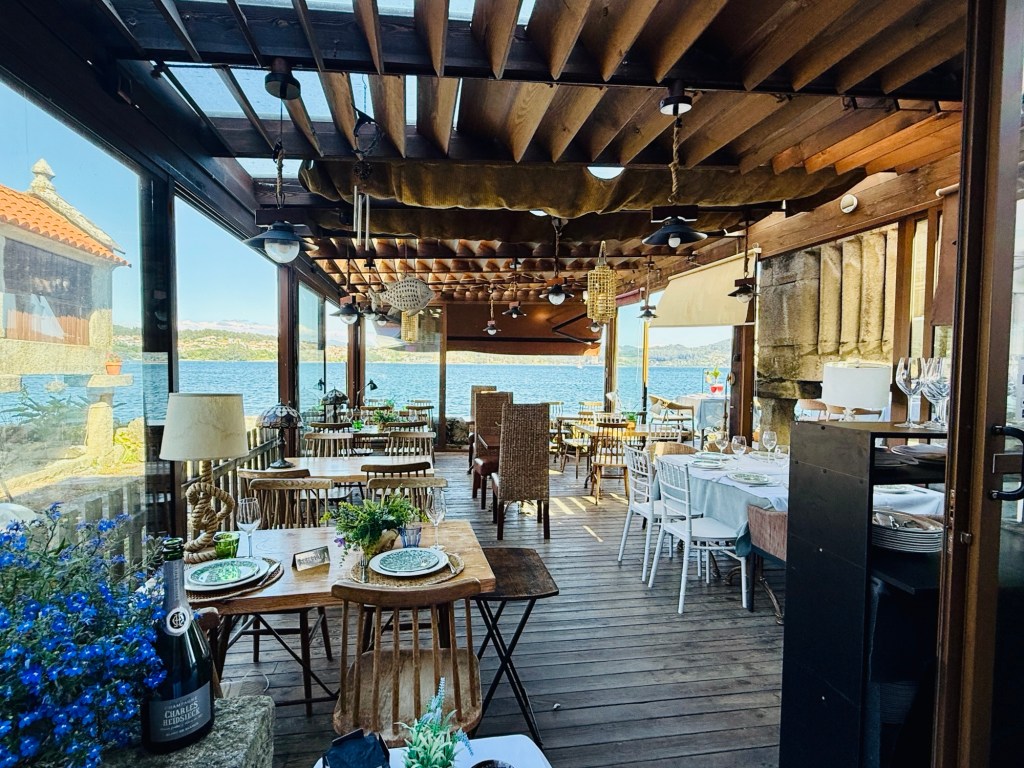
We had a delicious fresh seafood lunch… just what we needed after our walk… and then repeated again for dinner just a few hours later. In between I explored.
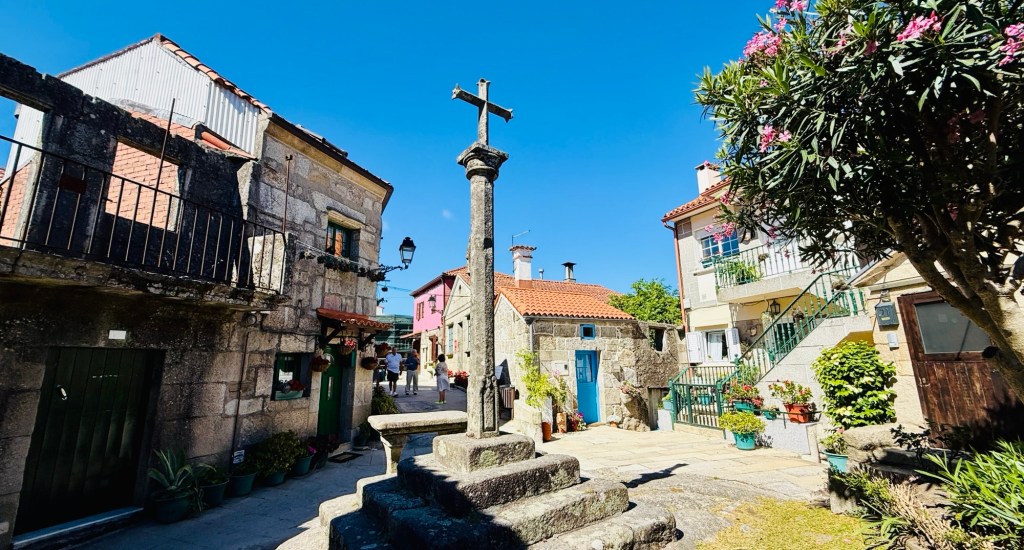
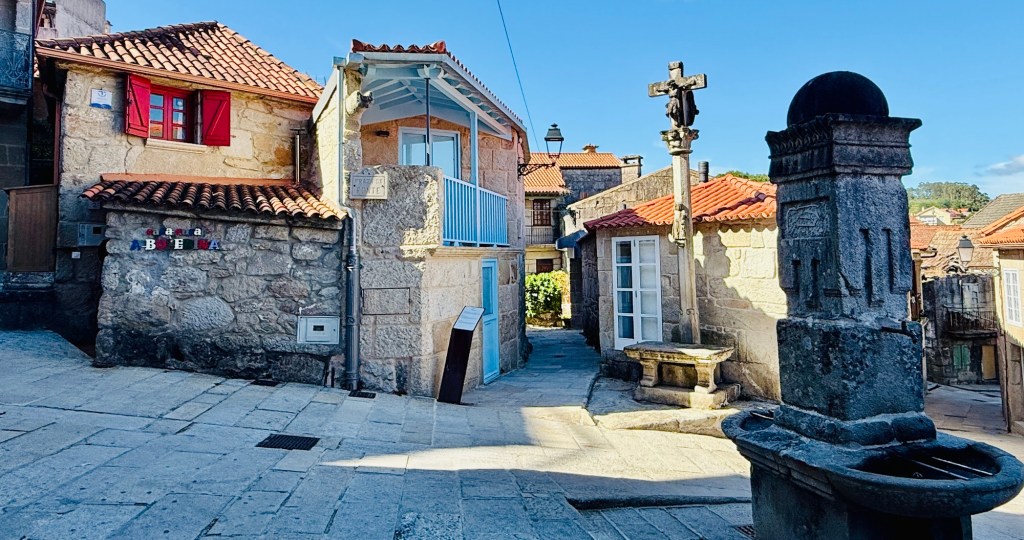
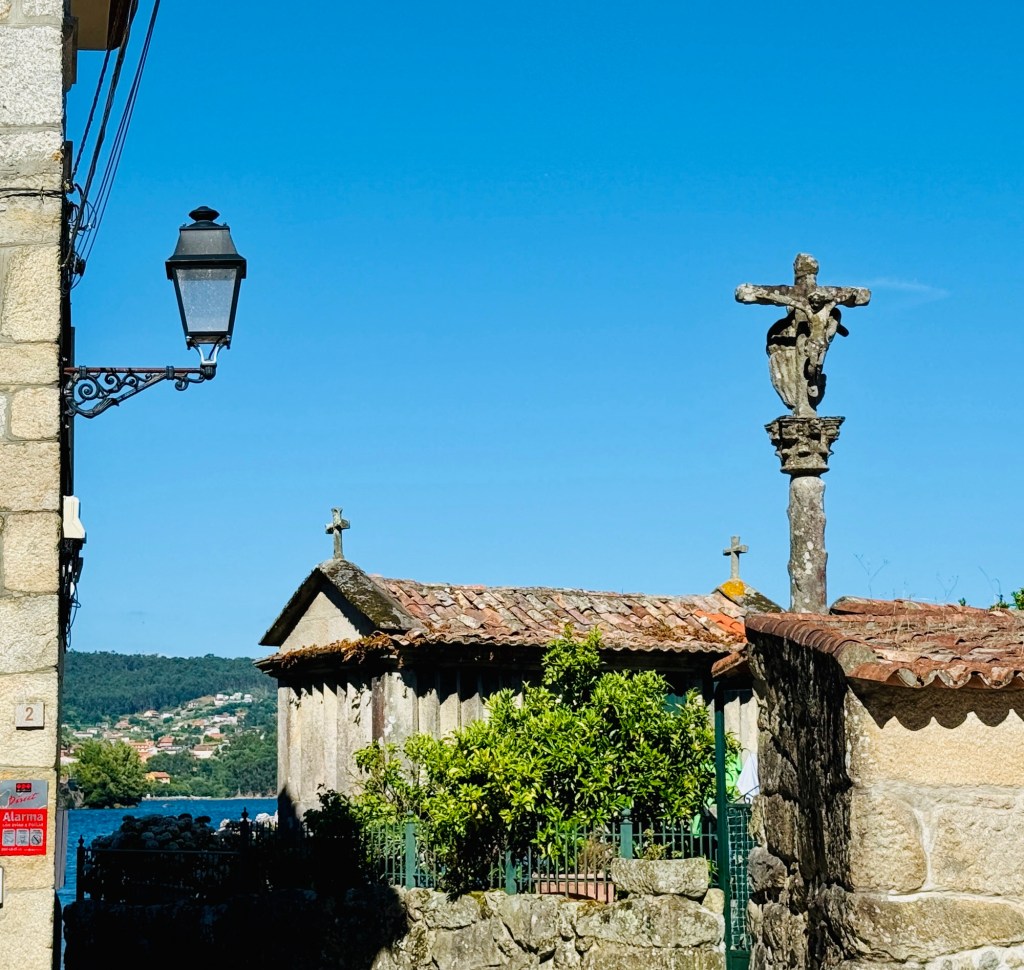
Everywhere you go in Combarro we noticed dolls and effigies of witches and wondered why. Apparently Galicia is a superstitious place with many legends involving magic and witches, which have a long association with the village. It’s said the many granite crosses dotted around town were meeting places for witches. Clearly the witches were unconcerned by Christianity. A bit freaky for me I’m afraid… even though I know that many ‘witches’ of the past were just strong women who wouldn’t toe the line or challenged traditional gender roles.

Magnetic, beautiful, and mystical- these are all words that come to mind when I think of my brief time wandering the streets of this unique fishing village. With its stunning coastal scenery, charming Galician folk architecture, and its compact yet vibrant old quarters, complete with hórreos and stone crosses, this place is truly captivating. I am just grateful that Camino brought us to such a beautiful place.
Steps today- 25,355
Kilometres today- 16.63
Flights climbed- 9
Temperature- 26°


-
Subscribe
Subscribed
Already have a WordPress.com account? Log in now.
 And I think to myself what a wonderful world