We leave the beautiful Veliko Tarnovo the following morning bound for Sofia, the nations laid-back capital. Sofia is no grand metropolis, but it has an undeserved reputation as a hard-edged post-communist city, full of concrete and grays. While actually, It is a modern, youthful city full of turquoise and gold domes, flowers, and yellow brick roads- yes, really!
For more than a century the famous Yellow Brick Road has stood as a unique pathway that winds through the heart of the city (there’s a long story behind that but I won’t go into that now).
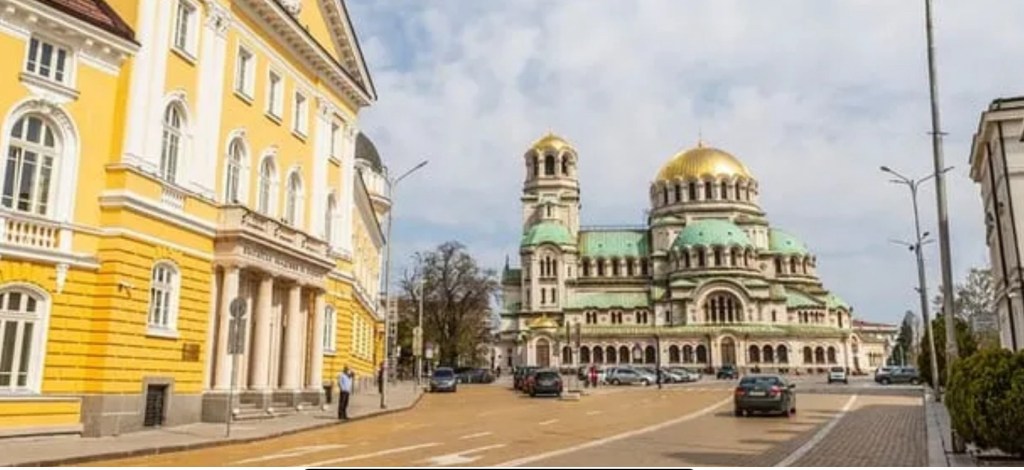
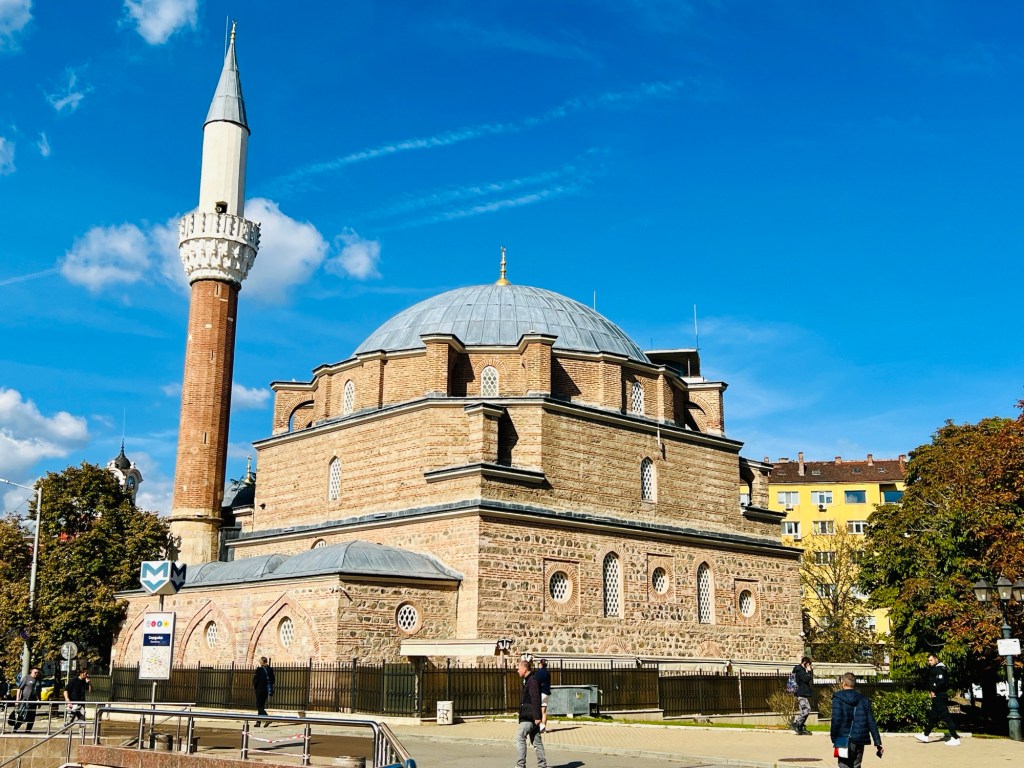
Although it does have some of those stubborn Red Army monuments… combined with the mosques…
…and Orthodox churches…
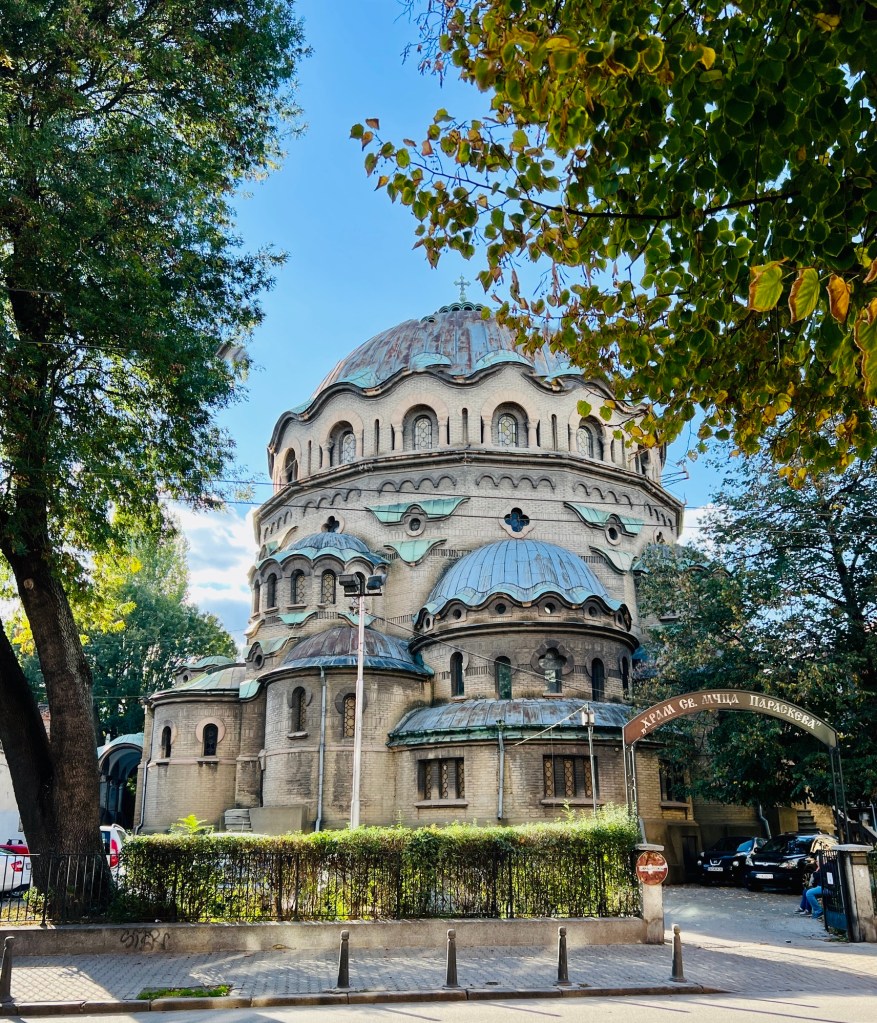

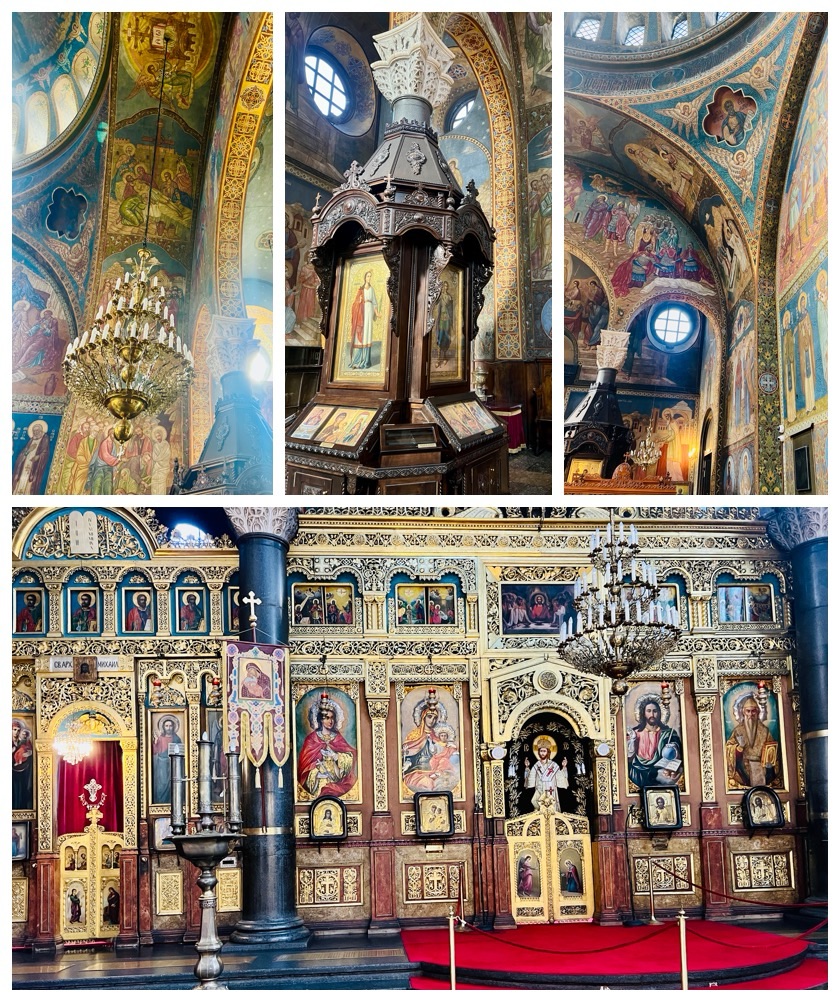
… some fine architecture, lush parks, museums, galleries and theatres…
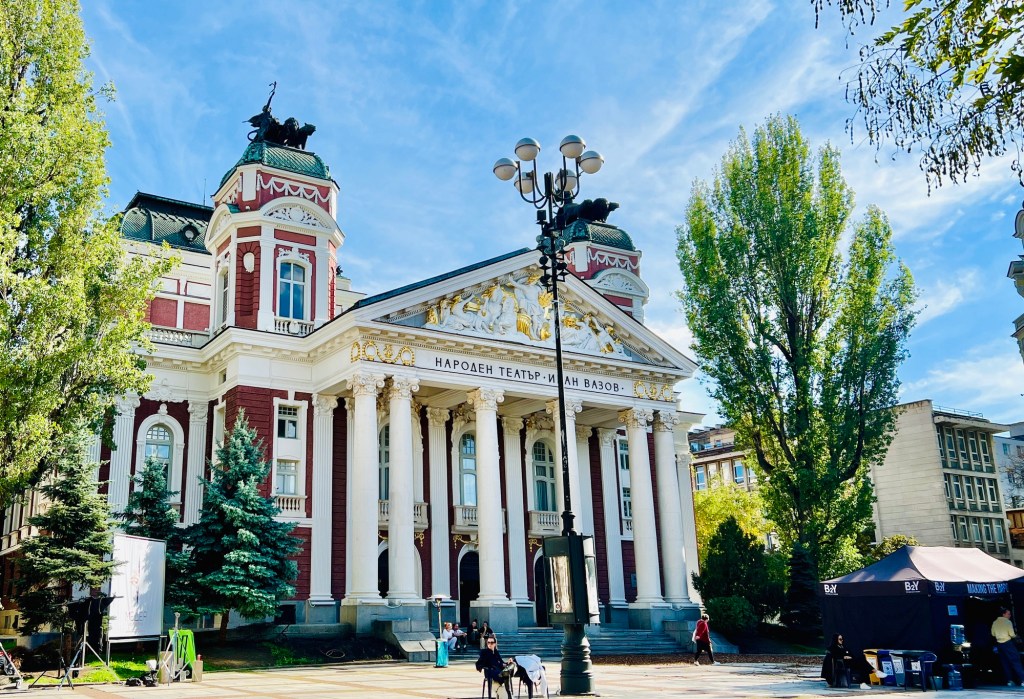
… cool restaurants and cosy cafes, street art, vintage trams and some really cool details on the buildings that give it an eclectic, exotic feel…

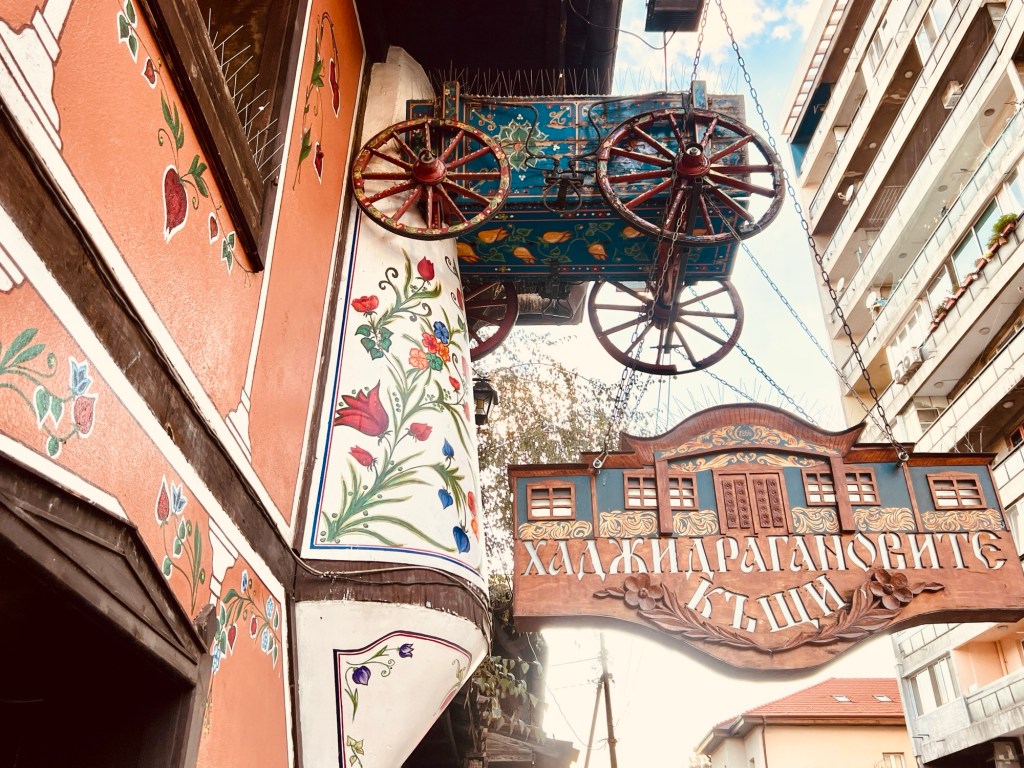
… all with the Vitosha Mountain looming in the background. Sadly we did not have enough time here to really experience enough of it (and there are some really cool free tours here if I’d had time… food tour with Balkan bites and a street art tour) and I felt it was lovely but a little ‘average’ as European cities go.
Sofia is a city with a long history and is one of the oldest cities in Europe, founded around 2500 years ago and was even briefly the capital of the Roman Empire. So I was a little disappointed to find that there is no ‘Old Town’ as such, and that these days there are only a few remnants of these great times… although it’s not difficult to find them right in the center of Sofia.

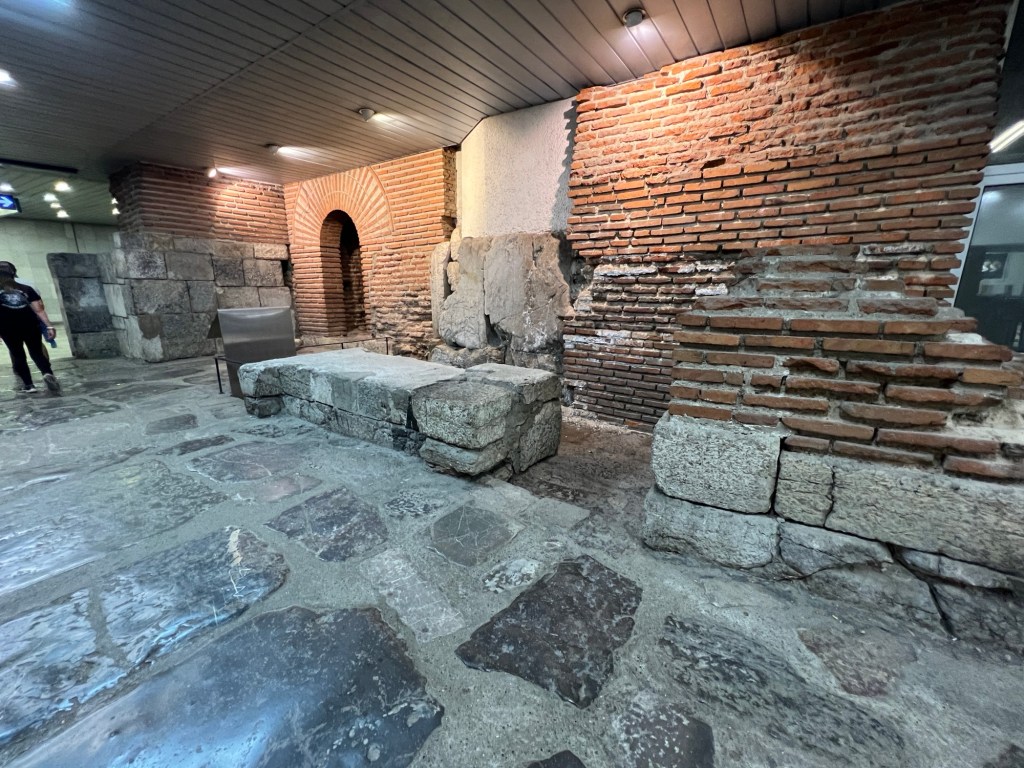
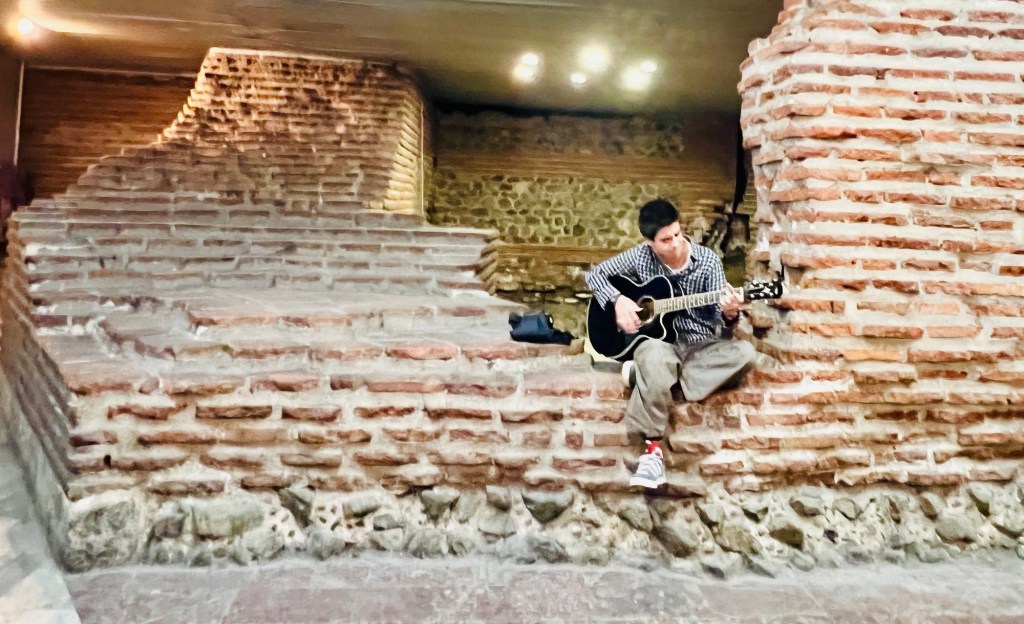
Excavation work carried out during construction of the metro unveiled a treasure trove of Roman ruins from nearly 2000 years ago, when the ancient city was called ‘Serdica’… and there are impressive excavations to be found in and around the Serdica metro station. So strange … but amazing to think that if the metro system had not been expanded these impressive ruins would have never been excavated!
When you Google ‘Sofia’, the first image to come up is Alexander Nevsky Cathedral. It’s become a symbol for the city… an awe inspiring church and one of the largest Orthodox churches in the world! Apparently it can hold an astonishing 10,000 people at one time.

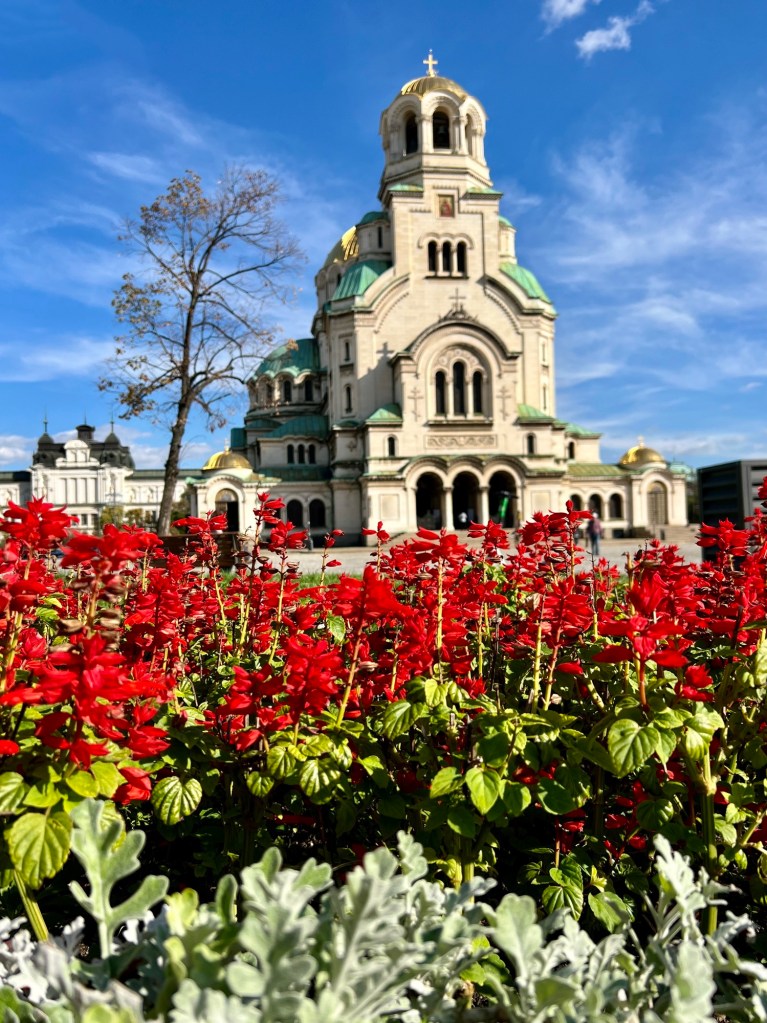
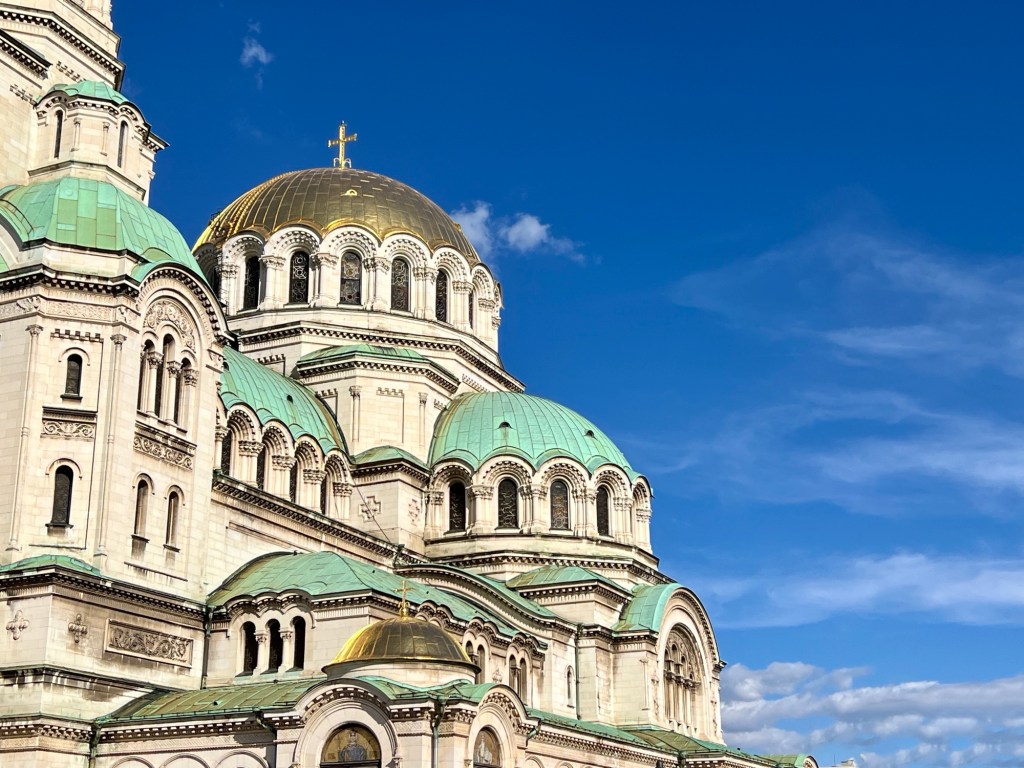
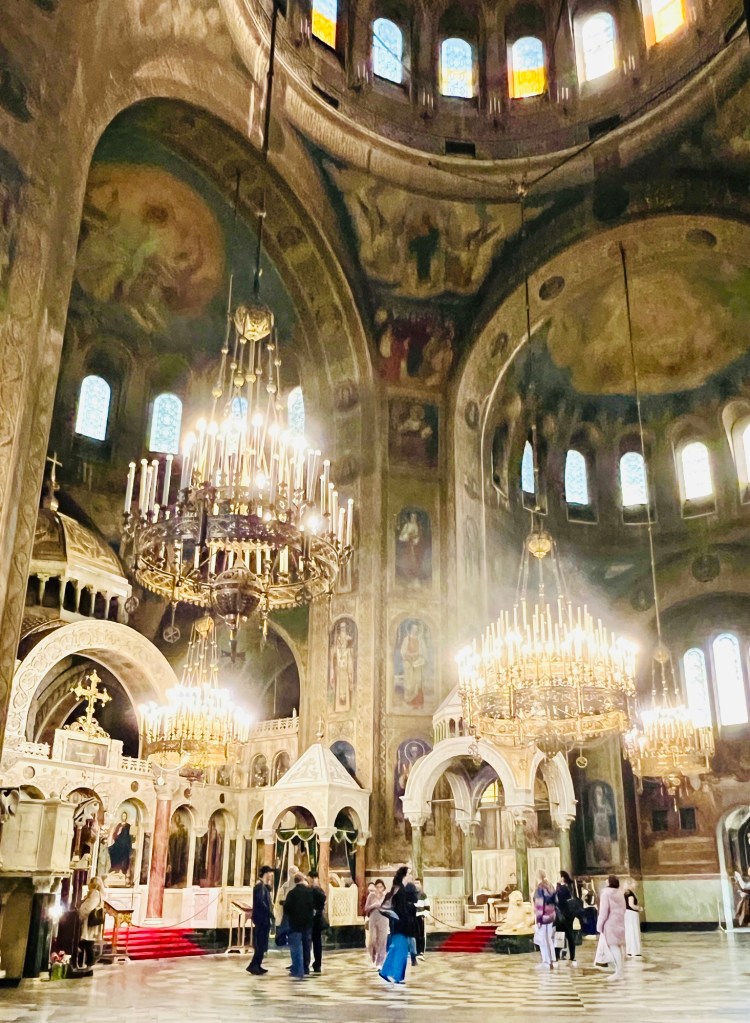
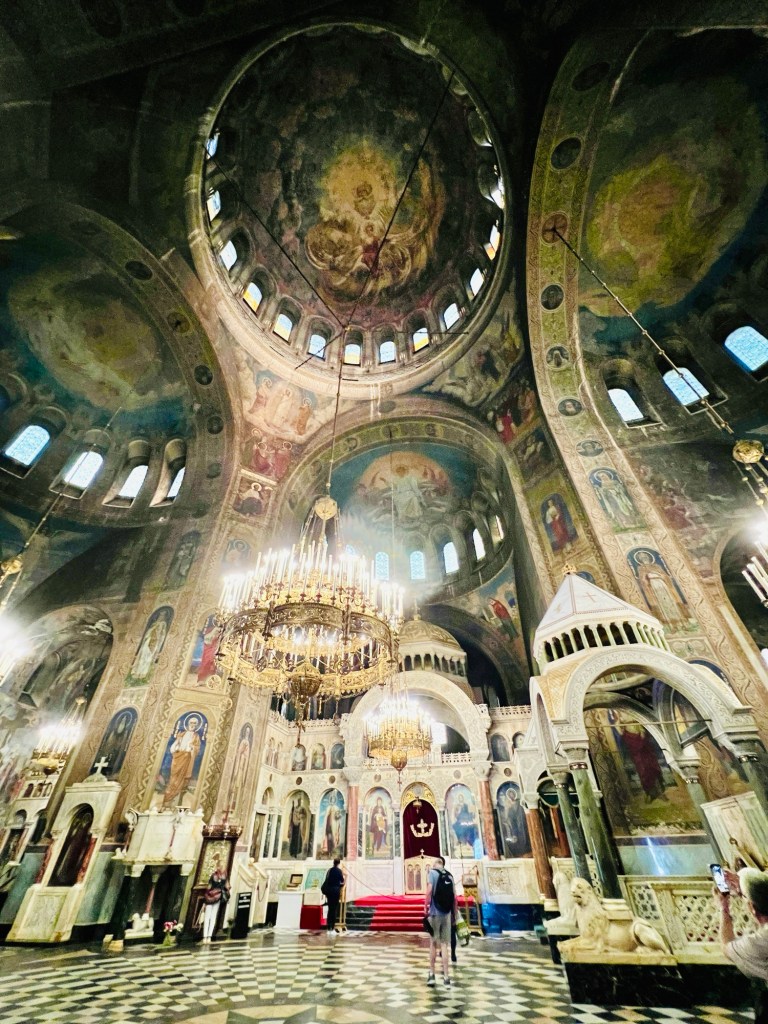
Disappointingly, after seeing so many amazing churches, the interior of this one was not nearly as impressive as the exterior.

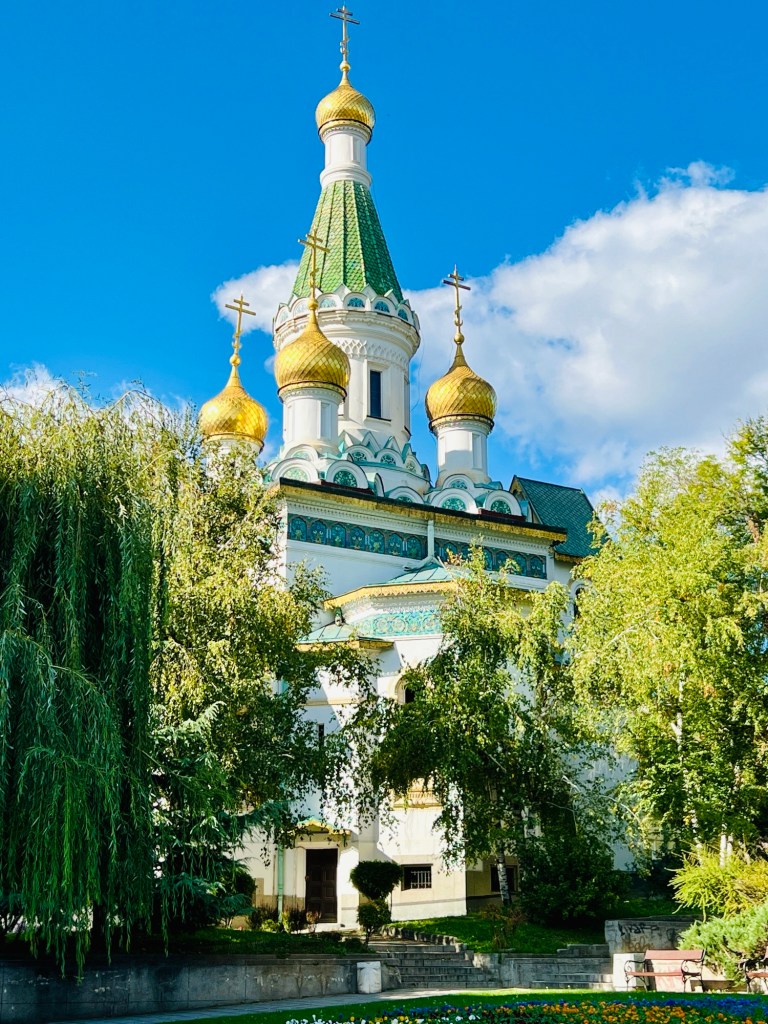
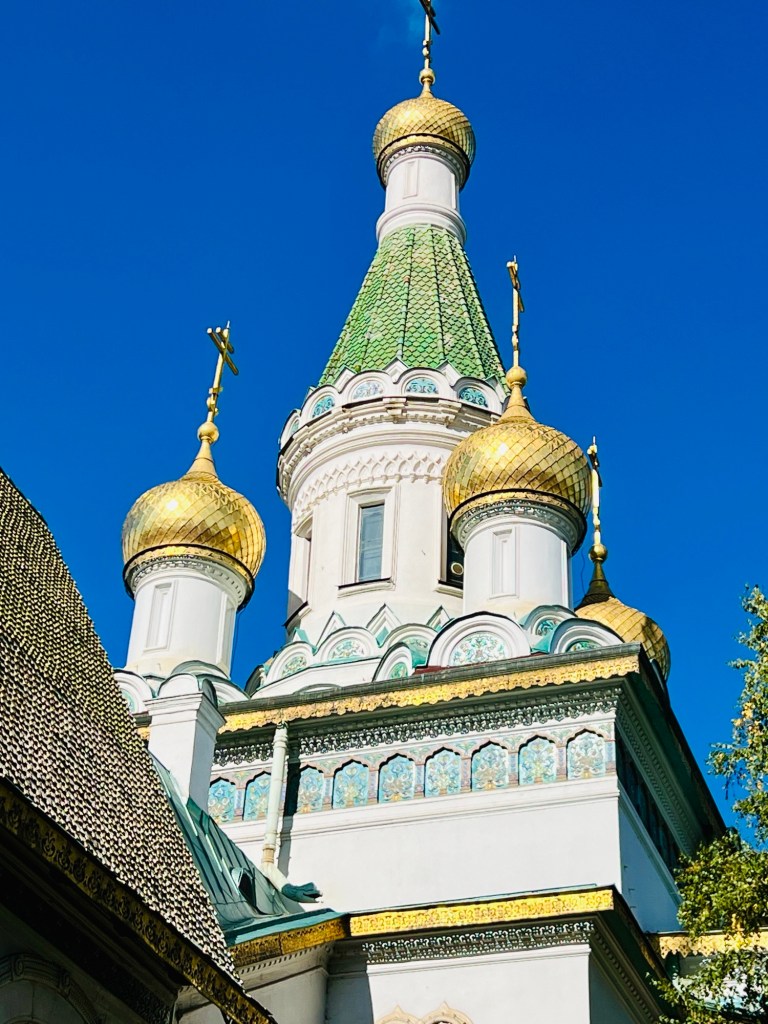
Although Alexander Nevsky Cathedral is Bulgaria’s landmark, I really loved the quaint St. Nicholas Church. The Russian church has five golden domes and is in an inviting small green paradise of a garden.
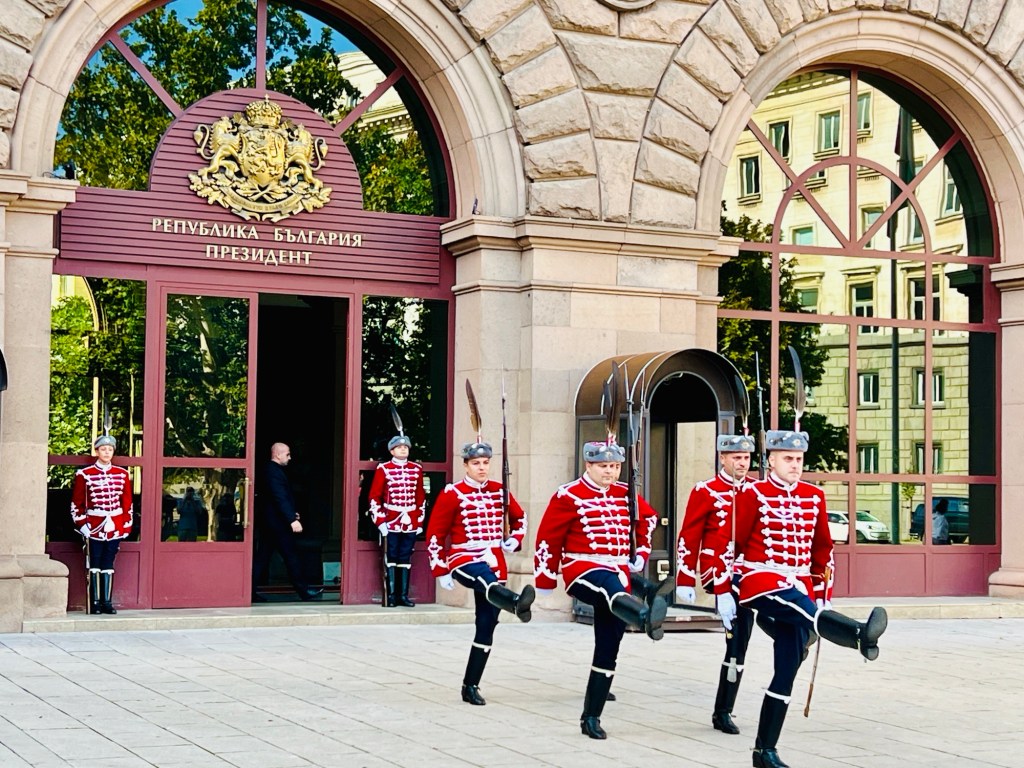
We happened to pass the Presidents Office at the time of The changing of the guards, and while not as elaborate as in some other European capitals, it was worth a stop nonetheless. I always imagine tradition dictates serious, unsmiling faces for these ceremonies, but one of the guards looked like he was trying to stop himself laughing… kind of funny really. I wonder if he was in trouble 😂.
St. George Rotunda is another one of the Sofia treasures as it is the oldest building in the city. It was built in the 4th or 5th century AD and turned into a church in the 6th century, but the surrounding Roman ruins are even older than that. It is hidden in the courtyard of the Presidency.


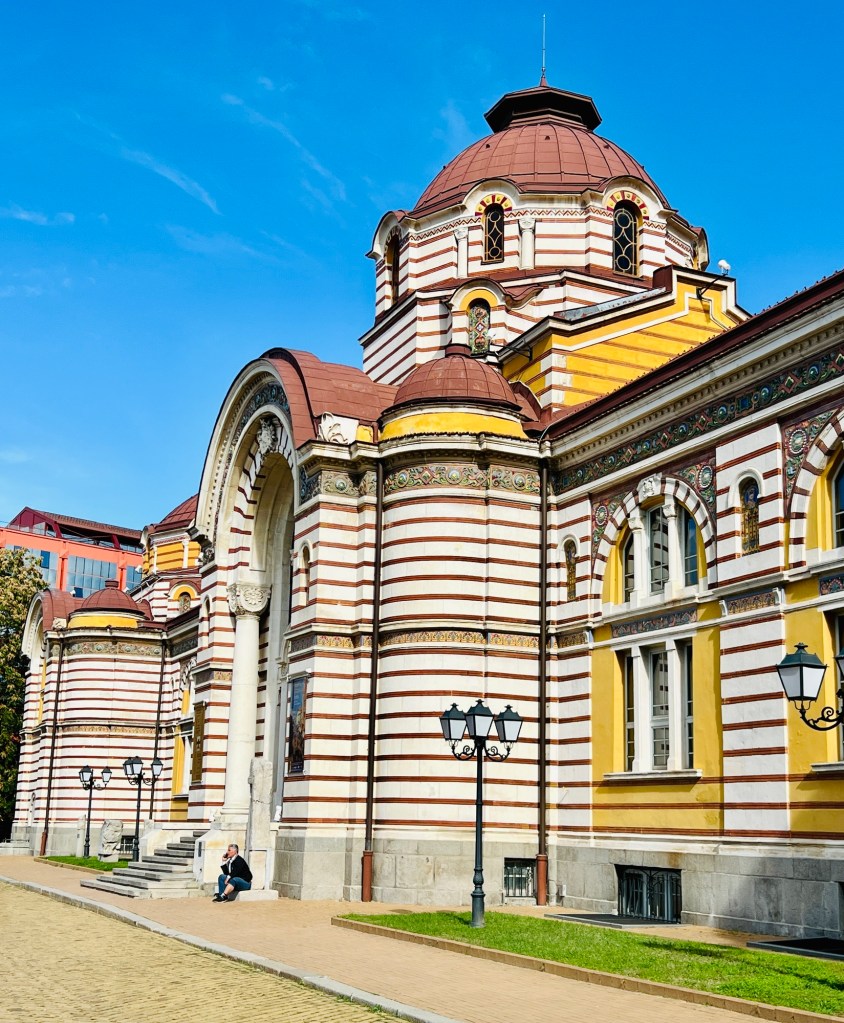
Bulgaria is a land of thermal activity and bubbling mineral springs, something I had no idea about before my time here. These colourful hot public baths were used for the locals for decades but sadly they’ve been closed for the past 40 years; a shame as I could imagine how it would have been in the past and I’d have loved a dip.

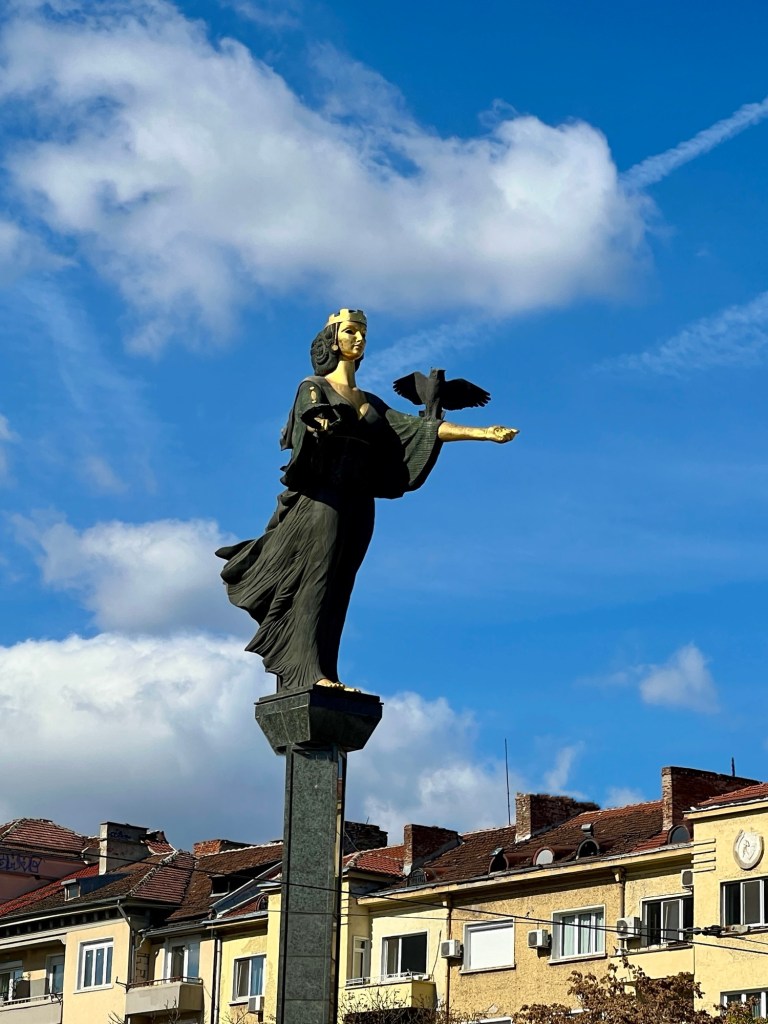
St Sofia is the symbol of the city and the monument is hard to miss due to its height! The lady high in the sky is a fairly new addition to Sofia, made in the year 2000. Sofia stands for Wisdom and St Sofia is the Goddess of wisdom!
On we go… to our last Bulgarian stop… Plovdiv. I’m looking forward to this one as I believe it’s amazing.
 And I think to myself what a wonderful world