Much of a day on a bus and we are briefly back in Lisbon, staying in an area not far from Alfama where we were a few weeks back, but very different. We appreciate that there appears to be no stairs or hills although we haven’t ventured far. The one similarity is the beautiful azulejo tiles that once again surround us… and the loud music and noise that went well into the night.
I had heard about a stunning medieval city… which was also a UNESCO site, and a bit of a hidden treasure in the heart of the rural Alentejo region… so I thought it sounded like my kind of place. Hopped on a train and travelled through countryside very different from what we have experienced in the last few weeks. It is hot and dry and due to its position, this area is one of Portugal’s hottest places. The landscape is full of olive groves, wide-open plains, and traditional stone villages. Although there were still plenty of vineyards as the Alentejo region is famous for its rustic wineries and delicious wine.
I love the feeling of history that hangs over so many beautiful towns in Europe… we just don’t have that back home… and Évora is one of those places. It has over 2000 years of history that goes back as far as the Romans and includes Moorish and Portuguese heritage… and it is one of Portugal’s most beautifully preserved medieval towns. Inside the 14th-century walls it has all the quintessential beauty…
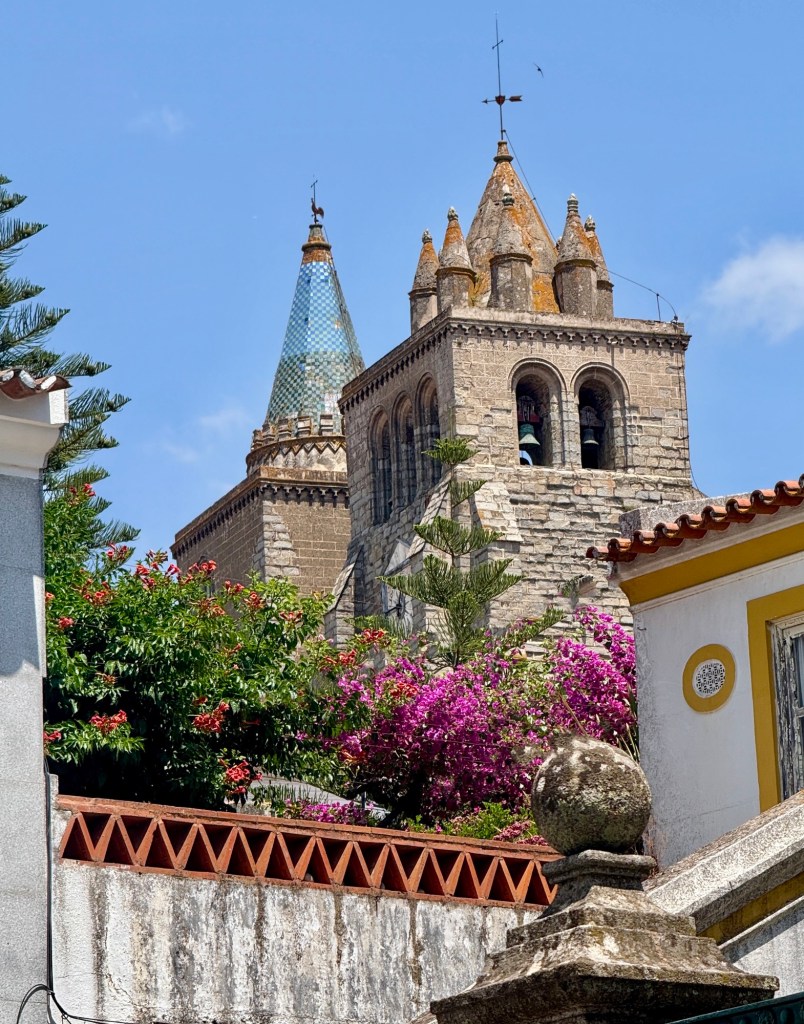
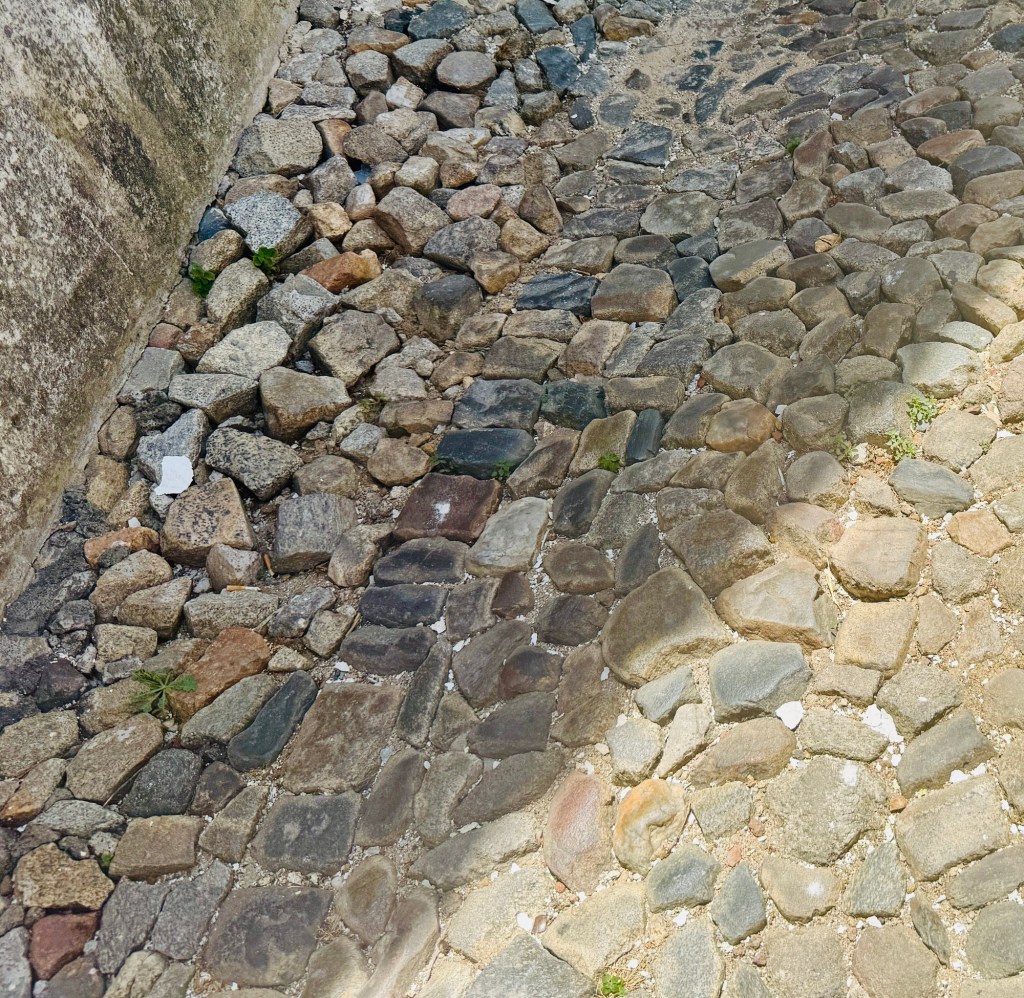
… narrow, winding lanes leading to striking monuments, including an elaborate medieval cathedral and cloisters… Roman ruins… whitewash houses… historic sights… the azulejo tiles and the balconies and a picturesque town square that was apparently once the site of some rather gruesome episodes courtesy of the Inquisition. And of course cobbles. And not just any cobbles. I once said, “the worse the cobbles, the better the town”… well these were real cobbly cobbles. No nicely cut squares or flat slate or marble… but all stones of very different shapes and sizes… very difficult to walk on. But what an enchanting place.
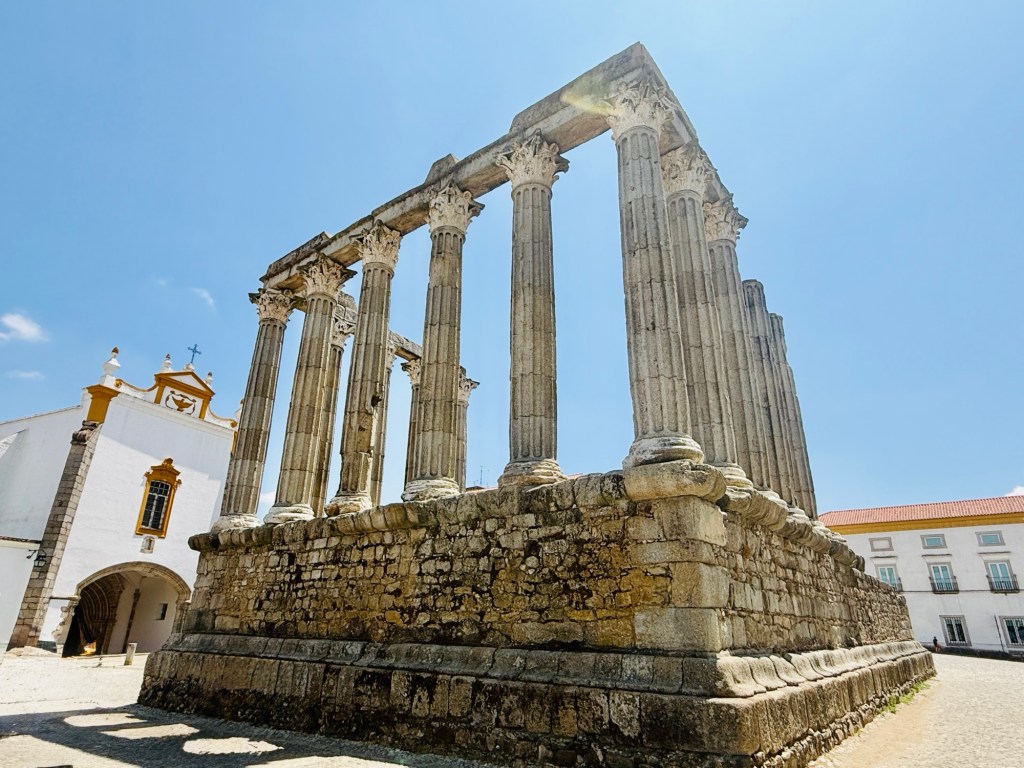
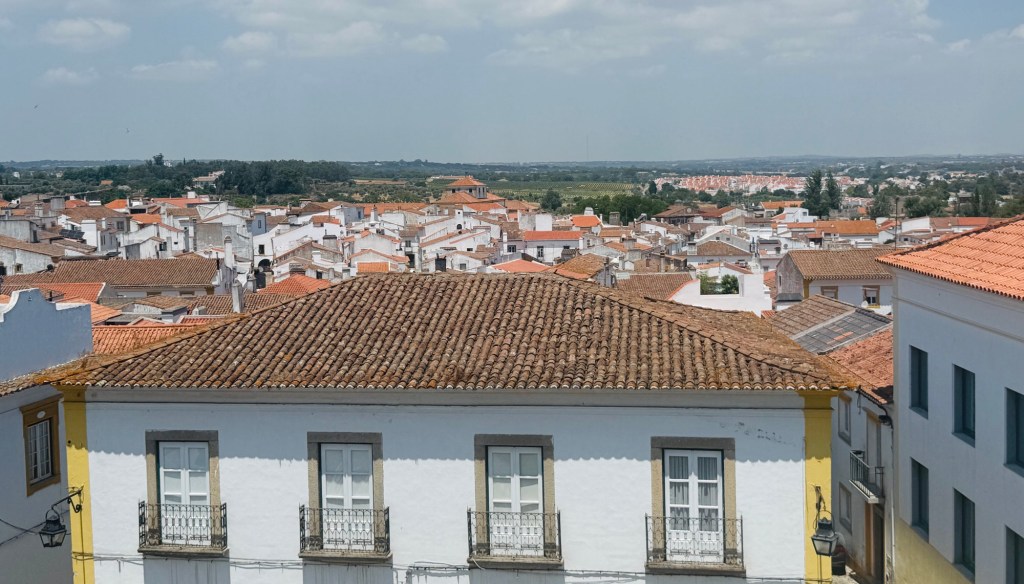
I came across the Roman temple of Diana by accident … you sort of can’t miss it right next to the cathedral, where I was headed. And I wandered over to the Jardim Diana just opposite with a great view out over the rooftops.
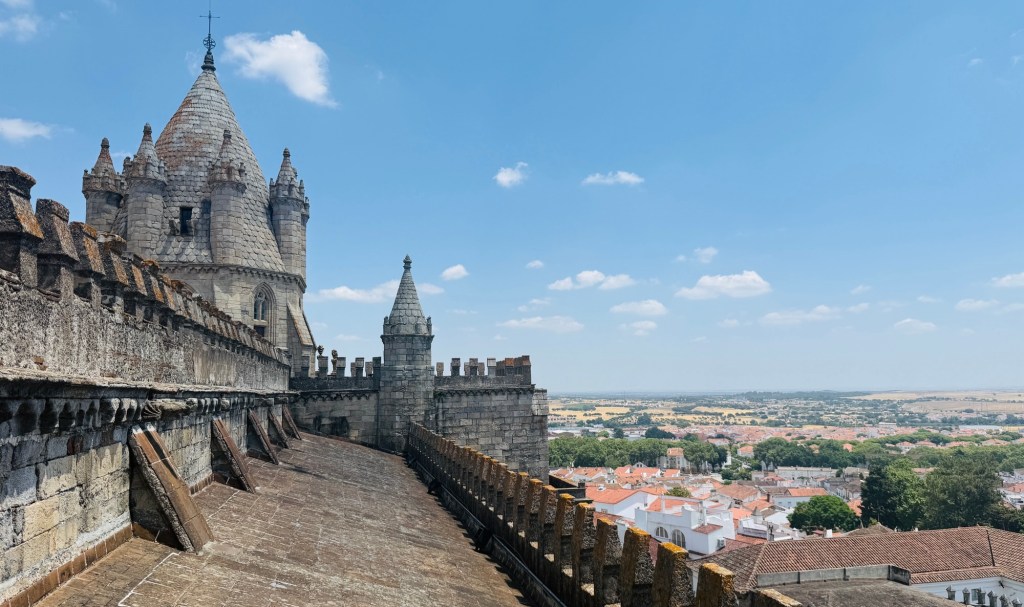
And then, the gothic cathedral that looks more like a fairytale castle, with its turrets and towers… and is the largest medieval cathedral in the country. It looked to me like it belonged in Sintra or somewhere like that… but there was no tourists. Seriously there were not many people in the town at all which makes me love it all the more… the rhythm is slow here… an oasis of calm without the tourist hoardes.
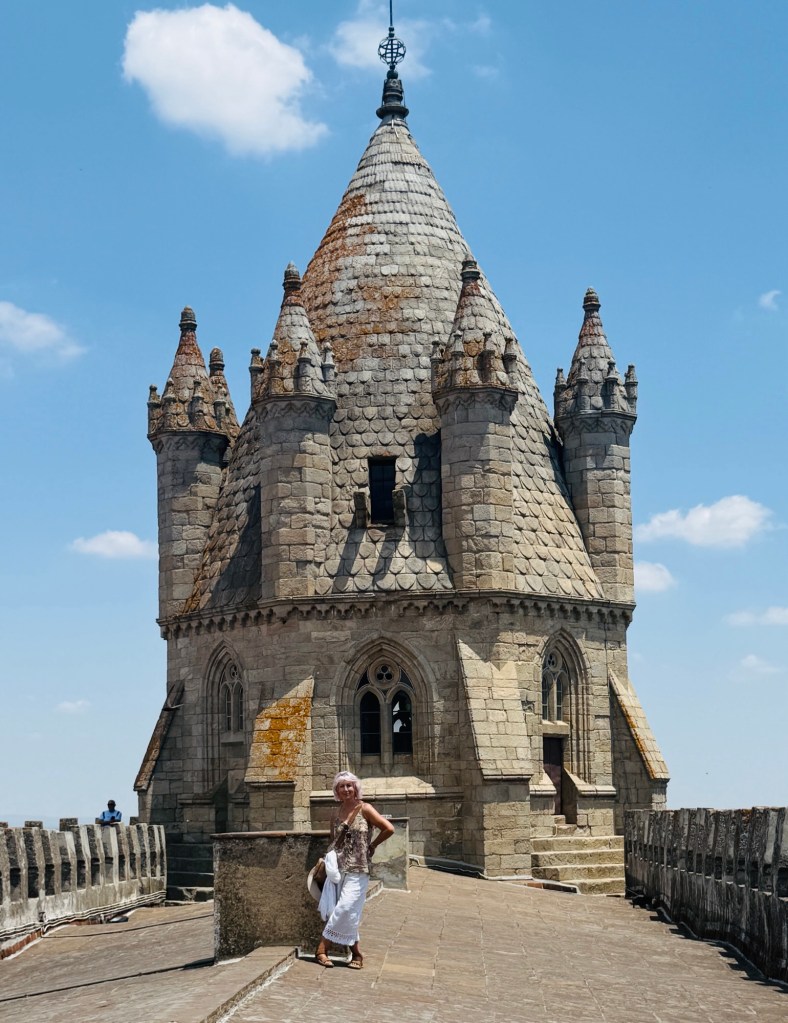
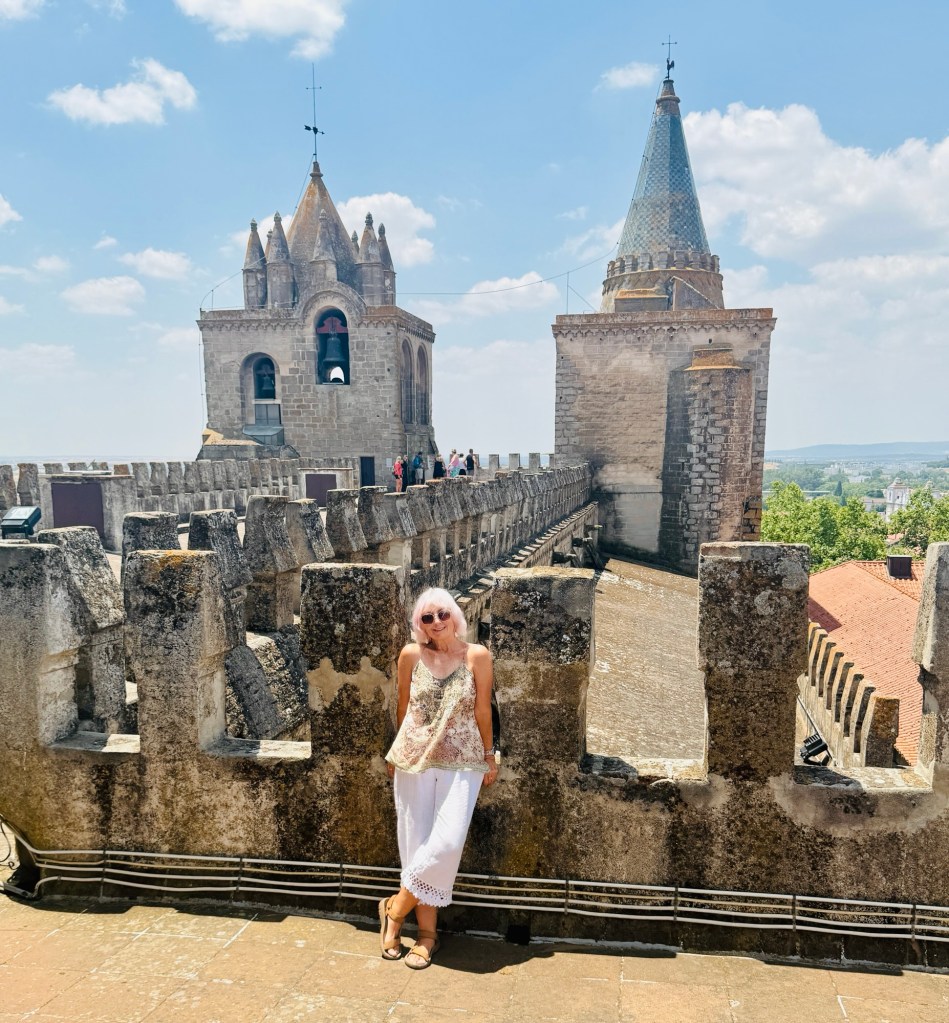
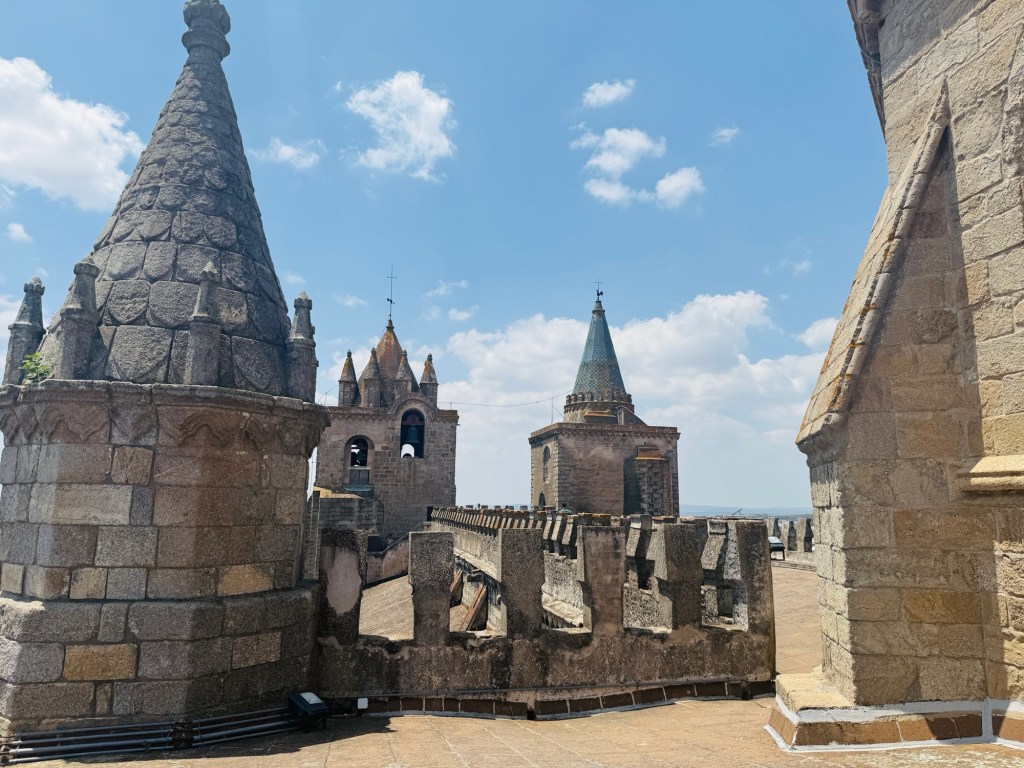
I climbed up the tower via a tiny narrow stone spiral staircase to the rooftop and seriously breathe-taking views over the countryside as far as you can see… vast plains and rolling hills with sparse white-washed houses and small farms, vineyards, olive trees, cork forests and cultivated land.
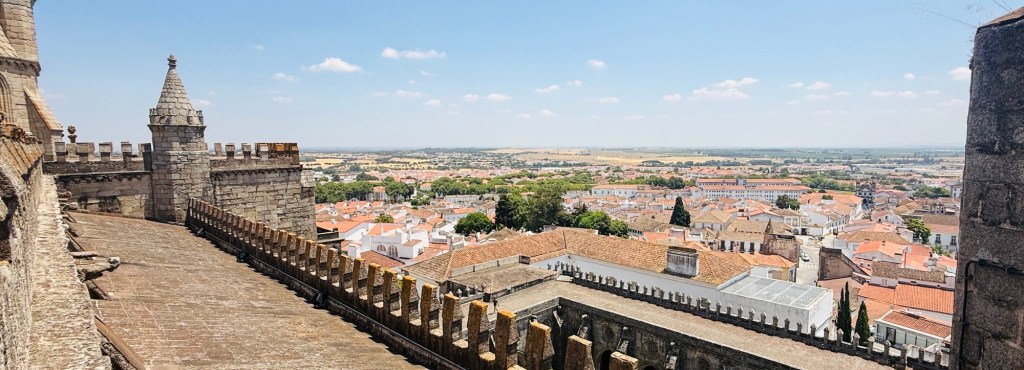
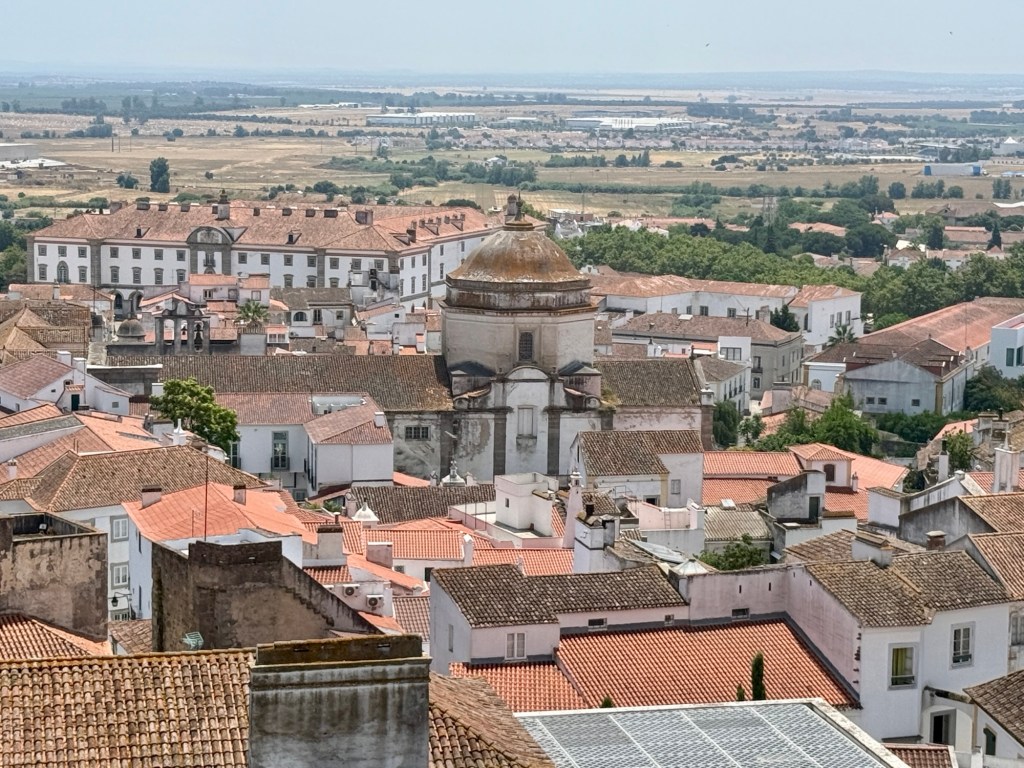
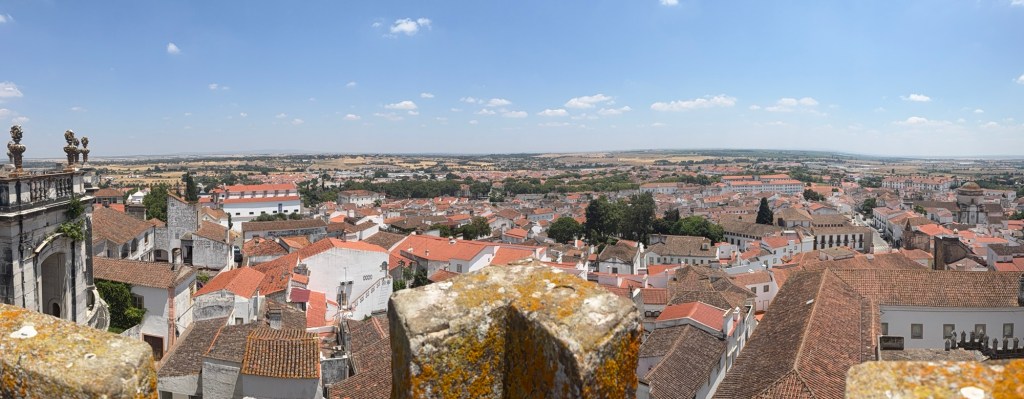
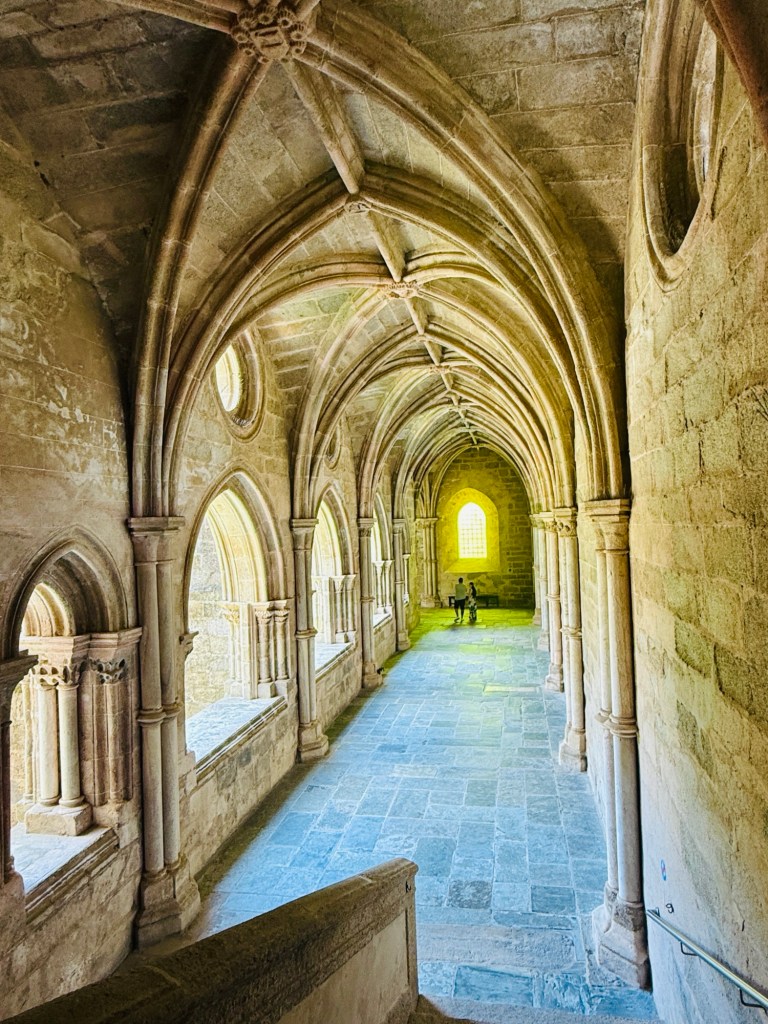
Back down the stairs to the lovely serene interior… home to beautiful art, cloisters and orange trees… and the church itself.
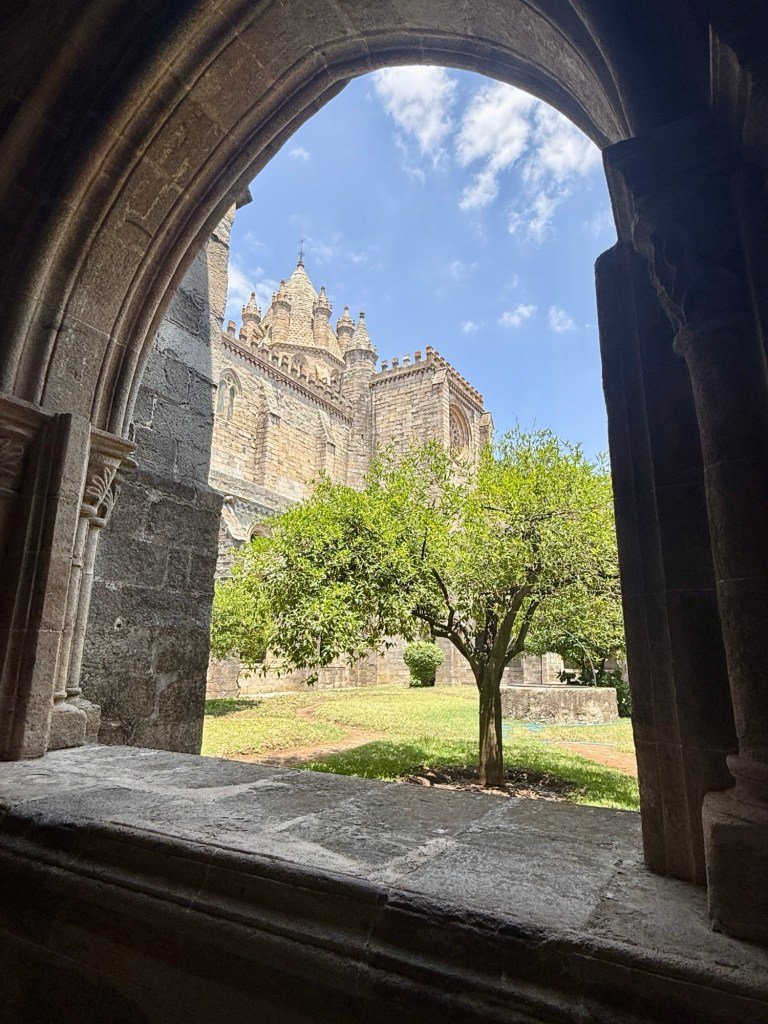
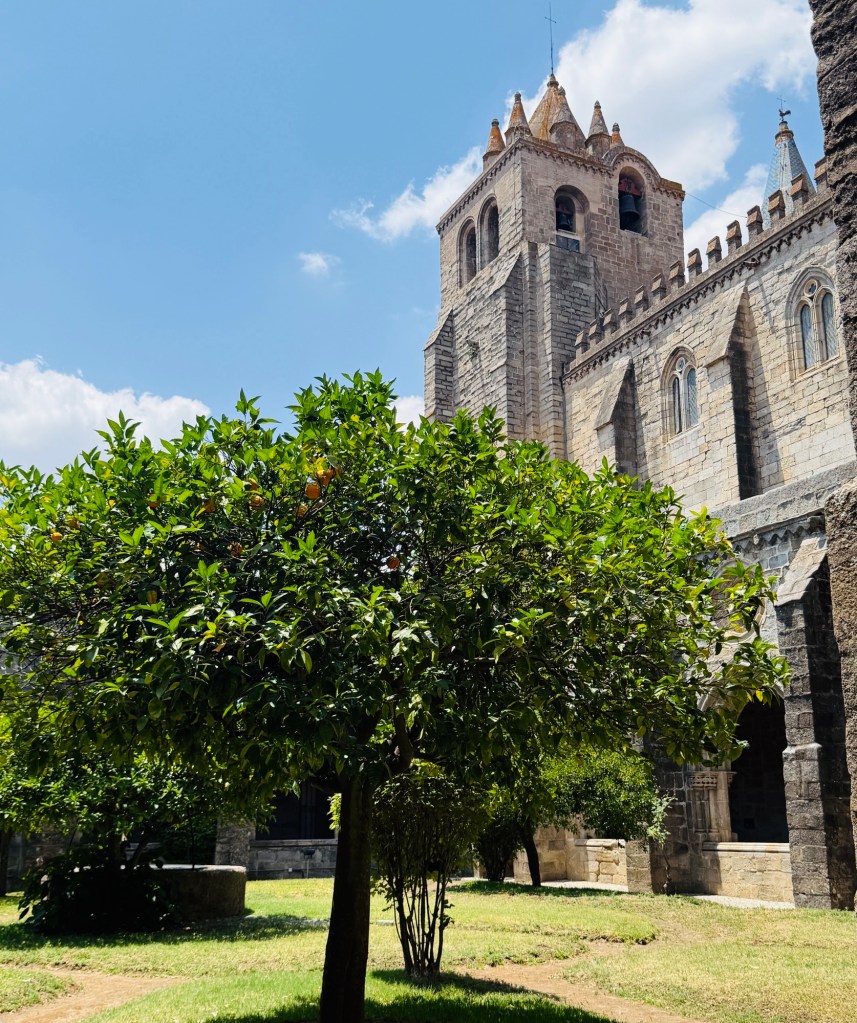
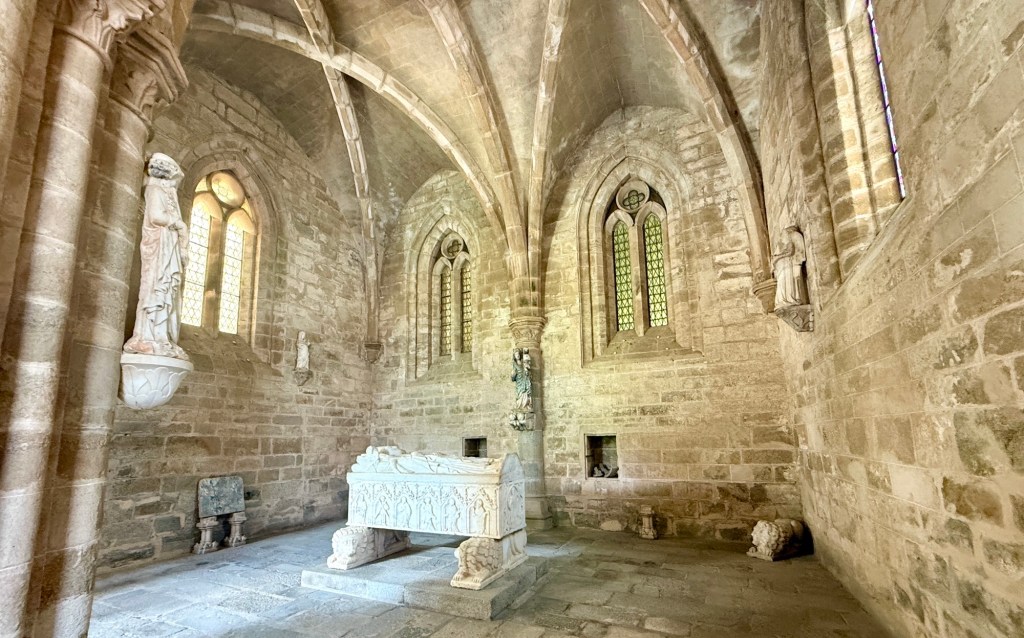

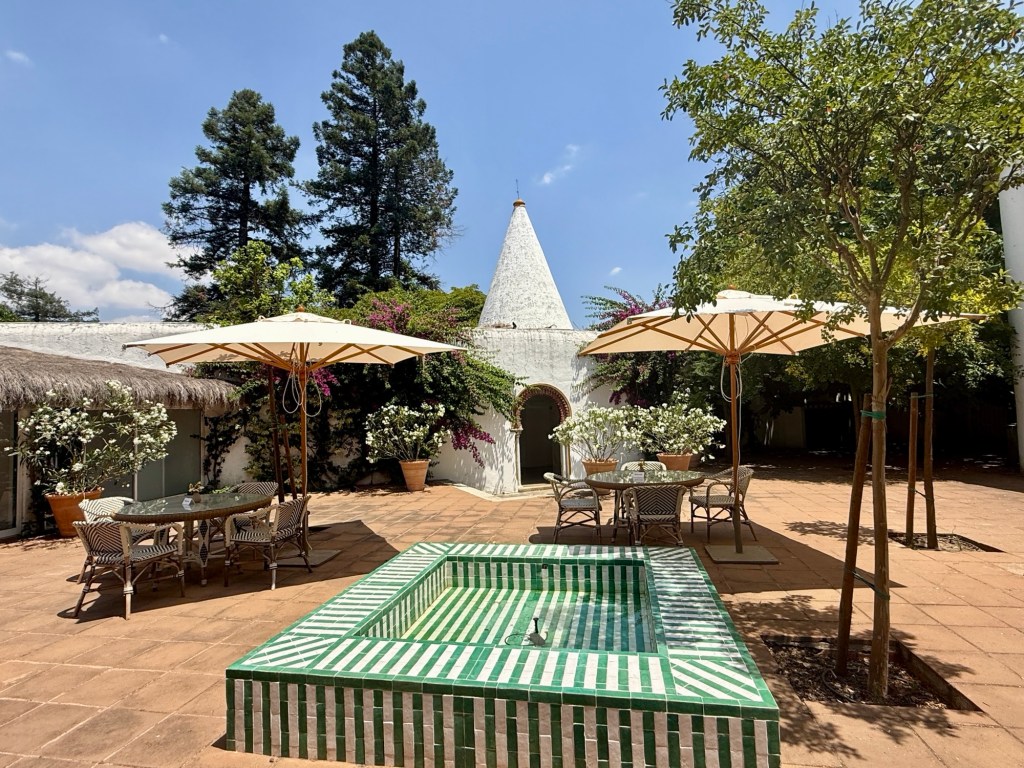
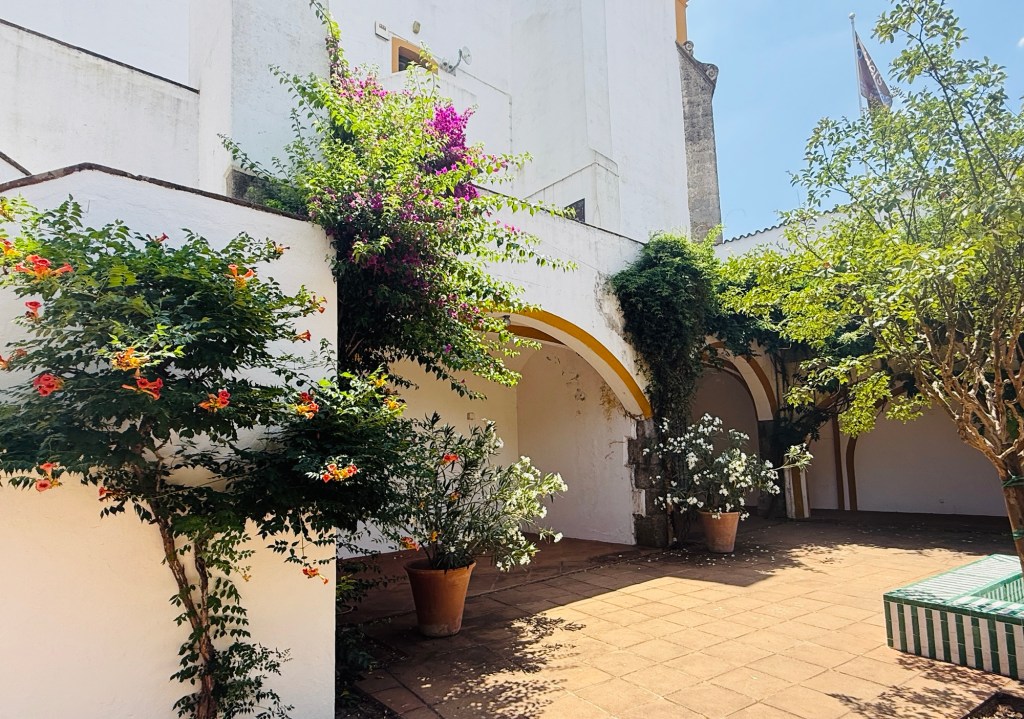
Very close by I wandered into the Palácio Duques de Cadaval with its stunning garden restaurant and art museum that happened to be exhibiting Australian indigenous art.
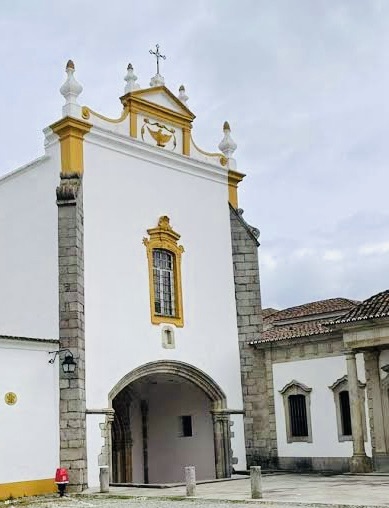
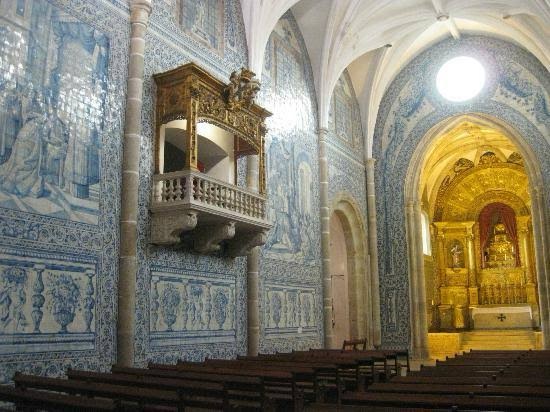
And then the igreja de São João Evangelista which stands out for the magnificent tile panels that cover the walls.

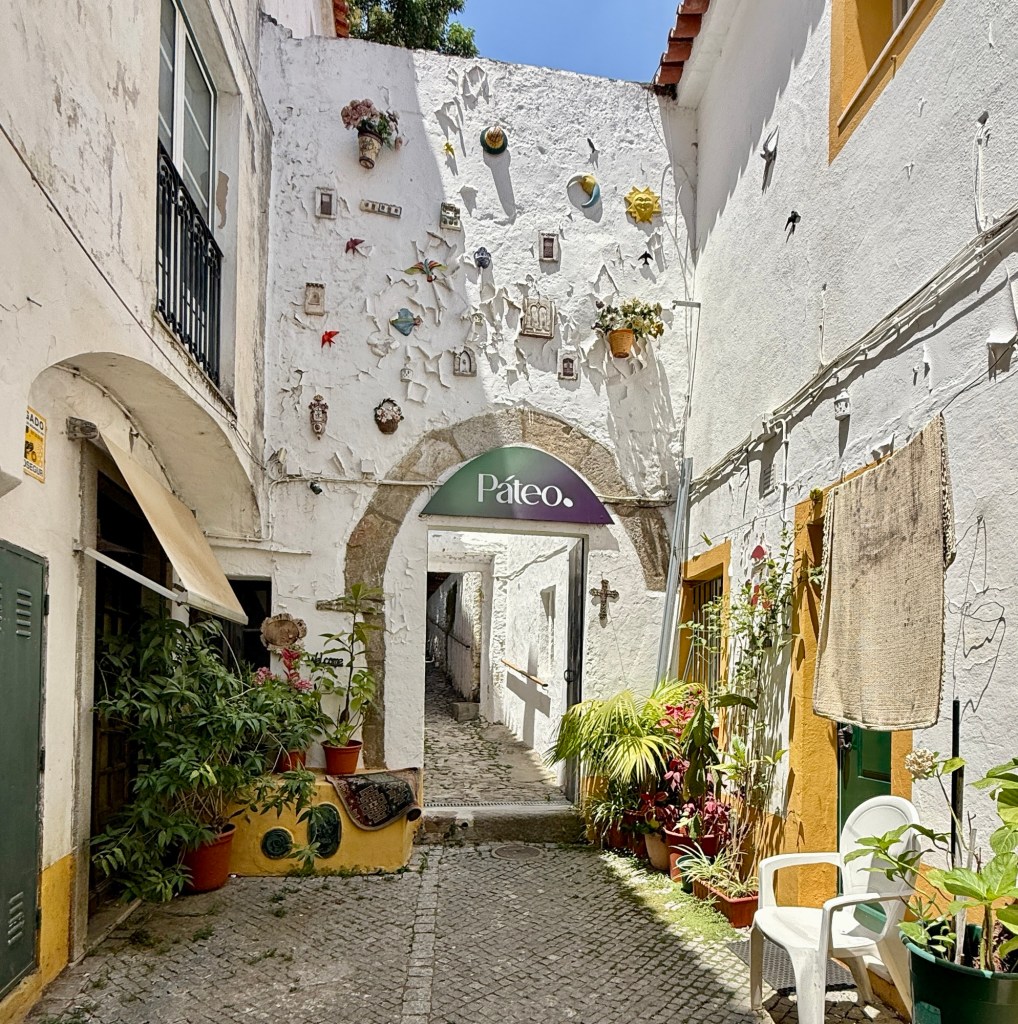
I wandered the patchwork of narrow cobblestoned streets in the ancient walled city… full of lovely old whitewashed houses with the Évora trademark yellow trim…

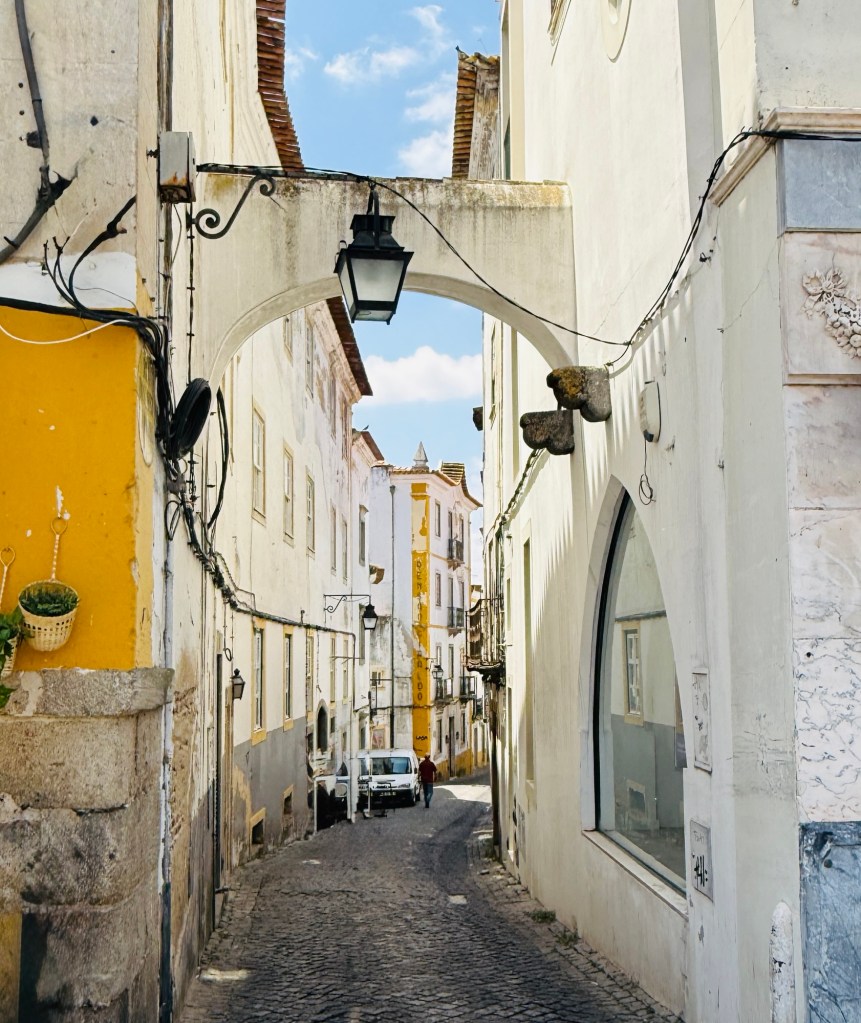
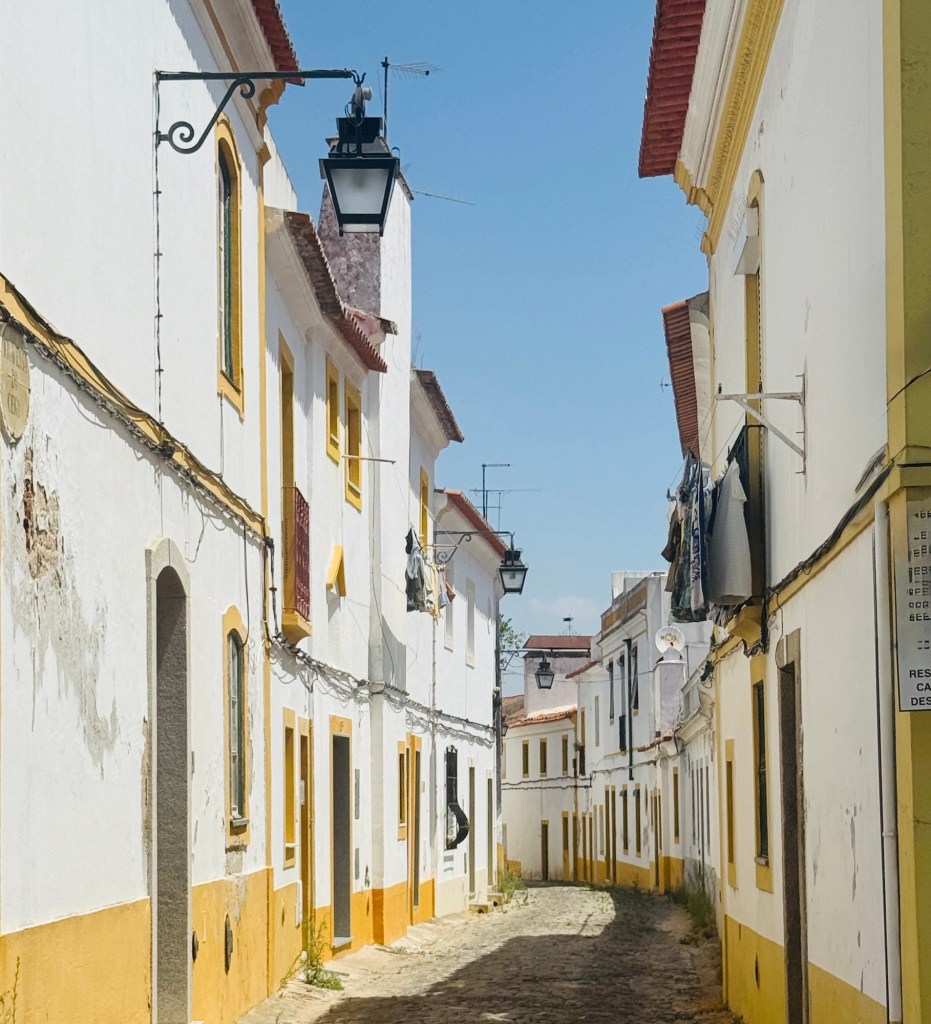
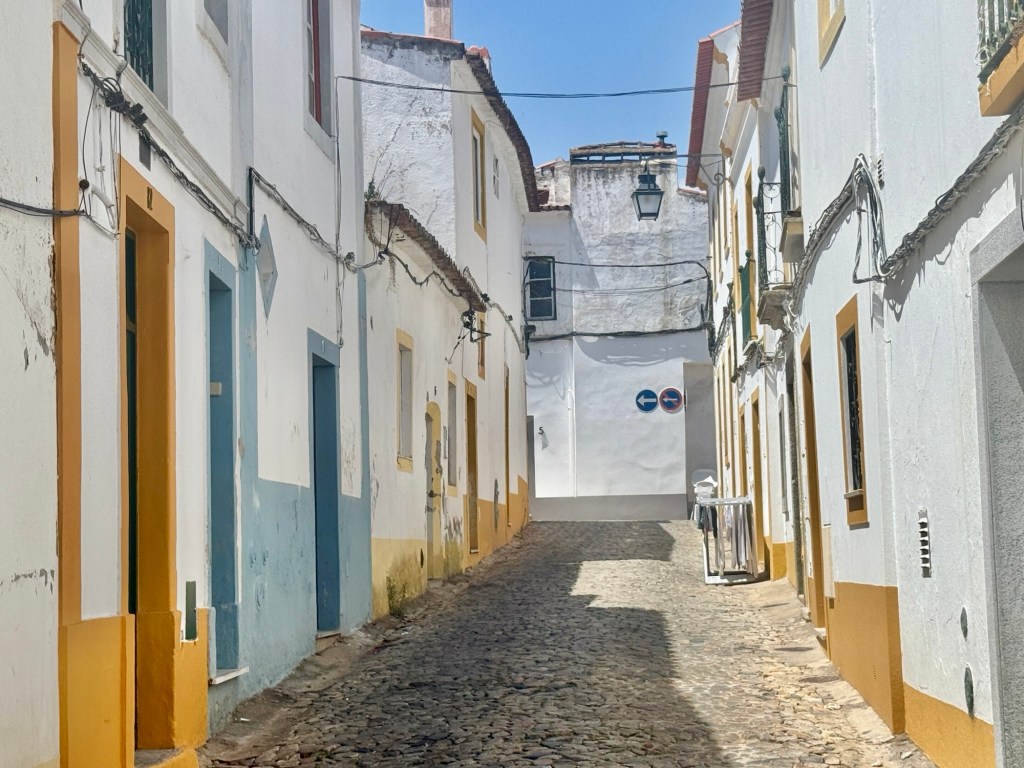
… to the main square Praça do Giraldo…
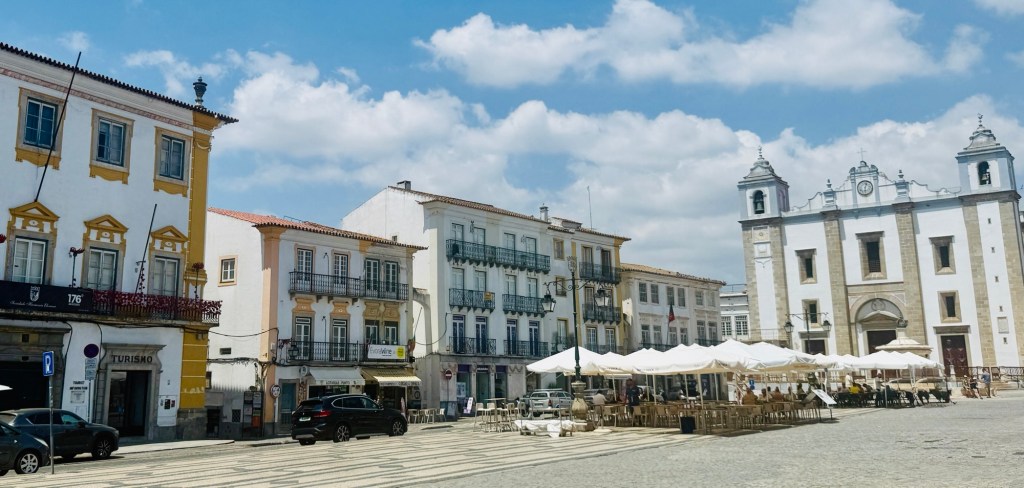
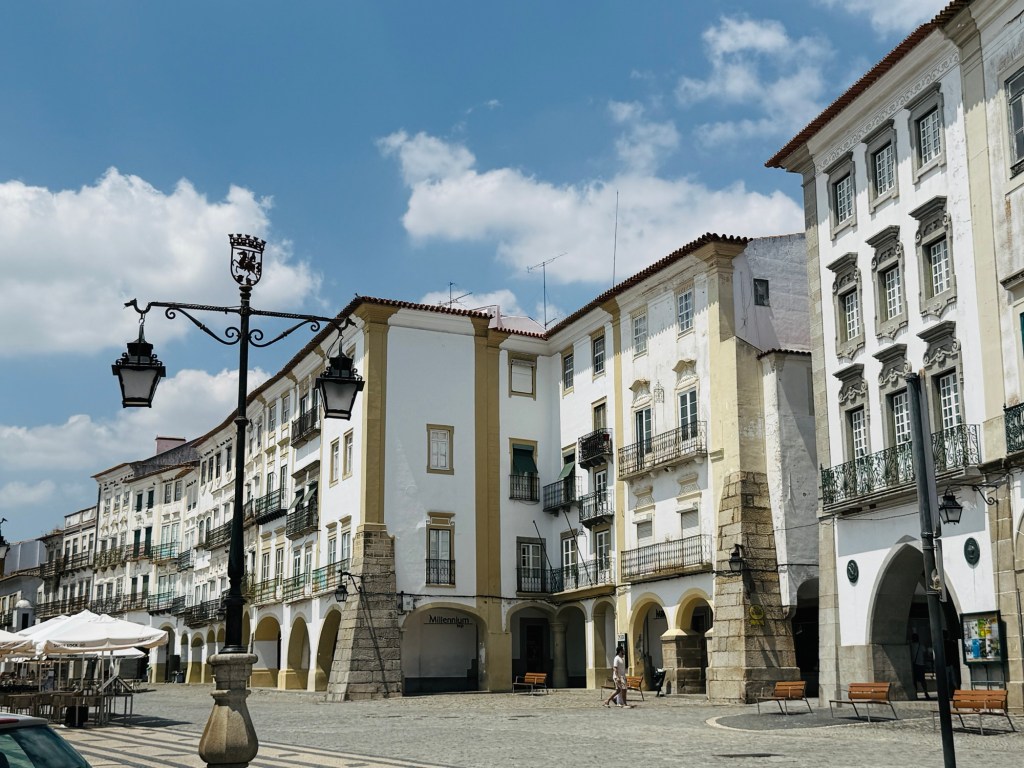
… and passed restaurants and local shops selling regional delicacies, handmade traditional pottery, local wines, and lots of local cork handicrafts.
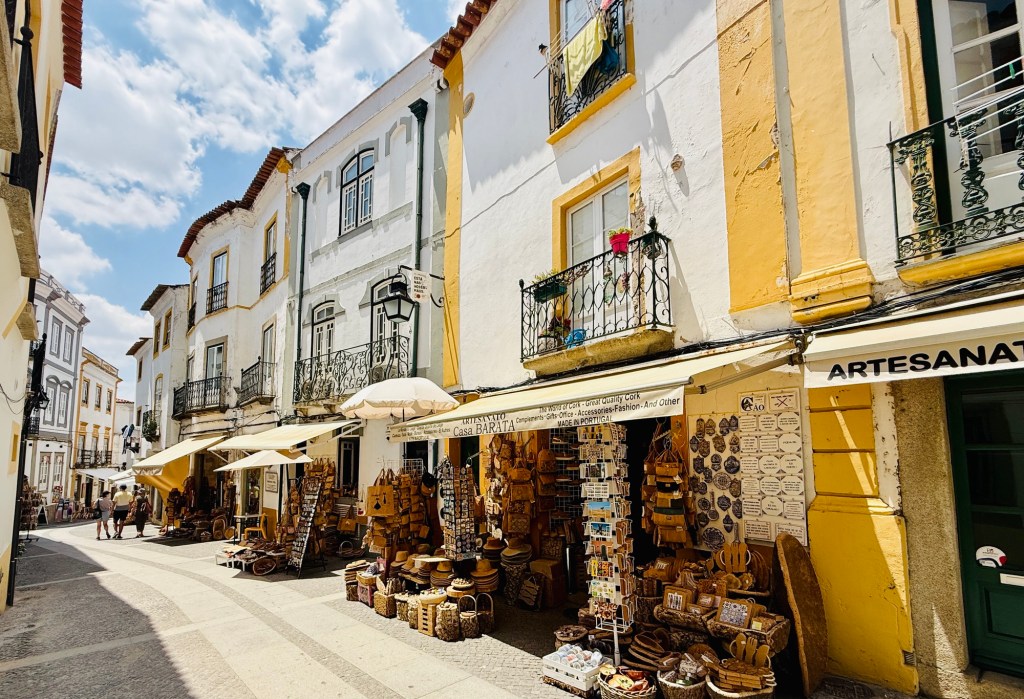
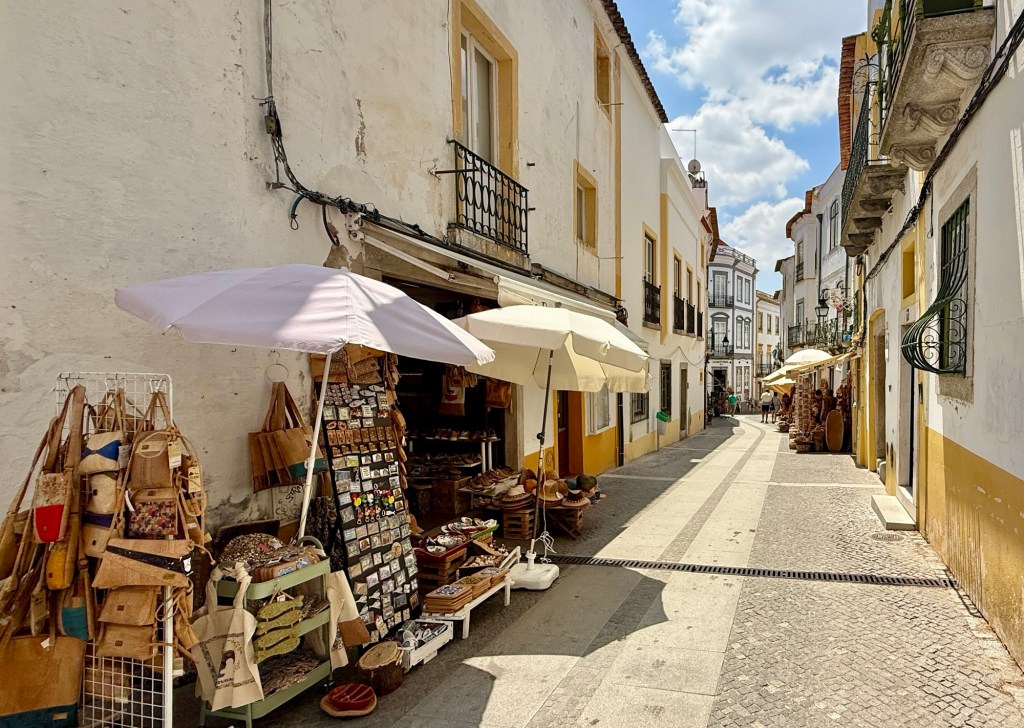
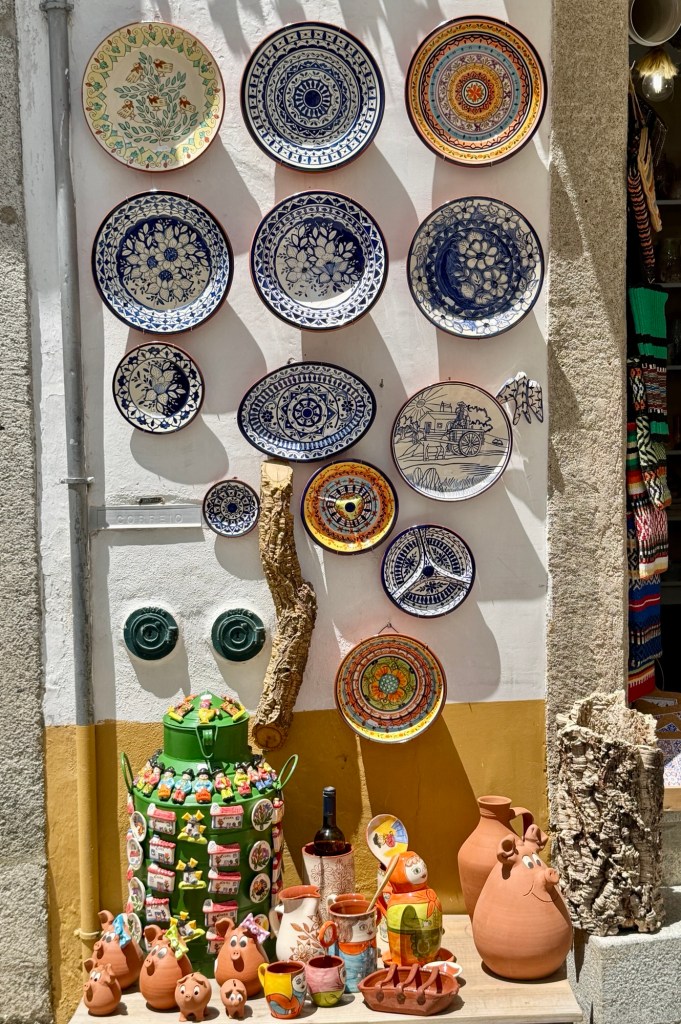
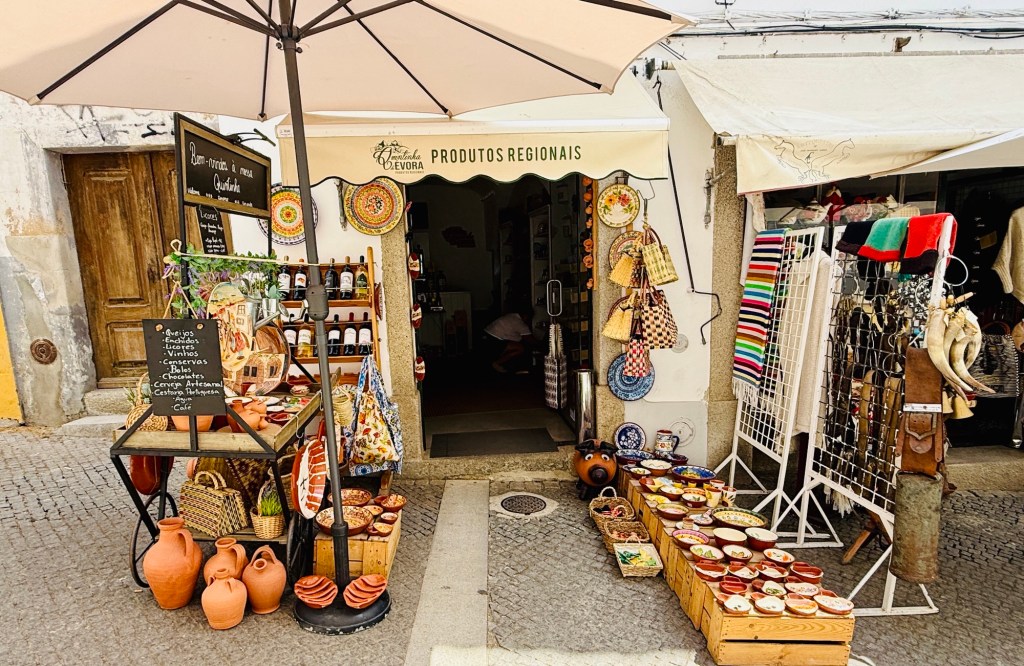
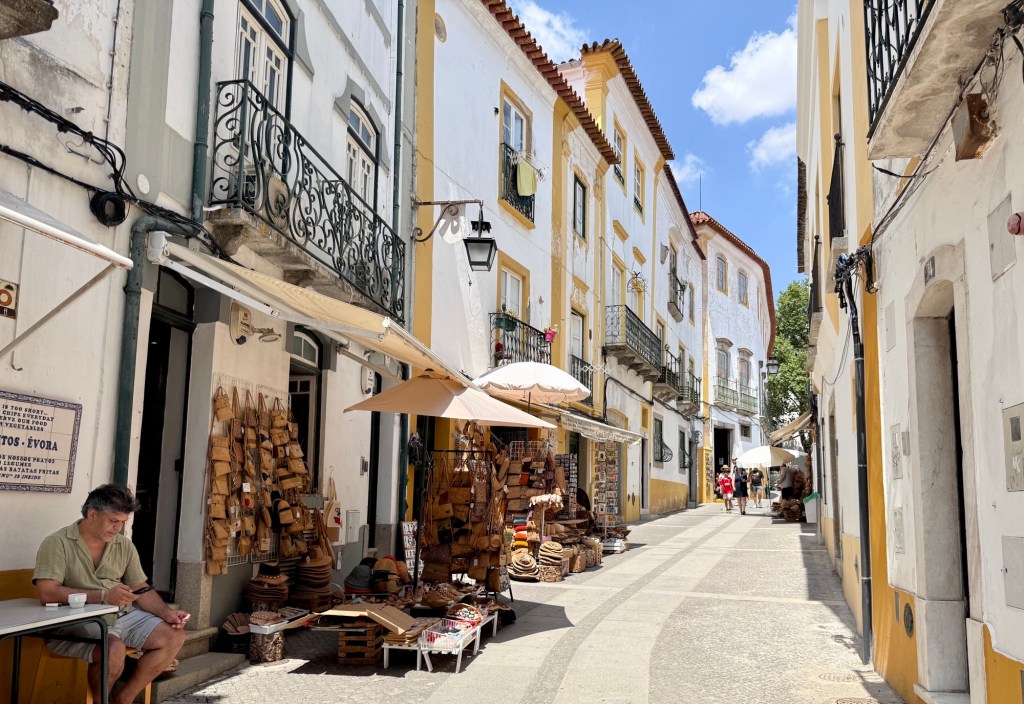
Apparently the streets have some pretty outlandish names if I understood Portuguese, like the “Alley Of The Unshaven Man” and the “Street Of The Countess’s Tailor”.
Next stop, the Capela dos Ossos may be Évora’s most famous landmark and is a hauntingly beautiful and eerie site. Constructed in the 17th century by Franciscan monks, the chapel serves as a haunting reminder of the transient nature of human life.
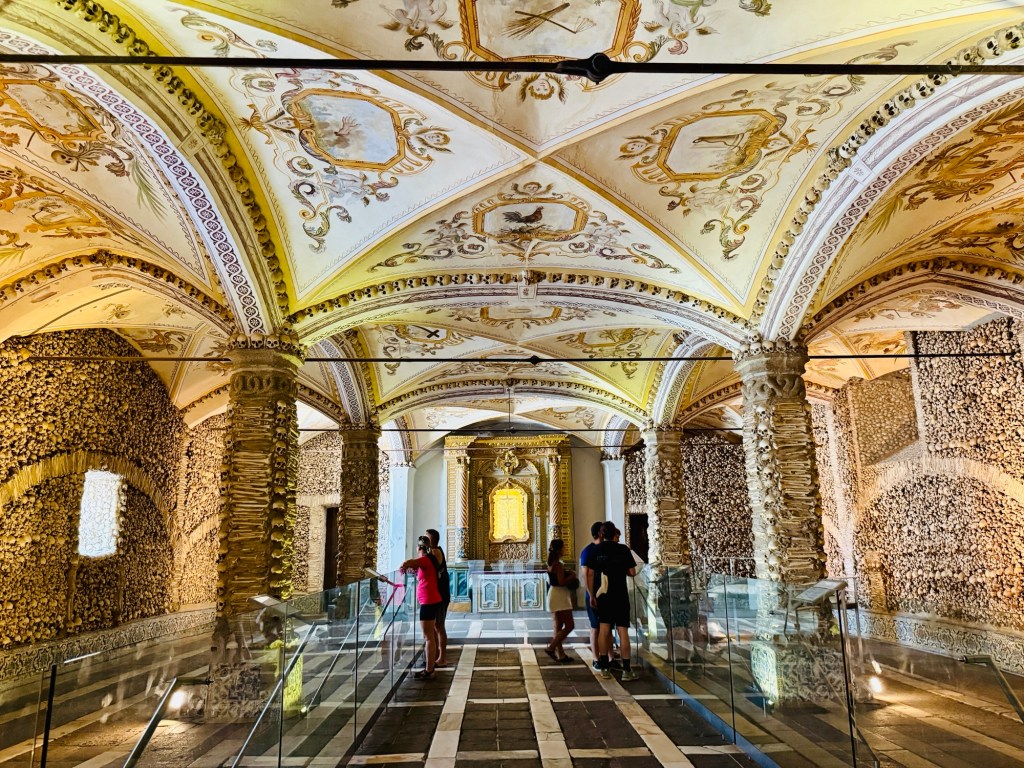
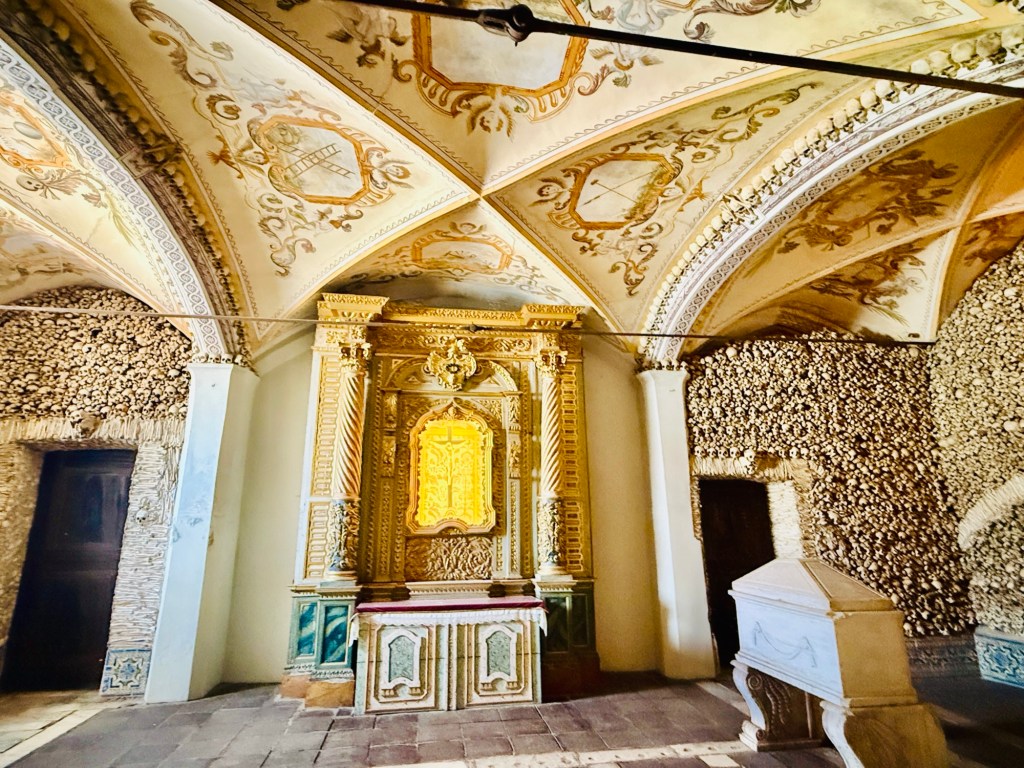
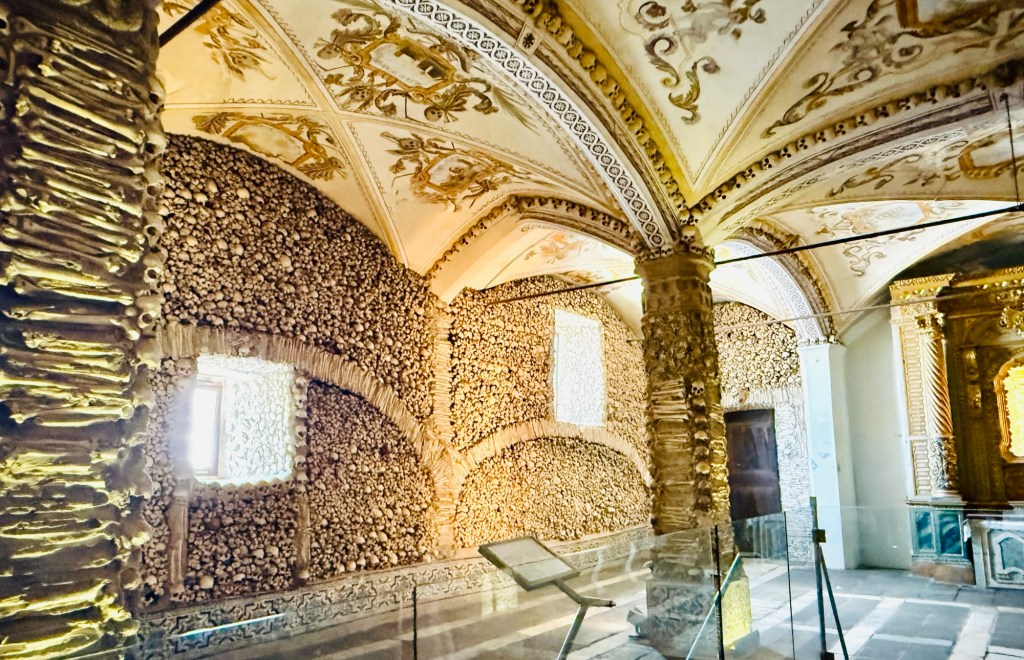
Its walls are intricately adorned with the bones and skulls of approx 5000 souls artfully arranged by Franciscan monks to symbolize our mortality. A definite touch of the macabre.

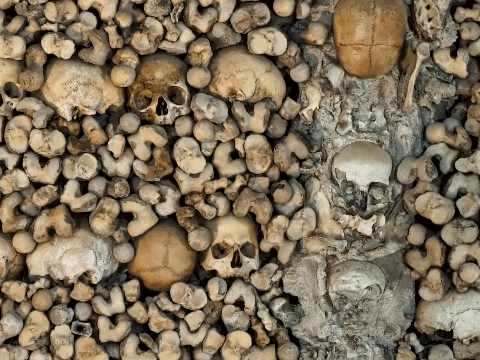
Above the chapel’s entrance, an ominous inscription reads “Nós ossos que aqui estamos, pelos vossos esperamos,” which translates to “We, the bones that are here, for yours wait.”

It was getting late and I was very hot so I headed back up the hill to a little restaurant I had noticed earlier… off the street and very shady and sat relaxing with a glass of wine, food and a fan that constantly sprayed me with water. Just what I needed… until it was time to catch the train back.
 And I think to myself what a wonderful world